

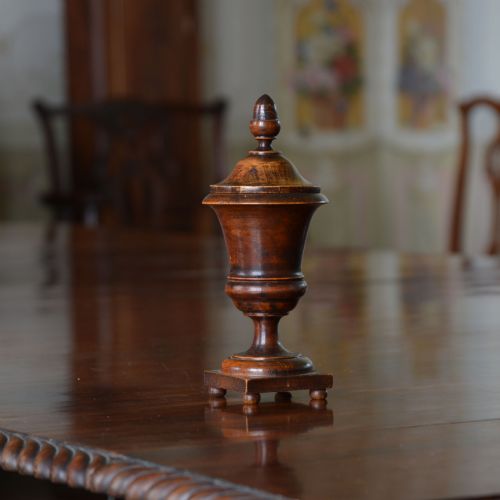


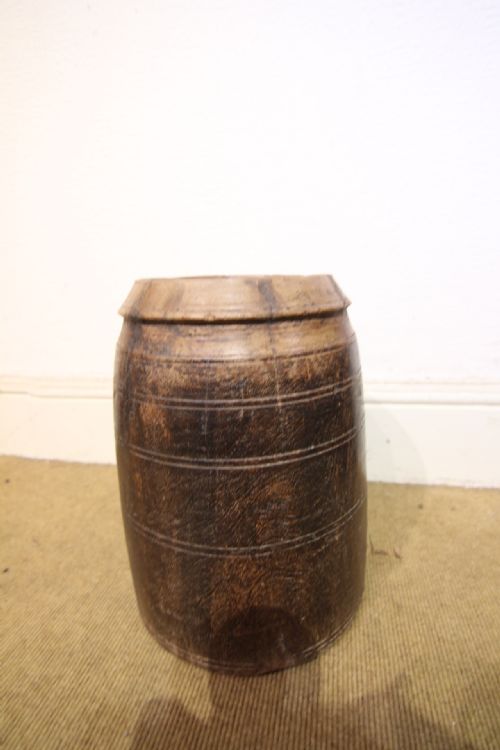


Brown Timber Urn
A brown timber urn brings warmth and historic presence to a room, offering sculptural form carved from rich hardwoods over centuries past.
Brown Timber Urn
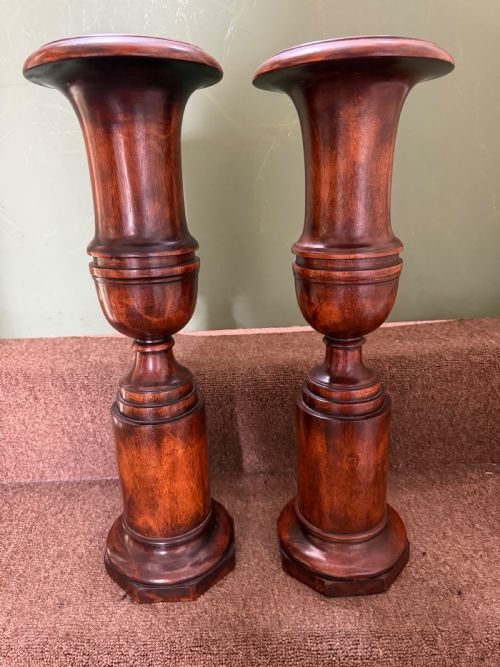
A brown timber urn encompasses decorative wooden vessels, pedestals, and carved objects originating mainly across the eighteenth and nineteenth centuries. These pieces draw upon neoclassical, Victorian, and traditional global designs, translating classical architectural shapes into rich domestic timber.
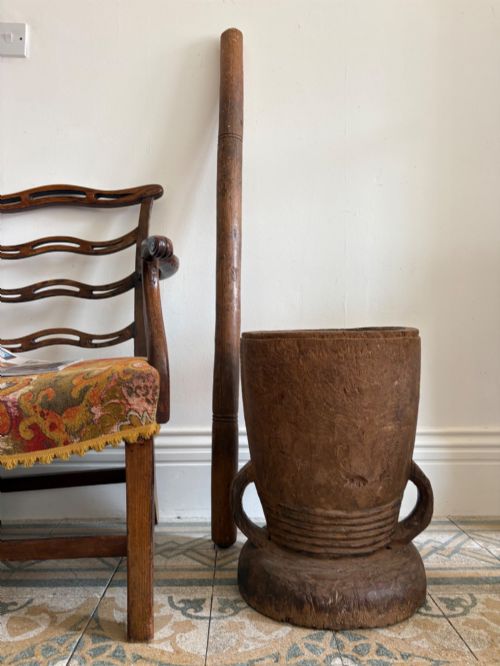
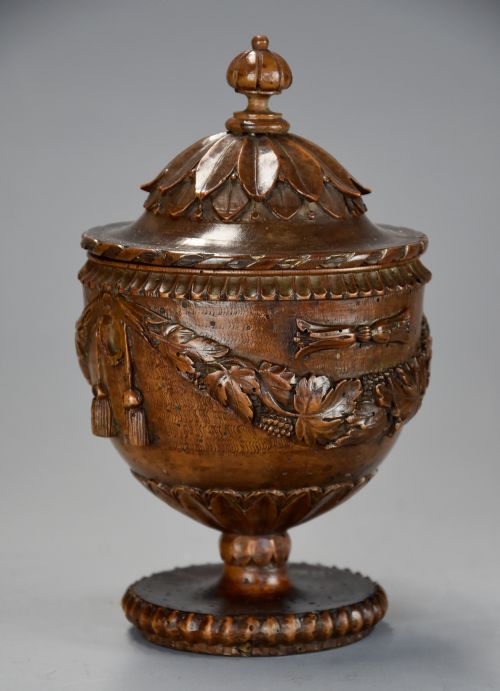
The selection ranges from finely turned walnut campana vessels and yew wood treen vases to primitive carved wooden vessels and monumental pedestals. Buyers encounter everything from refined European neoclassical lidded urns to rustic grain mortars and tribal vessels.
Most examples serve purely decorative functions, though many operate as jardiniere stands, display pedestals, or sculptural table centrepieces. Their survival demonstrates centuries of craftsmanship dedicated to domestic display and ornamental architecture.
How they were made
Craftsmen utilised dense hardwoods including mahogany, walnut, rosewood, fruitwood, and yew, selecting timber for deep grain patterns and stability. Turning on a lathe formed symmetrical bodies for campana vases and urns, while hand carving shaped intricate classical motifs, foliage, and caryatids.
Joinery methods varied according to origin and purpose, combining traditional pegged construction with hand-turned threaded joints on lidded vessels. Surface finishes relied on natural oils, waxes, and shellac polishes that built deep patination over generations of handling.
One listed pedestal cleverly conceals a secret compartment within its carved wooden architecture.
What varies in quality
Quality rests primarily in the crispness of the hand carving and the precision of the lathe turning, distinguishing master cabinetmakers from provincial turners. The choice and figure of the timber dictate visual depth, with well-selected walnut or yew grain elevating the piece.
Proportion and structural integrity define the higher tier of these objects, where classical lines remain balanced and true despite age and environmental shifts. Surviving original surfaces with deep, undisturbed patination command greater regard than stripped or heavily restored timber.
The Brown Timber Urn Glossary
- Campana
- A bell-shaped vessel with an everted rim, commonly seen in classical and neoclassical decorative arts. This silhouette mimics ancient bronze and terracotta garden craters.
- Treen
- Small handmade wooden domestic objects and wares created before the dominance of mass manufacturing. These items showcase everyday turning and carving skills in dense fruitwoods and hardwoods.
- Caryatid
- A sculpted female figure serving as an architectural support in place of a column or pilaster. In furniture and pedestals, they provide structural load-bearing alongside decorative presence.
- Jardiniere
- An ornamental pot or stand designed to hold growing plants or floral arrangements. They frequently appear in carved walnut or rosewood during the nineteenth century.
Brown Timber Urn: Frequently Asked Questions
How do I care for a wooden urn?
Keep wooden vessels away from direct heat sources and dramatic humidity fluctuations to prevent timber splitting. Dust gently with a dry cloth and apply a microcrystalline wax sparingly to nourish the grain.
Avoid liquid polishes containing silicone, which can penetrate porous historic timber and damage the underlying surface over time.
Were these urns used outdoors?
Almost all antique timber urns and vases were designed strictly for interior display within parlours, libraries, and country house halls. Wood of this age lacks modern weatherproofing treatments and cannot withstand damp outdoor environments.
Exposing antique hardwood to rain and frost will quickly degrade the joinery and ruin the historic surface patination.
How can I tell an eighteenth century urn from a later copy?
Examine the tool marks inside and underneath the vessel, as eighteenth-century turning and hand-carving methods leave distinct irregularities. Timber shrinkage, natural oxidation of the wood, and the depth of the finish provide reliable indicators of age.
Later Victorian revivals often display more uniform machine assistance and different construction tolerances compared to earlier Georgian examples.
What is the difference between an urn and a pedestal?
An urn is a self-contained vessel with a hollow body, sometimes featuring a lid, focused on sculptural form. A pedestal functions as a structural column or stand designed to elevate busts, sculptures, or plants.
Certain listings combine both forms, offering pedestals topped with urns or displaying architectural column designs.