



Pair Wooden Vases
Pair wooden vases bring warmth and grain to a room, ranging from turned neo-classical walnut to carved treen and lacquered Asian works.
Pair Wooden Vases
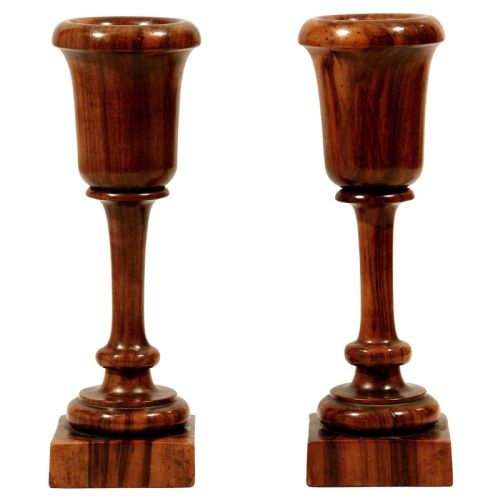
Pair wooden vases encompass turned timber vessels, spill stems, and decorative urns spanning the eighteenth, nineteenth, and early twentieth centuries. These objects appear in walnut, mahogany, yew wood, and lignum vitae, often shaped on a lathe with classical or regional proportions.
Buyers searching for pair wooden vases encounter British turned work alongside pieces originating from Chinese and Kashmiri workshops. Forms range from slender spill vases intended for hearth use to larger decorative display pieces.
The selection includes matched pairs created together as ornaments and utilitarian turned stems utilised for lighting or floral display. Each pair demonstrates the distinctive turning and carving techniques favoured during its respective period.
Materials and Making
Turners utilised dense hardwoods including walnut, mahogany, yew, and lignum vitae to shape these vessels on a lathe. The natural grain of the timber dictates the surface pattern, often enhanced through simple polishing or clear lacquering.
Asian examples incorporate carved woodwork, sometimes combined with lacquer or mounted with porcelain and cloisonné elements. British pieces from the eighteenth and nineteenth centuries rely heavily on precise spindle turning and hollow-core shaping.
Pair Wooden Vases Retail Price Guide 2026
Typical asking prices for pair wooden vases among the pieces listed under this phrase on Sellingantiques today, from the lower quarter to the upper quarter. They describe what is for sale here now, not the wider market.
Some wooden vases began life simply holding the spillages of the fireplace.
Evaluating Quality
Quality rests in the crispness of the turning and the selection of the timber grain. Superior examples display balanced proportions, symmetrical profiles, and well-chosen wood figure that complements the form.
Condition of the surface finish and the integrity of any joined or turned sections separate finer decorative items from standard utilitarian vessels. Original polish or undisturbed patination elevates the standing of older pieces.
The Pair Wooden Vases Glossary
- Treen
- Small handmade wooden household objects and utensils. This term covers functional and decorative turned wood items from earlier centuries.
- Spill Vase
- A small tall receptacle designed to hold thin wooden spills for lighting fires. These often feature simple turned wooden stems.
- Lignum Vitae
- An exceptionally dense and heavy hardwood often utilised for turned vessels. Its natural oils produce a fine, smooth finish when worked.
- Urn
- A classical vase form featuring a rounded body tapering to a foot. Many decorative wooden examples emulate ancient stone models.
Pair Wooden Vases: Frequently Asked Questions
How are wooden vases cleaned?
Dusting with a dry cloth preserves the aged surface of timber vessels. Avoid liquid cleaners that can penetrate unsealed grain or damage historic finishes.
Wax polish suited for hardwoods can be applied sparingly to maintain the lustre. Regular maintenance keeps the natural wood figure clear and protected.
Can old wooden vases hold water?
Most antique turned wooden vessels were designed for dry display or as decorative ornaments. Direct contact with water can cause timber to swell, crack, or warp.
Utilising internal glass liners protects the interior if fresh flowers are required. Otherwise, display them dry as sculptural mantel or table pieces.
What woods were commonly used?
Turners selected dense hardwoods like walnut, mahogany, yew, and lignum vitae for their stability and grain pattern. These timbers permitted sharp turning details without splintering.
Softer woods appear occasionally, but dense hardwoods dominate quality pieces. The choice of timber usually reflects the period and regional workshop traditions.
How do I date a turned wooden vase?
Dating relies on stylistic cues such as neo-classical profiles, tool marks left by the lathe, and the choice of timber. Georgian and Victorian pieces show distinct turning thicknesses and proportions.
Comparing the base construction and wear patterns helps establish age. Patination and finish characteristics also point toward specific nineteenth or eighteenth-century eras.