

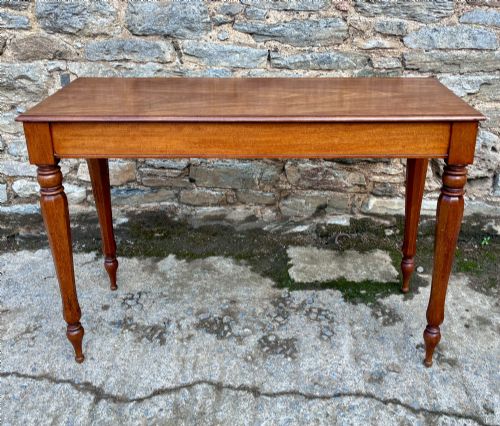
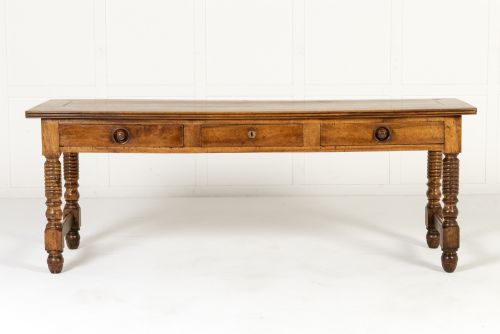
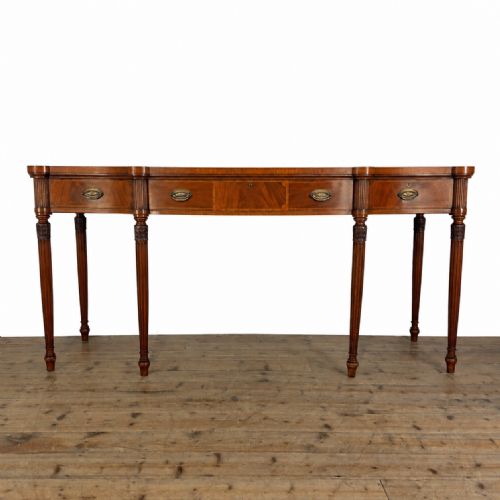
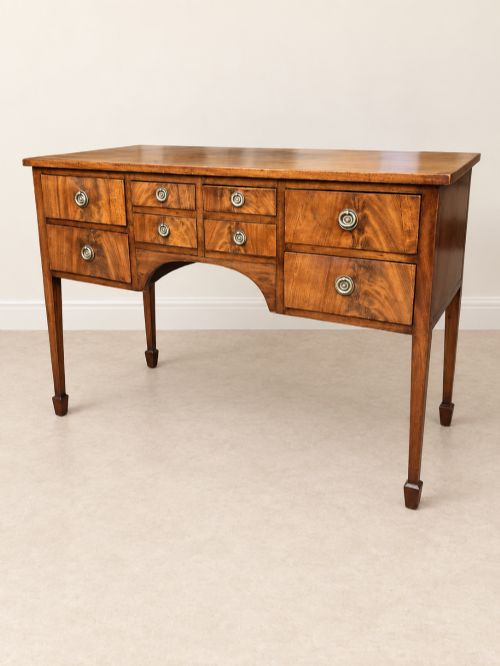


Brown Timber Serving Table
These brown timber serving table examples offer robust proportions and rich grain, grounding a dining room with practical surface area.
Brown Timber Serving Table
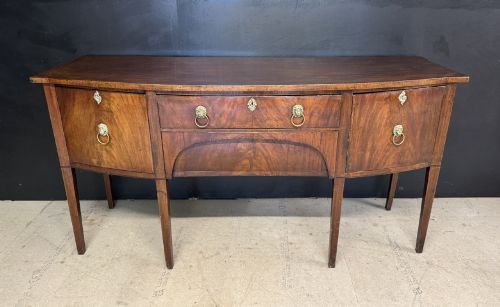
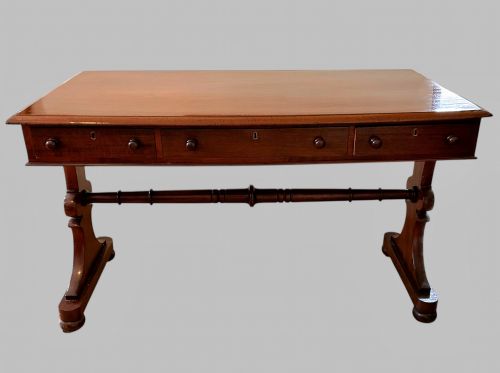
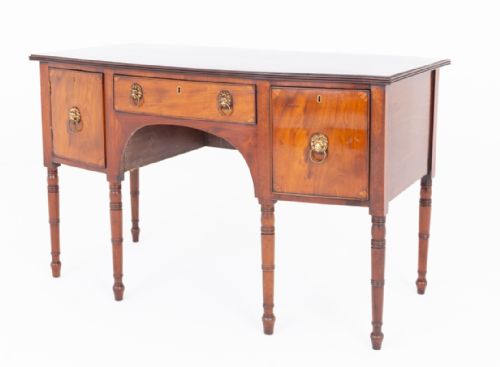
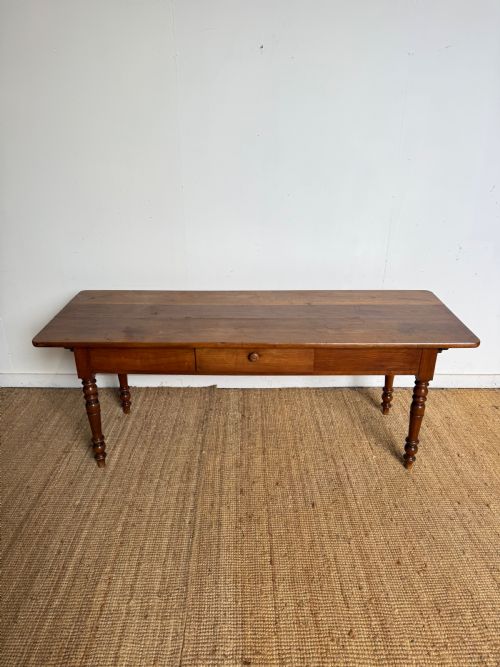
A brown timber serving table brings substantial presence to a dining space, functioning primarily as a surface for food presentation and storage. The selection spans robust sideboards, console formats, and dedicated servers originating from the Georgian, Victorian, and later revival periods.
You are most likely to encounter mahogany forms dating from the Georgian and nineteenth-century eras, often featuring serpentine fronts or multiple drawers. Alternative timbers such as cherrywood, walnut, and pitch pine appear alongside distinct regional styles including French provincial and Kashmiri designs.
How they were made
Cabinetmakers utilised dense hardwoods like mahogany and walnut for structural stability and fine grain figuring, frequently incorporating secondary timbers for drawer linings and internal framing. Brass hardware such as handles and escutcheons punctuate the dark timber surfaces.
Joinery methods relied on traditional dovetailing for drawers and mortise and tenon joints for frames, ensuring longevity. Surfaces were finished with oils or polishes to enhance the natural depth and colour of the timber.
Brown Timber Serving Table Retail Price Guide 2026
Typical asking prices for brown timber serving table among the pieces listed under this phrase on Sellingantiques today, from the lower quarter to the upper quarter. They describe what is for sale here now, not the wider market.
Pine occasionally crossed paths with Gothic revival tastes, resulting in unexpected church-like proportions in the dining room.
What varies in quality
Quality rests upon the selection of timber and the precision of the joinery, with superior examples displaying continuous grain matching across drawer fronts and doors. The crispness of carved details, such as serpentine shaping or moulded edges, distinguishes standard workshop production from finer cabinet work.
The integrity of original brass fittings and the retention of uncompromised secondary timbers heavily influence the standing of a piece. Earlier Georgian and late Regency items generally command attention through disciplined proportions and restrained ornamentation.
Gillow
The Brown Timber Serving Table Glossary
- Serpentine front
- A curved furniture front featuring a convex centre flanked by concave ends. This contour adds visual movement and requires high skill in timber shaping.
- Secondary timber
- The auxiliary wood used for internal components such as drawer sides, backboards, and framing. Cabinetmakers typically selected sturdier, less costly woods for these hidden areas.
- Escutcheon
- A protective plate surrounding a keyhole, often cast in brass. It prevents the timber around the lock from sustaining damage during daily use.
- Dovetail joint
- An interlocking woodworking joint formed by interlocking wedge-shaped fingers. This construction method resists tension and secures drawer corners permanently.
Brown Timber Serving Table: Frequently Asked Questions
Where were serving tables placed?
These tables stood against dining room walls to hold dishes, silver, and wine bottles during large meals. They relieved pressure on the main dining table by acting as auxiliary storage.
Servants used the generous top surfaces for plating courses before service. Lower drawers kept linens and cutlery close at hand.
How do I clean a timber surface?
Dust the timber regularly with a dry, soft cloth to prevent particulate buildup. Avoid silicone sprays that leave residues and attract dirt over time.
Apply a traditional beeswax polish sparingly when the wood appears dry. Buff the surface gently to maintain the natural sheen.
Are these tables sturdy enough for daily use?
Dense hardwoods like mahogany and walnut provide exceptional structural stability for everyday service. The solid joinery ensures the frame handles weight without sagging.
Care should be taken with hot dishes by using mats to protect the polished finish. Regular checks of the joints keep the table secure.
How do I distinguish Georgian from Victorian pieces?
Georgian pieces often display restrained classical proportions with understated mahogany veneers and fine stringing. Timber selection prioritised rich grain and deep colour.
Victorian examples frequently introduce bolder ornamentation, Gothic revival motifs, or alternative woods like pitch pine. Construction methods also became heavier during the later nineteenth century.