

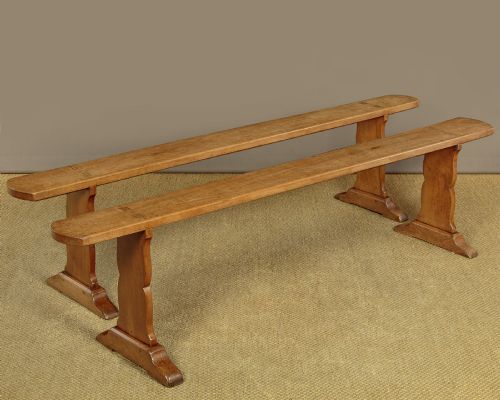
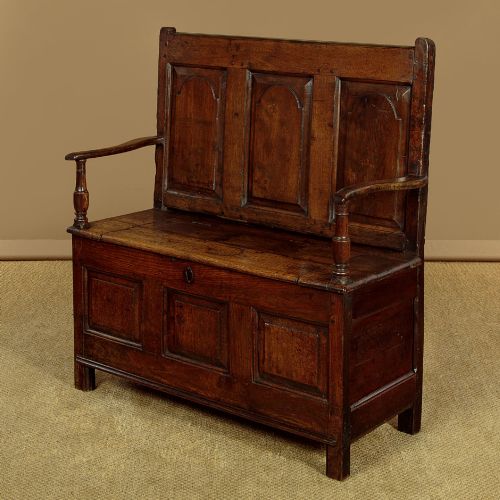


Brown Timber Hall Bench
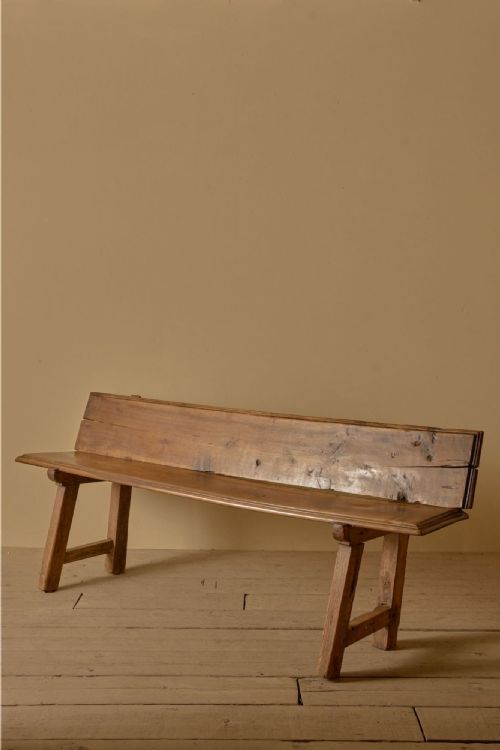
A brown timber hall bench provides a sturdy seat for an entranceway, combining practical function with substantial period character.
Brown Timber Hall Bench
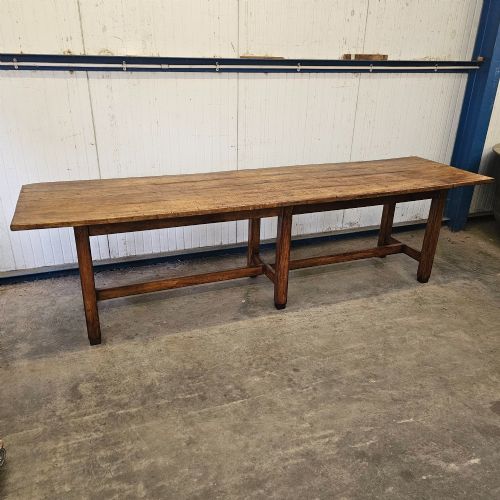
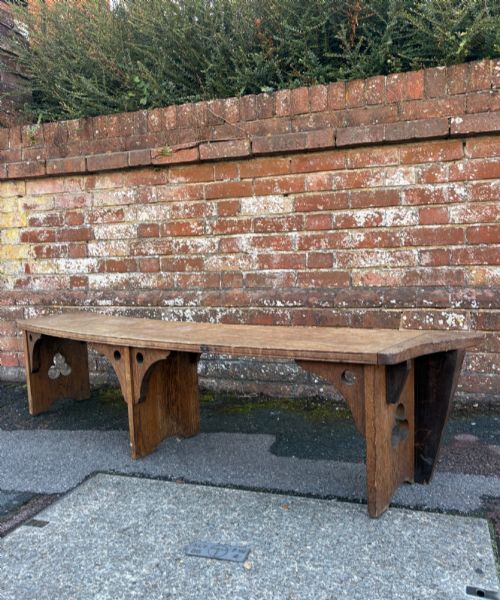
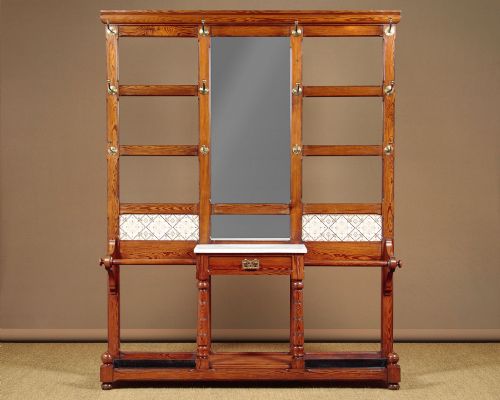
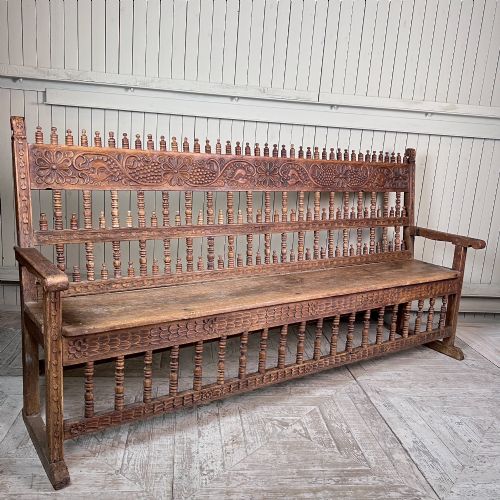
A brown timber hall bench appears across several centuries, ranging from seventeenth century fruitwood settles to nineteenth century oak window seats. These pieces serve entranceways and hallways, offering long timber seating alongside high backrests or enclosed storage boxes.
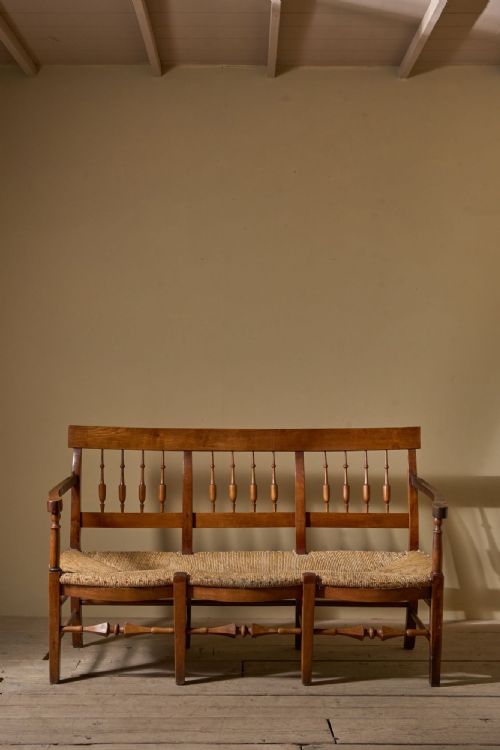
The selection on this page centres heavily on oak and elm pieces from the eighteenth and nineteenth centuries. Buyers regularly encounter vernacular forms such as Welsh settles, French provincial benches, and Gothic revival designs alongside simpler country house examples.
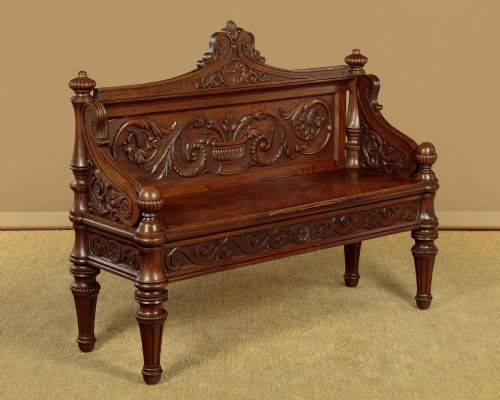
Origins stretch from English and Welsh workshops to French, Spanish Colonial, and Austrian makers. The forms vary from straight communal seating to curved Pugin style benches and high back settles designed to block draughts in cold passages.
Materials and construction methods
Makers relied primarily on native hardwoods including oak, elm, pine, and fruitwood. These timbers provided the structural strength required for heavy everyday use in domestic halls.
Joinery techniques involve traditional pegged mortise and tenon joints, hand-carved supports, and occasional rush seating. Surfaces show the marks of hand-tooling, trefoil carved supports, and natural grain patination developed through centuries of handling.
Brown Timber Hall Bench Retail Price Guide 2026
Typical asking prices for brown timber hall bench among the pieces listed under this phrase on Sellingantiques today, from the lower quarter to the upper quarter. They describe what is for sale here now, not the wider market.
Materials across these listings span oak, pine, elm, fruitwood, walnut, and iron, originating primarily from the eighteenth and nineteenth centuries.
Factors determining quality
Quality rests upon the integrity of the timber and the depth of its original patination. Pieces retaining unblemished primary hardwoods and minimal structural replacement command greater regard among collectors.
Carving execution and proportion separate standard utilitarian seating from exceptional workshop output. Well-executed details such as trefoil supports, burr elm panels, and balanced structural proportions distinguish finer examples.
The Brown Timber Hall Bench Glossary
- Settle
- A wooden bench with a high back, solid arms, and often a box base for storage. This form kept sitters warm by blocking draughts in older hallways.
- Fruitwood
- Timber derived from fruit-bearing trees such as cherry or pear, utilised by country makers for its dense grain and warm tone. It yields a distinctive smooth texture when polished.
- Elm
- A resilient hardwood utilised for bench seats and structural elements due to its resistance to splitting. The timber displays a characteristic interlocking grain pattern.
- Gothic Revival
- An architectural and decorative style drawing inspiration from medieval design, visible in pointed arches and trefoil carvings. This movement influenced nineteenth century furniture production.
- Burr elm
- A figure in elm wood caused by growth excrescences, yielding swirling patterns prized for decorative panels. Cabinet makers deployed this timber sparingly on prominent surfaces.
Brown Timber Hall Bench: Frequently Asked Questions
How do I care for a timber hall bench?
Maintain the wood by applying natural beeswax periodically to nourish the dry surface.
Keep the bench away from direct heat sources and strong sunlight to prevent the timber from splitting.
Were these benches used outdoors?
Certain examples originate as orangery or garden seating designed for sheltered exterior placement.
Most pieces listed are intended for interior entranceways and domestic hallways rather than exposed garden use.
What is the difference between a settle and a bench?
A settle typically incorporates a high solid back and enclosed sides designed to block cold draughts.
A standard bench offers simpler open seating without the high protective backrest or storage box base.
How can I tell the age of an oak bench?
Examine the construction marks, tool traces, and the overall oxidisation of the timber surface.
Hand-cut joints and deep patination accumulated over generations indicate older seventeenth and eighteenth century manufacture.