



Long Timber Bench Seat
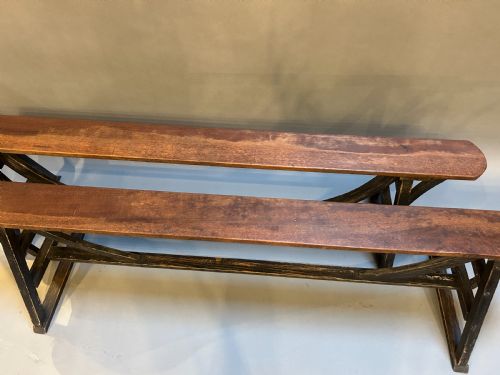
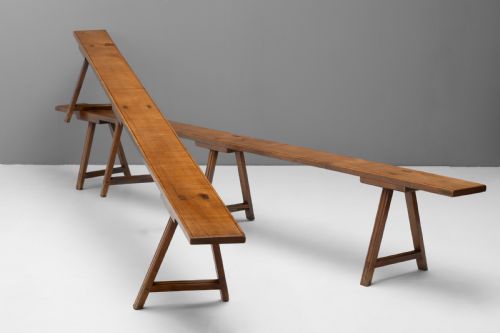
A long timber bench seat anchors a room with plain utility, offering honest seating gathered from centuries of domestic and institutional life.
Long Timber Bench Seat
When you search for a long timber bench seat, you are looking at substantial seating designed for communal dining, hallways or ecclesiastical spaces. These pieces emerge primarily from the nineteenth and early twentieth centuries, though eighteenth-century examples occasionally surface from historic ecclesiastical or estate settings.
The versions you are most likely to meet on this page span rustic farmhouse styles, French country designs, and formal revival pieces such as Carolean or Regency interpretations. They appear as single standalone items, pairs, or narrower dining benches built to accompany large tables.
Forms vary from simple vernacular pine and elm boards to robust oak and cherry constructions, sometimes incorporating cane seating or upholstered elements. Their origins stretch from English workshops to French provincial makers and colonial contexts.
How they were made
Makers relied on solid hardwoods and softwoods including pine, oak, elm, cherry, and mahogany, selecting timber based on regional availability and the intended function of the seat. Planks were joined using traditional carpentry methods to support heavy daily use without modern mechanical fasteners.
Surface treatments remained straightforward, often leaving the bare grain exposed or finished with simple historic waxes and varnishes that developed patination over generations. Details such as turned legs, carved rails, or woven cane panels reveal the hand of the vernacular craftsman or regional workshop.
Long Timber Bench Seat Retail Price Guide 2026
Typical asking prices for long timber bench seat among the pieces listed under this phrase on Sellingantiques today, from the lower quarter to the upper quarter. They describe what is for sale here now, not the wider market.
Regional bench styles span rustic farmhouse, French country, Arts and Crafts, and Carolean revival designs.
What varies in quality
The calibre of a bench rests in the integrity of its timber selection and the retention of its original structural joints. Thick, uncompromised boards and honest historic repairs demonstrate superior substance compared to heavily restored or artificially distressed equivalents.
Proportion and surface wear dictate the visual standing of each piece, where natural patination accumulated through decades of use outweighs uniform modern finishes. Pieces retaining their original pairing, finish, and structural context sit at the upper end of the scale.
The Long Timber Bench Seat Glossary
- Patina
- The surface sheen and colour acquired by wood and metal through decades of handling, exposure to light, and polishing. This gradual mellowing provides a visual indicator of age.
- Vernacular
- Objects made by local craftsmen for everyday use, following traditional regional designs rather than academic architectural styles. These pieces prioritize function and local materials.
- Carolean
- A decorative style dating from the reign of Charles II, characterised by rich carved woodwork, scrolling motifs, and barley-twist supports. Revival pieces later copied these elements.
- Cane
- Strips of rattan or other plant material woven into an open mesh pattern for seat bases or backs. It offers lightweight flexibility and breathability.
- Pew
- A long wooden bench with a back, traditionally fixed within a church for congregational seating. Surviving examples often show utilitarian construction and ecclesiastical provenance.
Long Timber Bench Seat: Frequently Asked Questions
How were long timber bench seats used historically?
These benches served communal seating needs in domestic dining spaces, large hallways, and institutional buildings like churches and palaces. Their generous length accommodated multiple sitters before individual chairs became standard.
In country homes, they provided practical, movable seating around large refectory tables or along walls where space allowed for linear furniture arrangements.
How do I care for an antique timber bench?
Maintain timber benches by keeping them away from direct heat sources and sudden humidity shifts that cause wood to split or warp. Regular dusting and occasional application of appropriate wax preserve the finish without building up heavy residues.
Avoid abrasive cleaners and protect surfaces from moisture to ensure the historic patination remains undisturbed for future years.
Can I use a church pew as a dining bench?
Church pews and long chapel benches function effectively alongside large dining tables, provided the seat height matches your table clearance. Their fixed backs and sturdy timber construction offer robust support for daily family meals.
Measure the length of your table and the height of the apron carefully to ensure the bench slides underneath or sits alongside comfortably.
What is the difference between elm and oak benches?
Oak benches typically exhibit prominent grain patterns and exceptional structural rigidity, making them suitable for formal and heavy-duty institutional environments. Elm timber displays a distinctive interlocking grain that resists splitting, often chosen for shaped seats and country vernacular furniture.
Both timbers provide durability, but elm tends to offer a warmer, more figured surface texture compared to the straighter lines of oak.