

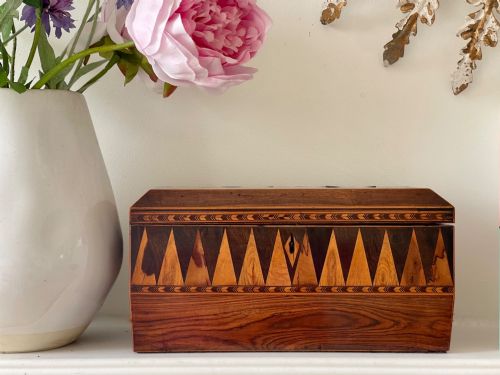


Brown Timber Caddy
These brown timber caddy examples bring period craftsmanship into daily use, offering practical storage fashioned from rich hardwoods.
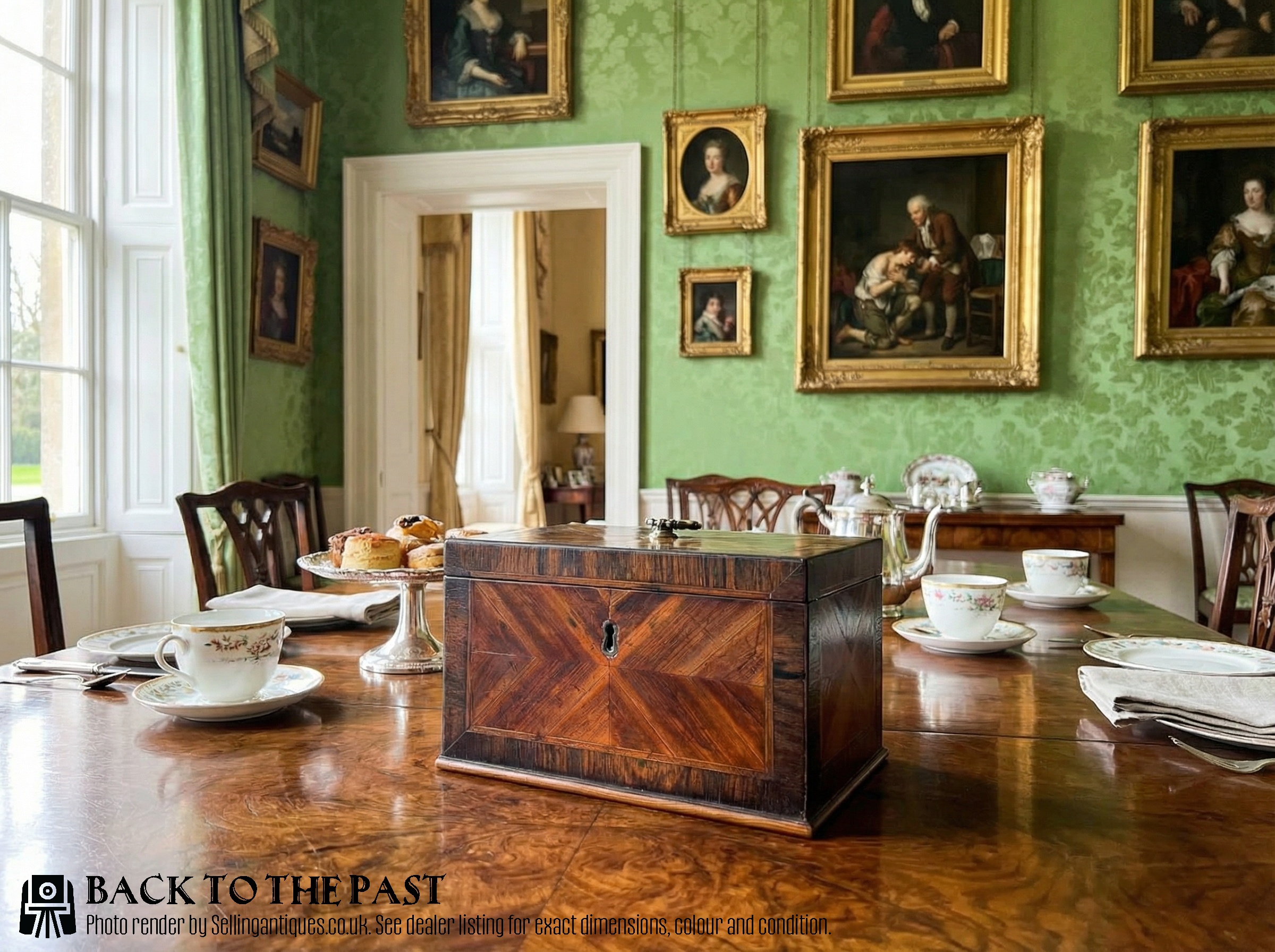
Brown Timber Caddy
When you search for a brown timber caddy, you are looking at utilitarian and decorative vessels fashioned from figured woods like mahogany, partridge wood, and oak. These pieces span the eighteenth and nineteenth centuries, emerging from Georgian, Regency, and Victorian periods.
The most common form you will meet on this page is the tea caddy, alongside related wooden vessels such as stationery boxes, jewellery boxes, and wine coolers. They reflect domestic storage needs of past households, often featuring fitted interiors for dry goods or valuables.
How they were made
Maker's hands shaped these objects using dense timbers like mahogany, rosewood, and partridge wood, sometimes employing intricate veneers and boxwood inlay to create geometric or floral patterns.
Construction techniques include coopered staves for curved buckets and precision joinery for box forms, occasionally accented with brass hardware, bone escutcheons, and iron fittings.
Brown Timber Caddy Retail Price Guide 2026
Typical asking prices for brown timber caddy among the pieces listed under this phrase on Sellingantiques today, from the lower quarter to the upper quarter. They describe what is for sale here now, not the wider market.
Some wooden buckets were coopered just like ale casks, proving that even a fancy wine cooler started life with tavern carpentry roots.
What varies in quality
The distinction between ordinary and superior examples lies in the choice of timber and the handling of grain, with highly figured woods like burr yew or particoloured partridge wood demanding greater skill from the maker.
Refinement in surface finish and the integrity of internal fittings, such as original mixing bowls or compartmentalised trays, elevate certain pieces above standard utility items.
The Brown Timber Caddy Glossary
- Tea caddy
- A small box or vessel once used to store loose tea leaves securely under lock and key. These containers often featured internal lids and foil linings.
- Partridge wood
- A dense, heavily figured tropical timber prized for its distinctive partridge-feather pattern. It appears frequently on decorative boxes from the eighteenth and nineteenth centuries.
- Coopered
- A method of construction where curved wooden staves are bound together with metal bands, traditionally utilised for buckets and wine coolers.
- Sarcophagus
- A monumental box shape featuring a domed or peaked lid resting on a plinth base, popular for larger tea caddies and jewellery boxes during the Regency and William IV periods.
- Tunbridge ware
- A specialised form of woodworking involving minute tessellated mosaic tiles made from natural woods to create pictorial or geometric surface designs.
Brown Timber Caddy: Frequently Asked Questions
What were tea caddies used for?
Tea caddies served to store expensive tea leaves securely in the home when tea was a luxury commodity.
They often included internal compartments and a lock to prevent servants or guests from accessing the contents.
How do I date a wooden tea caddy?
Dating relies on observing the timber species, construction methods, and hardware styling, such as escutcheons and hinge types.
Georgian examples tend to feature straight lines or simple veneers, while later Victorian versions often display heavier proportions and elaborate carving.
Are all these items made of mahogany?
Mahogany is common, but makers utilised a wide variety of domestic and exotic timbers including oak, rosewood, partridge wood, and yew.
Secondary woods and decorative veneers often were combined within a single piece to achieve contrasting colour and grain.
How should I clean my timber caddy?
Maintenance requires gentle dusting with a dry or slightly damp cloth, avoiding modern chemical polishes that can damage historic finishes.
Waxing occasionally helps nourish dry wood and maintain the natural lustre of the antique surface.