
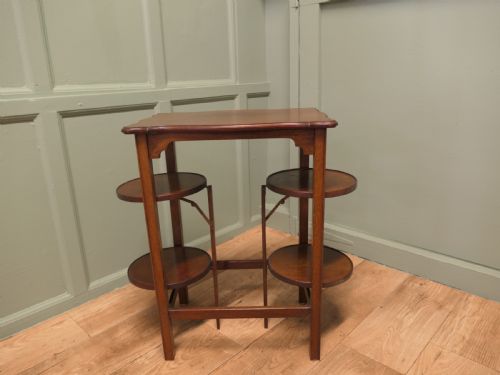
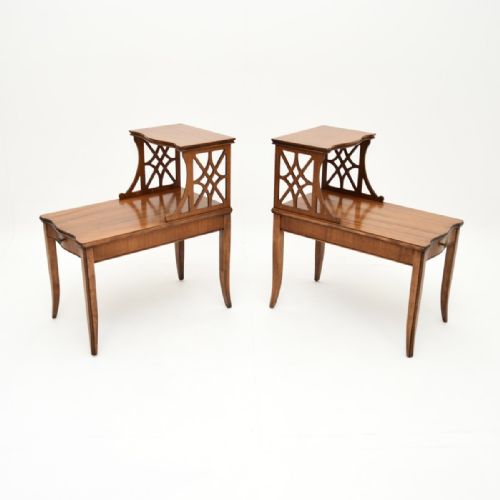
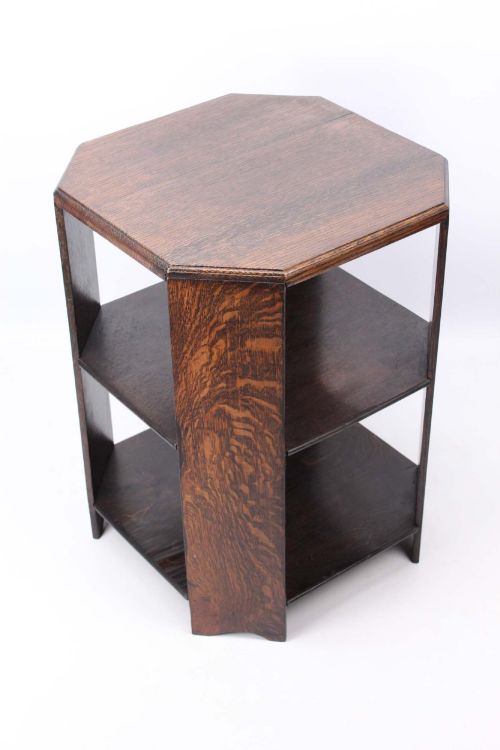
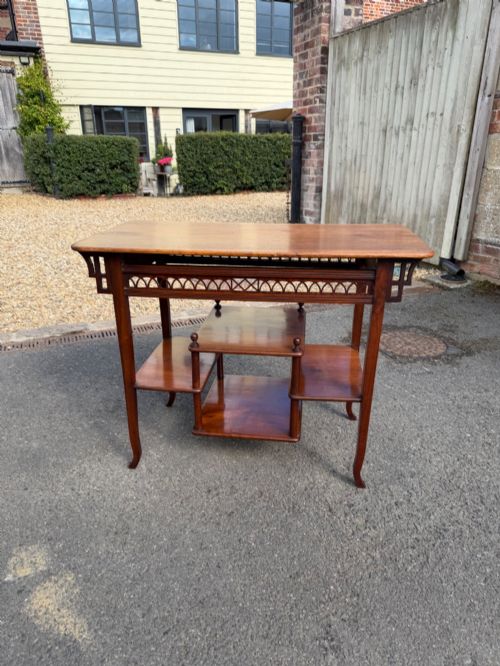
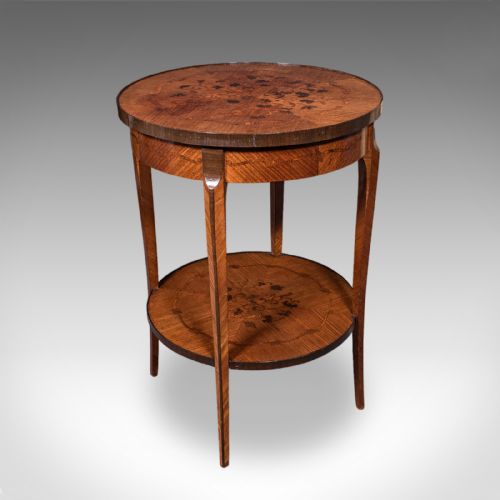
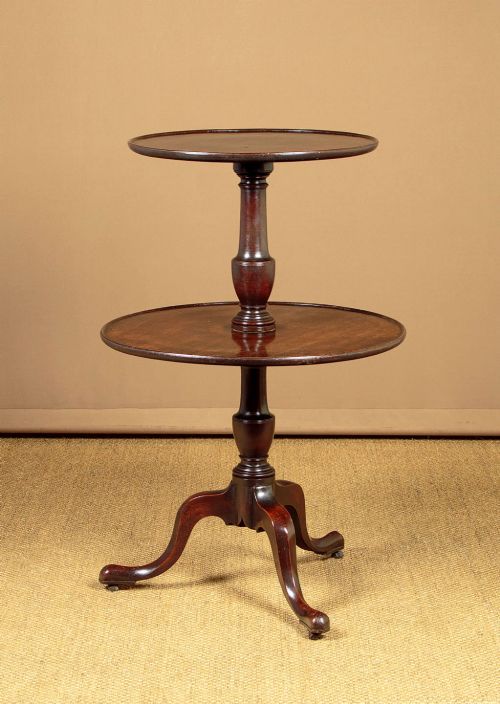
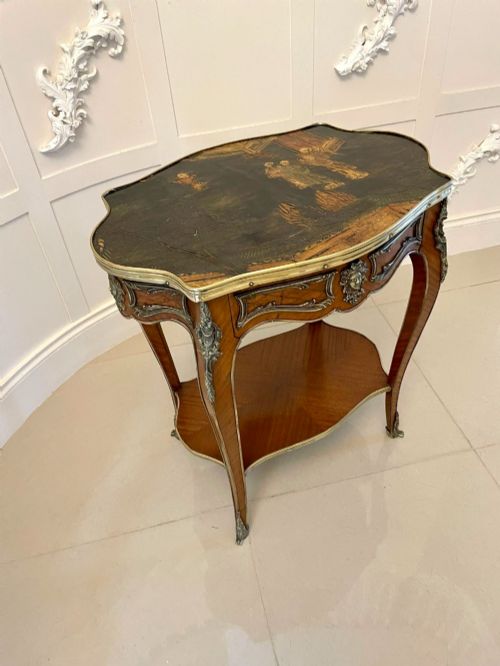
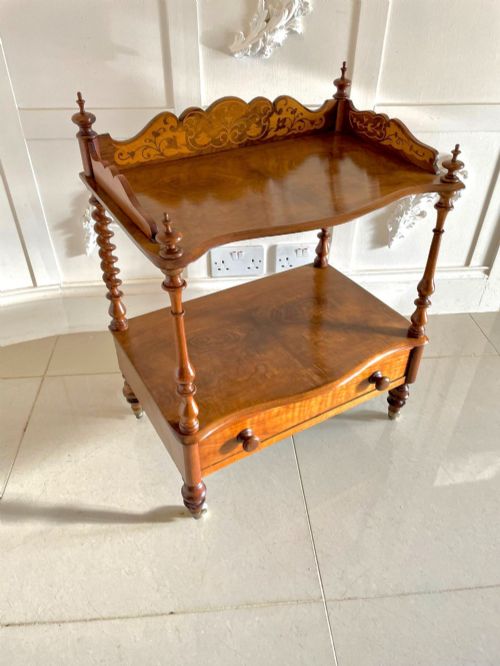
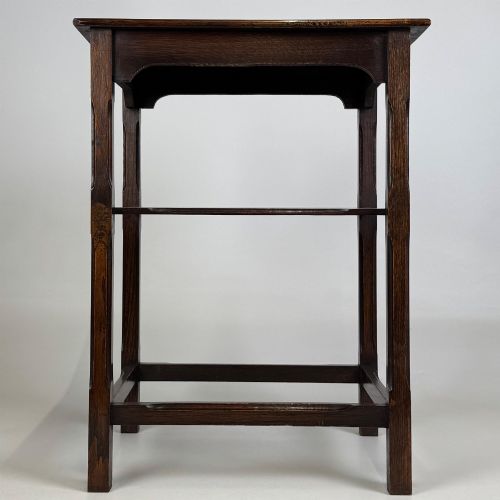
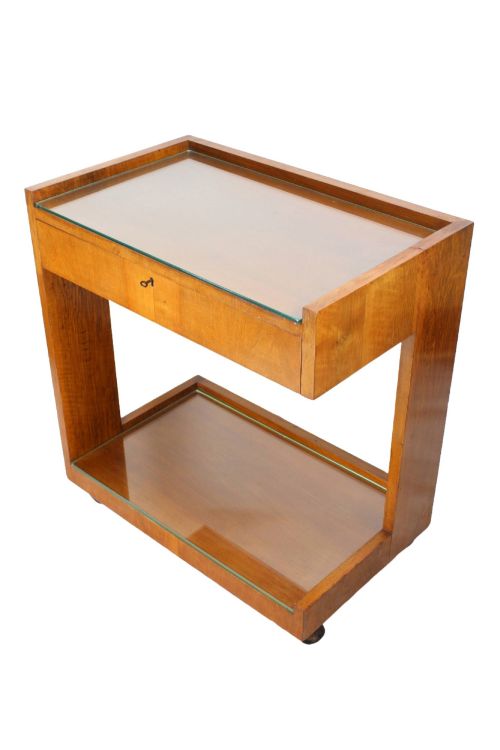
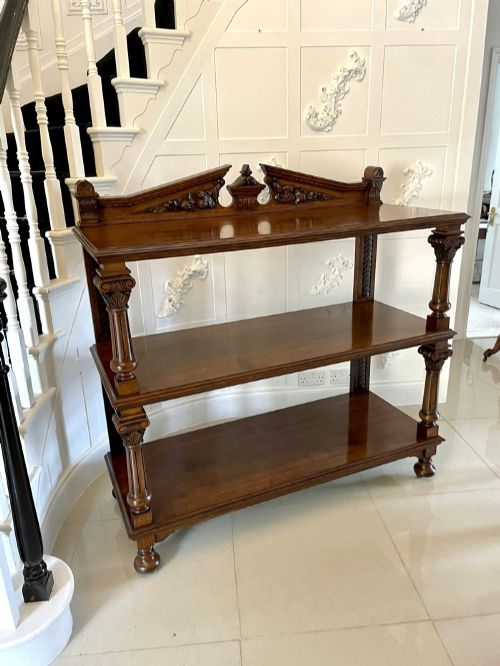

Brown Tier Side Table
Brown tier side tables offer practical surface space across multiple levels, combining period character with everyday utility in the home.
Materials and construction methods
Cabinet makers utilised solid hardwoods including oak, walnut, and mahogany for the primary frameworks, frequently applying figured veneers to surface areas for visual depth. Brass fittings, ormolu mounts, and tooled leather inserts appear on select refined iterations.
Joinery methods range from traditional mortise and tenon frames in early pieces to specialised bentwood and turned-leg constructions in later twentieth-century examples. Surface finishes include polished wood, limed oak treatments, and intricate marquetry inlay.
Assessing quality in tiered tables
Construction integrity separates standard utility items from superior cabinet work, specifically regarding the stability of multiple tiers and leg joints. Timber selection dictates the visual merit of the piece, with figured walnut and dense mahogany showing greater natural grain movement.
The subtlety of carved details, inlay precision, and the retention of original brass or ormolu hardware indicate the standard of production. Superior examples maintain balanced proportions across all levels without structural sag in the upper tiers.
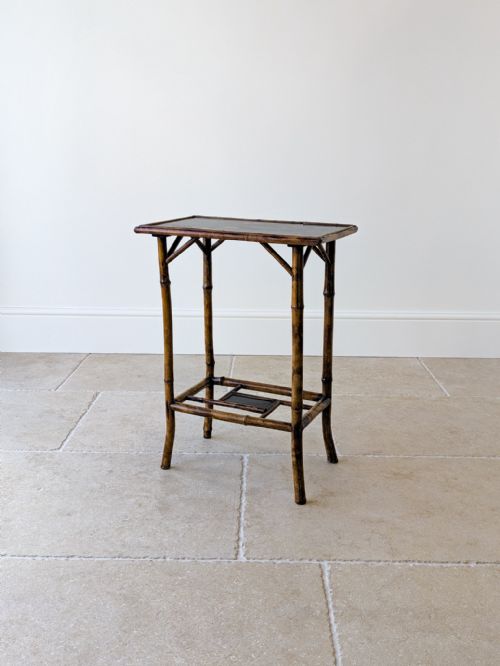
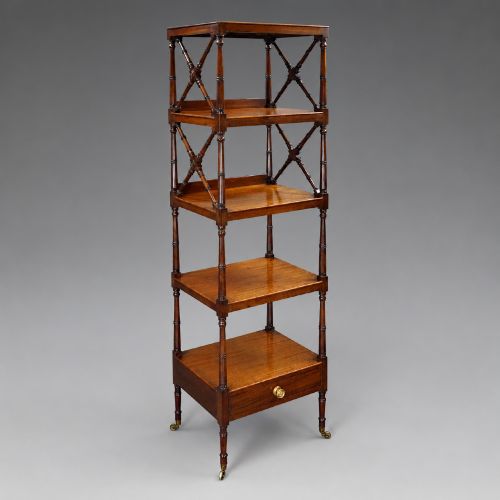
Tables featuring bamboo and bobbin legs remind us that Victorian households delighted in botanical oddities and turned woodwork.
Gregory & Co·Mallett of London
The Brown Tier Side Table Glossary
- Tier
- A single level in a structure arranged above another. Multiple tiers allow for increased display space without expanding the floor footprint.
- Etagere
- A piece of furniture consisting of a set of open shelves for displaying small objects. These decorative open units function similarly to multi-shelf side tables.
- Dumbwaiter
- A freestanding multi-tiered piece designed for serving food or holding items. Early examples feature rotating or graduated circular trays on a central column.
- Marquetry
- Decorative patterns formed by the insertion of pieces of veneer into a base material. This technique creates intricate pictorial or geometric designs on table tops.
- Ormolu
- Gilded bronze applications used as decorative mounts on furniture. This French technique accents the corners and legs of upscale period pieces.
Brown Tier Side Table: Frequently Asked Questions
What rooms suit a brown tier side table?
These pieces fit naturally beside seating in living rooms, serve as bedside surfaces in bedrooms, or function as display stands in hallways.
The multi-level design allows users to place lamps on top while storing books or decorative objects on the lower shelves.
How do I distinguish Edwardian from Victorian tables?
Victorian examples tend to feature darker, heavier timber with heavier carving and more ornate turnings.
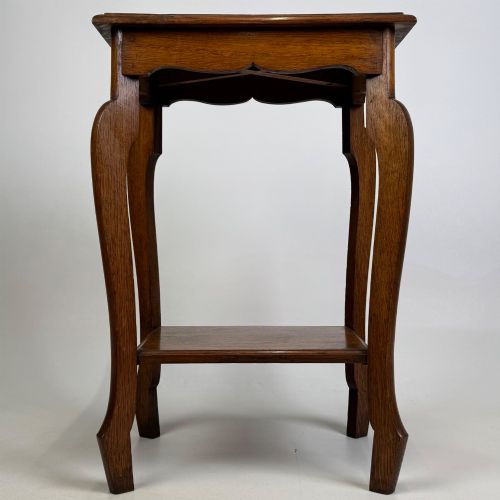
Edwardian pieces often present lighter oak or mahogany frames with simpler lines and more restrained decorative elements.
Are Art Deco tier tables made of solid wood?
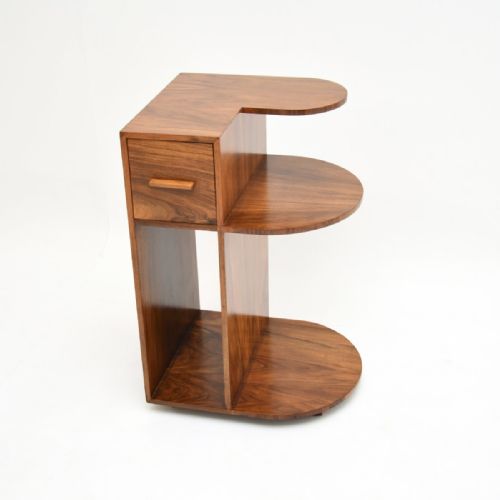
Many Art Deco examples utilise solid internal frames faced with figured walnut veneers to achieve bold grain patterns.
This technique prevented warping while displaying decorative wood figures across the wider flat surfaces.
How should I care for wood surfaces?
Regular dusting with a dry cloth keeps the polished finish clear of abrasive particles.
Avoid placing these tables in direct sunlight or near heat sources to prevent the timber and veneer from drying out.