




Brown Stoneware Water Jug
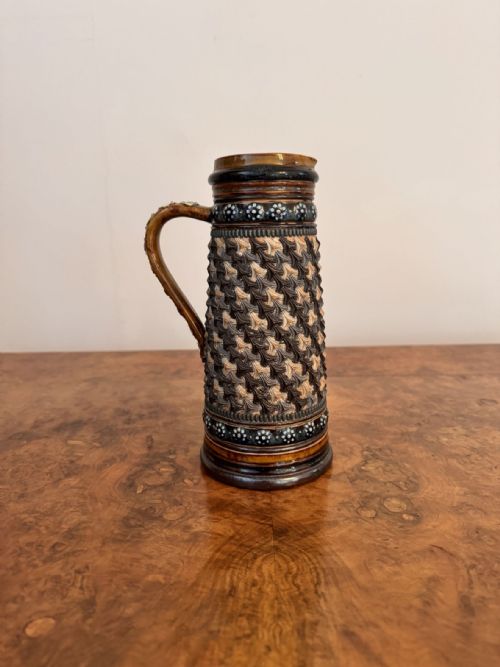
These brown stoneware water jugs are robust utilitarian vessels turned to decorative service, offering substantial heft and rich historic glazes for the country house interior.
Brown Stoneware Water Jug
A brown stoneware water jug is a durable ceramic pitcher designed for practical use, frequently appearing in Victorian iterations from the nineteenth century alongside earlier eighteenth-century examples and continental wares.
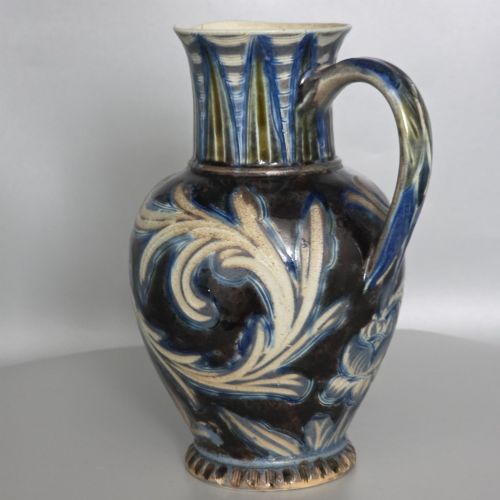
The selections on this page encompass substantial harvest vessels with silver rims, incised art pottery ewers, and large commercial or hotel water jugs intended for daily hydration.
Makers and potteries such as Doulton Lambeth dominate the offerings, spanning Victorian art pottery, Arts and Crafts design, and later Art Nouveau sensibilities.
Materials and construction
These pieces are thrown from dense stoneware and earthenware clays, frequently treated with salt glaze finishes or lead glaze surfaces that impart the characteristic lustrous brown coloration.
Selected examples incorporate applied decoration, incised patterns, or mounted silver rims that elevate the utilitarian ceramic body into a finished decorative work.
Brown Stoneware Water Jug Retail Price Guide 2026
Typical asking prices for brown stoneware water jug among the pieces listed under this phrase on Sellingantiques today, from the lower quarter to the upper quarter. They describe what is for sale here now, not the wider market.
One historical jug holds a full gallon and a half, ensuring nobody ever went thirsty during a Victorian harvest.
Judging quality and execution
Quality resides in the crispness of the incised ornament and the depth of the salt glaze finish, where skilled studio work surpasses standard commercial production.
Artistic collaboration, such as named decorator involvement, distinguishes superior art pottery pieces from ordinary utility wares of the period.
Doulton Lambeth·Emma Shute·Copeland Spode
The Brown Stoneware Water Jug Glossary
- Stoneware
- A sturdy, vitrified ceramic fired at high temperatures until impervious to liquid without requiring a glaze. It forms the heavy, durable body of these jugs.
- Salt glaze
- A decorative finish achieved by throwing common salt into the kiln during high-temperature firing, creating a distinctive pebbled texture on the ceramic surface.
- Ewer
- A large pitcher with a flared spout and an ornate handle, traditionally designed for table service or washing. Many Victorian examples functioned as decorative water vessels.
- Harvest jug
- A large, bulbous pitcher traditionally filled with ale or water during agricultural gatherings. These pieces often feature mounted silver rims and incised rural motifs.
Brown Stoneware Water Jug: Frequently Asked Questions
What is a brown stoneware water jug?
A brown stoneware water jug is a heavy ceramic pitcher produced primarily during the nineteenth century for serving water or holding beverages at table.
These vessels utilise dense stoneware clays and salt glazes to achieve durability and a rich earthy appearance.
How were these jugs used historically?
They served practical functions in homes, hotels, and large dining rooms for holding and pouring water, ale, or other liquids.
Some larger examples, such as harvest jugs, were utilised during communal agricultural feasts before transitioning into decorative display pieces.
How do I date a stoneware jug?
Dating relies on stylistic markers, impressed factory marks, and recorded working periods of specific decorators and potteries like Doulton Lambeth.
Victorian pieces often display registration diamonds, salt-glaze finishes, or specific Arts and Crafts and Art Nouveau design motifs.
Can I use these antique jugs for serving water?
While structurally sound, antique stoneware jugs are generally appreciated today as decorative display objects rather than for daily utility.
Their historical significance and ceramic glazes make them popular focal points for interior styling rather than active kitchenware.