




Brown Ship Oil Painting
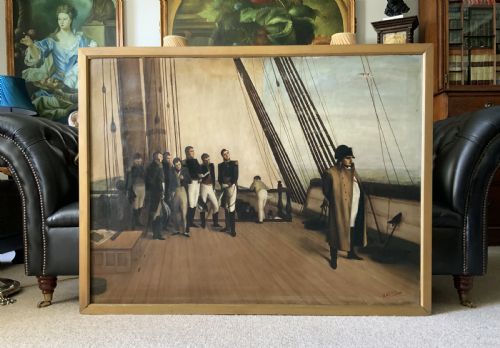
A brown ship oil painting brings maritime history into a room, capturing historical vessels and dramatic coastal waters on canvas.
Brown Ship Oil Painting
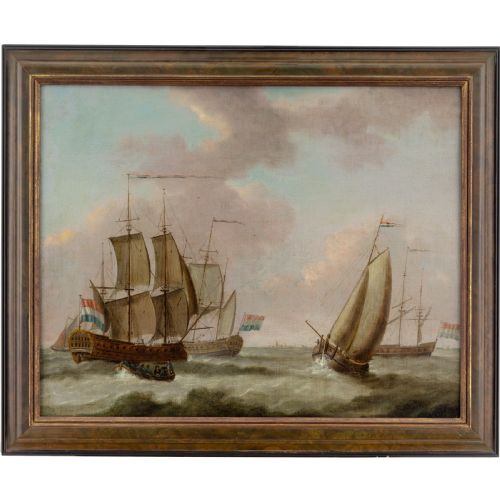
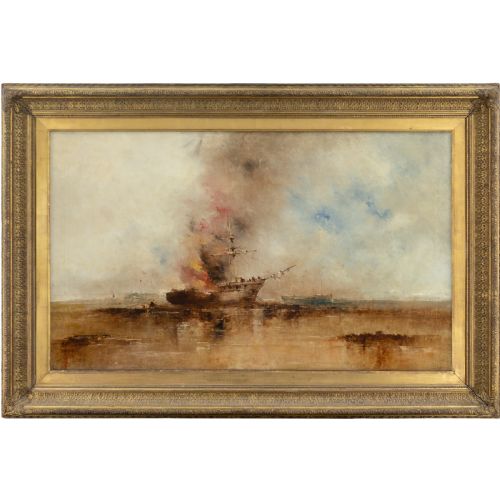
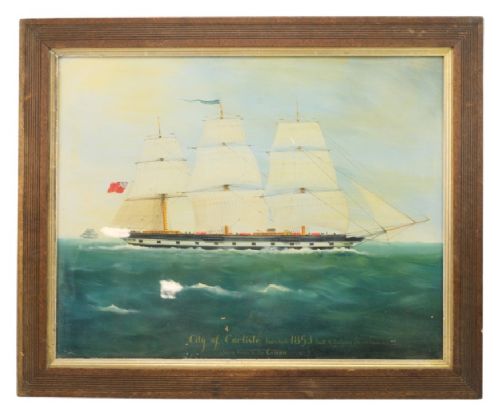
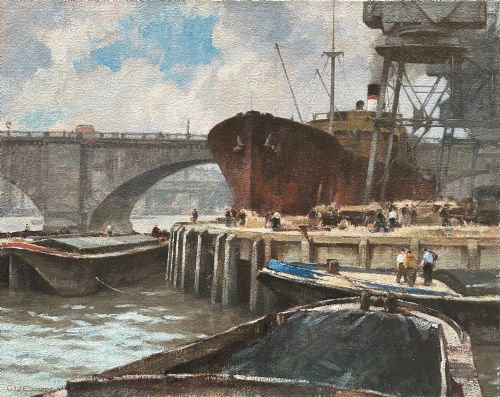
A brown ship oil painting depicts vessels ranging from nineteenth-century barques and naval warships to harbour scenes and sea battles. These works span periods from the seventeenth century through the Victorian era and into the twentieth century.
The version most commonly met on this page is the nineteenth-century canvas, often featuring maritime engagements, coastal shipping, or port scenes rendered in rich, earthy tones. Works by named artists sit alongside pieces produced by the English School and continental painters.
Subjects include specific vessels such as the steel hull ship Sindia or naval cruisers alongside anonymous depictions of galleons and fishing boats. These artworks function primarily as historical marine records as well as traditional wall art.
How they were made
These works rely on oil paint applied to canvas or wood panels, sometimes housed in frames incorporating gold leaf and gilt decoration. Artists built up the composition using oil media to create depth in the rendering of turbulent seas and wooden hulls.
Support materials consist principally of stretched canvas or wooden panels, with pigments manipulated to achieve the characteristic dark, atmospheric palettes associated with maritime painting of the period.
Listings span the eighteenth, nineteenth, and twentieth centuries, utilising oil on canvas, wood, and oil on panel.
What varies in quality
Quality rests on the precision of the brushwork and the artist's ability to render nautical rigging, hull structure, and the movement of water convincingly. Works by identified painters often display superior handling of light and maritime detail compared to unsigned school pieces.
The integrity of the original canvas and paint surface dictates the standing of a piece, alongside the quality of any period framing such as gilt or gold leaf surrounds.
William McAlpine·Cyril Walduck Edwards·Paul Jean Clays·Ludwig Hermann·Edward Fletcher·Samuel John Milton Brown·Johan Jens Neumann·Bertram Priestman·Walter J Hall·Abraham Storck·Stephen Brownlow
The Brown Ship Oil Painting Glossary
- Barque
- A sailing vessel with three or more masts having the fore and mainmasts square-rigged and the mizzenmast fore-and-aft rigged. This rig was common for merchant shipping.
- Galleon
- A large sailing ship used for war and commerce from the sixteenth to the eighteenth centuries. These vessels are distinguished by multiple decks and raised structures at the bow and stern.
- Gilt
- A thin layer of gold or gold-like material applied to wood frames. This finish was widely used on nineteenth-century picture surrounds.
- Panel
- A flat piece of wood used as a rigid support for oil painting before or alongside canvas. Panels are frequently found on nineteenth-century and earlier works.
Brown Ship Oil Painting: Frequently Asked Questions
How do I date a ship painting?
Dating relies upon the vessel type depicted, such as a four-masted barque or an eighteen-century warship, alongside the materials of the canvas and stretcher. Costume details of figures on deck or along the coast also provide reliable chronological markers.
Signatures, artist attribution, and framing styles offer further evidence to narrow the decade of production.
Where should I hang a marine painting?
These works suit traditional reception rooms, studies, or hallways where darker oil palettes can contrast against neutral wall colours. Adequate lighting brings out the subtle tones in the water and rigging.
Avoid placing canvases in direct sunlight or damp environments to preserve the oil paint and gilt frames.
What is the difference between a marine and a townscape?
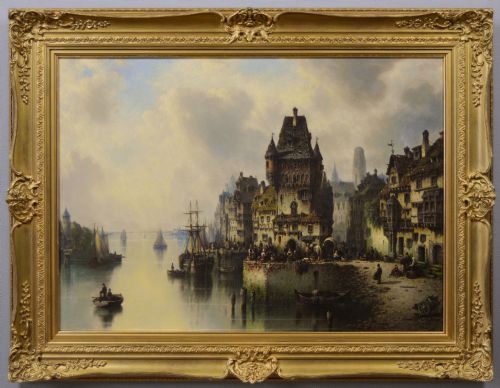
A marine painting focuses primarily on vessels, naval engagements, or open seas with coastal elements secondary to the water. Townscapes centre on port architecture, harbour buildings, and riverside structures with shipping as part of the urban view.
Both categories frequently overlap in nineteenth-century works depicting busy trading ports.
Are these paintings on canvas or wood?
The majority of these works use oil on canvas stretched over wooden frames, though some smaller examples are painted directly onto wood panels. Canvas supports allow for larger compositions like naval battles and dramatic sea scenes.
Panel works offer a rigid surface often favoured in earlier periods.