




Brown Rosewood Box
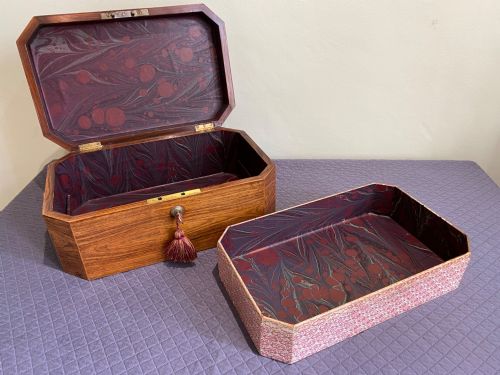
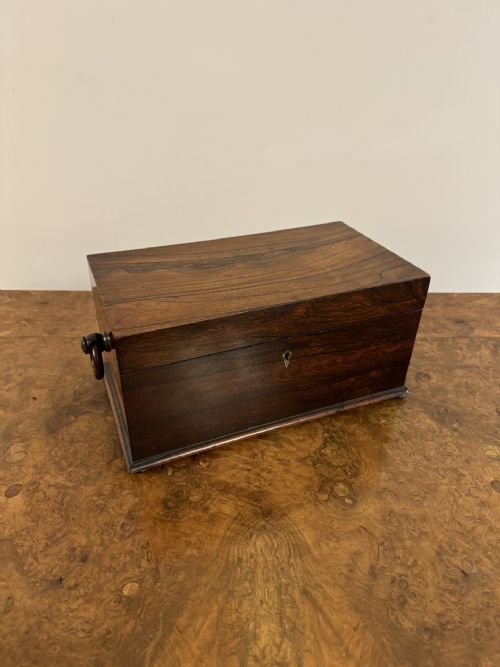
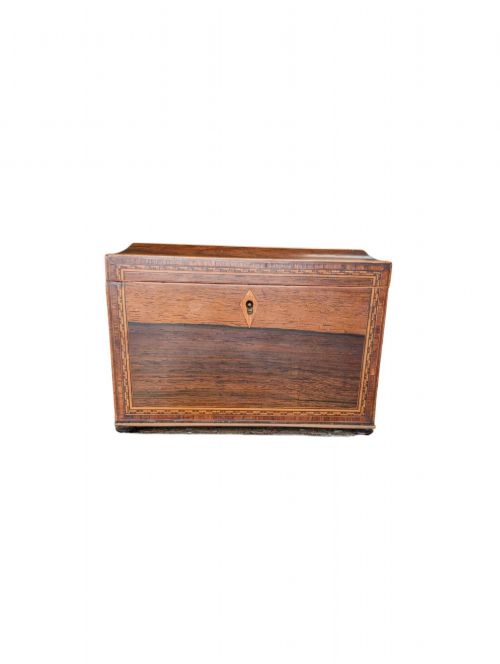
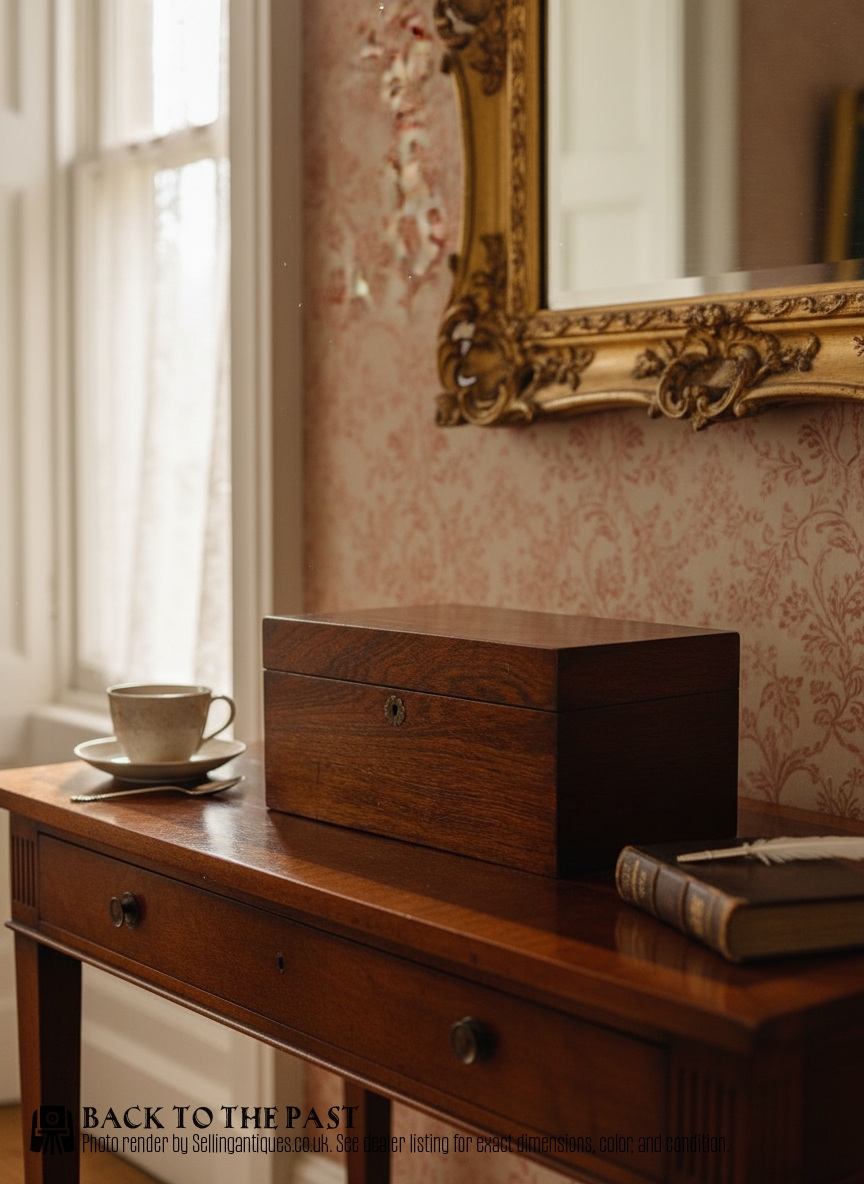
A brown rosewood box offers dense grain and deep warmth, serving as a sturdy container for tea, documents, or jewellery.
Brown Rosewood Box
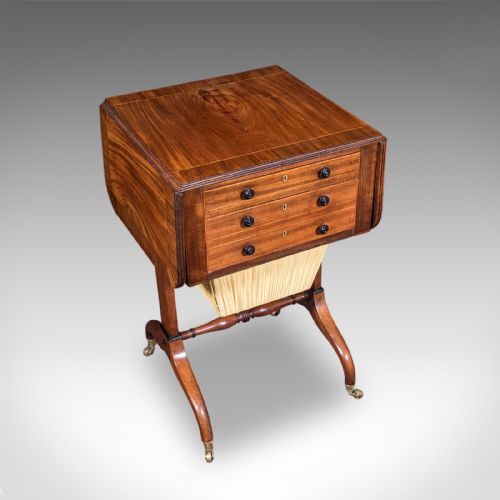
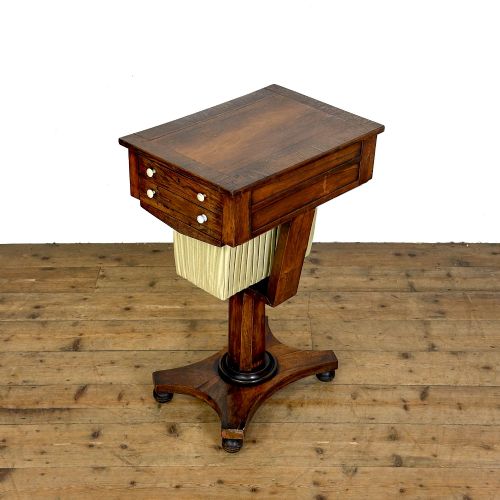
A brown rosewood box appears in numerous forms across this selection, primarily as tea caddies, work tables, and writing boxes designed for the desk or parlour. Buyers seeking a functional desktop accessory or a compartmented storage container will find these examples span the Georgian, Regency, and Victorian eras.
The most common versions met on this page are tea caddies and work boxes, often shaped in the sarcophagus style or inlaid with brass and mother of pearl. These pieces demonstrate domestic organisation from the nineteenth century, utilising dense timber to protect precious contents.
Originating from English workshops as well as international sources like Qing Dynasty and Anglo-Indian makers, these items range from small trinket boxes to large drop-leaf sewing tables. The variety reflects the versatility of rosewood as a primary cabinet timber during the nineteenth century.
Materials and construction
Constructed primarily from rosewood, these objects often incorporate secondary timbers and decorative veneers applied to a solid core. Cabinetmakers utilised the rich, dark grain of the wood alongside contrasting materials such as boxwood and walnut for inlay.
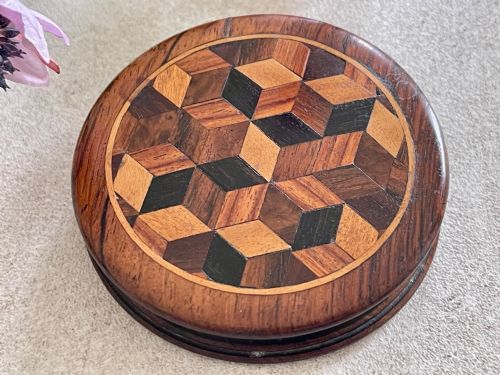
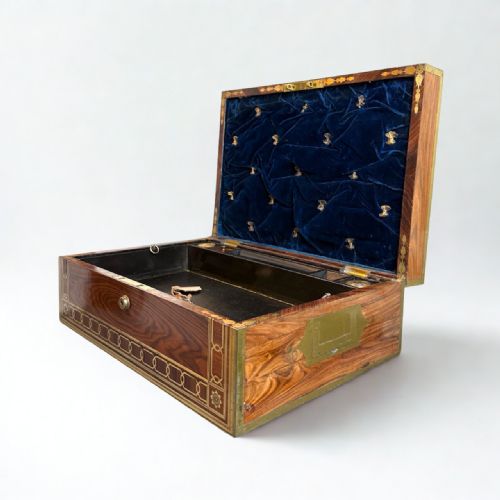
Surface decoration frequently includes Tunbridge Ware mosaic patterns, mother of pearl, and brass stringing embedded directly into the timber. Interiors are lined with fabric, velvet, or compartments fashioned from bone and lighter woods to hold sewing implements or writing utensils.
Materials appearing across these objects include bone, velvet, mother of pearl, and contrasting boxwood stringing.
Assessing quality
Quality in these pieces rests upon the precision of the joinery and the integrity of the veneer work across complex curves and flat planes alike. Superior examples maintain tight mitres and secure hinges that support heavy lids without sagging.
The sophistication of internal fittings and the complexity of decorative elements, such as intricate shell inlay or detailed Tunbridge Ware mosaics, distinguish finer objects from simpler utility items.
Gillows·Henry Hollamby·F Waller
The Brown Rosewood Box Glossary
- Tea Caddy
- A box designed to store loose tea leaves, often featuring internal compartments and a locking lid to protect valuable dry goods.
- Tunbridge Ware
- A type of woodworking characterised by microscopic mosaic tiles assembled to create pictorial or geometric surface decoration.
- Sarcophagus
- A box shape featuring a domed or stepped hinged lid sloping outward toward a broader base, popular during the Regency and William IV periods.
- Writing Slope
- A desk accessory with an inclined lid that opens to reveal a flat writing surface, inkwell spaces, and document storage.
- Teapoy
- A small stand or table fitted with containers for storing tea, often supported by a central pillar and platform base.
Brown Rosewood Box: Frequently Asked Questions
What was a brown rosewood box used for originally?
These boxes served specific domestic functions, such as securing dry tea leaves, housing sewing equipment, or providing a stable slant for writing letters.
Inside, compartments and small trays kept precious items organised away from dust and light.
How do I care for a rosewood box at home?
Keep the timber away from direct sunlight and sudden changes in central heating to prevent the wood from splitting or warping.
Dust gently with a dry cloth and avoid applying modern polishes that can build up on older French polished surfaces.
How can I tell a Regency box from a Victorian one?
Regency pieces often display restrained classical lines with precise brass inlay, reflecting neoclassical tastes of the early nineteenth century.
Victorian examples tend towards heavier proportions, elaborate mother of pearl decoration, or complex Tunbridge Ware mosaics.
Are the internal fittings usually original?
Many boxes retain their original velvet linings, removable caddy canisters, and bone handles, though some suffered alterations over centuries of use.
Examining the wear patterns around the hinges helps determine if the internal partitions remain unaltered.