

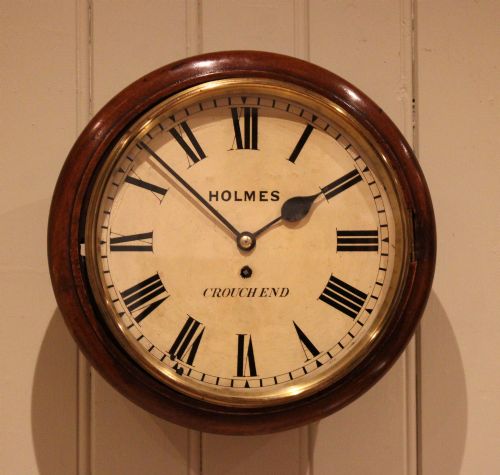
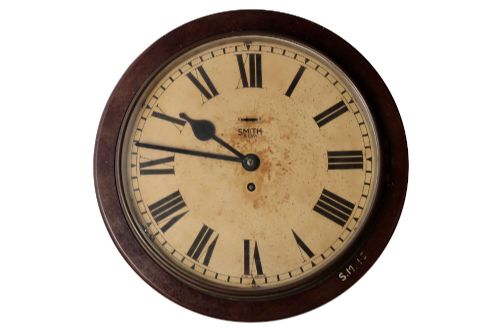
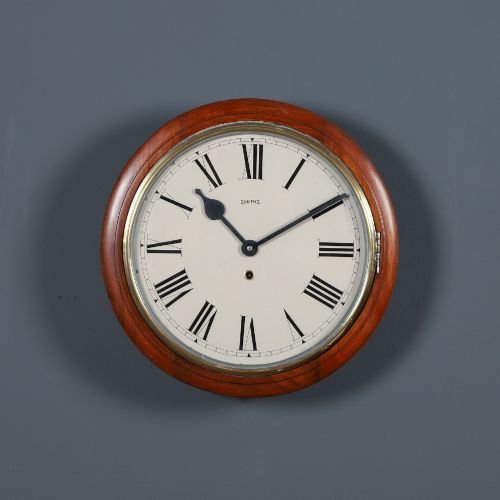
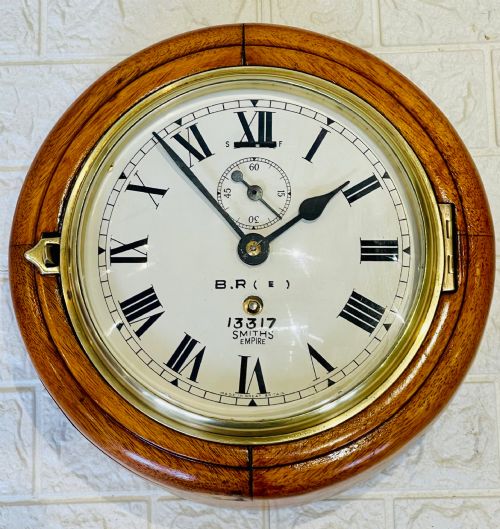
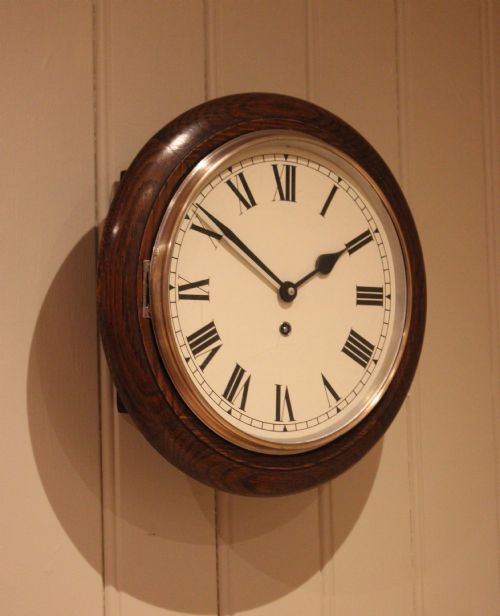
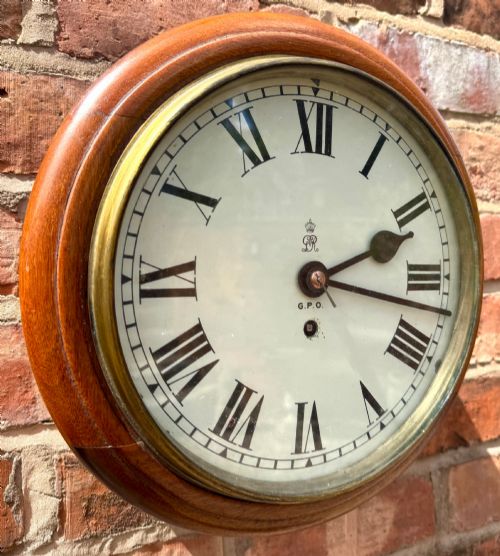


Brown Railway Clock
These brown railway clock pieces combine utility and history, offering functional timepieces built for transport networks and public buildings.
Brown Railway Clock
A brown railway clock represents the practical timekeeping devices used across transport networks and public spaces during the nineteenth and twentieth centuries.
Buyers examining this selection encounter wall clocks originating from periods such as the Victorian era, the 1910s, 1920s, 1930s, and 1940s.
Common forms include round dial wall clocks and fusee movements housed in timber cases, reflecting the utilitarian demands of railway operations.
How they were made
Cases utilise durable timbers such as mahogany and oak, often paired with brass bezels and protective glass covers to withstand heavy station environments.
Movements rely on traditional mechanisms, including single chain fusee systems designed for reliable timekeeping across long operational hours.
Brown Railway Clock Retail Price Guide 2026
Typical asking prices for brown railway clock among the pieces listed under this phrase on Sellingantiques today, from the lower quarter to the upper quarter. They describe what is for sale here now, not the wider market.
Some station clocks still carry the faint scent of coal smoke trapped in their oak frames after a century on the platform.
What varies in quality
The distinction between standard examples and superior specimens rests on the precision of the movement and the provenance recorded on the dial.
Signatures from notable makers or specific railway lines elevate an item beyond a standard utility clock, reflecting its operational history.
Smiths·John Walker·Camerer Cuss And Co·Thomas Gibbs
The Brown Railway Clock Glossary
- Fusee
- A conical pulley used in clock movements to maintain an even pull as the mainspring unwinds. This mechanism ensures consistent timekeeping accuracy.
- Dial clock
- A wall timepiece featuring a prominent circular face designed for clear visibility in large rooms or platforms. These faces often display station names or company initials.
- Mahogany
- A durable tropical hardwood selected for its strength and rich grain. It frequently forms the sturdy housing for station timepieces.
- Bakelite
- An early synthetic plastic utilised for casings in mid-century models. It provided a robust, moisture-resistant alternative to traditional timber.
Brown Railway Clock: Frequently Asked Questions
How do I wind a fusee railway clock?
A fusee mechanism requires a specific winding key inserted into the dial face to tension the mainspring.
Care must be taken not to overwind the movement, ensuring the chain remains correctly seated on the cone pulley.
Where were these clocks originally mounted?
These timepieces hung in railway stations, administrative offices, and platforms to regulate train departures and staff schedules.
Their robust construction allowed them to endure industrial vibrations and heavy public foot traffic.
How do I identify the railway company?
Dial faces and timber cases often bear painted lettering or stamped inventory numbers denoting specific regional networks.
Initials such as LMS or references to waterways indicate the exact transport division that utilised the instrument.
Are these clocks suitable for daily home use?
These wall clocks function effectively in domestic settings when properly mounted to load-bearing walls.
Regular professional servicing helps maintain the mechanical movement over extended periods of operation.