

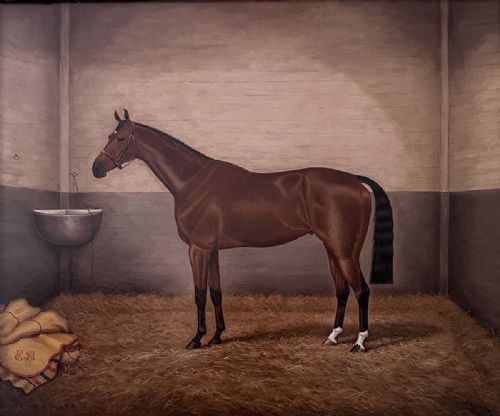


Brown Racehorse Artwork
Brown racehorse artwork captures equine champions and their jockeys through oil paintings and prints spanning the nineteenth and twentieth centuries.
Brown Racehorse Artwork
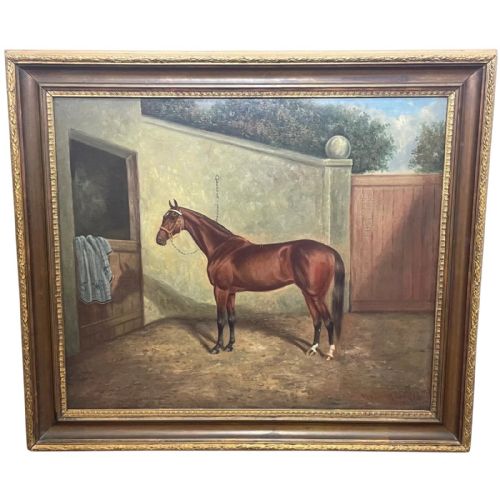
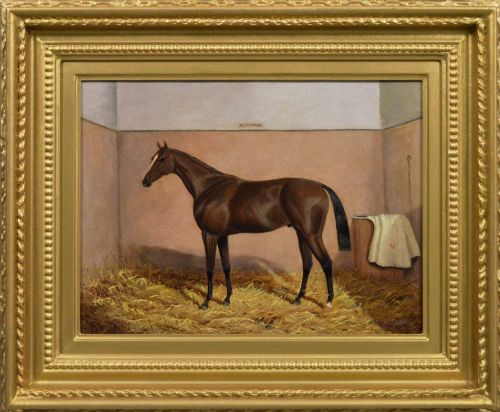
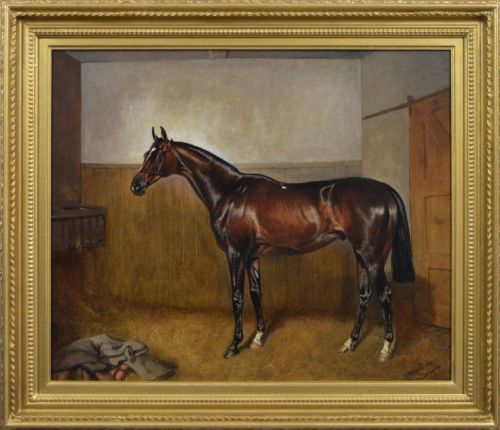
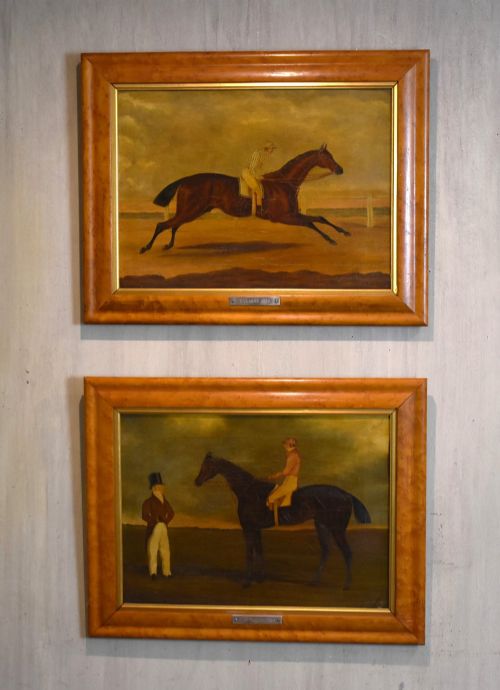
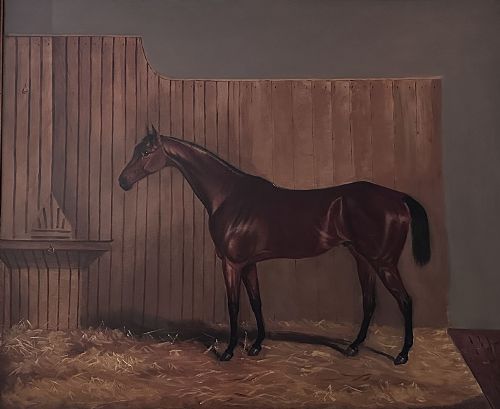
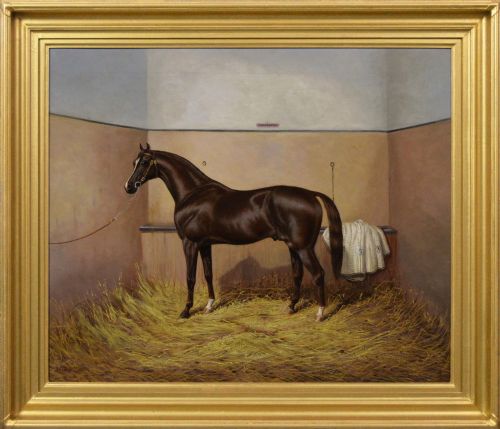
Brown racehorse artwork encompasses horse portraits, racing scenes, and paddock studies depicting named thoroughbreds and their jockeys. These works record famous winners, such as Spion Kop and Flying Fox, alongside specific racing events and meetings.
The selections span from Victorian sporting art to twentieth-century studies, reflecting changing artistic approaches to equine subjects. Most pieces take the form of oil paintings on canvas or board, accompanied by framed prints and works on paper.
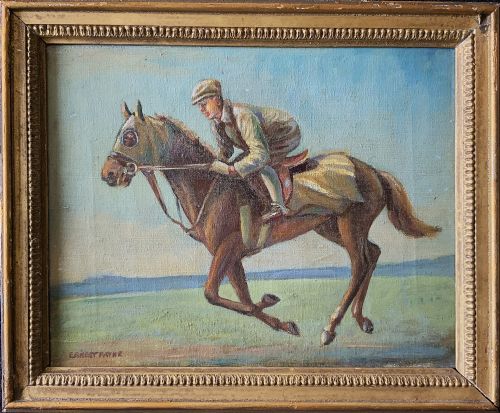
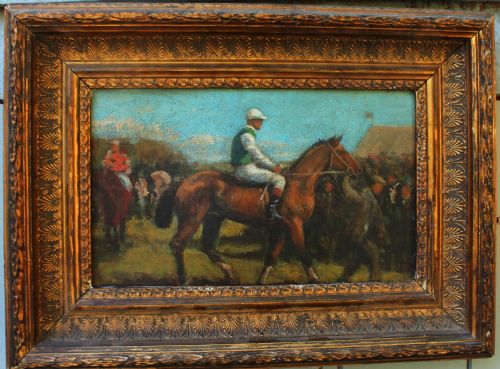
Makers and artists documented in these pieces range from Victorian specialists to later realists and impressionists. Buyers encounter both detailed commissioned portraits of royal thoroughbreds and rapid oil studies capturing the tension before a race.
Materials and techniques
Artists relied primarily on oil paint applied to canvas, wood, or paper to render the musculature and coat of the horse. Ink and pastel on coloured paper also appear, offering a more immediate method for capturing movement in the final furlong or the paddock.
Framed prints and aquatints provide mechanical reproductions of popular sporting subjects after notable painters. Wood frames frequently accompany these works, preserving the paper and canvas supports while maintaining a period appearance.
Listings feature works from the nineteenth and twentieth centuries, utilising oil paint, canvas, paper, wood, glass, and ink across various sporting art styles.
Assessing quality and execution
Quality rests on the accuracy of equine anatomy and the fidelity of the portrait to the named horse and jockey. Works by established painters demonstrate a sharper command of light on the horse's coat and a better sense of movement during a race.
The survival of the original support, whether canvas or paper, and the clarity of the brushwork or print impression dictate the visual strength of the piece. Provenance detailing specific owners, jockeys, or courses further distinguishes individual works.
Albert Clark·Ernest Payne·John Alfred Wheeler·John Rattenbury Skeaping·Samuel Spode·Alfred Wheeler
The Brown Racehorse Artwork Glossary
- Aquatint
- A printmaking technique that produces tonal effects similar to watercolour washes. It was frequently used in the nineteenth century to reproduce sporting scenes.
- Paddock study
- A preliminary or informal painting executed before a race. These works focus on the horse and jockey gathered prior to the start.
- Thoroughbred
- A horse breed developed for racing, noted for agility and speed. They form the central subject of the portraits and racing scenes found here.
- Sporting art
- A genre of painting and prints dedicated to equine subjects, racing, and field sports. It reached notable popularity during the Victorian period.
Brown Racehorse Artwork: Frequently Asked Questions
What periods do these artworks cover?
The pieces span the nineteenth and twentieth centuries, encompassing Victorian sporting art alongside twentieth-century realism and impressionism.
Dates range from nineteenth-century portraits and aquatints through to mid-twentieth-century drawings and paintings.
How are the horses identified?
Many works name specific thoroughbred champions, winning jockeys, and race meetings directly in the titles or inscriptions.
Famous subjects include Epsom Derby winners and royal racehorses documented alongside their trainers and owners.
What materials were used?
Artists worked primarily in oil paint on canvas, wood panels, or paper supports to create these equine portraits and racing scenes.
Printmaking techniques such as aquatint and painted prints also appear alongside pastel and ink on paper.
How do these pieces reflect racing history?
The artworks record prominent historical racehorses, named jockeys in specific silks, and nineteenth-century courses like Kempton Park.
They document specific owners and historic events, serving as a visual archive of equestrian sport.