




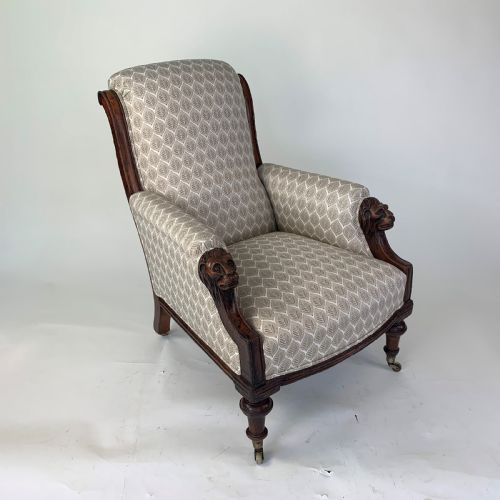


Brown Patterned Accent Chair
These brown patterned accent chair selections bring rich textile depth and period character to a room through traditional seating forms.
Brown Patterned Accent Chair
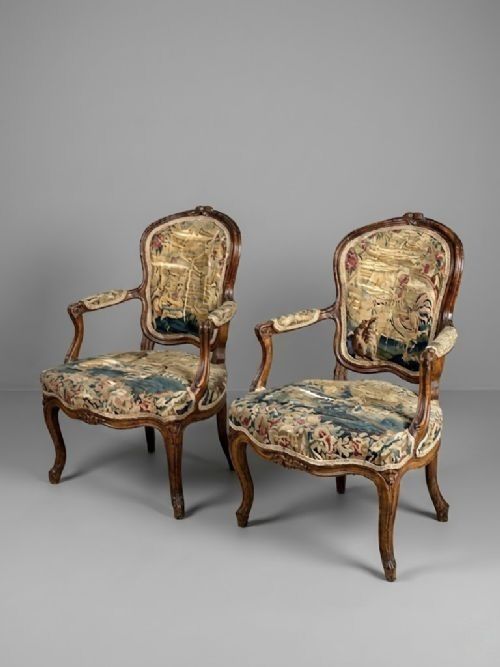
A brown patterned accent chair encompasses various historic seating styles finished in warm timber tones and upholstered in patterned textiles. Buyers searching for a brown patterned accent chair encounter diverse nineteenth-century and early twentieth-century interpretations, ranging from Victorian button backs to Art Deco armchairs.
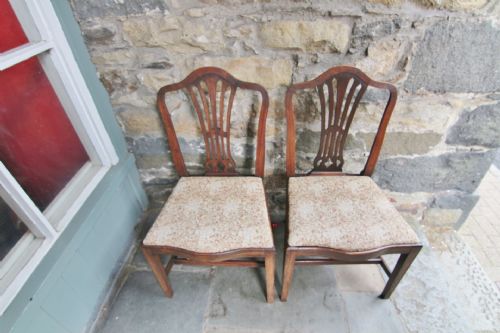
The selection frequently includes side chairs, open armchairs, and hall chairs constructed from walnut, mahogany, oak, and rosewood. These pieces combine exposed wooden frames with decorative upholstery fabrics to serve as functional focal points in a space.
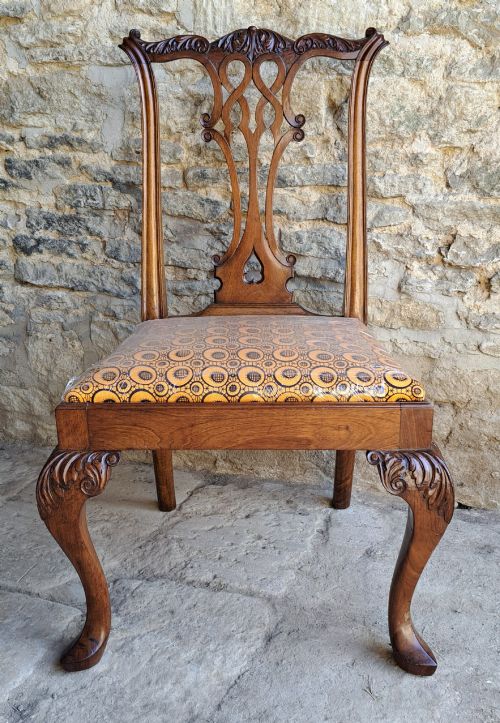
Origins span standard nineteenth-century periods alongside revival styles such as Chippendale, Georgian, and Arts and Crafts. Pieces like the rush-seated armchair or the Edwardian salon chair demonstrate how these accent seats blend sturdy timber structures with patterned surface interest.
Assessing Quality and Craftsmanship
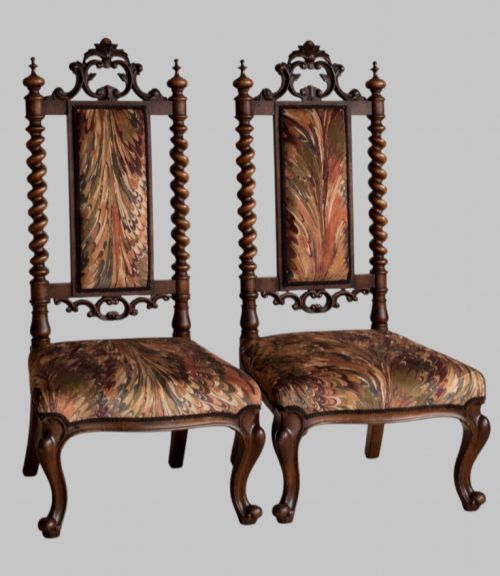
Quality rests in the precision of the timber frame construction, the crispness of carved or turned details like barley twist supports, and the structural stability of the joints. Superior examples demonstrate thoughtful timber selection, such as figured walnut or rich mahogany, alongside robust joinery that withstands daily use.
The integration of the upholstery elevates a piece when fabric selection complements the period aesthetic and installation respects traditional methods. Details such as carved backs, inlaid woodwork, and well-executed upholstery distinguish refined salon and parlor chairs from simpler utilitarian seating.
Wheelers of Arncroach·E W Godwin
The Brown Patterned Accent Chair Glossary
- Accent chair
- A single chair chosen to stand out in a room through distinctive styling or fabric. It provides both supplementary seating and visual contrast.
- Upholstery
- The padded and fabric-covered components of a chair that provide seating comfort. Historic pieces utilise textiles ranging from geometric cottons to traditional woven covers.
- Barley twist
- A type of decorative turning resembling a twisted rope, commonly found on the wooden legs and supports of nineteenth-century chairs. This technique adds sculptural texture to the frame.
- Side chair
- A small, armless chair designed primarily for dining or occasional use around a room. These pieces feature decorative wooden backs and upholstered or wooden seats.
- Armchair
- A chair equipped with side supports for the arms, offering a more substantial seating option. Examples in this category range from open armchairs to fully upholstered barrel backs.
Brown Patterned Accent Chair: Frequently Asked Questions
How do I date an antique armchair?
Dating relies on examining the timber species, construction methods, and secondary woods used within the frame. Stylistic clues such as turned legs, carved back details, and upholstery styles also point to specific periods like the Victorian era or Edwardian years.
Comparing structural joints and fastener types helps narrow down the decade of manufacture. Consulting comparable pieces from documented workshops provides further confirmation of age.
Where should I place an accent chair?
An accent chair works effectively in corners, reading nooks, bedrooms, or alongside a primary sofa grouping. Its patterned upholstery allows it to anchor a neutral scheme or complement existing room colours.
Positioning the piece away from direct heat sources protects vulnerable timber frames and textiles. Ensuring adequate clearance around the chair highlights its form and carved details.
How do I maintain upholstered antique chairs?
Routine maintenance involves gentle vacuuming with a soft brush attachment to remove dust from fabric and crevices. Keeping pieces out of direct sunlight prevents textile fading and timber drying.
Professional cleaning is recommended for delicate or antique fabrics to avoid damaging internal padding. Periodic checks of the leg joints ensure structural stability remains intact.
What is the difference between a salon chair and a side chair?
Salon chairs were traditionally designed for entertaining in nineteenth-century drawing rooms, often featuring lighter frames and decorative elements like inlaid wood or carved backs. Side chairs typically serve a more functional purpose around dining tables or hallways.
While both share a compact, armless footprint, salon chairs place greater emphasis on ornamental styling. Side chairs prioritize sturdy construction suitable for frequent daily seating.