



Mahogany Ladies Chair
These mahogany ladies chair examples combine compact Victorian and Edwardian seating forms with rich timber frames, offering collectors refined comfort and domestic elegance.
Mahogany Ladies Chair
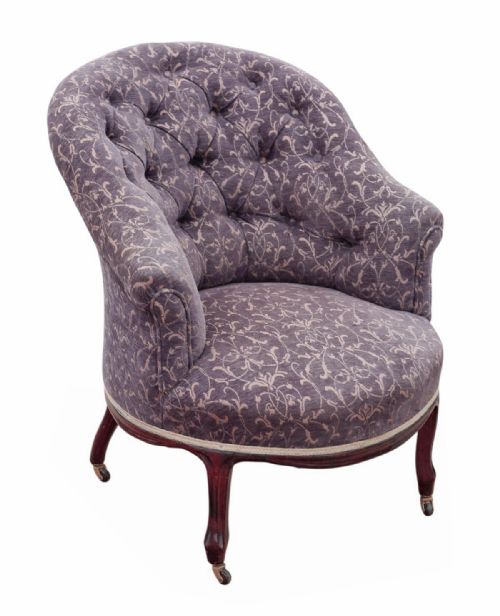
A mahogany ladies chair represents a distinct class of compact nineteenth and early twentieth century seating, designed specifically with a lower seat and open or nursing proportions. The pieces seen across the archive and current listings span the Victorian and Edwardian eras, with occasional Georgian survivals appearing in various regional workshops.
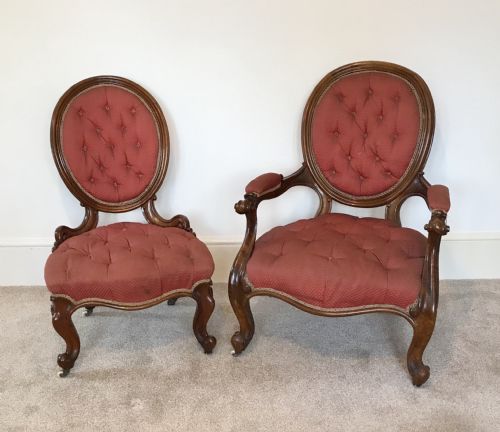
Buyers most frequently encounter Victorian spoon back and button back variants, alongside Edwardian salon and fireside chairs framed in solid timber. These domestic seats often survive as pairs alongside larger gentleman counterparts or as individual pieces suited to bedroom and parlour use.
The form developed to accommodate the heavy skirts and formal attire of the period, offering lower armrests and supportive upholstered backs. Identifying the correct period relies on examining timber turning, frame joinery, and the distinct curvature of the show wood.
Materials and Construction
Makers utilised solid mahogany for the exposed structural frames, often shaping the timber into flowing curves for spoon back and tub chair designs. Secondary woods such as beech or pine frequently form the internal framing beneath traditional upholstery layers.
Upholstery methods rely on horsehair stuffing, coil springs, and webbing secured to deep buttoned textile, velvet, leather, or fabric coverings. Brass castors are commonly fitted to the short cabriole or turned front legs of mid nineteenth century examples.
Carved ornament on the crest rail and show wood is executed by hand, displaying floral motifs or subtle line inlay on later Edwardian pieces. The joinery combines tenoning and glued joints designed to withstand heavy domestic use without sacrificing decorative grace.
Judging Quality
Quality rests primarily on the crispness of the hand carving and the selection of the mahogany grain on the show wood frame. Superior examples display deep, flowing spoon back contours and robust joinery that remains entirely rigid under weight.
The integrity of the original show wood frame distinguishes exceptional pieces from ordinary workshop output, particularly where frames retain their factory finish or rich, undisturbed polish. Secondary wood selection and the complexity of the turned or fluted legs further elevate a piece above standard domestic seating.
Edwards & Roberts·Maple & Co
The Mahogany Ladies Chair Glossary
- Spoon back
- A padded chair back shaped in a concave oval resembling the bowl of a spoon, designed to fit the human spine. This ergonomic form defines many mid Victorian parlour seats.
- Show wood
- The polished or carved wooden portions of a chair frame left visible around the upholstered sections. Craftsmen shaped this timber to display the grain and decorative carving.
- Button back
- An upholstery technique where tightly pulled tufts form a diamond pattern across the padded surface. This method secures the internal stuffing while adding rich texture.
- Tub chair
- A fully upholstered seating form with low, continuous arms forming a curved enclosure. The compact barrel shape provides intimate support for reading or resting.
- Nursing chair
- A low seated armchair constructed without high armrests to permit comfortable infant feeding or sewing. These seats sit close to the floor for domestic convenience.
Mahogany Ladies Chair: Frequently Asked Questions
How do I date a mahogany ladies chair?
Dating relies on observing the combination of timber colour, frame outline, and upholstery styling. Victorian examples tend to feature heavy mahogany show wood with spoon backs, whereas Edwardian pieces often incorporate lighter inlaid decoration.
Hardware details such as brass castors and the tightness of the joinery also indicate the period of manufacture. Comparing the proportions against documented archive pieces helps confirm the decade of origin.
Were these chairs made to match gentlemen's chairs?
Many nineteenth century reception rooms utilised matching pairs comprising a larger gentleman chair and a smaller lady chair. The scaled down proportions of the ladies version accommodated the dress styles of the period.
While frequently sold together today, collectors also acquire them as singular statement pieces for bedrooms and dressing rooms. The shared timber and carving style maintains visual harmony when paired.
Can I replace the fabric on an antique chair?
Reupholstering is a standard practice for functional antique seating that has suffered textile wear over the decades. Traditional materials like horsehair and hessian should be retained where possible to maintain historical integrity.
Selecting period appropriate velvet, leather, or patterned textile ensures the finished piece respects its original aesthetic. Professional upholstery preserves the internal spring tension and frame alignment.