

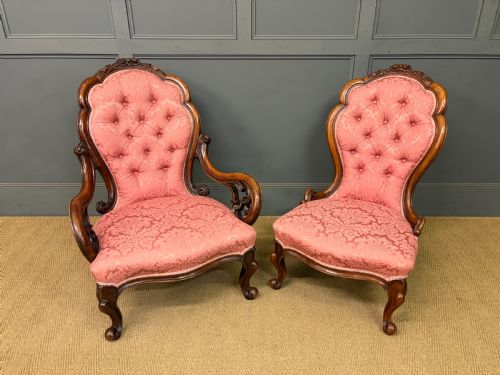


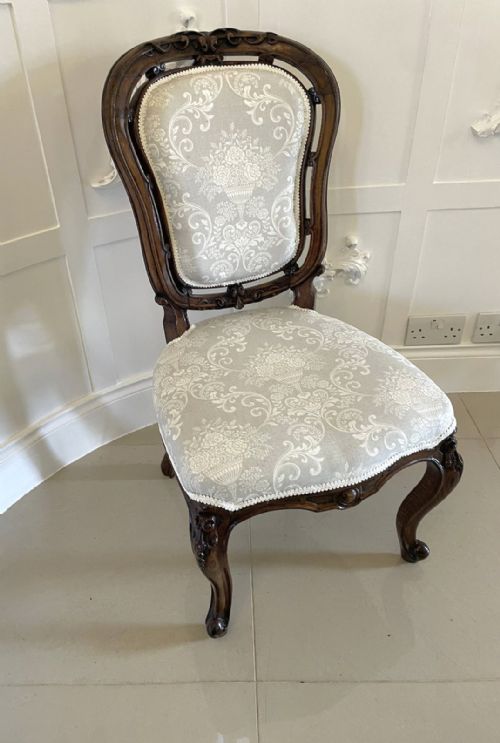


Antique Damask Nursing Chair
An antique damask nursing chair is a low-slung nineteenth-century seat designed for comfort, offering elegance and period character to a bedroom or drawing room.
Antique Damask Nursing Chair
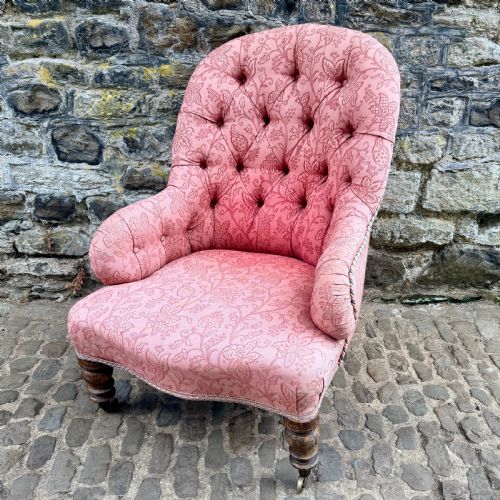
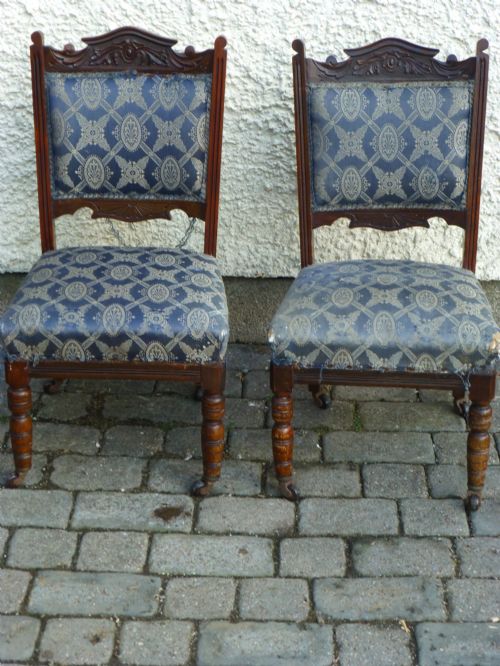
When you search for an antique damask nursing chair, you are looking at low-seated Victorian bedroom and drawing room chairs upholstered in patterned fabric. The selections here span the nineteenth century, including Regency, William IV, Victorian, and Art Nouveau periods, alongside French Napoleon III and English examples.
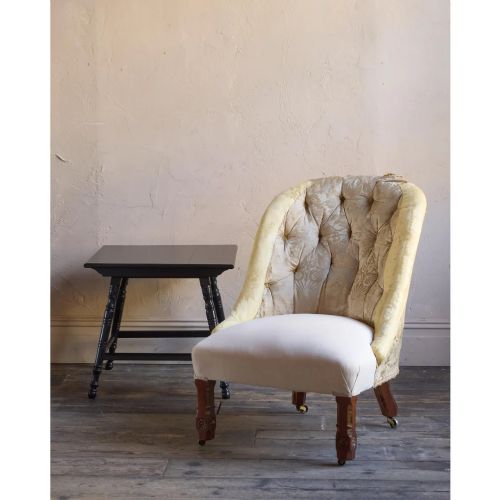
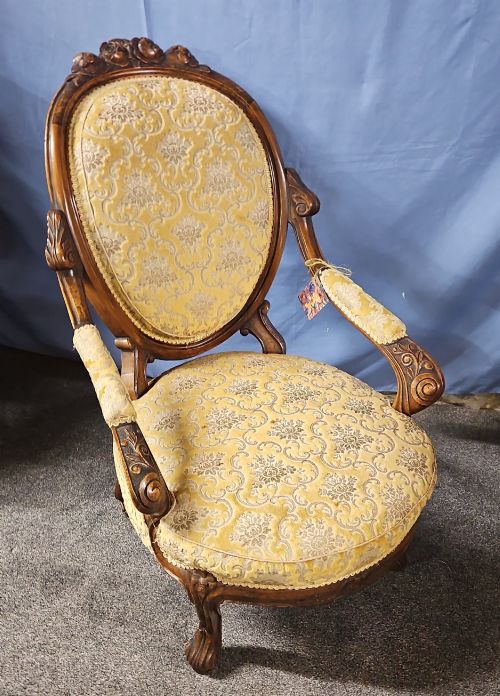
The primary forms you will encounter are nursing chairs, slipper chairs, and spoon-back armchairs, often styled with button upholstery or carved rosewood and walnut frames. These pieces also appear as occasional chairs, side chairs, and children's chairs.
Originating as practical bedroom seating for ladies or mothers tending to infants, these chairs provide a compact footprint combined with ornate frames. Walnut and mahogany woods dominate the selection, frequently paired with ceramic castors or brass fittings.
How they were made
Cabinetmakers constructed the frames using solid timbers such as walnut, rosewood, and mahogany, often shaping them into curved spoon-backs or cabriole legs. Wood carving was executed by hand, visible in details like the Victorian Rococo Revival and Aesthetic Movement ornamentation.
Upholstery techniques involved traditional stuffing and buttoning over resilient springs or webbing, finished with damask fabric or requiring re-upholstery. Frames occasionally feature ebonised finishes or brass and ceramic elements on the support structures.
Some nineteenth-century nursing chairs were built with unusually generous proportions to accommodate voluminous crinoline skirts.
What varies in quality
The distinction between standard and superior pieces rests on the crispness of the timber carving and the architectural balance of the frame. Robust construction in walnut or rosewood with refined spoon-back contours commands greater attention than plain mahogany alternatives.
Original upholstery condition and the integrity of the internal padding influence the character of each chair, though many pieces are offered for re-upholstery. Finely turned legs, intact ceramic castors, and distinct stylistic details such as Aesthetic Movement ebonising elevate individual items.
The Antique Damask Nursing Chair Glossary
- Damask
- A reversible figured fabric traditionally woven on a jacquard loom with patterns flatting into the ground. It provides the classic tactile upholstery seen on many period bedroom seats.
- Spoon-back
- A padded chair back hollowed into the concave shape of a spoon to fit the human spine. This ergonomic form is typical of mid-Victorian walnut and rosewood seating.
- Cabriole leg
- A furniture leg that bends outward in a convex curve and tapers inward in a concave arc, ending in a pad or scroll. It is frequently seen on Victorian revival seating.
- Prie-Dieu chair
- A devotional chair featuring a low seat and a high, narrow top rail designed for kneeling during prayer. Victorian examples often utilise walnut frames and button upholstery.
- Button upholstery
- A technique where depressions are created in padded upholstery by pulling twine through the stuffing and securing it with covered buttons. This secures the filling and creates a tufted surface.
Antique Damask Nursing Chair: Frequently Asked Questions
What is an antique damask nursing chair?
An antique damask nursing chair is a low nineteenth-century seat designed for comfortable sitting, historically utilised in bedrooms and nurseries.
These pieces feature upholstered seats in patterned fabric paired with exposed timber frames made from walnut, rosewood, or mahogany.
How do I date an antique nursing chair?
Dating relies on identifying stylistic markers such as Victorian Rococo Revival carving, Regency proportions, or Art Nouveau contours. Timber choice also helps, as rosewood and early mahogany give way to walnut and ebonised finishes later in the century.
Examining the construction methods and upholstery style provides further clues to whether a piece originates from the early Victorian period or around nineteen hundred.
Were nursing chairs only used in nurseries?
Despite the traditional name, these low chairs were commonly placed in ladies' bedrooms, boudoirs, and drawing rooms for general relaxation and grooming.
Their reduced height made them practical for dressing and nursing infants without obstruction from high armrests or bulky frames.
Can I use these chairs in a modern room?
These compact seats integrate easily into contemporary interiors as accent chairs, dressing table seats, or fireside seating.
Their varied wood tones and upholstery options allow them to function as statement pieces in living spaces and bedrooms alike.