


Brown Parquetry Drawers
These brown parquetry drawers combine geometric wood veneers with practical storage, offering a traditional centrepiece for a period interior.
Brown Parquetry Drawers
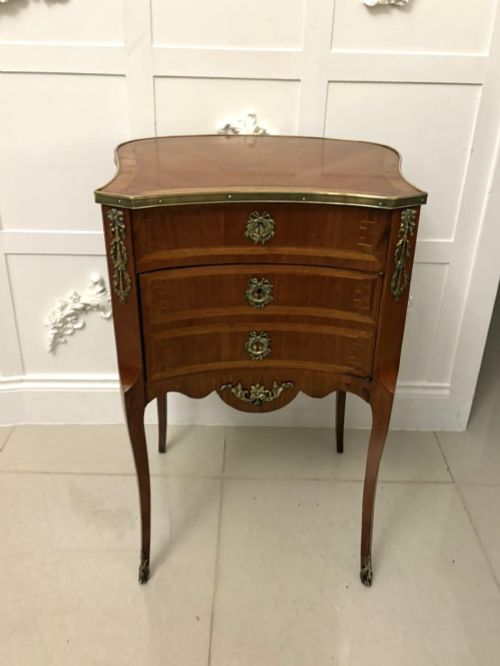
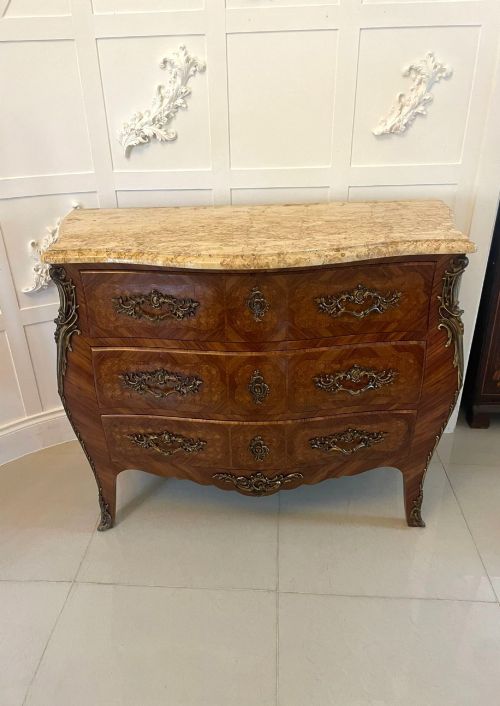
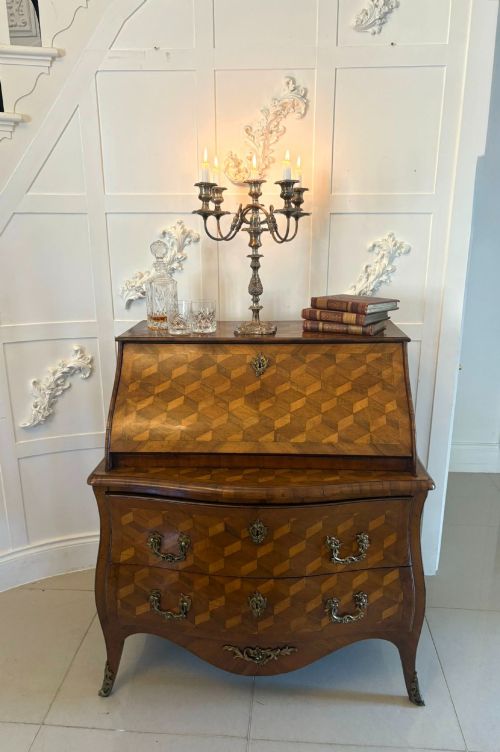
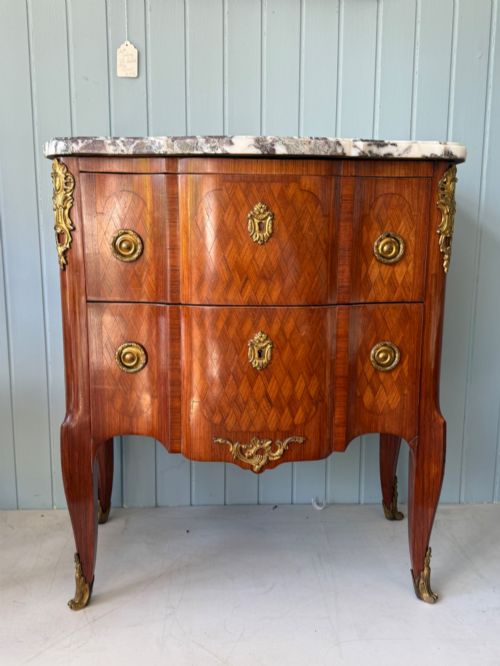
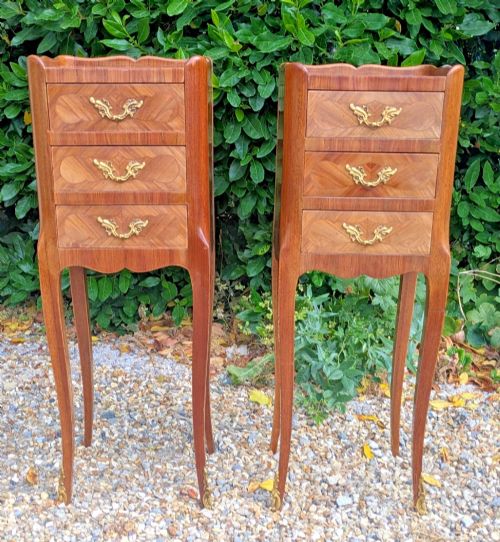
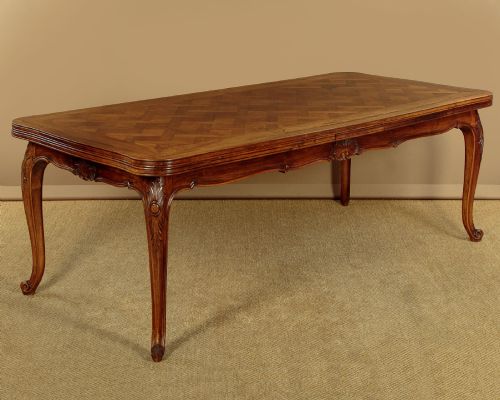
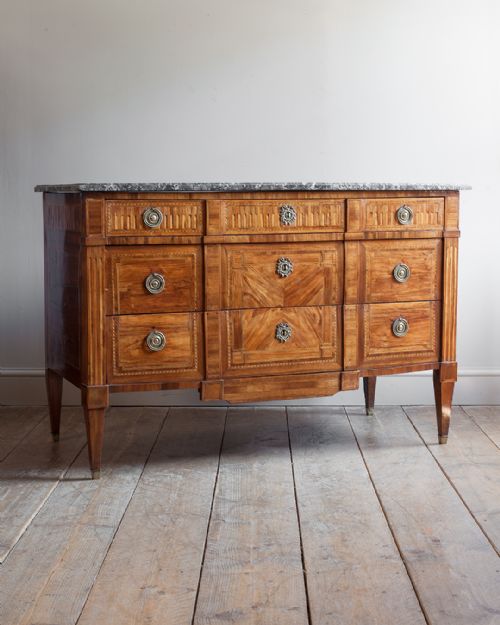
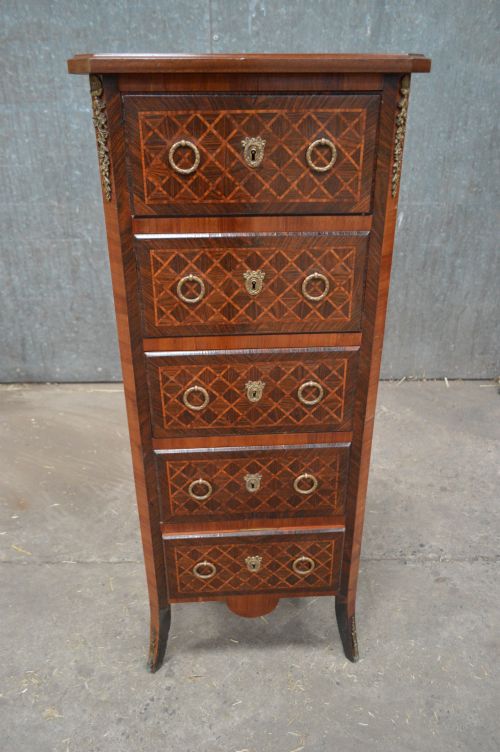
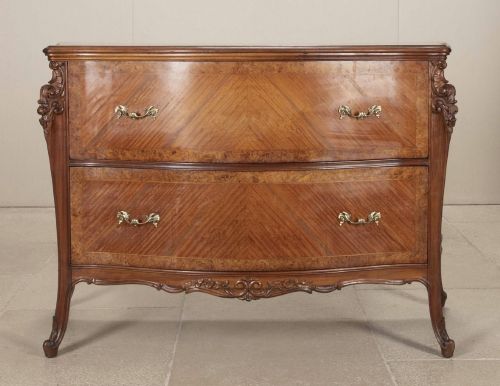
When searching for brown parquetry drawers, buyers encounter a selection of chest of drawers, commodes, and bedside cabinets spanning the eighteenth century through to the early twentieth century. French regional and revival designs dominate the selection, often taking the form of serpentine or bombe commodes alongside compact bedside tables.
The material evidence shows these storage pieces originating primarily from French workshops, alongside Italian and Austrian examples. Nineteenth-century interpretations of Louis styles appear frequently, alongside eighteenth-century walnut and kingwood pieces featuring geometric veneer work.
Materials and construction
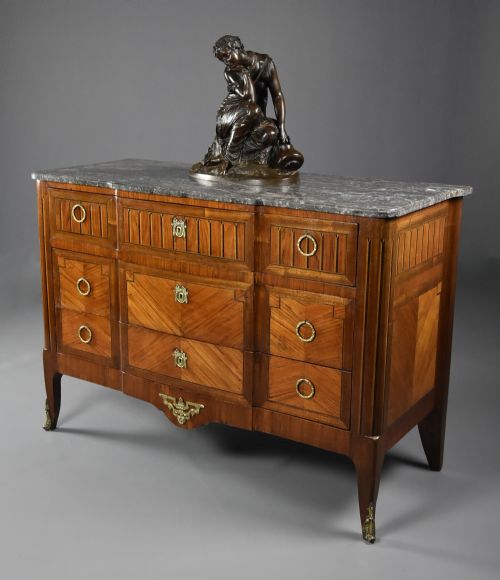
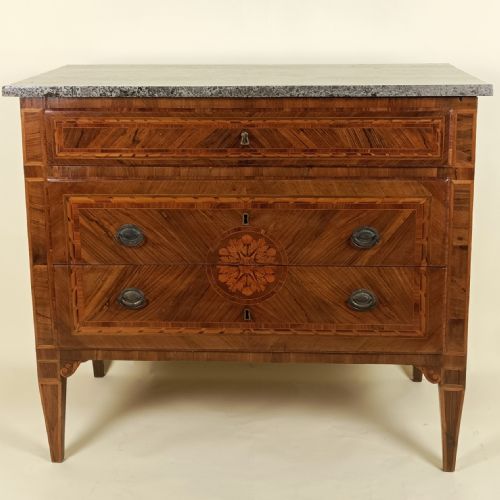
Cabinet makers utilised dense hardwoods such as walnut, kingwood, rosewood, tulipwood, and fruitwood to construct these pieces, often arranging contrasting veneers in geometric parquetry patterns. Marble tops in white or scagliola varieties frequently crown the timber carcases.
Metal ornamentation adds detail to the timber structures, with brass, ormolu, and gilt bronze mounts fitted to corners, handles, and feet. Structural joinery supports the heavy marble slabs and intricate drawer configurations.
Listings feature eighteenth-century walnut and nineteenth-century French kingwood alongside early twentieth-century decorative pieces.
Assessing the pieces
The precision of the veneer work defines the upper tier of these pieces, where timber grain aligns seamlessly across geometric parquetry panels. Lesser examples rely on simpler surface patterns with less nuanced timber selection.
The integration of heavy mounts and original stone surfaces dictates overall harmony. Superior specimens feature crisply chased ormolu or bronze mounts that match the sophistication of the underlying cabinet work.
Victor Raulin
The Brown Parquetry Drawers Glossary
- Parquetry
- Geometric mosaic woodwork formed by small pieces of veneer fitted together. This technique creates patterned surfaces on drawer fronts and tabletops.
- Commode
- A decorative chest of drawers developed in France during the seventeenth century. These low storage units often feature marble tops and ornate mounts.
- Bombe
- A swelling, outwardly curved contour found on the front and sides of furniture carcases. This volumetric shape requires advanced woodworking skill to execute properly.
- Ormolu
- Gilt bronze ornamentation applied to furniture mounts and feet. The technique involves coating bronze in a finely ground gold-mercury amalgam.
- Scagliola
- A composite material made from selenite, glue, and pigments, mimicking marble. Artisans use it to create inlaid stone surfaces on tabletops and commodes.
Brown Parquetry Drawers: Frequently Asked Questions
Where were these pieces used?
These storage pieces functioned primarily in formal bedchambers, salons, and reception rooms of grand European houses. Their decorative parquetry surfaces and marble tops allowed them to serve both practical and display purposes.
Smaller iterations, such as bedside cabinets and occasional tables, sat beside sleeping quarters or in private boudoirs to hold personal items and lighting.
How do I date a commode?
Dating relies on examining the structural timber, the style of the mounts, and the overall contour of the carcase. Eighteenth-century examples often display hand-cut dovetails and native fruitwoods or walnut, whereas later revival pieces incorporate machine-sawn elements.
Stylistic shifts also provide clues, as Louis XV forms favour asymmetric curves while Louis XVI designs return to neoclassical symmetry and straight tapering legs.
What is parquetry?
Parquetry is a woodworking technique where small geometric veneers of different coloured woods are fitted together to create patterned surfaces. Unlike marquetry, which depicts pictorial scenes like flowers or landscapes, parquetry focuses on repeating geometric grids.
Cabinet makers utilised contrasting tones of walnut, kingwood, and tulipwood to give these geometric designs depth and visual movement across drawer fronts.
How do I care for marble tops?
Marble surfaces require gentle cleaning with mild, pH-neutral soap and warm water to avoid etching the stone. Acidic substances like citrus or wine can stain or dull the polished finish if left on the surface.
Periodic waxing of the surrounding timber carcase helps maintain the wood, keeping parquetry veneers nourished without affecting the stone top.