
Brown Parquetry Desk
A brown parquetry desk brings geometric wood veneers and continental revival styling into a room, offering a functional writing surface designed for daily correspondence.
Brown Parquetry Desk
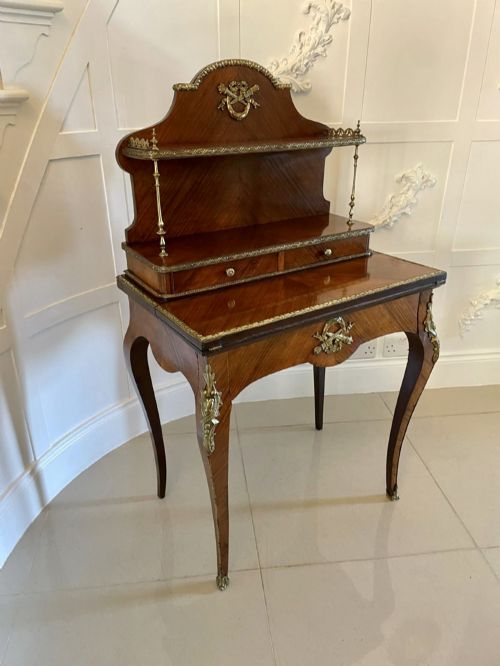
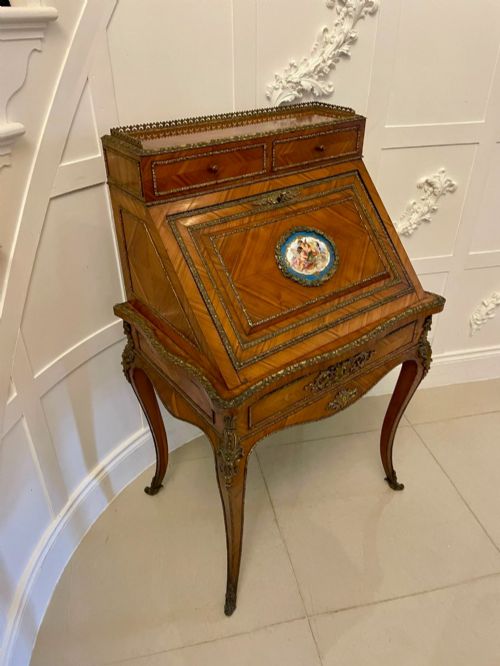
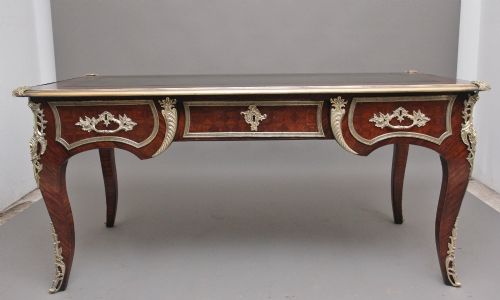
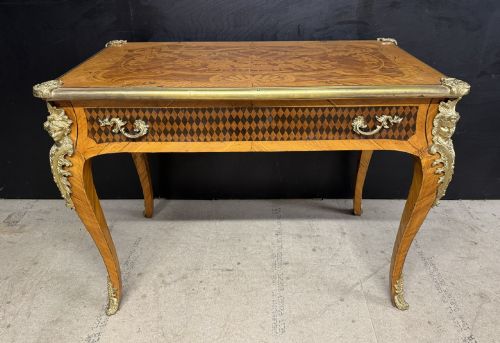
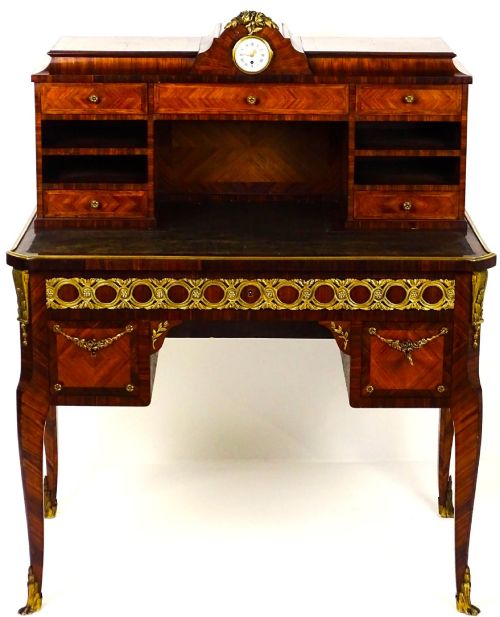
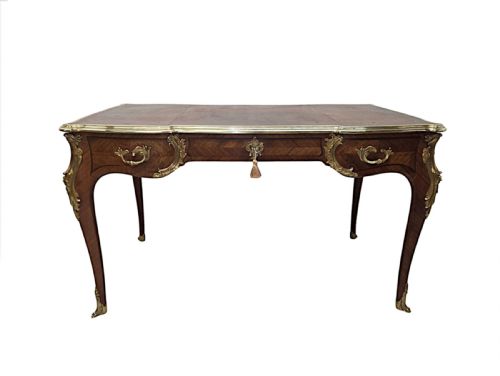
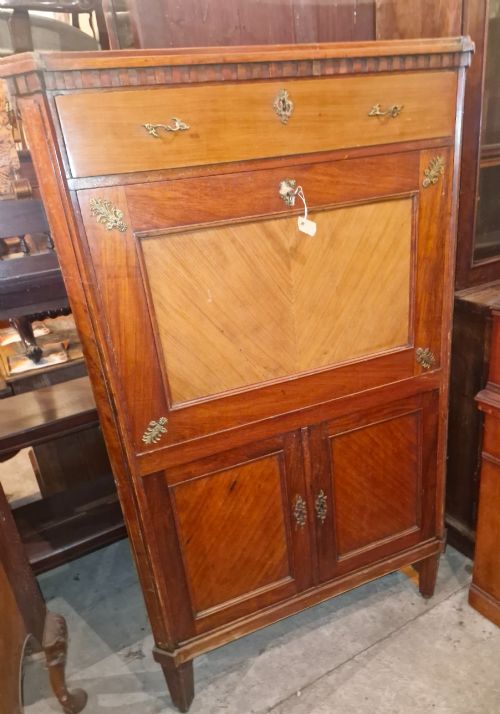
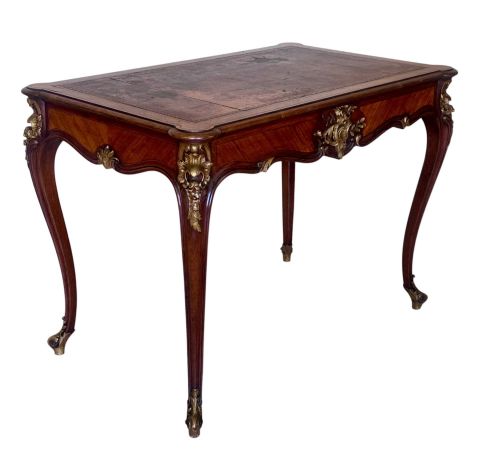
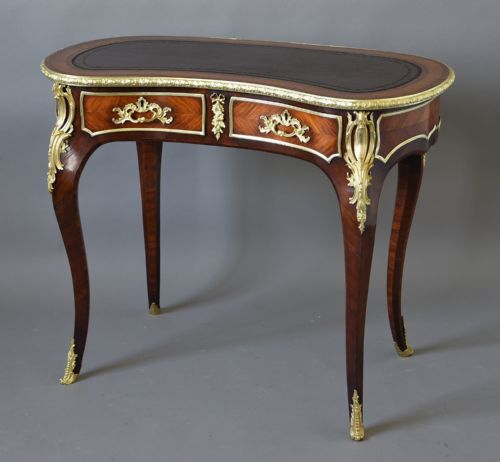
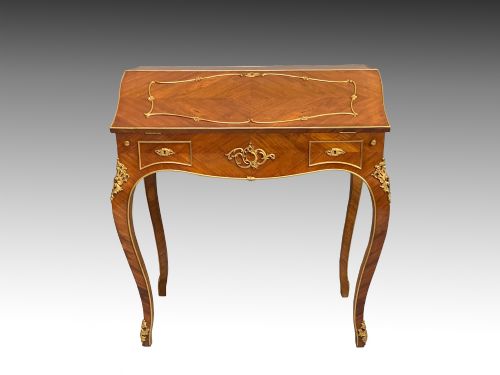
When buyers search for a brown parquetry desk, they encounter various writing furniture formats originating mainly from nineteenth-century continental workshops. These pieces range from substantial bureau plats and cylinder desks to compact bonheur du jour cabinets designed for correspondence.
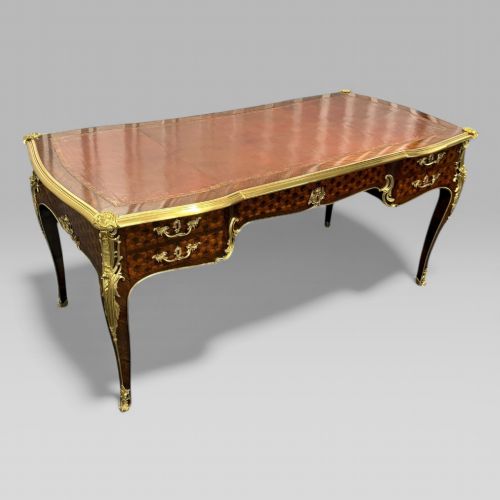
The selection includes specific French revival iterations following Louis XV and Louis XVI styles, alongside English interpretations and occasional Victorian pieces. Bureau plats and writing tables dominate the forms, frequently featuring shaped tops and fitted drawers.
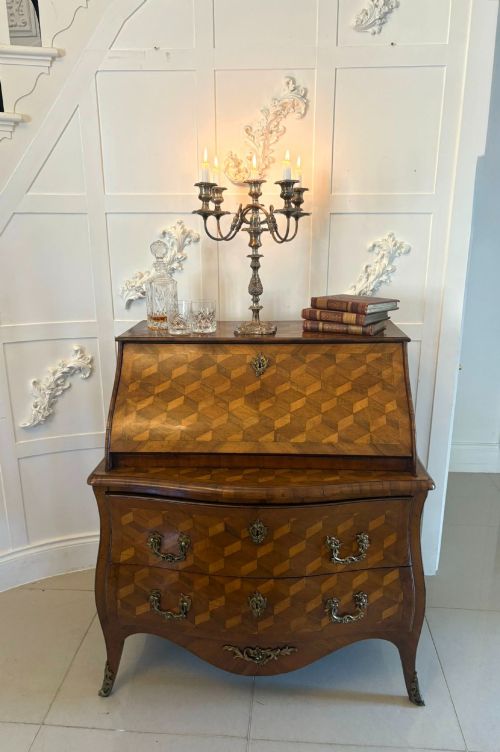
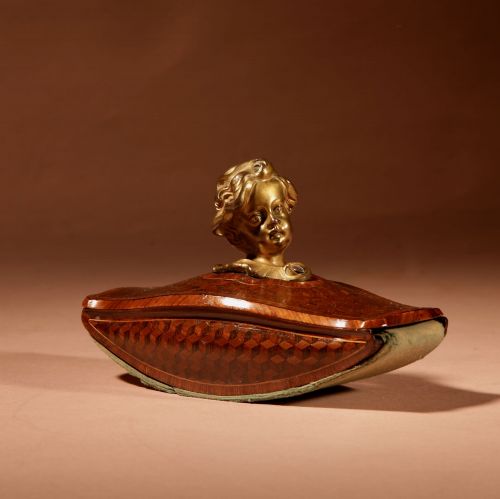
Makers utilised decorative wood veneers arranged in geometric patterns to cover carcass frames, creating the characteristic parquetry surface texture across writing desks and associated accessories.
Materials and construction methods
Cabinetmakers constructed these desks using foundational timbers like oak or walnut, onto which they laid fine veneers of kingwood, tulipwood, or rosewood. Artisans arranged these contrasting timber pieces by hand into precise geometric parquetry patterns across the writing surface and drawer fronts.
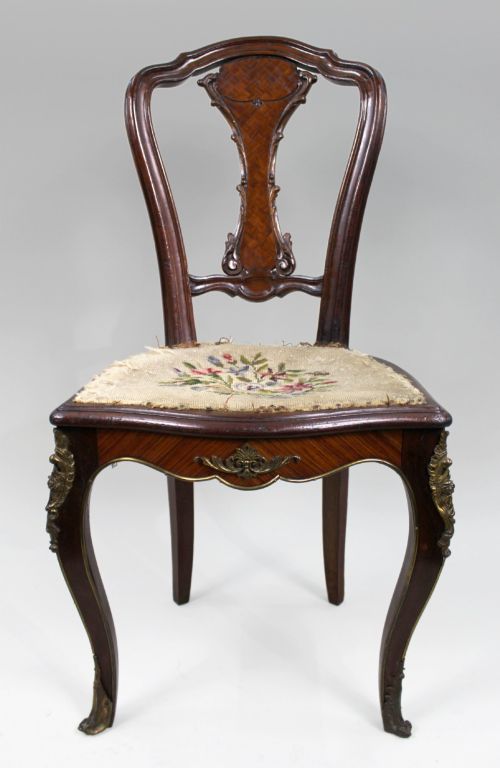
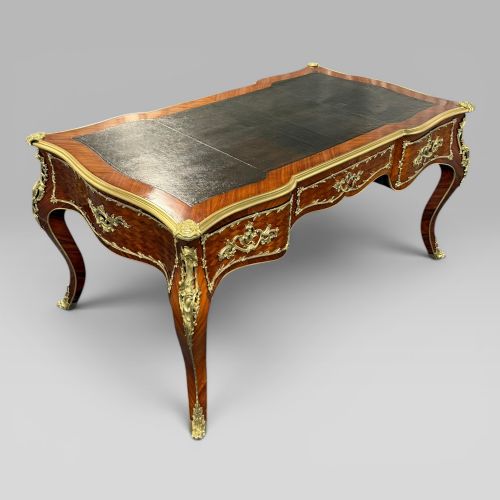
Craftsmen mounted cast ormolu and gilt bronze accents along the edges, feet, and keyholes to protect corners and frame the timber sections. Many writing surfaces integrate inset panels of leather to provide a smooth plane for writing.
Structural elements involve traditional joinery suitable for heavy writing tables and bureau cabinets, accommodating detailed marquetry panels and porcelain plaques where specified by the design.
Listings feature eighteenth, nineteenth, and early twentieth-century periods, dominated by French Kingwood, walnut, and ormolu mounts.
Distinctions in craftsmanship
Quality in a brown parquetry desk rests on the precision of the geometric veneer work and the crispness of the cast ormolu mounts. Finer examples display seamless alignment of wood grains across opening drawers and complex curved surfaces.
The weight and detail of the bronze or gilt mounts differentiate workshop standards, where heavily chased mounts indicate superior production compared to simpler cast alternatives. The choice of underlying timbers and the retention of original leather writing inserts also influence the overall standard of preservation.
Paul Sormani·CH. Jeanselme & Co·François Linke·Edmund Nye·Maurice Dufrêne
The Brown Parquetry Desk Glossary
- Parquetry
- A geometric mosaic of wood veneers arranged in repeating patterns such as cubes or chequers. This technique decorates the exterior surfaces of desks and tables.
- Bureau Plat
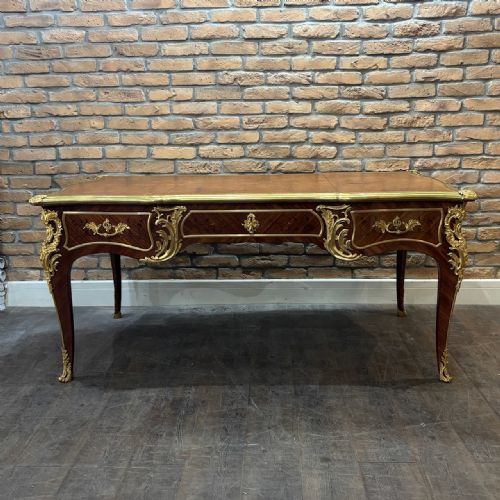
- A freestanding double-sided writing table fitted with drawers along the frieze. These pieces typically lack an upper superstructure and stand on cabriole or tapered legs.
- Ormolu
- Gilt bronze mounts applied to furniture edges and corners for decorative effect. The metal is cast and chased to produce crisp relief details.
- Kingwood
- A dense, heavy Brazilian timber featuring dark brown and violet colouring with distinct figuring. It serves as a primary veneer wood on nineteenth-century continental desks.
- Bonheur du Jour
- A small ladies writing desk featuring a light framework with a small cabinet or shelving unit on the upper surface. These desks appeared frequently during the nineteenth century in revival styles.
Brown Parquetry Desk: Frequently Asked Questions
How do I identify a parquetry surface?
Parquetry consists of small geometric pieces of veneer fitted together to form patterns like cubes, lozenges, or squares. It differs from marquetry, which depicts pictorial scenes using varied wood types and botanical motifs.
Inspect the surface closely under good light to observe the grain direction and timber boundaries where the individual veneer segments meet.
What is a bureau plat used for?
A bureau plat functions as a large writing table meant to stand in the centre of a room rather than against a wall. The flat top provides an expansive writing area, while frieze drawers hold stationery and writing instruments.
These tables date heavily to French revival periods and often feature leather writing inserts bordered by gilt tooling.
How should I care for antique wood veneers?
Keep antique parquetry desks away from direct sunlight and steady heat sources to prevent the underlying wood from drying out and the veneer from lifting. Apply occasional appropriate wax polishing to maintain the lustre of the timber.
Avoid excessive moisture on the wood and protect leather writing panels from spills during daily use.
What distinguishes Louis XV style desks?
Louis XV style desks feature characteristic asymmetrical curves, cabriole legs, and flowing ormolu mounts that trace the contours of the writing box. The forms avoid straight lines in favour of serpentine shapes and bombe fronts.
These revival pieces emerged strongly during the nineteenth century, emulating earlier eighteenth-century French royal aesthetics.