

Brown Parquetry Bureau
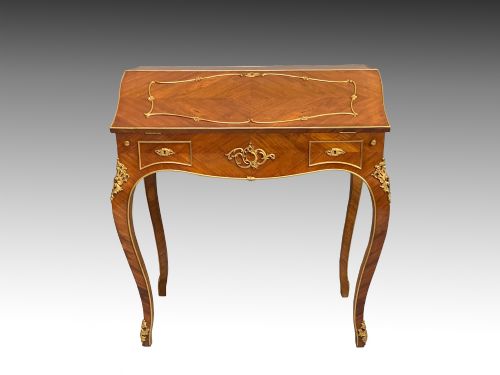
A brown parquetry bureau combines complex geometric wood patterns with a fitted writing surface, offering practical workspace alongside decorative cabinetwork.
Brown Parquetry Bureau
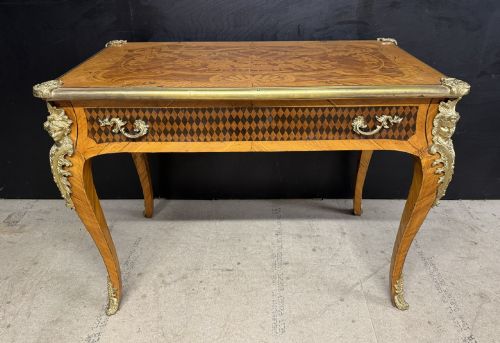
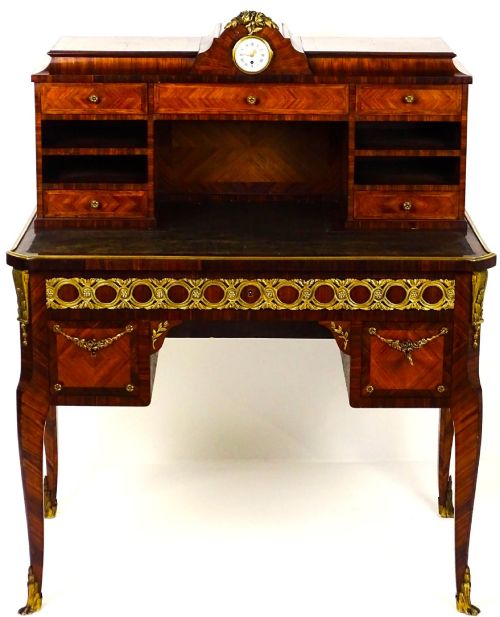
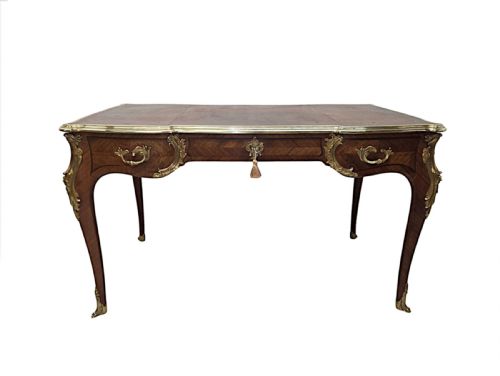
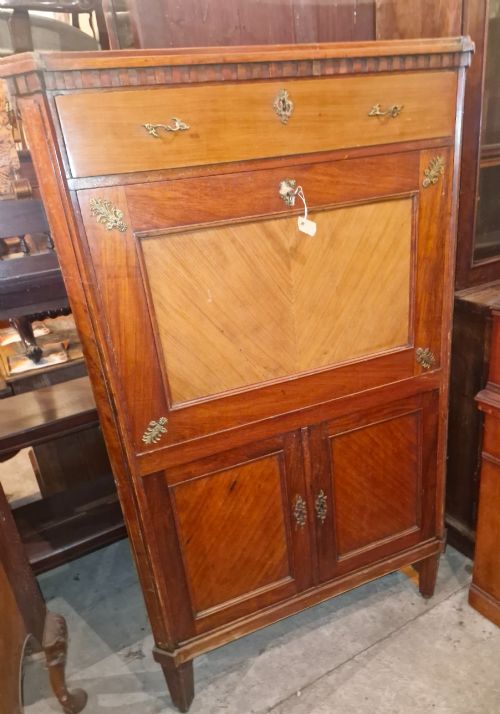
A brown parquetry bureau brings together several forms of antique writing furniture, ranging from sloping-front desks to flat-topped writing tables and cabinets.
The pieces appearing on this page belong predominantly to the nineteenth century, with examples stretching back to the eighteenth century and forward into the art deco period of the 1930s.
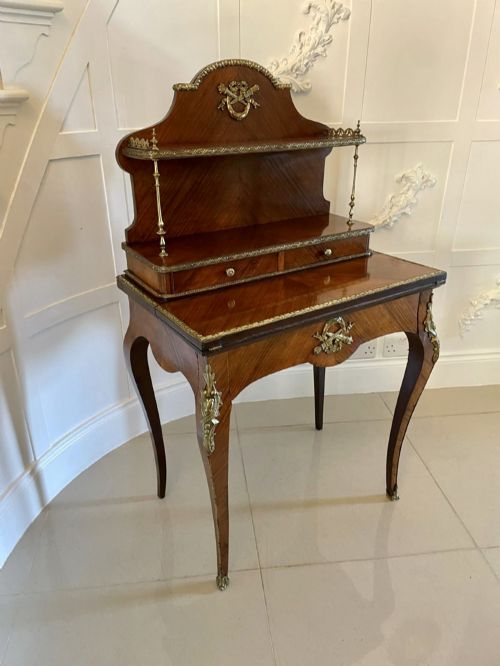
French revival designs dominate the selection, heavily influenced by Louis XV and Louis XVI styles, alongside English interpretations and specialised forms such as the bonheur du jour.
How they were made
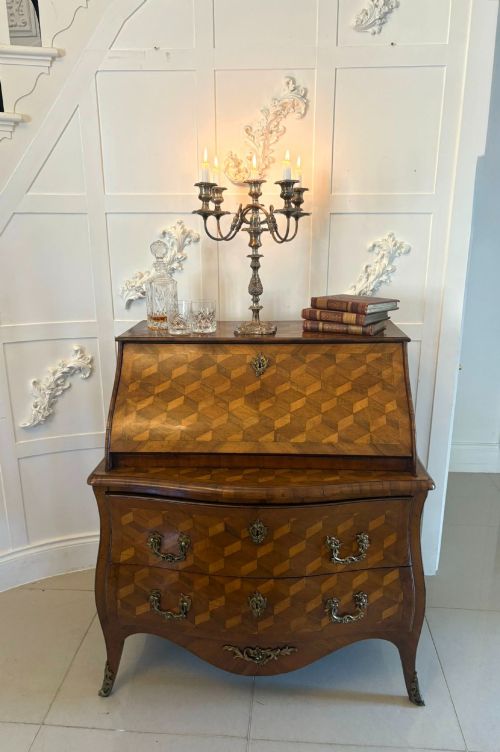
Cabinetmakers constructed these writing desks using dense timbers such as kingwood, walnut, rosewood, fruitwood, and tulipwood, often laying parquetry and marquetry geometric patterns across the surfaces.
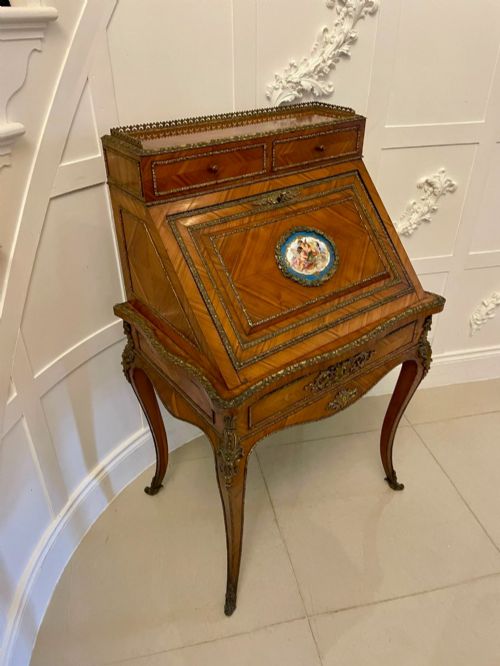
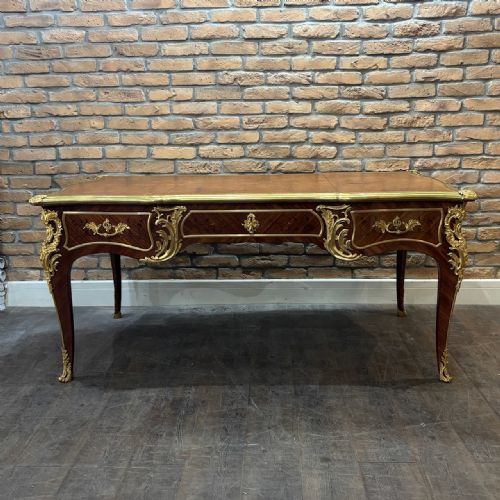
Many examples incorporate cast and gilt bronze or ormolu mounts, alongside brass details, leather writing inserts, and occasionally porcelain plaques.
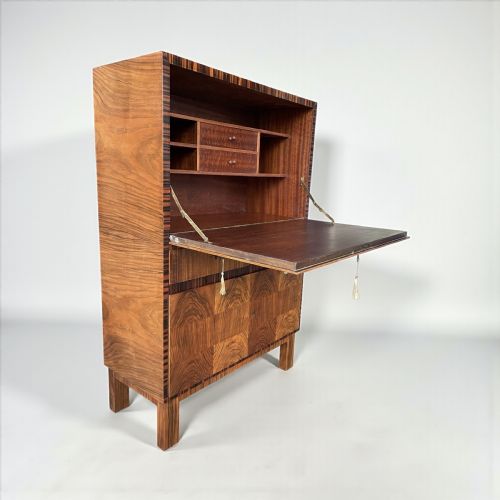
Joinery techniques ranged from standard cabinet construction to specialised framing required for cylinder desks, bombe shapes, and fall-front secretaires.
Listings feature 19th-century French styles alongside 18th-century walnut pieces and 1930s art deco items.
What varies in quality
The standard of a brown parquetry bureau depends largely on the precision of the wood mosaic work and the crispness of the cast bronze mounts.
Pieces attributed to notable makers display superior proportions, refined wood selection, and heavier, more detailed ormolu hardware compared to standard commercial workshop production.
Paul Sormani·François Linke·CH. Jeanselme & Co
The Brown Parquetry Bureau Glossary
- Parquetry
- Geometric wood inlay forming patterned surfaces. Artisans arranged small blocks of contrasting timbers to create mosaic designs across tabletops and fall fronts.
- Ormolu
- Gilded bronze mounts applied to furniture. These decorative elements frame drawers, corners, and legs on French revival pieces.
- Bureau plat
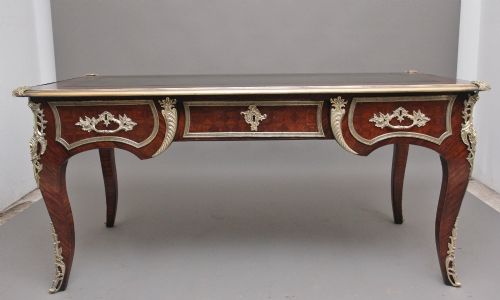
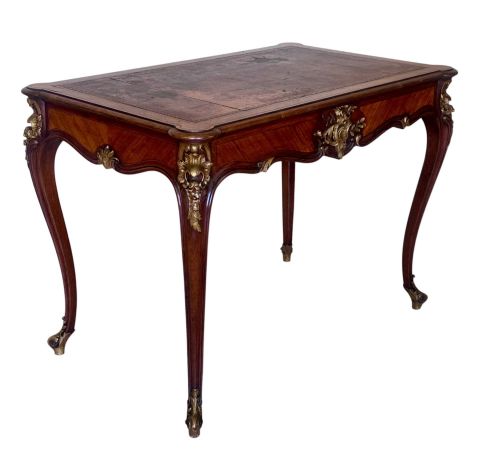
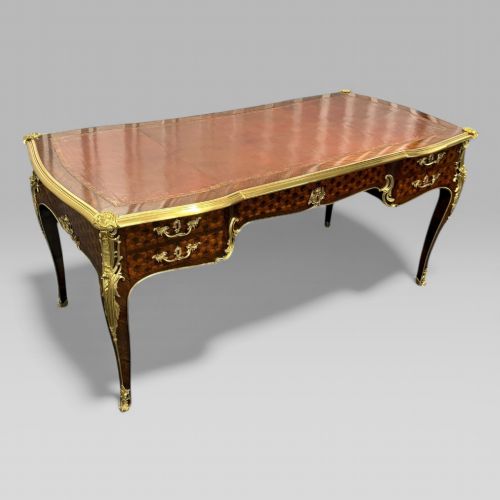
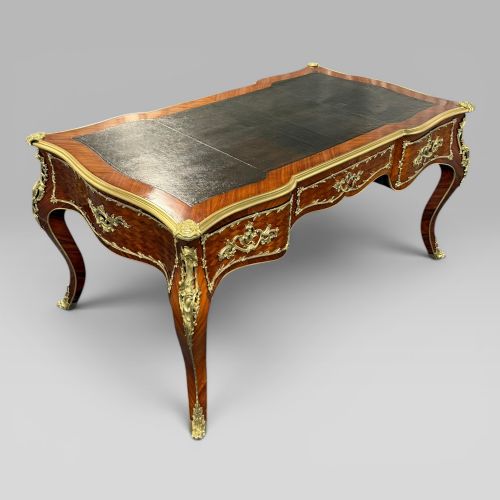
- A flat-topped writing table, usually freestanding with drawers beneath the surface. These tables often feature leather inserts and metal mounts.
- Bonheur du jour
- A light lady's writing desk with a small cabinet or shelving superstructure on top. These dainty writing stations became popular during the nineteenth century.
- Secretaire abattant
- A tall upright desk featuring a drop-front writing flap that conceals internal pigeonholes and small drawers. This form allows a compact footprint while offering substantial enclosed storage.
Brown Parquetry Bureau: Frequently Asked Questions
What is a parquetry bureau?
A parquetry bureau is a writing desk decorated with geometric wood mosaic patterns arranged across the exterior surfaces. These pieces typically include drawers or a fall-front writing flap.
They serve as both functional writing surfaces and decorative focal points within a room, combining fine cabinetmaking with fitted storage compartments.
How do I identify French revival styles?
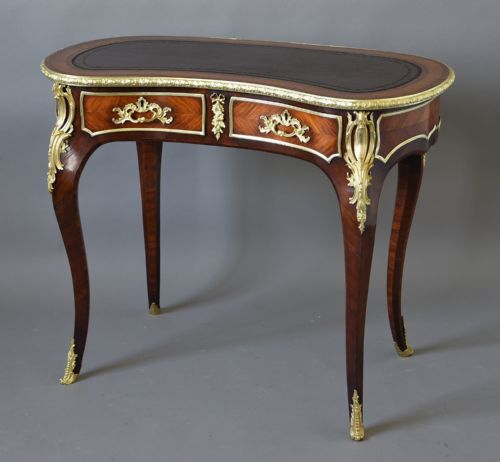
French revival pieces incorporate curved cabriole legs, asymmetrical scrollwork, and prominent ormolu mounts characteristic of the Louis XV and Louis XVI periods. These designs often utilise kingwood and tulipwood.
Maker attribution and specific decorative hardware help distinguish nineteenth-century interpretations from eighteenth-century originals.
Where were these desks used?
These writing desks functioned primarily in private studies, drawing rooms, and boudoirs for correspondence and household administration. Smaller forms like the bonheur du jour suited lighter daily letter writing.
Today, they integrate well into home offices or living spaces as functional writing tables with historical character.
What is the difference between a bureau plat and a cylinder desk?
A bureau plat provides an open, flat writing surface with drawers arranged beneath the top. A cylinder desk encloses the writing area beneath a curving quarter-circle rolling shutter.
Both forms utilise parquetry and metal mounts, but offer different levels of privacy and dust protection for writing materials.