
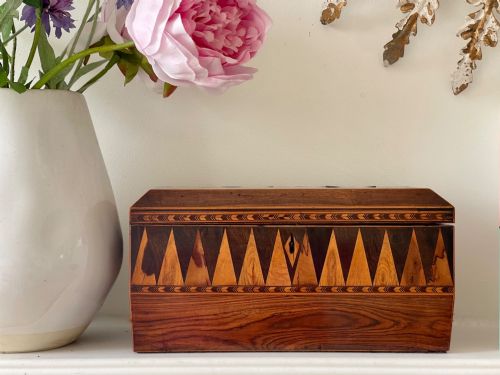
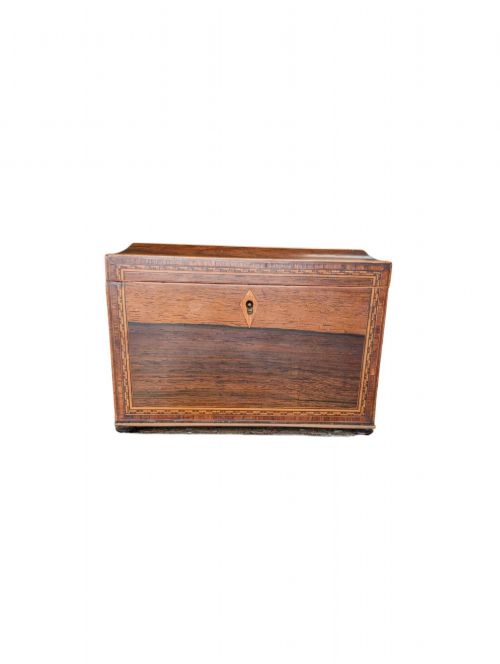
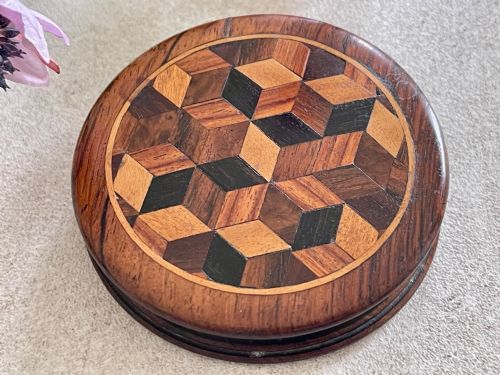
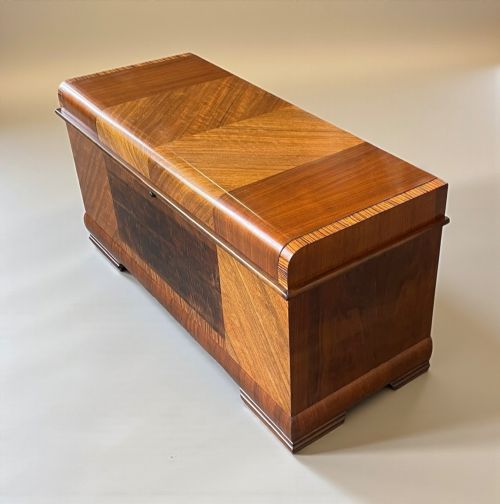


Brown Parquetry Box
A brown parquetry box combines precise geometric woodwork with practical storage, offering a tangible piece of centuries-old craftsmanship that appeals to collectors and interior decorators alike.
Brown Parquetry Box
A brown parquetry box is a container built or decorated with small, fitted geometric veneer tiles that create patterned surfaces. When searching for a brown parquetry box, buyers encounter various forms designed for specific domestic uses.
The selections on this page span several periods, from Georgian and Regency eras through the Victorian age up to the 1930s. The Victorian period supplies many of the surviving examples, particularly items finished with Tunbridge Ware micro-mosaic ornamentation.
Object types include tea caddies, correspondence stationery boxes, writing slopes, snuff boxes, and general keepsake trinket boxes. These range from small miniature desks to larger blanket chests and table boxes.
How they were made
Makers constructed these pieces using a foundation of solid timber such as mahogany or walnut, applied with thin veneers of contrasting woods. Woods like boxwood, rosewood, kingwood, and tulipwood provided the tonal palette required for geometric patterns.
Detailed work involved assembling thousands of tiny wood blocks to form pictorial or geometric mosaic bands, a technique prominent in Tunbridge Ware items. Metal components such as brass hinges, locks, and ormolu mounts added structural reinforcement and visual contrast.
Materials span walnut, brass, rosewood, boxwood, kingwood, wood veneer, mahogany, and ormolu across multiple centuries.
What varies in quality
Quality rests upon the precision of the veneer work and the complexity of the geometric layout. Tight joints between individual wooden tesserae and crisp alignment define superior examples.
The choice of underlying timber and decorative secondary materials also dictates the standard of the piece. Well-preserved fitted interiors, original brass hardware, and signed maker stamps elevate the standing of an individual box.
Edmund Nye·Henry Hollamby·Victor Raulin
The Brown Parquetry Box Glossary
- Parquetry
- A geometric mosaic of wood pieces used for ornamentation on floors or furniture surfaces. It relies on contrasting colours and grain directions to form patterns.
- Tunbridge Ware
- A specialised type of wooden mosaic originating from Tunbridge Wells, depicting landscapes or geometric bands using tiny tinted wood squares. Each block is cut from rods of naturally coloured timber.
- Tea Caddy
- A box designed specifically to store tea leaves securely, often featuring internal compartments and a lock. Tea was a valuable commodity in earlier centuries, requiring safe containment.
- Writing Slope
- A portable desk featuring an angled writing surface that often folds open to reveal compartments for ink, pens, and paper. These items were essential for correspondence before widespread modern postal services.
- Veneer
- A thin slice of decorative wood applied over a coarser base timber to give the appearance of solid costly wood. This technique prevents warping while displaying attractive grain figures.
Brown Parquetry Box: Frequently Asked Questions
What is a parquetry box?
A parquetry box is a small wooden container decorated with geometric patterns formed from small wooden veneers.
These patterns distinguish parquetry from marquetry, which typically depicts pictorial scenes or floral motifs using curved organic shapes.
How were antique tea caddies used?
Tea caddies held precious tea leaves under lock and key in Georgian and Victorian households.
Servants or hosts kept the key to control access to the expensive leaves, which were blended inside the internal compartments.
How do I date a wooden box?
Dating involves examining the construction methods, timber types, and lock mechanisms used by makers.
Hand-cut dovetails, specific veneer thicknesses, and stylistic cues from periods like Regency or Victorian help establish the age.
What is Tunbridge Ware?
Tunbridge Ware refers to wooden items decorated with precise mosaic tesserae made from various natural timbers.
Craftsmen glued thousands of microscopic wood rods together and sliced cross-sections to create detailed geometric or pictorial bands.
How do I care for antique wood boxes?
Keep wooden boxes away from direct sunlight and extreme temperature fluctuations to prevent veneer cracking.
Maintain the finish by occasionally applying suitable beeswax and avoiding excessive moisture on the historical surfaces.