


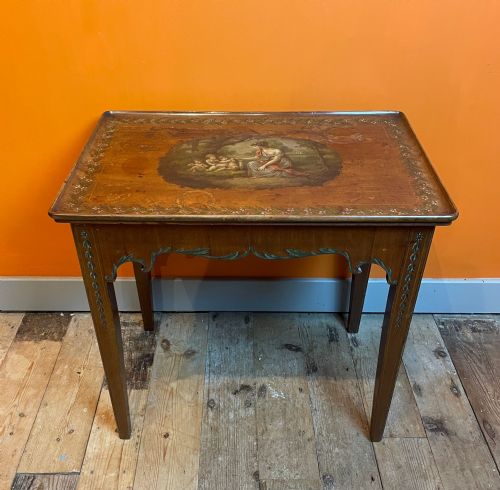
Brown Painted Accent Tables
Brown painted accent tables bring hand-finished surface character to a room, offering practical display space with decorative painted finishes.
Brown Painted Accent Tables
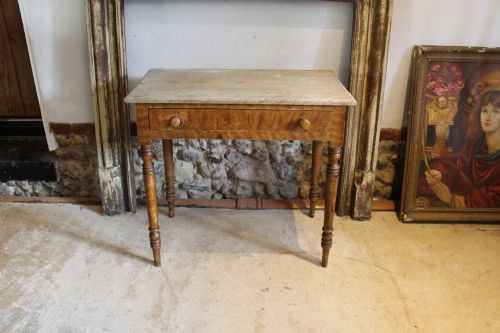
When you search for brown painted accent tables, you encounter occasional and side tables featuring painted decoration upon timber surfaces. These pieces range from Georgian and nineteenth-century examples to Edwardian and later twentieth-century interpretations.
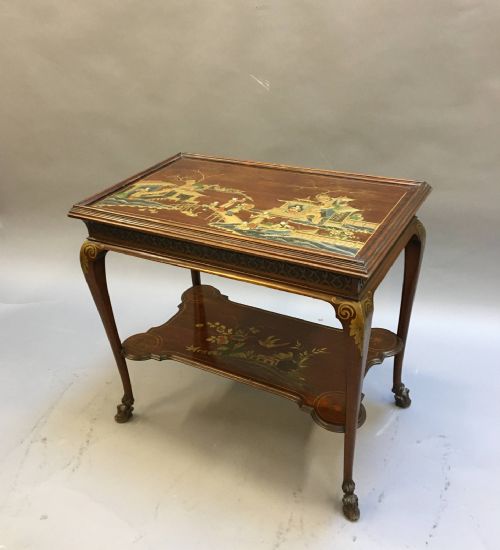
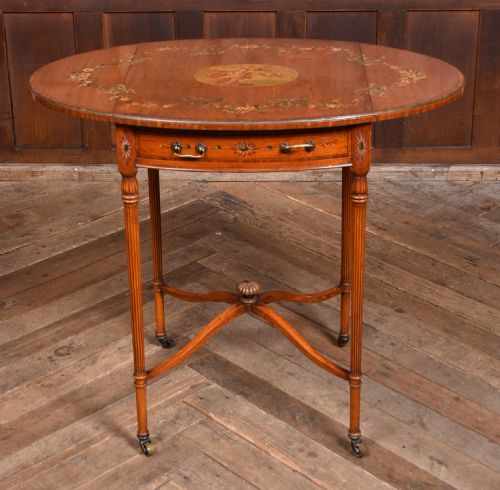
The selection includes drop-leaf tables, tiered surfaces, and folding designs finished with painted scenes, scumble glazes, or ragwork techniques. You will find styles spanning Sheraton Revival, Chinoiserie, and neoclassical motifs alongside Italian and French rococo revivals.
How they were made
Construction relies upon traditional timber foundations including mahogany, satinwood, pine, and rosewood, shaped into occasional and side tables. Makers applied decorative coats of paint, scumble glaze, and lacquer directly onto the wood.
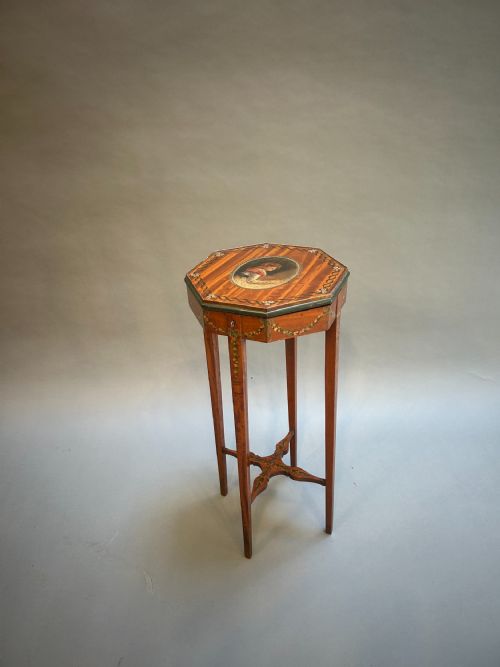
Surface ornamentation involved hand-painted neoclassical scenes, trompe l'oeil effects, and Chinoiserie motifs, sometimes complemented by brass hardware. The finishing techniques varied from ragwork patterns to Vernis Martin style applications.
The inventory spans diverse regional styles, incorporating Swedish ragwork folding tables alongside Italian and French rococo revivals.
What varies in quality
Quality rests in the execution of the painted decoration and the selection of the underlying timber. Finer examples display meticulous brushwork in neoclassical scenes or Chinoiserie motifs rather than hurried application.
The integrity of the structural joinery and the preservation of the original painted surface separate standard production from superior pieces. Original scumble glazes and untouched painted patination elevate an individual table.
The Brown Painted Accent Tables Glossary
- Scumble glaze
- A translucent or opaque paint layer manipulated with tools or rags to create broken colour effects. This technique builds textured, patterned surfaces on nineteenth-century furniture.
- Chinoiserie
- European artistic interpretation of Chinese and East Asian decorative styles, popular in painted furniture. It typically incorporates motifs of figures, landscapes, and pavilions.
- Sheraton Revival
- A late nineteenth and early twentieth-century design movement inspired by late eighteenth-century neoclassical furniture. These pieces frequently feature satinwood or painted decorations.
- Vernis Martin
- A European simulation of East Asian lacquerwork developed in the eighteenth century. The style uses layered varnish to achieve a translucent, glossy finish on decorative tables.
- Ragwork
- A decorative paint finish created by applying and manipulating colour with rags to produce a mottled or textured pattern. Swedish examples utilise this technique on folding tables.
Brown Painted Accent Tables: Frequently Asked Questions
What periods do these tables represent?
The selection encompasses pieces from the Georgian era through the nineteenth century, including 1800, 1860, and 1880 examples. Later items extend into the Edwardian period and the early twentieth century.
Design revivals heavily influence the dates, with Victorian and Edwardian makers recreating earlier Georgian and continental styles. This creates a diverse mix of authentic period items and later revival pieces.
How were occasional tables used historically?
These tables served flexible functions in period interiors, providing movable surfaces for holding tea, books, or decorative objects. Their portable nature allowed them to be shifted between drawing rooms and parlours as needed.
Drop-leaf and folding designs offered further adaptability for smaller spaces or occasional entertaining. Their decorative painted finishes ensured they remained ornamental even when not in active use.
How do I identify a scumble glaze finish?
A scumble glaze involves manipulating wet paint with brushes, combs, or rags to create patterned, mottled grain effects over a base colour. This technique mimics richer timber or adds textured visual depth to the surface.
On nineteenth-century pieces, original scumble work displays characteristic age patination and subtle variations in tone. It differs from flat, uniform modern paint through its visible hand-worked texture.
What distinguishes Sheraton Revival painted tables?
Sheraton Revival pieces draw inspiration from the late eighteenth-century neoclassical designs associated with Thomas Sheraton. They frequently utilise lighter woods like satinwood or painted pine as a canvas for classical motifs.
Expect symmetrical forms decorated with painted swags, urns, or floral borders reminiscent of the Georgian period. These late nineteenth and early twentieth-century interpretations prioritise refined elegance and delicate proportions.