


Black Painted Base Tables
Black painted base tables unite distinct periods and styles, offering striking contrast and versatile surfaces for traditional or modern interiors.
Black Painted Base Tables
Black painted base tables encompass a diverse range of forms, from occasional tables and lamp stands to dining tables and dresser bases. Buyers searching for black painted base tables encounter pieces spanning the eighteenth century through to the early twentieth century, reflecting varied stylistic influences.
Lacquered wood and painted wood dominate the construction of these decorative items, often enhanced by hand-painted or gilded details. The dark finished supports provide a stable foundation while highlighting the contrasting top surfaces or decorative motifs.
Materials and construction methods
Makers utilised traditional woods such as pine alongside specialised materials like papier-mâché and lacquered wood to build these supports and surfaces. Iron stands also appear, demonstrating the varied structural approaches used across different periods.
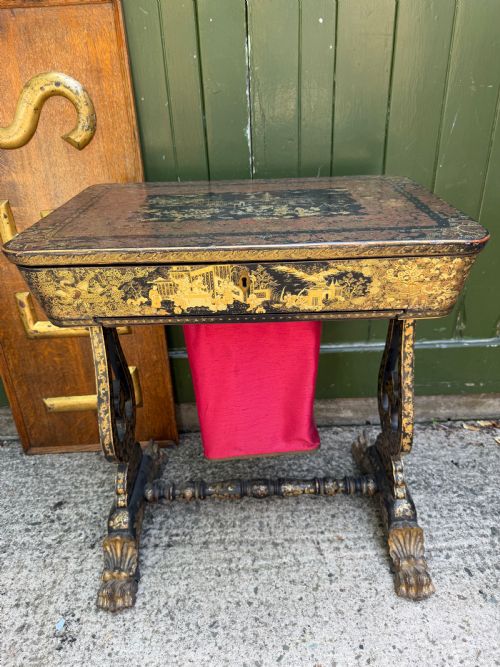
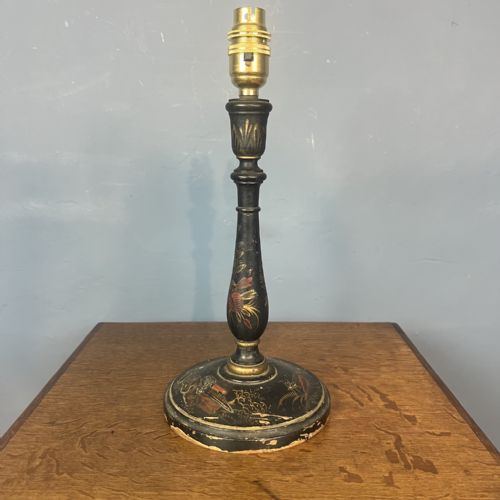
Surface decoration frequently involves black lacquer, hand painting, and gilding, particularly visible in chinoiserie and folk art pieces. Artisans applied successive layers of paint and varnish to achieve durable, glossy, or matte dark finishes on the bases.
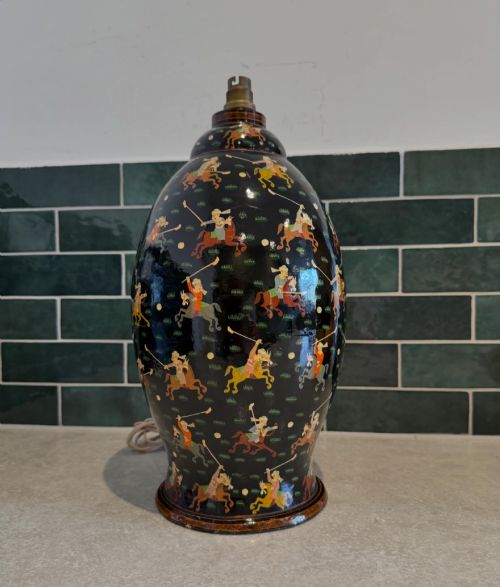
Design styles present on the page range from Victorian and Edwardian chinoiserie to Scandinavian country and Kashmiri folk art.
Judging quality in painted furniture
Quality rests in the execution of the surface finish and the preservation of original painted or gilded decoration. Finer examples show careful attention to detail in hand-painted motifs and well-balanced proportions between the base and the top.
The integrity of the construction materials, whether solid wood, lacquer, or papier-mâché, distinguishes superior pieces. Skill in applying the dark finish and maintaining the structural stability of the base defines the better specimens.
The Black Painted Base Tables Glossary
- Papier-mache
- A composite material made of paper pulp or reinforced paper sheets, bonded with glue and finished with lacquer. It provides a lightweight yet durable base for decorative objects.
- Torchere
- A tall stand or pedestal designed to support a lamp or candleholder. These pieces often feature slender shafts raised on painted or carved bases.
- Lacquer
- A durable resin or varnish finish applied in multiple layers and polished to a smooth sheen. It protects the underlying wood and creates a deep dark surface.
Black Painted Base Tables: Frequently Asked Questions
What periods do these black painted base tables cover?
The pieces span from the eighteenth century through the nineteenth century and into the early twentieth century. Examples include Victorian, Edwardian, and earlier revival styles.
Craftsmanship methods and materials shift across these eras, ranging from Scandinavian country painted items to intricate chinoiserie lacquerwork.
How do I maintain a lacquered or painted wood base?
Keep painted and lacquered surfaces clean by dusting them gently with a soft, dry cloth. Avoid harsh chemical cleaners or excess moisture which can damage the finish.
Place the furniture away from direct sunlight and heat sources to prevent the dark paint or lacquer from fading and cracking over time.
Are these tables suitable for everyday use?
Many of these pieces function well as side tables, lamp stands, or occasional surfaces in modern rooms. Sturdier kitchen tables and dresser bases offer practical utility for daily living.
Delicate papier-mâché or heavily decorated lacquer items require gentler handling and suit display roles rather than heavy daily service.
How can I tell different regional styles apart?
Regional styles show distinct decorative vocabularies, such as the figurative motifs of Kashmiri folk art versus the European interpretations found in Edwardian chinoiserie. Scandinavian country pieces typically display simpler ragwork painted finishes.
Examining the underlying materials, such as pine or lacquered wood, helps identify the likely geographic origin and period of manufacture.