
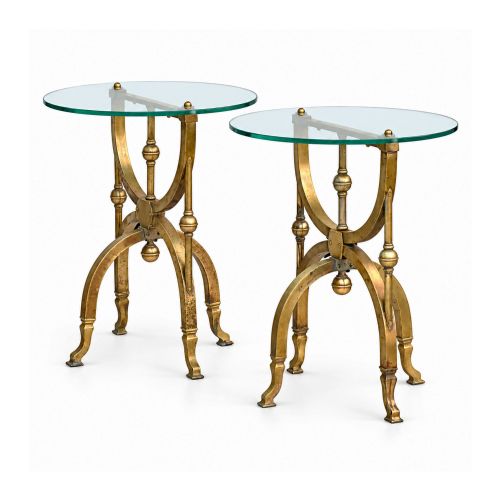
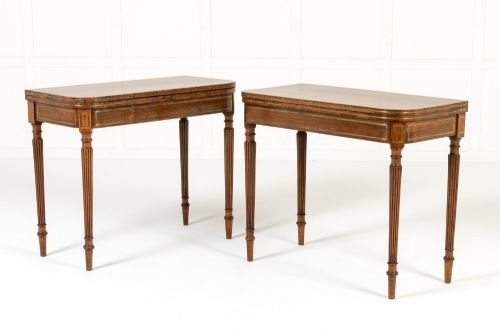
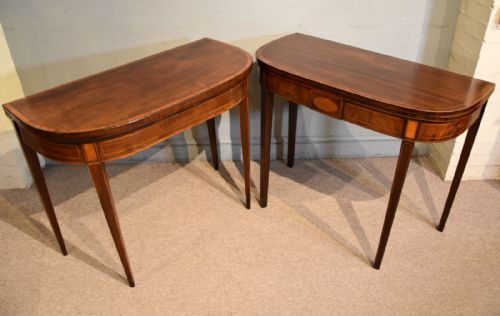

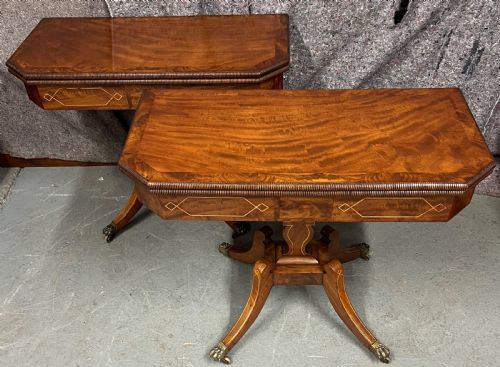


Pair Folding Side Tables
Pair folding side tables bring dual surfaces and clever engineering to a room, offering adaptable card, tea and occasional forms.
Pair Folding Side Tables
When you search for pair folding side tables, you encounter matching sets designed to fold, flip or swivel. These surfaces include card tables, tea tables and occasional tables from various historical periods.
The selections span the eighteenth and nineteenth centuries, taking in Georgian, Regency, Victorian and 1920 dates. Woods such as mahogany, rosewood and walnut dominate the offerings alongside occasional examples in oak, padauk and painted finishes.
How they were made
Cabinetmakers constructed these pieces using solid timbers and decorative veneers such as satinwood, boxwood and rosewood. Inlays and brass details appear across the Regency and Georgian pieces.
The folding mechanisms rely on hinged tops that rotate, fold over or collapse. Supporting legs swing out to bear the weight of the open leaf.
Some tables hide a secret well beneath the folding top, originally designed to store counters and deck markers.
What varies in quality
The refinement of the timber and the precision of the joinery set the standard for these objects. Crisp carving, balanced grain matching and tight hinges distinguish the better examples.
Matched pairs require consistent ageing and wear across both items. Cohesion in colour and timber figure determines how successfully the two pieces sit together.
George Oakley
The Pair Folding Side Tables Glossary
- Card Table
- A folding table designed for gaming, featuring a baize-lined interior surface when opened. These tops often swivel or fold flat against a frieze.
- Tea Table
- A small folding table intended for serving tea, equipped with a hinged top that opens to display a polished wooden surface. They date frequently to the eighteenth and nineteenth centuries.
- Demi-lune
- A half-moon shape characteristic of certain eighteenth century card tables. This profile allows the closed table to sit flush against a wall.
- Frieze
- The horizontal band beneath the tabletop. This section often houses the hinges and swiveling mechanisms for the folding top.
Pair Folding Side Tables: Frequently Asked Questions
How were they used historically?
Owners placed these items against room walls to save space during daily routines. When guests arrived, the tables opened into larger surfaces for entertainment.
Card tables provided baize-lined areas for evening gaming, while tea tables held ceramic services during social gatherings.
How do I live with them?
Position the pair together against a living room wall or separate them as matching bedside or hallway surfaces. Their folding mechanism allows easy adjustment depending on daily spatial needs.
Keep the surfaces away from direct heat sources and moisture to protect the polished wood and delicate inlays.
How do I tell periods apart?
Eighteenth century examples often display clean classical lines in mahogany with satinwood or boxwood stringing. Regency and George IV items introduce bolder rosewood grains and brass mounts.
Victorian and later twentieth century pieces show heavier walnut timbers, carved details or painted Scandinavian and Oriental finishes.