

Brown Oval Pedestal Table
A brown oval pedestal table brings warmth and proportion to a room, offering a sturdy central column that leaves floor space free.
Brown Oval Pedestal Table
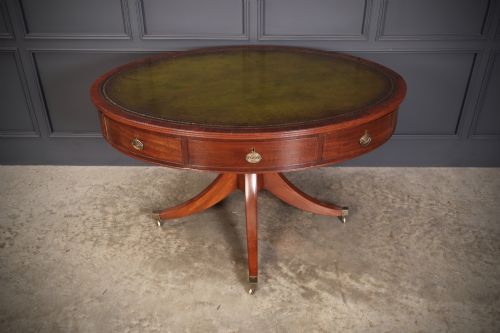
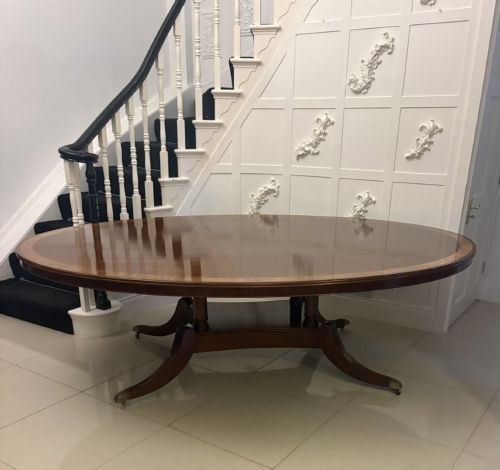
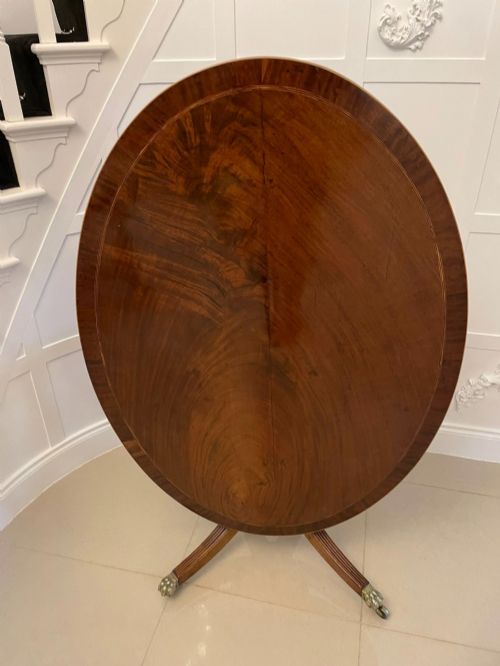
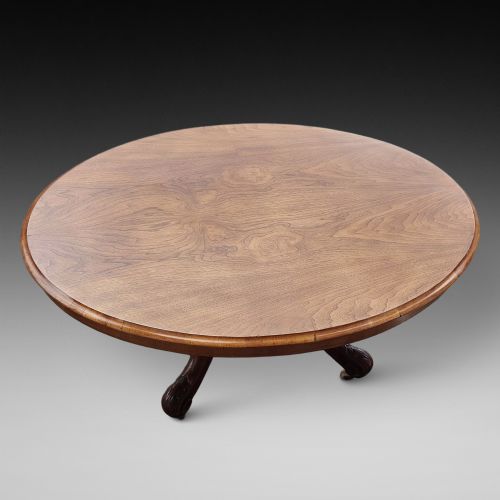
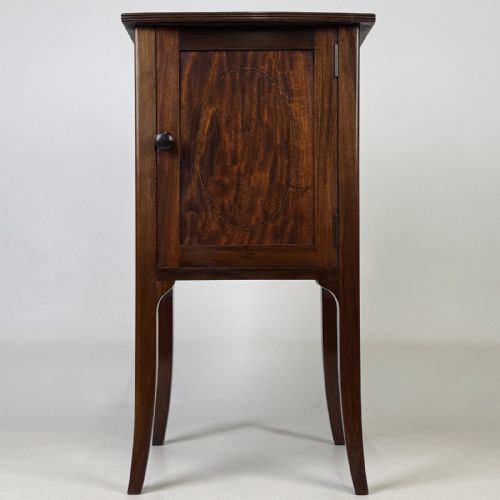
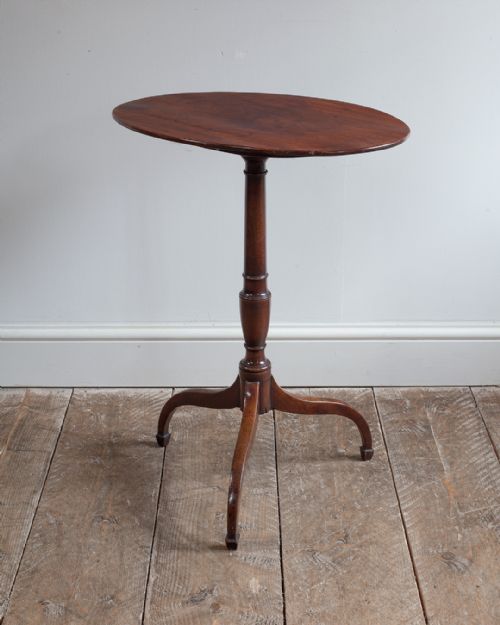
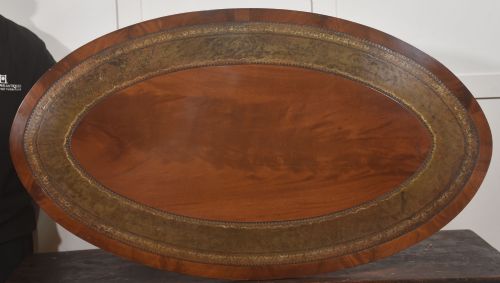
When you search for a brown oval pedestal table, you encounter various dining, breakfast, centre, and occasional tables spanning the Georgian, Victorian, and Edwardian periods. These pieces feature a central pillar or multiple pedestals supporting rich wooden surfaces.
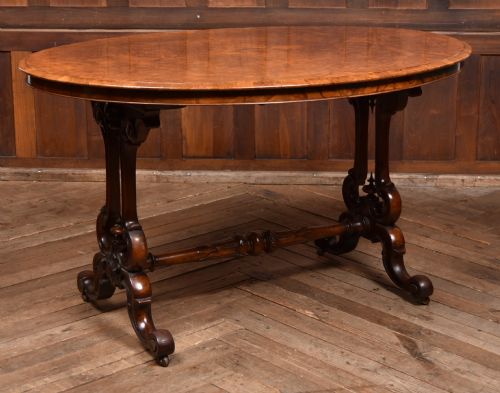
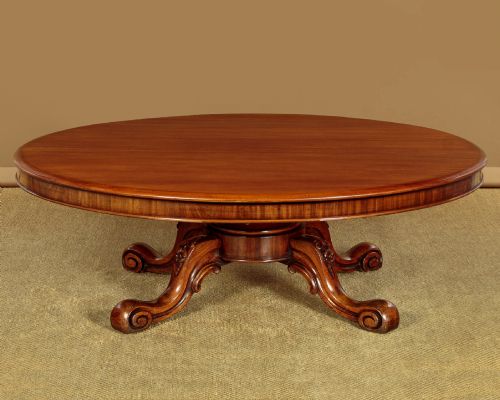
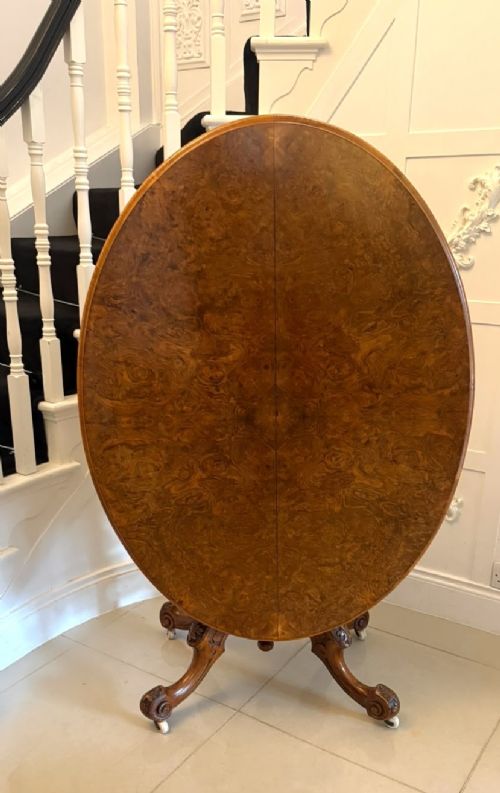
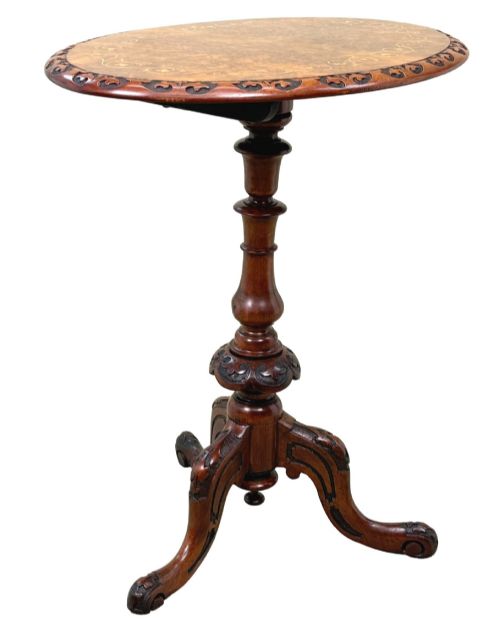
Victorian burr walnut pieces dominate the selection, often taking the form of tilt-top loo tables or centre tables with carved bases. Alongside these, mahogany dining tables and smaller occasional tables appear frequently in both original nineteenth-century and later revival styles.
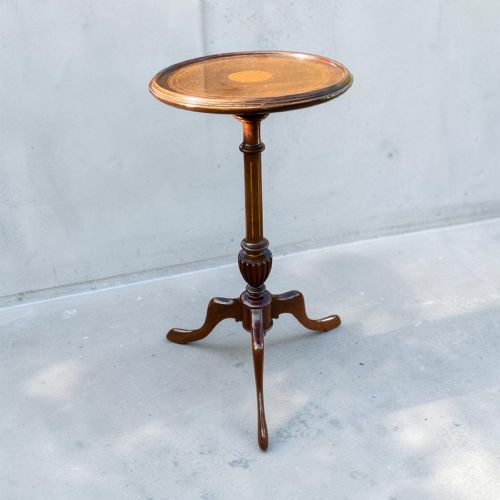
The forms range from compact lamp and coffee tables to large extending dining tables designed for seating multiple guests. Each version utilises the curved oval perimeter to soften room layouts while providing practical surface area.
How they were made
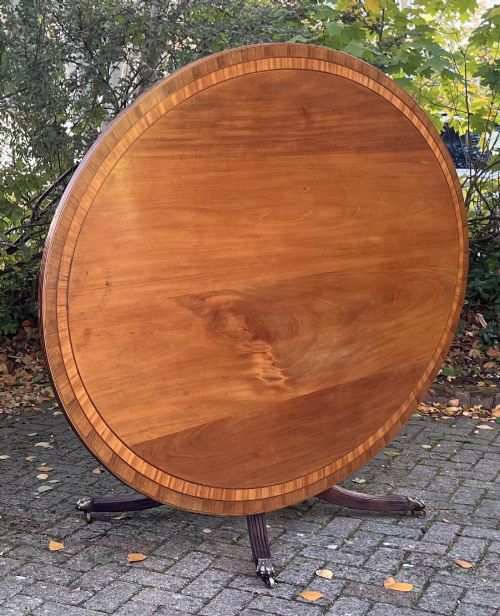
Cabinet makers constructed these tables primarily using solid mahogany, oak, or walnut frames veneered with highly figured burr walnut to create striking grain patterns on the tops. Marquetry, boxwood inlay, and satinwood crossbanding frequently border the perimeters.
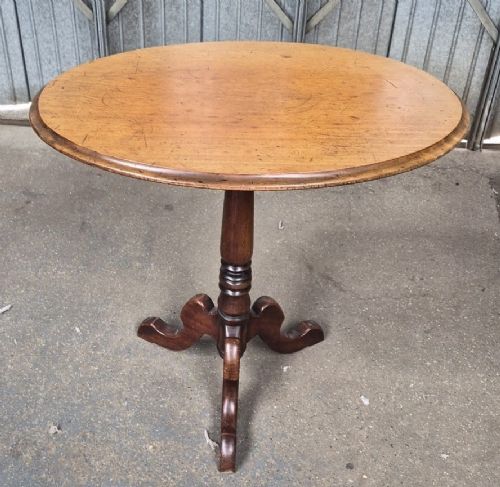
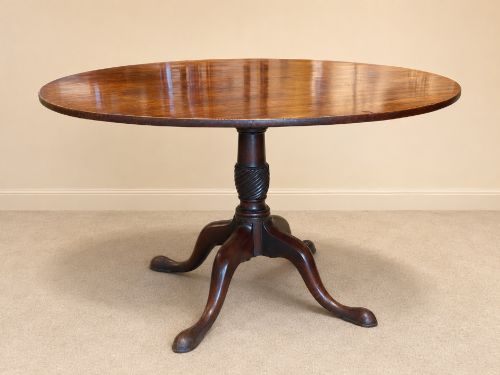
Central pedestals rely on sturdy timber columns mounted onto tripod or quadrapod carved legs, sometimes incorporating brass castors for mobility. Tilt-top mechanisms utilise clever pivoting catches that allow the surface to fold upright when not in use.
Brown Oval Pedestal Table Retail Price Guide 2026
Typical asking prices for brown oval pedestal table among the pieces listed under this phrase on Sellingantiques today, from the lower quarter to the upper quarter. They describe what is for sale here now, not the wider market.
The listings encompass Victorian, Edwardian, and Georgian periods, utilising mahogany, burr walnut, and oak.
What varies in quality
The selection of timber grain largely dictates visual appeal, with richly figured burr walnut and carefully matched mahogany veneers sitting at the upper end of the scale. Figured surfaces show depth and movement that plain timber lacks.
Carving execution on the pedestal bases and legs reveals the hand of skilled artisans, distinguishing workshop pieces from mass-produced furniture. Crisp mouldings and tightly fitted tilt mechanisms reflect superior construction standards.
Wylie & Lochead
The Brown Oval Pedestal Table Glossary
- Pedestal table
- A table supported by a central upright column or pillar rather than four corner legs. This construction maximises legroom around the perimeter.
- Tilt-top
- A hinged tabletop mechanism that pivots from horizontal to vertical. This allows the furniture to stand flat against a wall when space is needed.
- Burr walnut
- Wood taken from the gnarled growth of a walnut tree, yielding complex, swirling grain patterns. Cabinet makers slice this wood into thin veneers for tabletops.
- Crossbanding
- A decorative border of veneer laid around the edge of a tabletop with the grain running perpendicular to the centre. It creates a contrasting frame effect.
- Quadrapod base
- A pedestal support resting on four carved legs rather than three. This layout provides enhanced stability for larger oval surfaces.
Brown Oval Pedestal Table: Frequently Asked Questions
How do I use a tilt-top table?
Release the brass catch beneath the tabletop to pivot the surface into a vertical position for storage or movement. Ensure the lock engages securely before lowering items back onto the top.
Keep the pivot mechanism lightly oiled to maintain smooth operation without straining the wooden mountings during adjustment.
Where does an oval pedestal table fit best?
An oval table suits medium to large reception rooms where straight edges feel too rigid or space requires softening. The curved perimeter improves traffic flow around the centre of the room.
Pair a small occasional version beside seating or place a larger pedestal dining model centrally beneath a pendant light.
How do I identify Victorian walnut pieces?
Look for rich brown burr veneers with intricate, swirling grain patterns across the top surface, paired with solid walnut framing. Victorian examples often feature carved central pillars and tilt mechanisms.
Examine the underside for hand-cut screws, timber shrinkage lines, and traditional joint construction consistent with nineteenth-century cabinet making.