



Brown Oriental Altar Table
These brown oriental altar table pieces offer centuries of regional craftsmanship, bringing distinctive wooden architecture directly into contemporary interiors.
Brown Oriental Altar Table
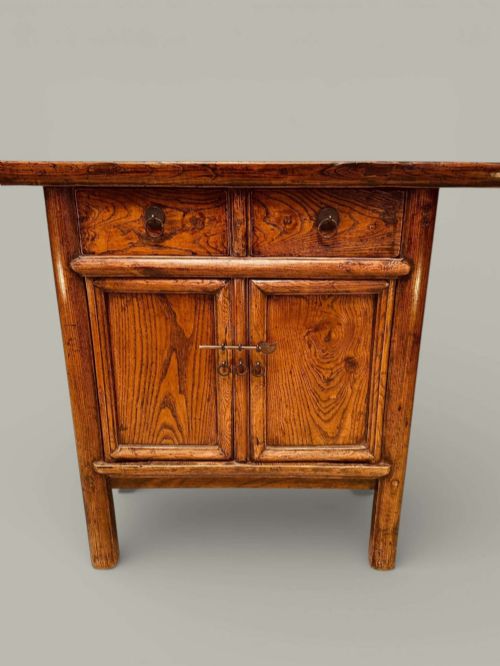
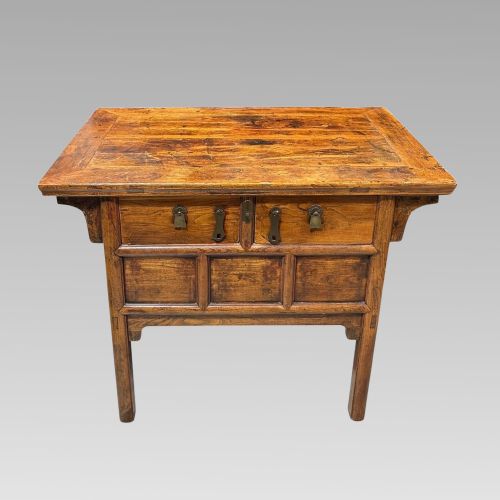
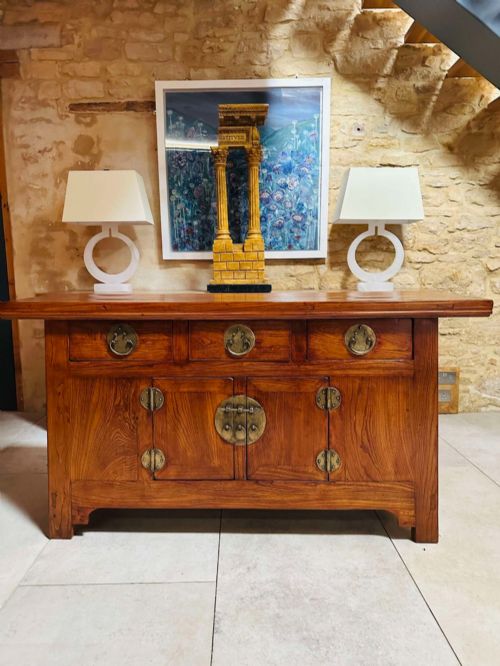
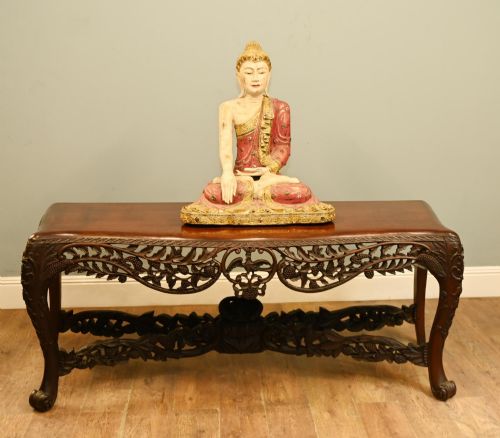
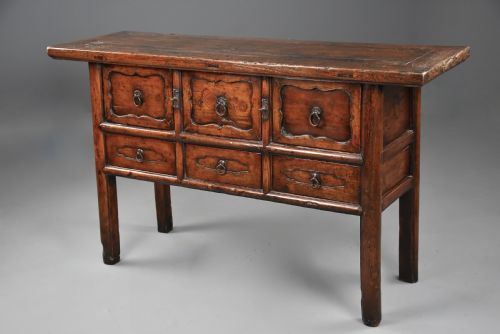
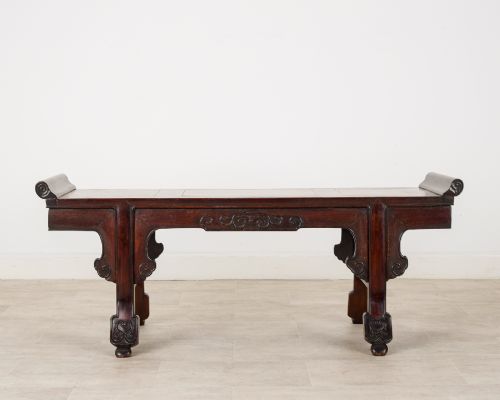
A brown oriental altar table represents traditional Chinese furniture forms dating primarily from the eighteenth and nineteenth centuries. These pieces encompass rectangular console tables, low tables, and trestle designs originally shaped for ceremonial spaces or domestic utility.
The version most frequently encountered on this page is the elm or hardwood console table from the Qing Dynasty. Such tables often display long, narrow proportions with characteristic structural joinery suited to both historic interiors and modern placement.
Materials and construction methods
Construction relies heavily on dense regional timbers such as elm and various hardwoods, selected for their structural resilience. Artisans utilised traditional mortise and tenon joinery, allowing the wooden frames to expand and contract naturally over decades of use.
Surfaces frequently receive hand-rubbed finishes, highlighting the natural grain of the timber or incorporating subtle lacquer applications. Metal elements like brass or iron fittings occasionally appear on drawers and structural brackets.
Brown Oriental Altar Table Retail Price Guide 2026
Typical asking prices for brown oriental altar table among the pieces listed under this phrase on Sellingantiques today, from the lower quarter to the upper quarter. They describe what is for sale here now, not the wider market.
Current listings span the eighteenth to early twentieth centuries, featuring elm, hardwood, brass, and lacquer.
Assessing quality in historical tables
Quality rests primarily in the integrity of the timber and the crispness of any carved detailing. Hardwood variants generally command greater attention due to the density and grain pattern of the material.
Proportion and surface patina also dictate distinction, where tables retaining an honest, unblemished finish and sound structural joints demonstrate superior craftsmanship from their respective period.
The Brown Oriental Altar Table Glossary
- Altar table
- A long, narrow ceremonial or domestic table originating from China, typically featuring upturned flange ends or recessed legs.
- Qing Dynasty
- The final imperial dynasty of China, spanning from sixteen-forty-four to nineteen-twelve, known for sophisticated hardwood furniture production.
- Elm
- A resilient domestic timber widely utilised in regional Chinese cabinet-making for its fibrous grain and durability.
- Mortise and tenon
- A traditional woodworking joint where a projecting tongue fits snugly into a corresponding cavity, securing the frame without metal fasteners.
Brown Oriental Altar Table: Frequently Asked Questions
How were altar tables originally used?
These tables served primarily as surfaces for domestic ancestral worship, holding ritual objects, incense burners, or decorative items within traditional homes.
Over time, their elegant proportions also suited them for functional placement against walls in principal rooms.
Where should I place an altar table?
Their narrow footprint makes them ideal for hallways, living room perimeters, or behind sofas where floor space is limited.
They provide a flat display surface while introducing historic architectural character to an interior scheme.
How do I care for antique elm furniture?
Keep wooden pieces away from direct heat sources and sudden humidity changes to prevent the timber from splitting or warping.
Dust regularly with a dry cloth and occasionally nourish the surface with natural wax suited for antique finishes.
How can I tell a Qing Dynasty table apart?
Qing period examples typically exhibit dense hardwood construction, traditional joinery, and restrained or elaborate carving depending on the regional workshop.
Examining the underside and drawer construction often reveals the hand-tool marks characteristic of nineteenth-century production.