





Brown Oak Throne
A brown oak throne stands as a commanding seat, offering substantial timber construction and historic presence for the home.
Brown Oak Throne
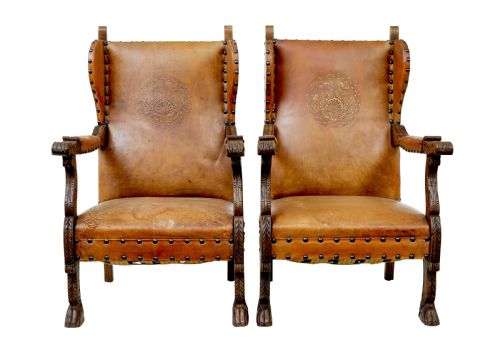
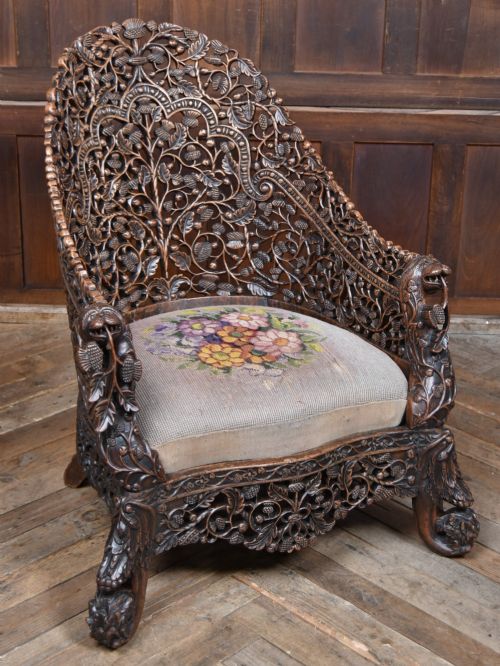
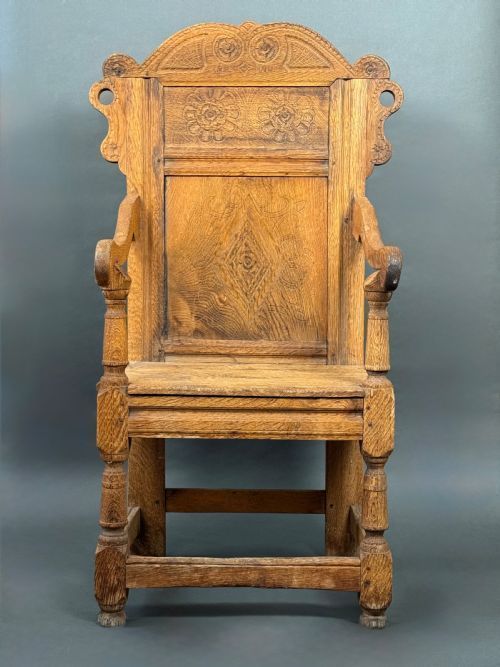
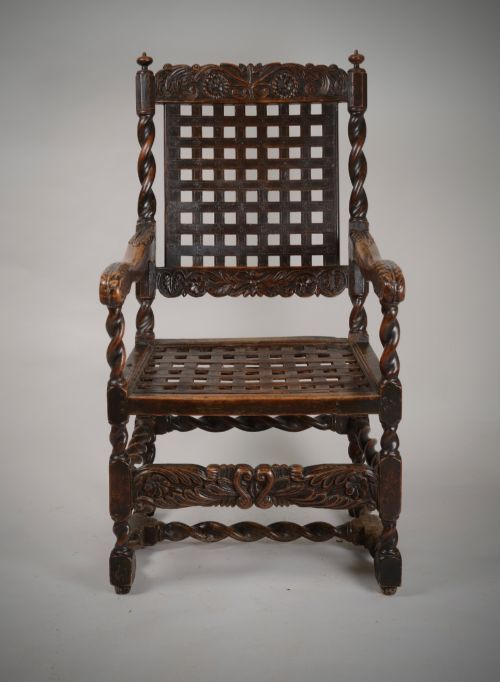
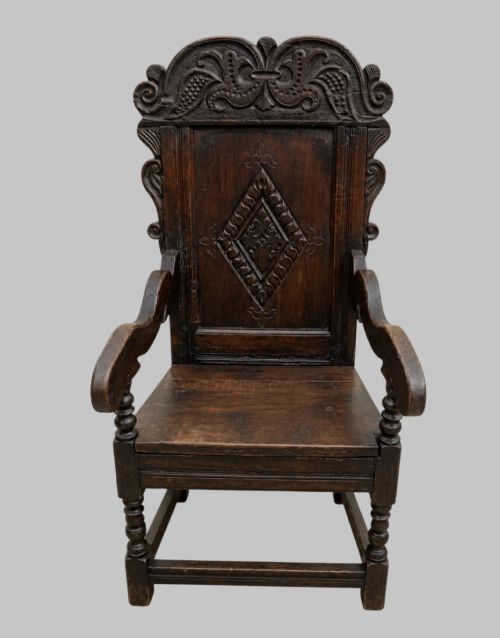
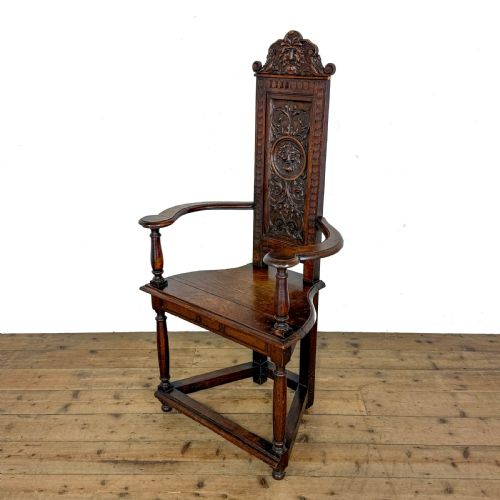
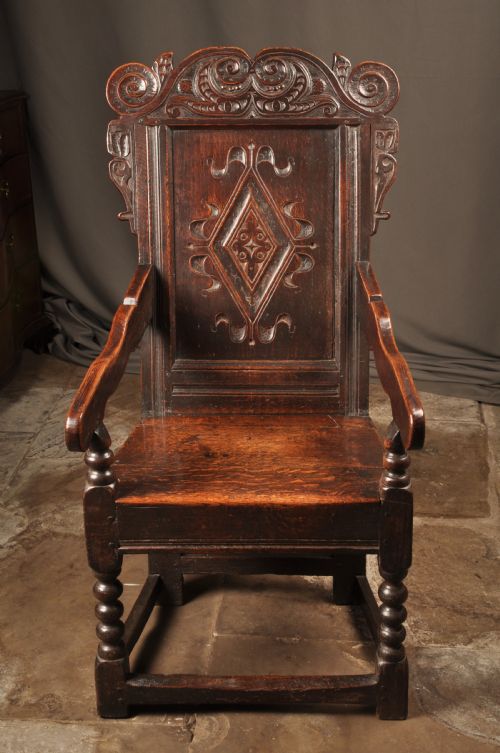
A brown oak throne typically manifests as a substantial armchair, wainscot chair, or high-backed elbow seat designed to draw attention in a room. Buyers searching for a brown oak throne will encounter heavy timber seating originating from periods spanning the seventeenth century through to the Victorian era.
The pieces appearing here include authentic seventeenth century examples alongside nineteenth century revivals fashioned in the Jacobean, Gothic, and Carolean styles. Regional variations such as Welsh and Yorkshire wainscot chairs frequently populate the selection alongside continental forms.
Most entries function primarily as armchairs or great chairs, utilising solid construction methods typical of early English joinery. The overarching form remains heavy and architectural, offering deep seats and high panels that define the archetype.
Distinctions in quality
Quality rests in the crispness of the hand carving and the integrity of the original timber framing. Pieces retaining their structural joinery without excessive replacement timber command greater regard from collectors.
The depth of the colour in the aged oak and the presence of period upholstery materials distinguish superior examples from later copies. Proportion and the subtlety of regional carving details further separate standard pieces from exceptional ones.
The furniture styles range from Gothic Revival and Jacobean to Charles II and English Country designs.
The Brown Oak Throne Glossary
- Wainscot chair
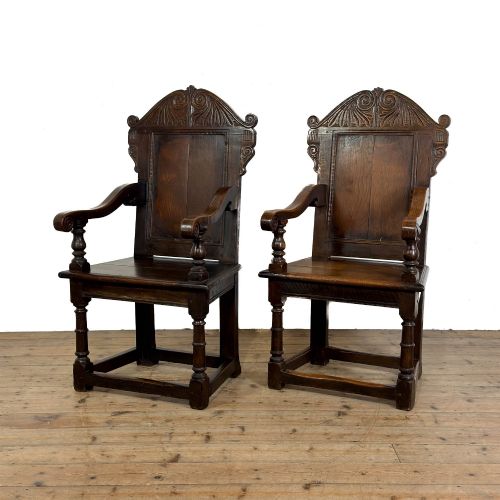
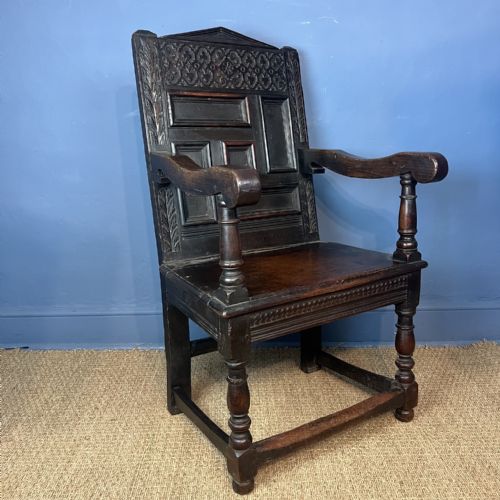
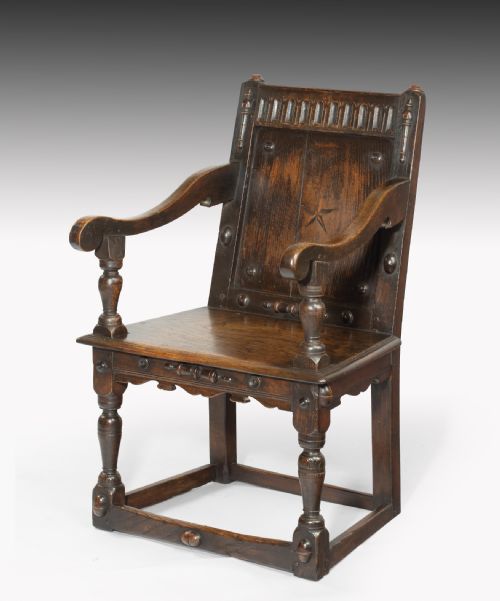
- A heavy wooden armchair constructed primarily from oak panels with solid panelled backs and substantial armrests. This form was common in prosperous seventeenth century households.
- Caquetoire
- A lightweight continental armchair featuring a trapezoidal seat and a high, narrow back designed for conversation. These pieces appeared in French and Flemish traditions.
- Glastonbury chair
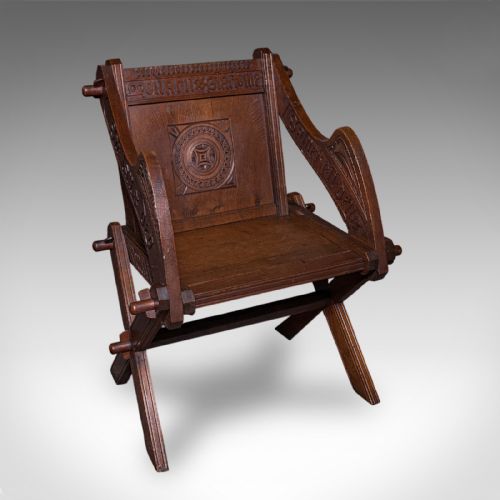
- A distinctive type of ecclesiastical elbow chair with an X-framed base and sloping arms. The style draws on medieval prototypes revived during the Victorian period.
- Turner's chair
- A round chair constructed from turned wooden spindles and triangular seats. These seats are also known as Glastonbury or Saxon chairs in nineteenth century terminology.
- Carolean
- A style spanning the reign of Charles II characterised by rich carving, scrolling foliage, and crown motifs. Furniture from this period utilises walnut alongside oak.
Brown Oak Throne: Frequently Asked Questions
How do I identify a seventeenth century wainscot chair?
Seventeenth century wainscot chairs feature pegged mortise and tenon joinery with solid panelled backs, heavy armrests, and visible tool marks from hand working. The timber displays deep natural patination acquired over centuries of use.
Such pieces often exhibit regional carving traits, such as those associated with Welsh or Yorkshire workshops, distinguishing them from later nineteenth century revivals.
What is a Glastonbury chair?
A Glastonbury chair is an ecclesiastical-style elbow chair characterised by an X-form folding frame, a sloping panel back, and flat armrests. Many examples seen today date from the Victorian Gothic Revival period.
The design references medieval church seating and was popularised in nineteenth century interiors seeking historical authenticity.
Where were wainscot chairs used?
Wainscot chairs served as principal seats of authority in seventeenth century great halls, reserved for the head of the household or esteemed guests. Their solid wooden panels protected occupants from cold draughts.
Over time, these heavy chairs transitioned into domestic reception rooms and studies as symbols of tradition and status.
How should I care for historic oak seating?
Historic oak furniture requires stable indoor humidity levels and protection from direct sunlight to prevent timber shrinkage and cracking. Regular dusting with a dry cloth maintains the surface without stripping the aged patina.
Leather and fabric elements benefit from gentle cleaning suited to their specific material composition, avoiding harsh modern chemical treatments.