

Brown Oak Study Desk
A brown oak study desk offers a rich, deep timber grain that anchors a room with working history.
Brown Oak Study Desk
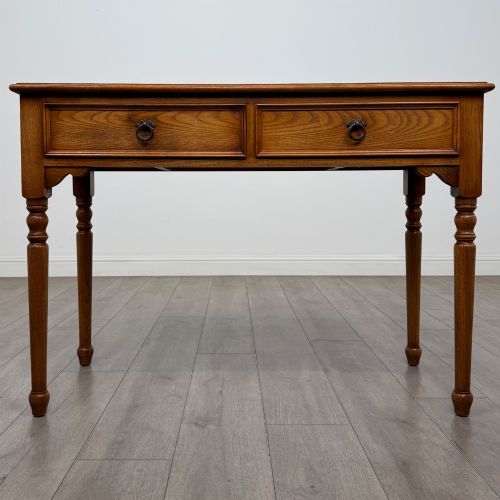
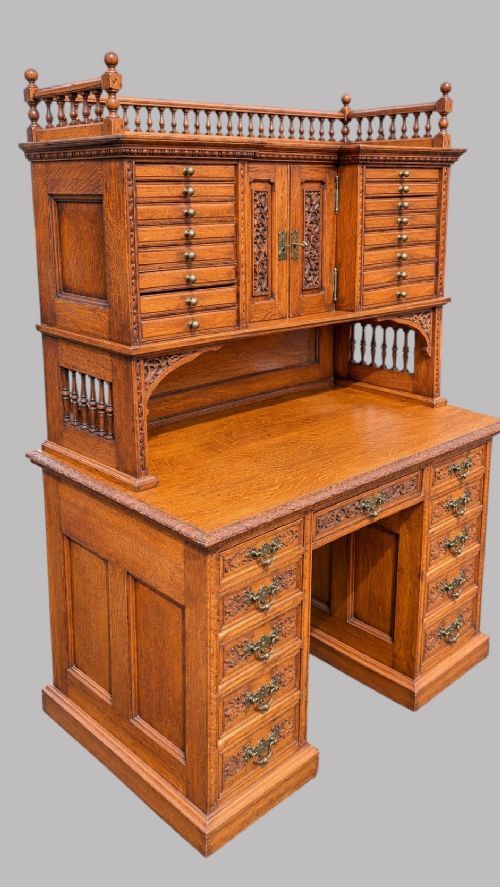
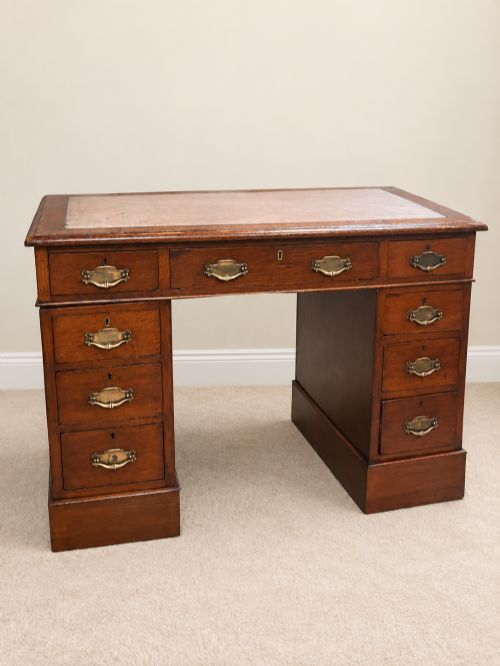
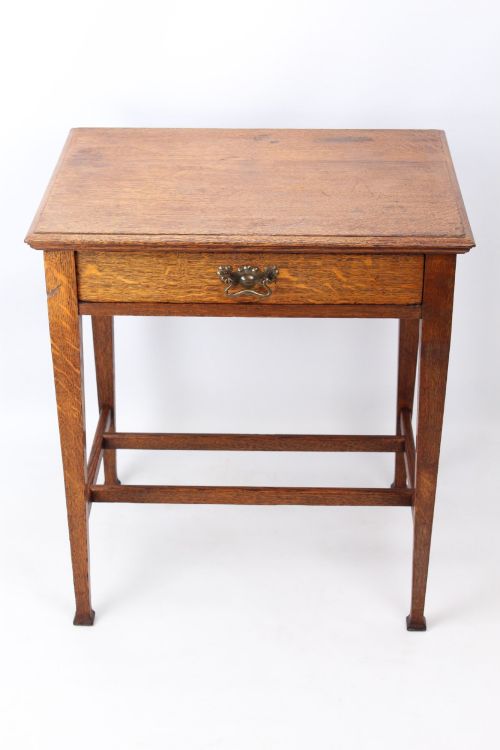
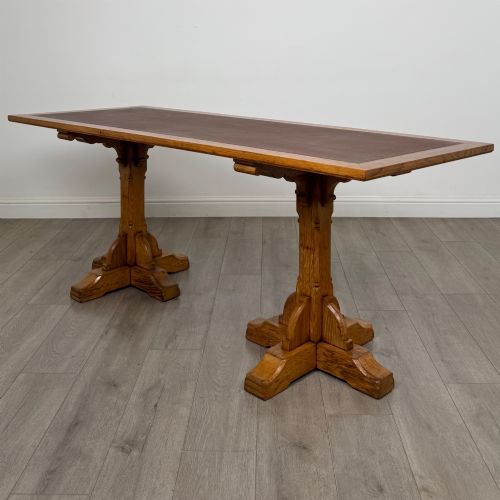
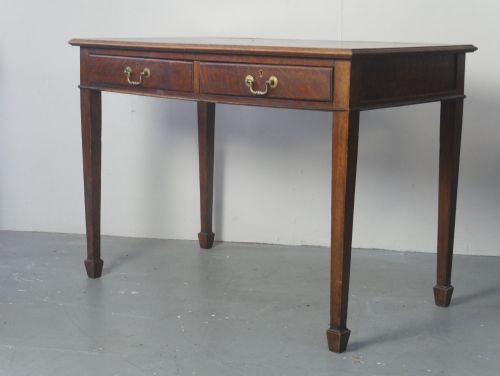
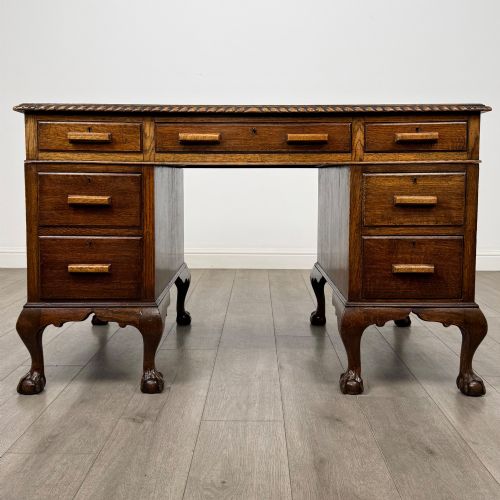
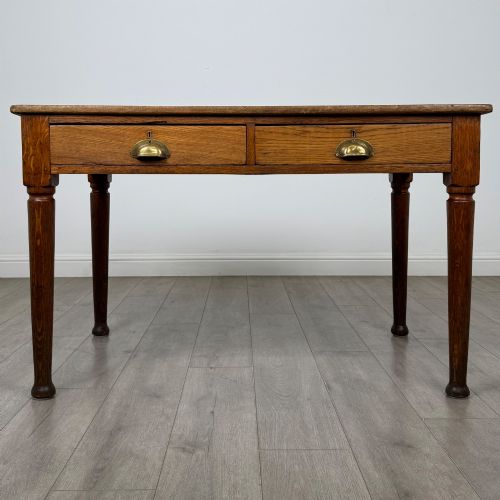
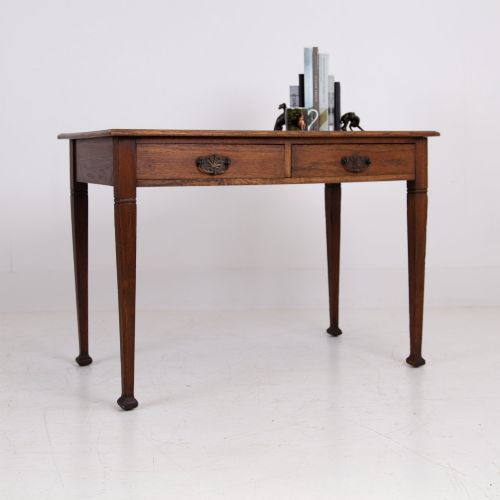
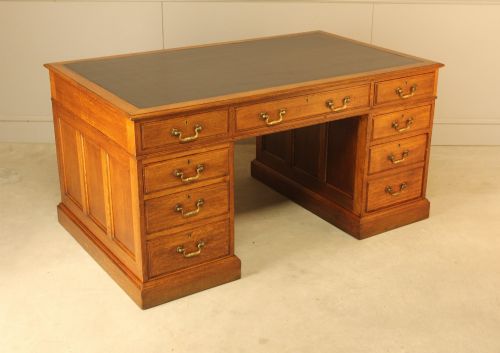
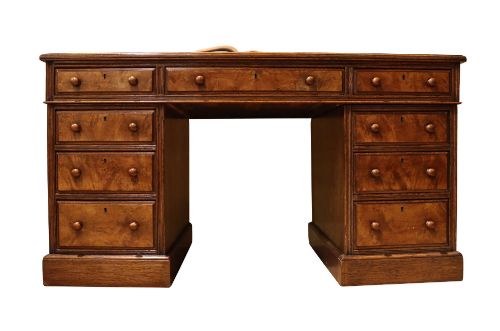
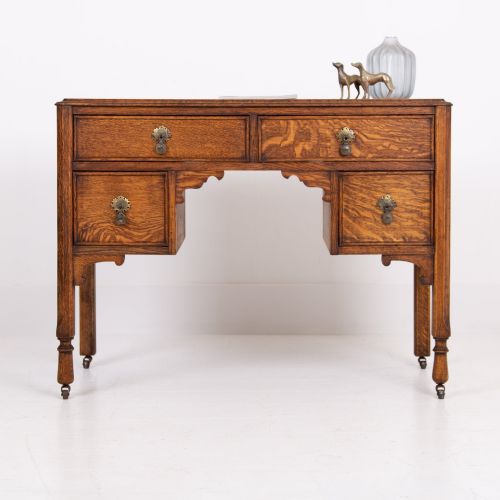
A brown oak study desk brings together heavy timber construction and practical writing surfaces designed for nineteenth and twentieth-century working spaces. You will find pedestals, kneeholes, and smaller writing tables shaped by Victorian, Edwardian, and Arts and Crafts makers.
The material itself defines these pieces, showing the distinct warm tones and figuring of English oak, pollard oak, and burr walnut highlights. Many examples incorporate fitted drawers, leather writing surfaces, and brass handles suited to library or study use.
Materials and construction
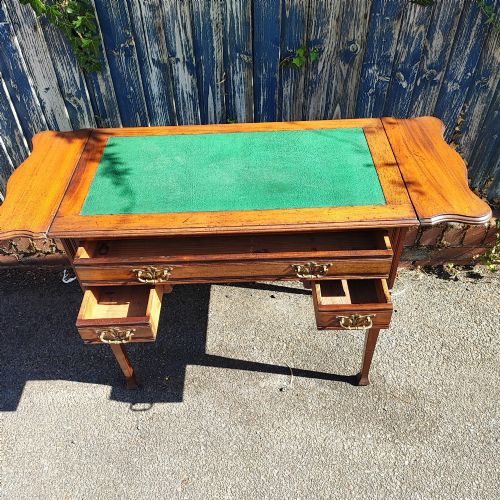
Makers built these desks using solid oak frames, frequently complemented by secondary timbers like pine and enriched with pollard oak or burr walnut veneers. Writing surfaces typically feature inset leather panels, while drawers and cabinets utilise dovetailed joints and brass or iron hardware.
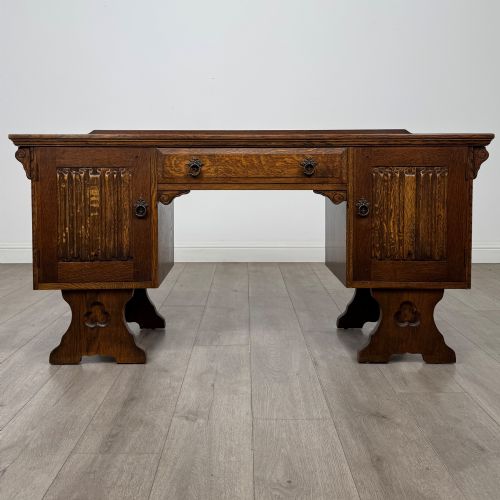
Carved details such as linenfold panels or Gothic Revival motifs appear alongside clean Arts and Crafts lines. Hand-finished polishing brings out the natural golden and deep brown hues of the wood without masking the grain.
The listings span the Victorian, Edwardian, Arts and Crafts, and Art Deco periods, utilising oak, pollard oak, burr walnut, brass, and leather.
Assessing quality
Quality rests in the selection of the timber figures, such as figured brown oak or burr walnut, and the crispness of any carved ornamentation. Superior examples display balanced proportions, original brass or iron fittings, and well-fitted interior drawer dividers.
The integrity of the construction, from stable pedestal frames to smooth-sliding drawers, separates standard utility furniture from finer library pieces. Original leather inserts and well-preserved patination also distinguish better specimens.
Gillows·Heal's·Bruce James Talbert·Blyth and Son
The Brown Oak Study Desk Glossary
- Brown oak
- Timber taken from oak trees affected by a fungal process that deepens the wood into rich brown tones. This coloration makes each writing table visually distinct.
- Pedestal desk
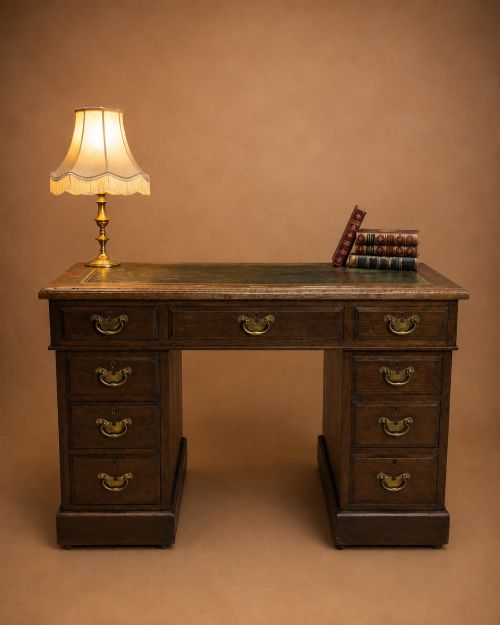
- A freestanding desk comprising two supporting pedestals of drawers beneath a single top. It offers substantial storage flanking a central kneehole.
- Linenfold
- A style of wood carving that mimics folded fabric. It appears frequently on Edwardian panels.
- Pollard oak
- Timber gathered from trees pollarded to produce dense, highly figured grain patterns. It provides dramatic visual texture on Victorian surfaces.
- Kneehole desk
- A compact desk configuration featuring a central recess for the sitter's legs. Flanking banks of drawers provide enclosed storage.
Brown Oak Study Desk: Frequently Asked Questions
How do I care for a leather desk top?
Leather desk inserts require gentle cleaning with a slightly damp cloth to remove dust and debris. Avoid harsh chemical cleaners that can strip the natural finish from the hide.
Applying a specialist leather balm periodically keeps the surface supple and prevents cracking. Keeping the desk away from direct sunlight preserves both the leather and the surrounding brown oak timber.
How do I distinguish Victorian from Edwardian desks?
Victorian desks tend to feature heavier proportions, darker finishes, and more ornate carved details such as Gothic Revival or Aesthetic Movement motifs. They often employ rich secondary woods like burr walnut alongside the primary oak.
Edwardian desks frequently show lighter golden tones and cleaner lines influenced by the Arts and Crafts movement. Construction methods remained robust, but the overall aesthetic favoured simpler forms and functional utility.
Were these desks used in offices or homes?
These desks served in both domestic libraries and professional offices, depending on their size and form. Large pedestal desks and partners desks equipped the studies of substantial houses and administrative headquarters.
Smaller writing tables and bureau formats suited domestic bedrooms, drawing rooms, or private studies. Banker's and clerk's desks fulfilled specific commercial roles in counting houses.