

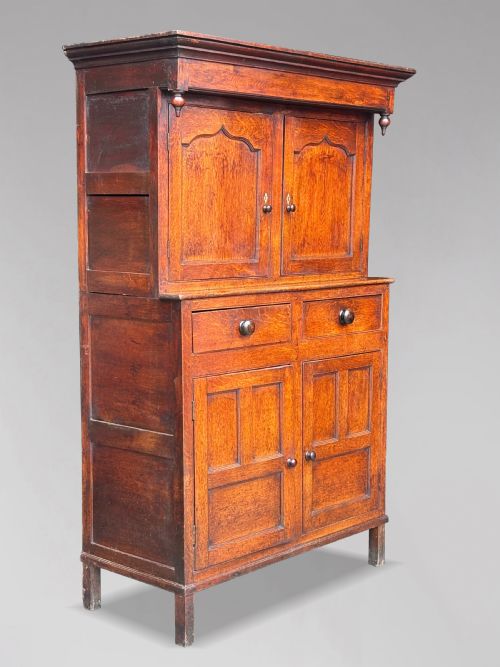


Brown Oak Livery Cupboard
A brown oak livery cupboard is a heavy timber storage piece built for keeping food and linen, offering rich grain and deep period character.
Brown Oak Livery Cupboard
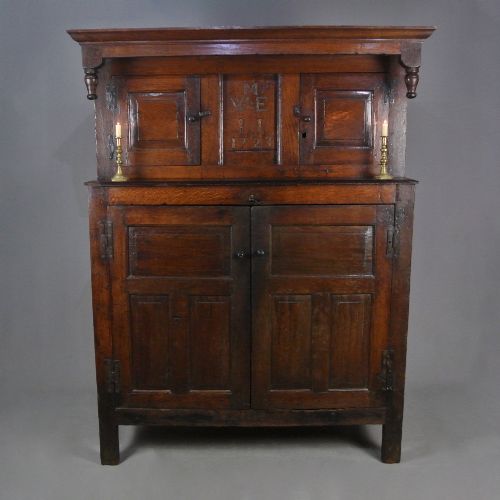
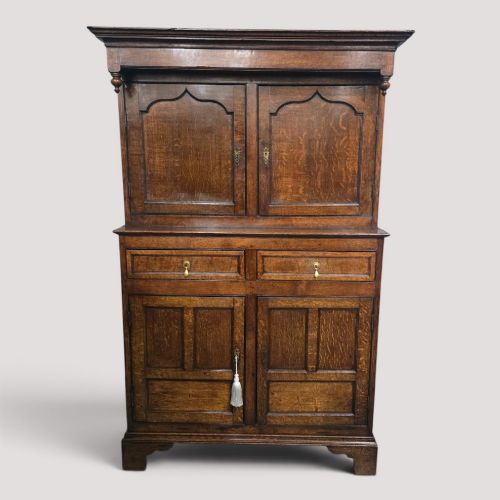
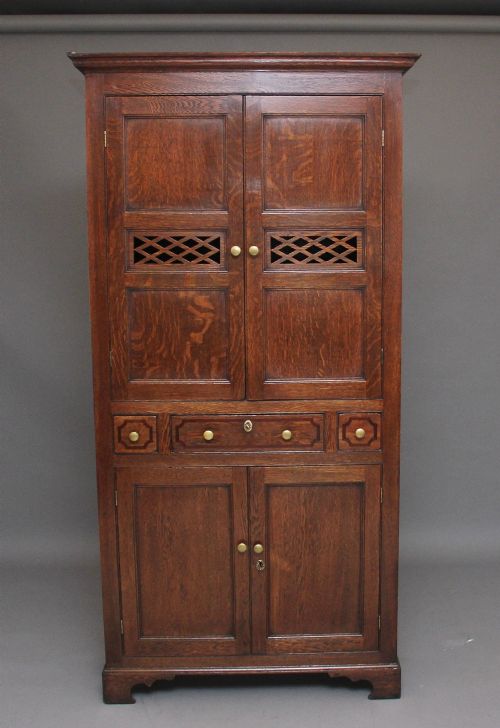
A brown oak livery cupboard stands as a substantial piece of early storage furniture designed to hold provisions, linens, and domestic goods. The selection spans centuries from the seventeenth through the nineteenth, with Georgian and seventeenth-century examples appearing most frequently.
Form varies widely across the inventory, ranging from standing court cupboards and press cupboards to mural livery cupboards and wall-hanging food cupboards. Pieces originate from English and Welsh workshops, often reflecting regional traditions like the Cwpwrdd Deuddarn.
Makers utilised sturdy timbers to build furniture meant for heavy domestic service, resulting in robust forms that survive from the seventeenth, eighteenth, and nineteenth centuries.
What varies in quality
The degree of hand carving and the complexity of architectural detailing separate standard utilitarian storage from finer decorative examples. Crispness in the chisel work on the oak panels indicates the skill of the original carpenter.
Originality of the timber and surviving period brass or iron hardware determine the overall integrity of the piece. Pieces that retain their early surface patination and unreplaced fittings represent the higher end of the range.
Listings feature oak material across periods from the seventeenth century through nineteen-twenty, including Georgian and Charles II styles.
The Brown Oak Livery Cupboard Glossary
- Livery cupboard
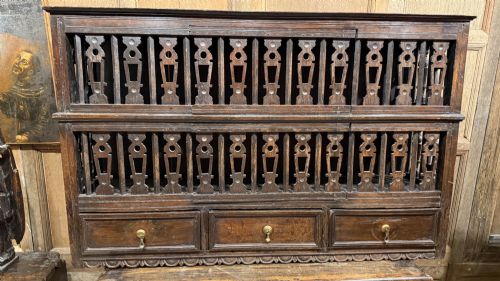
- A traditional storage cabinet used originally for rations, food, or candles. These pieces often feature ventilated doors or open upper sections.
- Court cupboard
- A two-stage wooden cabinet common in the seventeenth century, typically featuring carved supports and enclosed upper and lower compartments.
- Deuddarn
- A traditional Welsh two-section oak press cupboard used for storing household linen and provisions. This form is characteristic of Welsh country workshops.
- Mural livery cupboard
- A compact storage cabinet designed to be hung upon a wall rather than stood upon the floor. These pieces are often referred to as wall-hanging food cupboards.
- Linen press
- A tall storage furniture item combining sliding trays or shelves with lower drawers for folded textiles. Examples are recorded in oak from later periods.
Brown Oak Livery Cupboard: Frequently Asked Questions
What is a brown oak livery cupboard?
A brown oak livery cupboard is a traditional timber storage cabinet built for provisions and household goods. These pieces date primarily from the seventeenth and eighteenth centuries.
They display the robust construction and heavy grain typical of early English and Welsh country furniture. Regional forms such as the court cupboard and the Deuddarn appear frequently.
How do I date a livery cupboard?
Dating relies on examining the construction methods, joinery, timber selection, and decorative carving styles. Seventeenth-century pieces typically show pegged frames and geometric panels.
Later eighteenth and nineteenth-century examples often incorporate Georgian proportions or simpler panel designs. Inscribed dates carved into the wood occasionally provide direct evidence of the year of manufacture.
Where were these cupboards made?
These cupboards originated in English and Welsh workshops, constructed by regional carpenters using locally sourced timber. Welsh examples often follow distinct vernacular forms like the Cwpwrdd Deuddarn.
English pieces span various styles including Jacobean, Charles II, and Georgian country designs. Each region utilised available hardwoods suited to domestic furniture.
How do I care for antique oak?
Antique oak requires a stable indoor environment away from direct heat sources and dramatic humidity fluctuations. Excessive dryness can cause the old timber to split or shrink.
Applying a traditional beeswax polish occasionally helps nourish the surface patination. Avoid modern silicone sprays that can damage the historical finish of the wood.