
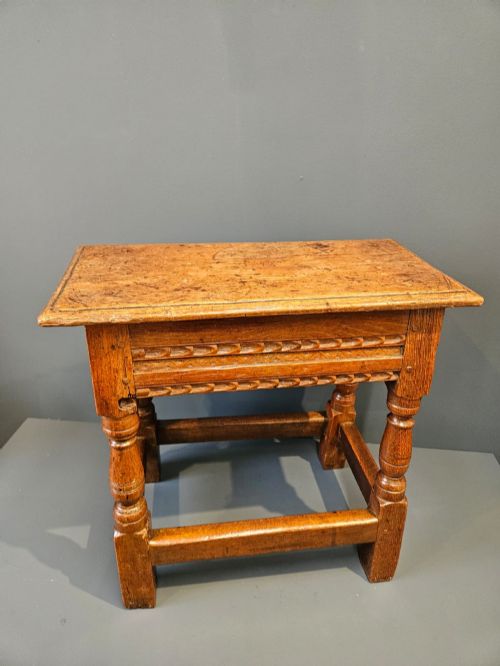
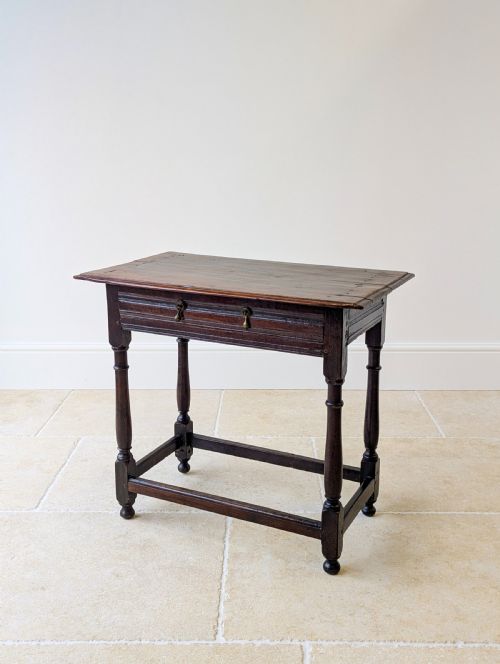


Brown Oak Joint Table
These brown oak joint table pieces bring sturdy historic character into a room through honest timber construction and timeless domestic forms.
Brown Oak Joint Table
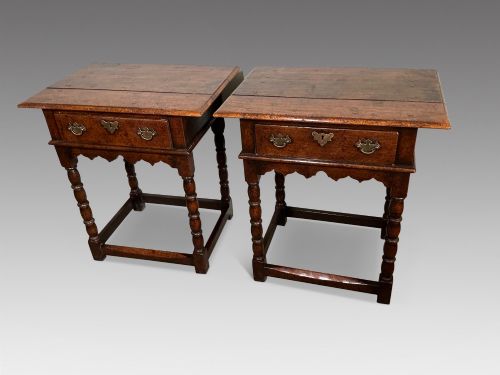
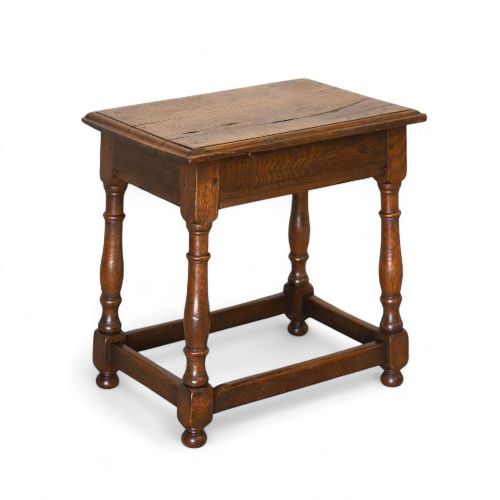
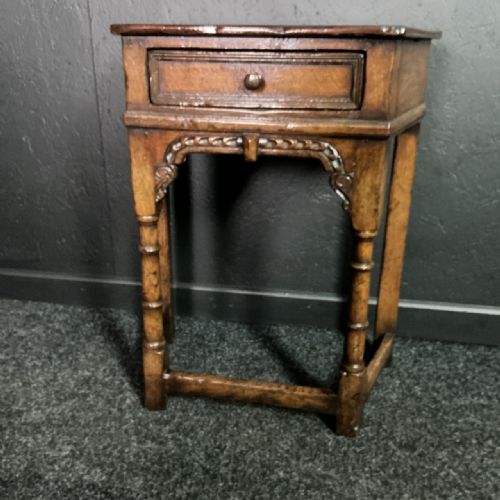
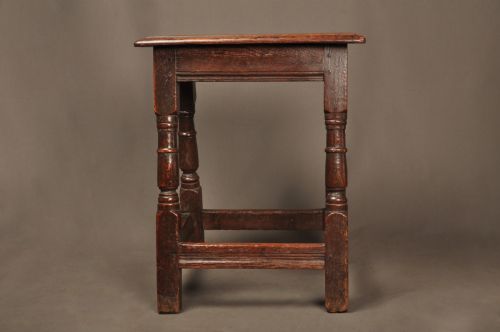
A brown oak joint table or related seating piece connects modern interiors directly to centuries of domestic craft. When searching for a brown oak joint table, buyers encounter a range of sturdy items spanning from the seventeenth century through the Edwardian era and the twentieth century.
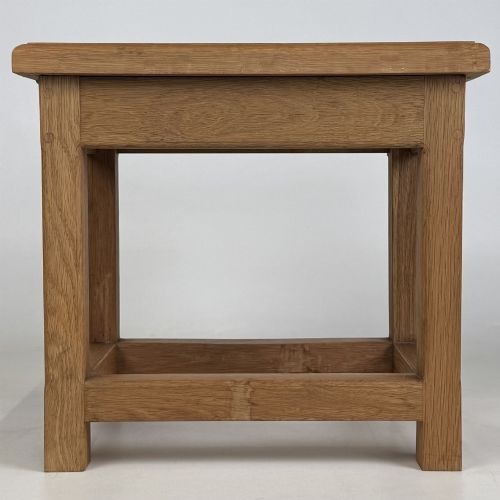
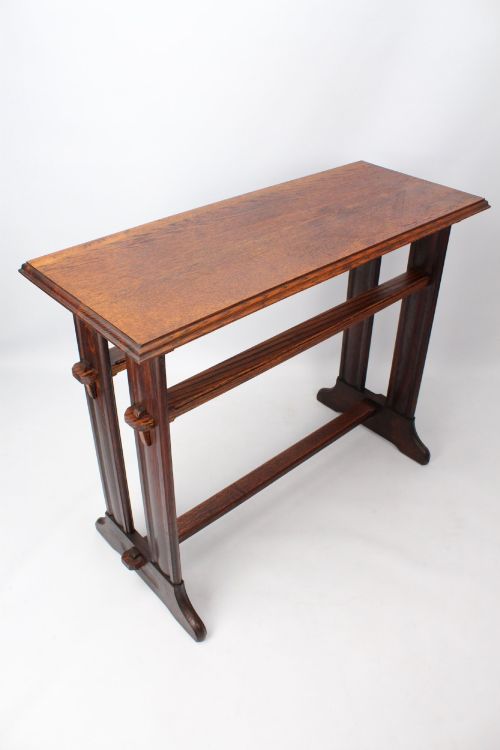
The selection here encompasses various practical forms designed for everyday historic use. Side tables, occasional tables, centre tables, and lowboys appear alongside joint stools, benches, and miniature apprentice pieces.
Origins stretch across distinct periods including the seventeenth century, Georgian era, nineteenth century, and early twentieth-century revivals. Jacobean and Arts and Crafts styles sit alongside English country provincial work.
Judging the pieces
Quality rests in the depth of natural tone and the honesty of the timber grain developed over centuries. Examples displaying rich colour and unblemished structural integrity stand apart from later reproductions.
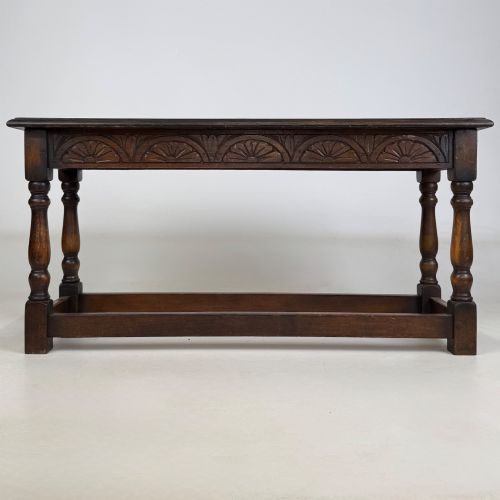
Hand-carved details and period-appropriate joinery demonstrate the skill of the original maker. The crispness of early carving and the snug fit of pegged joints reveal the underlying standard of manufacture.
Miniature apprentice pieces let woodworkers practice intricate joint work on a tiny scale before building full-sized tables.
The Brown Oak Joint Table Glossary
- Joint table
- A rigid table constructed with mortise and tenon joints secured by wooden pegs rather than metal nails or screws. These items were built to withstand heavy daily domestic use.
- Joint stool
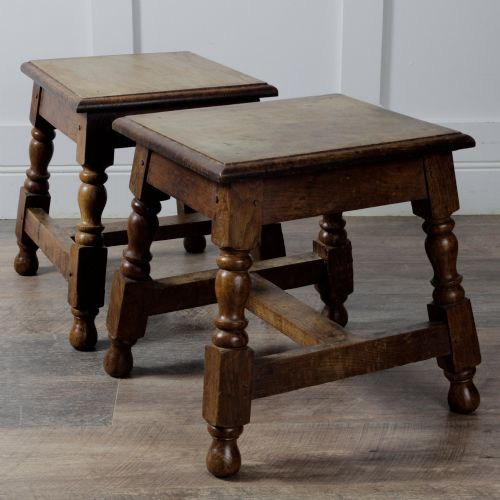
- A sturdy wooden stool built using the same pegged frame techniques as a full-sized joint table. They frequently double as small stands or low side surfaces.
- Lowboy
- A small oak table featuring one or more drawers beneath the working surface, originating in the late seventeenth and eighteenth centuries. They served versatile functions in domestic chambers.
- Pegged construction
- A method of joining timber sections by drilling matching holes and driving wooden dowels through them. This traditional technique accommodates natural wood movement over decades.
- Jacobean style
- A heavy, formal aesthetic dating from the early seventeenth century characterised by straight lines and geometric panels. Revival versions appeared frequently during the late nineteenth and early twentieth centuries.
Brown Oak Joint Table: Frequently Asked Questions
What is a joint table?
A joint table is a sturdy piece of furniture constructed with mortise and tenon joints held together by wooden pegs. The term denotes the rigorous framing method used before the widespread adoption of metal hardware.
These pieces were built to endure heavy domestic service in historic households. Their robust skeletons allowed them to function reliably as dining surfaces, work desks, and general utility tables.
How do I date an oak table?
Dating relies on examining tool marks, timber shrinkage patterns, and the style of the joinery. Seventeenth-century examples display hand-split boards and distinctive edge moulding, while later revival pieces show uniform mechanical sawing.
Construction details provide the clearest clues to age. Pegs that project slightly from hand-cut mortises point toward earlier periods, whereas flush machine-turned dowels suggest Edwardian or twentieth-century manufacture.
Where should I place a joint table?
These compact wooden items suit hallways, living rooms, and studies where surface space is limited. Their narrow proportions allow them to function as lamp tables or side displays without dominating a room.
Keeping them away from direct heat sources and strong sunlight protects the historic timber. Applying occasional suitable wax feeds the dry oak and maintains the depth of the finish.
Are these tables suitable for daily use?
Solid oak and yew construction makes these tables remarkably resilient for everyday environments. Their heavy frames resist tipping and withstand regular placement of household objects.
Protecting the aged timber surface with coasters and mats prevents liquid rings and scratching. Simple care ensures these historic tables continue serving functional roles in modern homes.