




Brown Oak Fireside Chair
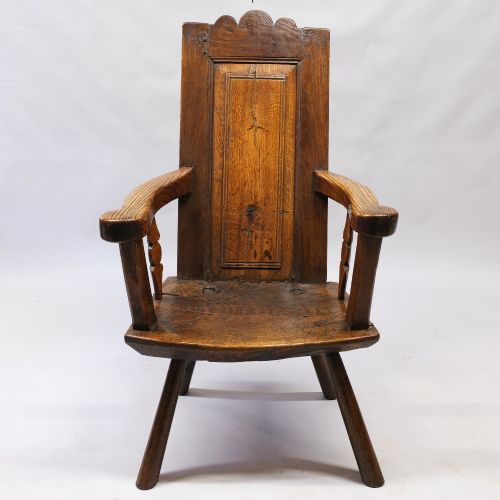
A brown oak fireside chair brings deep colour and solid grain to a hearth, offering sturdy comfort shaped by centuries of country craftsmanship.
Brown Oak Fireside Chair
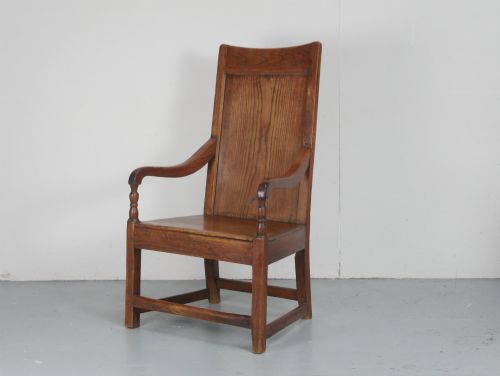
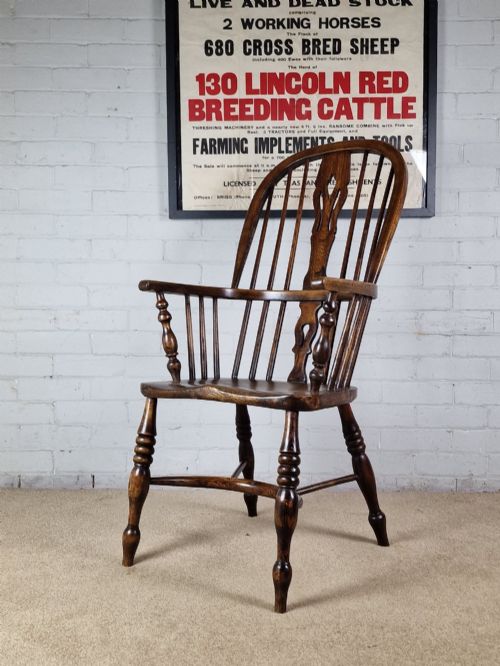
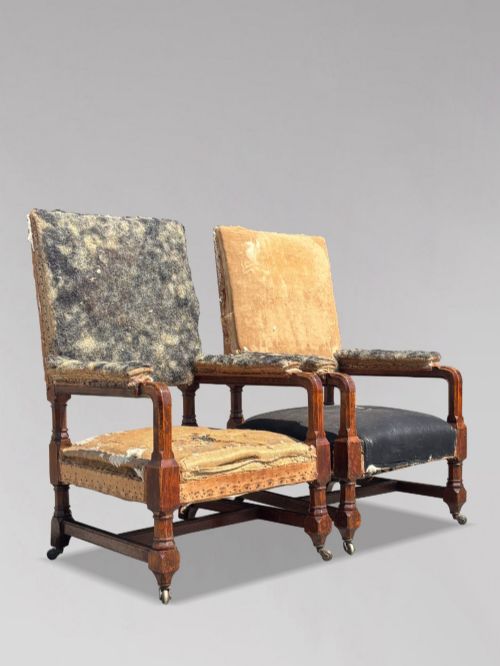
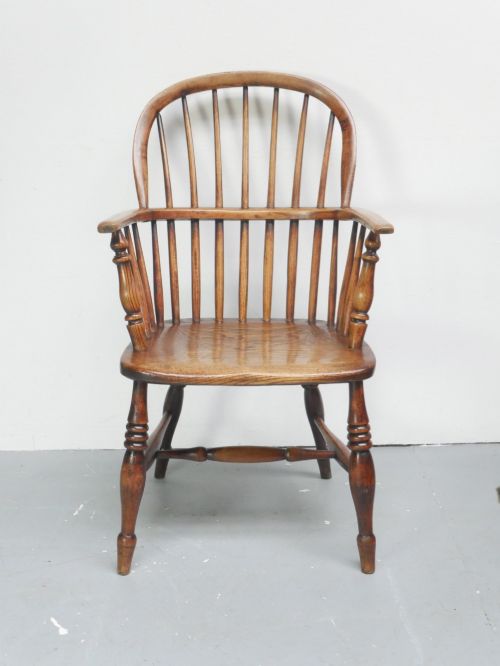
A brown oak fireside chair centres on sturdy seating built for warmth and comfort near a hearth. These forms draw on centuries of vernacular traditions, spanning heavy panel-backed designs to spindle-backed Windsors.
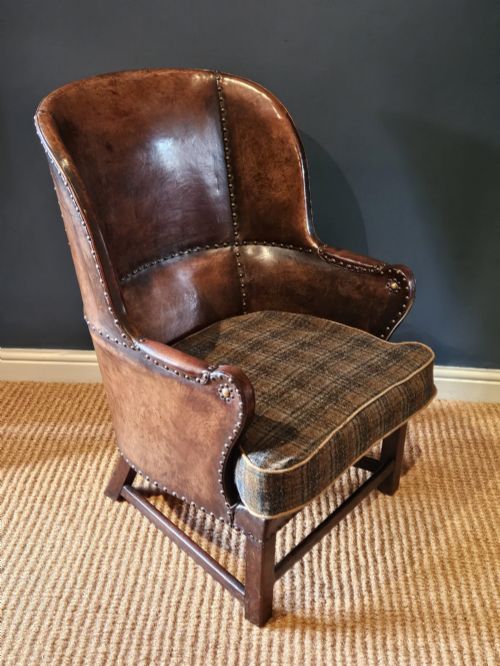
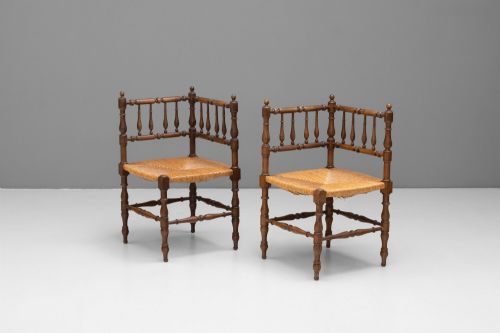
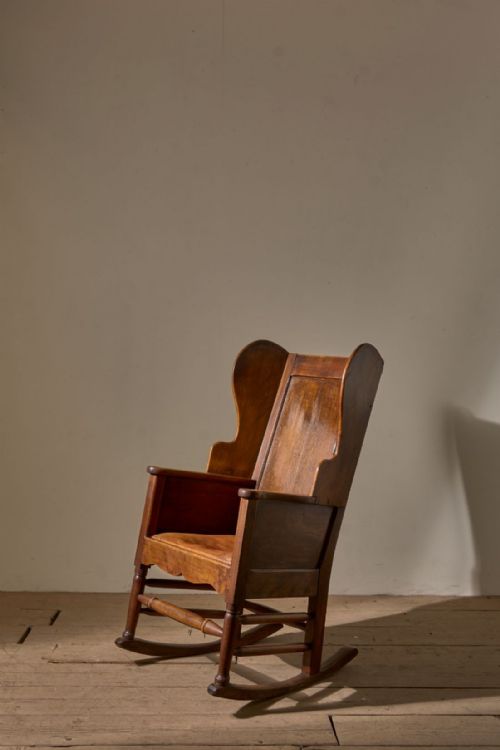
The selection here ranges from eighteenth-century lambing chairs to twentieth-century club and wingback styles. Oak frames frequently pair with elm seats, leather pads, or rush weaving to provide enduring support by the fire.
Materials and construction
Cabinetmakers and country joiners relied on sturdy timbers like oak for structural frames and uprights. Elm and ash often provided tough, resilient seating boards capable of withstanding daily use without splitting.
Traditional joinery methods such as mortise and tenon joints held the heavy frames together. Spindles, bobbin turnings, and steam-bent components added both structural rigidity and visual character to regional designs.
Brown Oak Fireside Chair Retail Price Guide 2026
Typical asking prices for brown oak fireside chair among the pieces listed under this phrase on Sellingantiques today, from the lower quarter to the upper quarter. They describe what is for sale here now, not the wider market.
Some nineteenth-century rocking chairs were built specifically to keep weary readers gently in motion while warming their toes by the grate.
Judging quality and character
Quality rests in the integrity of the timber and the honesty of the construction. Superior examples display rich, natural patination on the oak surfaces, achieved through generations of handling and polishing.
Proportion and comfort distinguish finer country pieces from utilitarian seating. The balance of the armrests, the depth of the seat, and the preservation of original fixings dictate the standing of each chair.
Robert Mouseman Thompson
The Brown Oak Fireside Chair Glossary
- Lambing chair
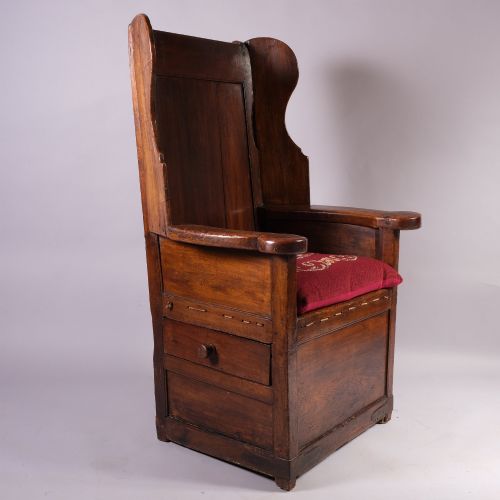
- A traditional high-backed fireside seat featuring solid wooden wings designed to block draughts from the hearth. These pieces often incorporate a low seat and an enclosed base.
- Windsor chair
- A timber chair constructed with a solid wooden seat into which the legs and back spindles are separately dovetailed or wedged. Regional variations include comb backs and broad arms.
- Spindleback
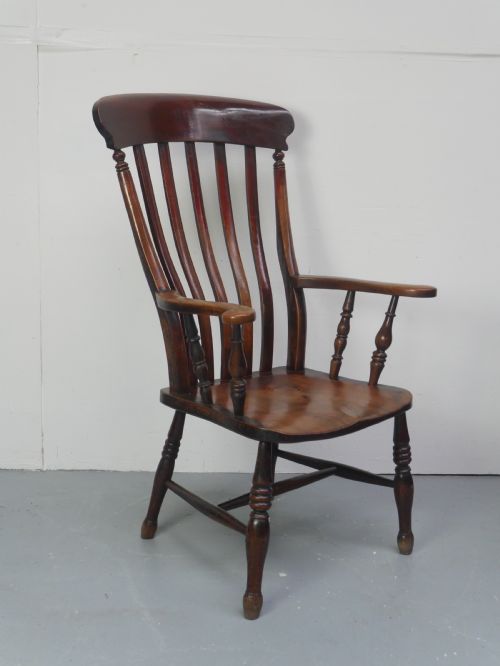
- A chair design utilising slender turned uprights within the backrest to provide lightweight yet sturdy support. This construction method appears frequently in vernacular country seating.
- Panel-backed
- A heavy wooden chair construction featuring flat timber panels fitted within a framed structure. This early method offers robust protection against cold draughts.
- Bobbin turned
- Furniture legs and stretchers shaped on a lathe to resemble a series of rounded wooden beads or spools. This decorative turning technique appears on seventeenth and nineteenth-century frames.
Brown Oak Fireside Chair: Frequently Asked Questions
What is a lambing chair?
A lambing chair is a traditional wooden seat featuring high enclosed sides designed to shield the sitter from cold draughts near an open hearth. They usually include a low seat and sometimes a small storage compartment underneath.
These pieces date back to the eighteenth century and earlier, serving as practical seating for shepherds, farmers, and household members in cooler rural homes.
How do I identify a Windsor chair?
A Windsor chair is characterised by a heavy wooden seat slab into which the legs and back spindles are fitted directly rather than attached to a separate frame. Regional versions display distinctive comb backs, bow backs, or solid splats.
Makers selected resilient timbers like elm for the seats and ash or oak for the bentwood bows and spindles to ensure long-lasting structural strength.
How do I care for antique oak furniture?
Antique oak benefits from occasional applications of natural beeswax to nourish the dry timber and maintain its rich surface sheen. Avoid placing wooden chairs near direct heat sources or strong sunlight to prevent the grain from splitting.
Regular dusting with a soft, dry cloth preserves the historic patination without stripping away the layers of age and use accumulated over centuries.
Where were these country chairs made?
Country chairs were produced by local vernacular joiners and regional workshops across rural Britain, including districts like Yorkshire, Lincolnshire, and the Scottish borders. Each area developed slight variations in turning patterns and structural shapes.
Local tradesmen utilised whatever native hardwoods grew nearby, resulting in distinctive combinations of oak frames, elm seats, and ash spindles unique to their home regions.