



Brown Oak Extending Table
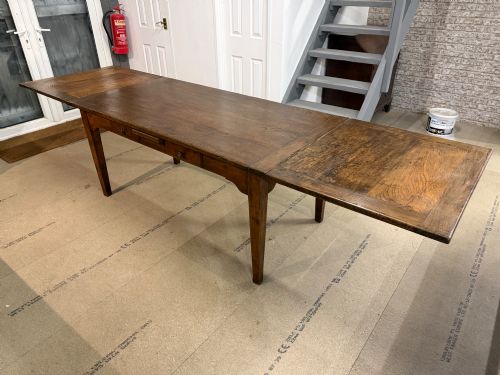
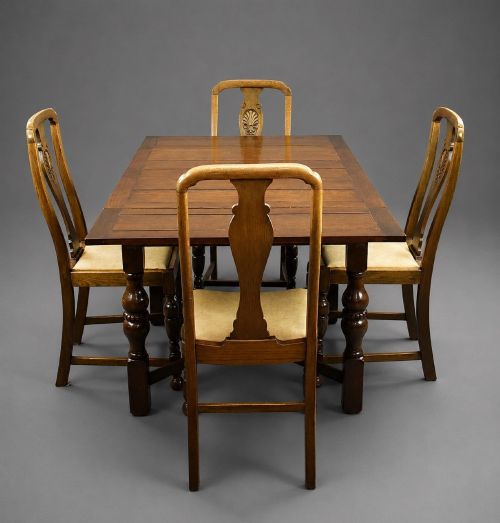
A brown oak extending table brings rich timber grain and practical versatility to a dining room, seating family and guests with ease.
Brown Oak Extending Table
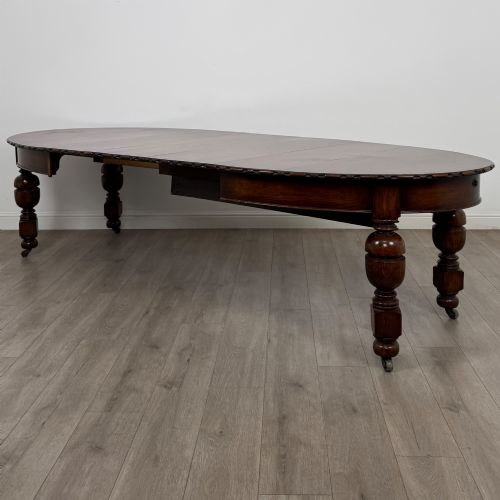
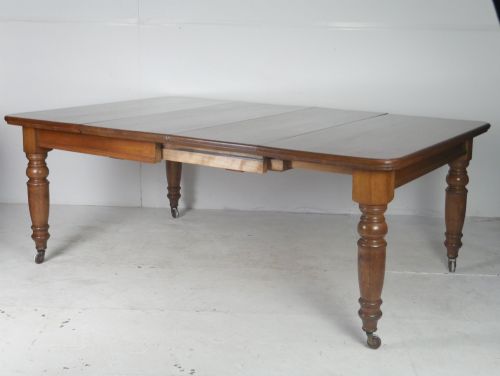
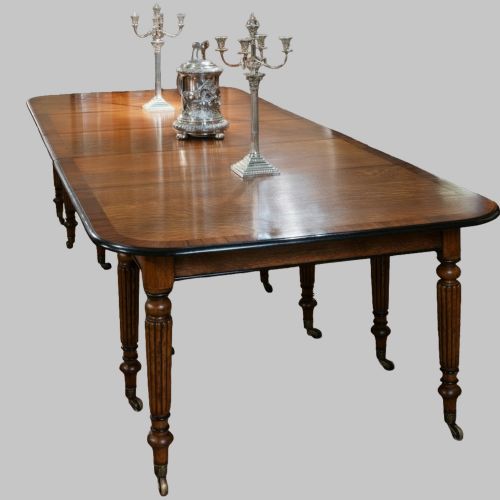
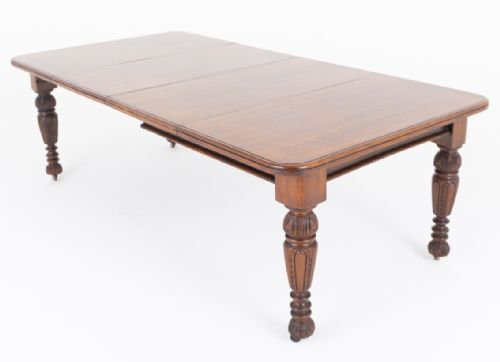
A brown oak extending table serves as a robust centrepiece for dining rooms and kitchens, offering clever mechanical ways to enlarge its surface when required. Buyers searching for a brown oak extending table encounter sturdy refectory forms, rustic farmhouse boards and formal Victorian designs suited to daily meals and large gatherings alike.
The pieces available span multiple centuries and stylistic revivals, ranging from seventeenth-century draw-leaf variants to Edwardian and Arts and Crafts creations. Solid oak predominates, frequently enriched with brass hardware, wood inlay, or supplemental fruitwood and pine components.
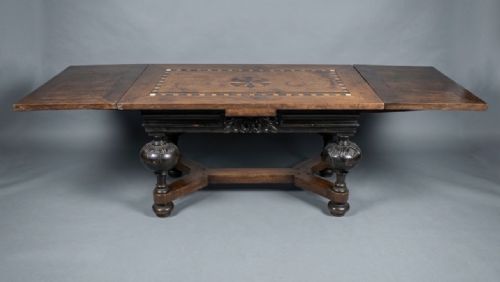
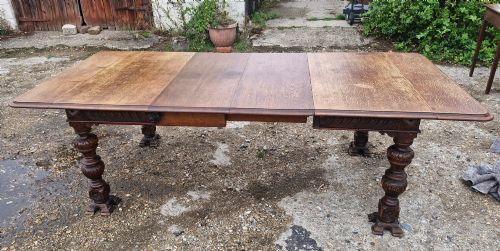
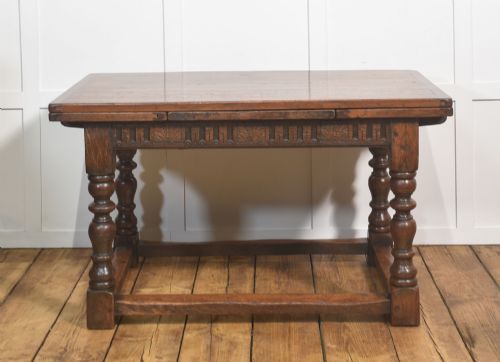
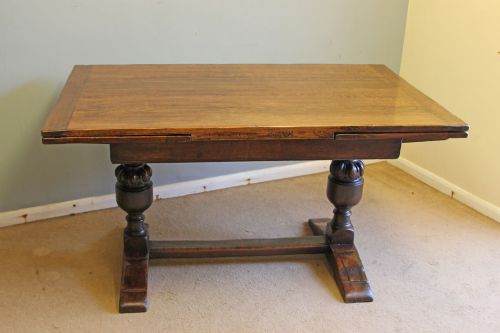
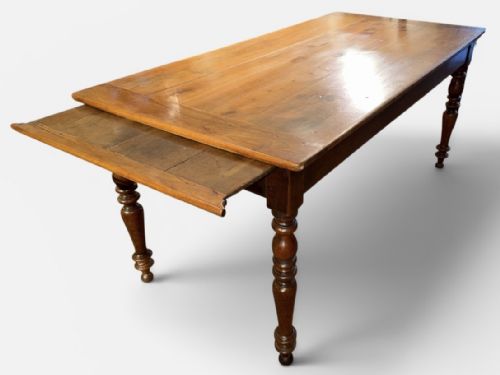
Jacobean and Dutch Renaissance revivals sit alongside English country house and French farmhouse aesthetics, demonstrating how cabinetmakers adapted traditional dining furniture for changing domestic spaces. Many examples utilise clever leaf systems, including draw leaves that slide from beneath the main top or drop-in leaves supported by central runners.
Evaluating craftsmanship
Quality rests upon the selection of timber and the precision of the extension mechanism, where smoother sliding action and tight joints indicate superior workshop skill. Tables fashioned from solid oak with well-fitted leaves demonstrate greater stability than those with loose joints or warped secondary timbers.
Decorative details elevate certain pieces, distinguishing standard utility boards from fine revival examples featuring wood inlay, parquetry, or carved friezes. The integrity of the original underframe and the harmonious ageing of the oak surface determine the overall stature of each piece.
Several examples incorporate practical bread slides and refectory stretchers alongside traditional brass hardware and metal extension mechanisms.
Maple and Co
The Brown Oak Extending Table Glossary
- Draw-leaf table
- An extending table featuring two leaves hidden beneath the main top that pull out from each end. The main top lowers automatically as the leaves are drawn into place.
- Refectory table
- A long, narrow dining table traditionally used in monasteries and large halls, characterised by sturdy legs joined by a low stretcher. Many nineteenth and twentieth-century versions incorporate extending mechanisms.
- Parquetry
- Geometric wood inlay work forming a mosaic pattern on the surface of a table top. This technique often appears on French provincial dining furniture.
- Gate-leg table
- A table with hinged leaves supported by swing-out legs resembling a gate. Some variations include extending frames to accommodate additional diners.
- Quarter-sawn oak
- Timber cut radially from the growth rings, producing a decorative grain pattern known as silver grain or medullary rays. This cut offers increased dimensional stability for large table tops.
Brown Oak Extending Table: Frequently Asked Questions
How do draw-leaf extending tables work?
Draw-leaf tables use secondary leaves stored beneath the main surface. When pulled outwards, the central top drops slightly to allow the end leaves to slide level.
This clever mechanism allows a single person to lengthen the surface without removing or storing loose boards separately.
What is brown oak timber?
Brown oak is not a distinct species, but rather ordinary English oak heartwood darkened by a fungal reaction while growing. This natural process creates deep chestnut and chocolate tones within the grain.
Cabinetmakers prized this timber for its rich colour variation and distinct visual depth on large table tops.
How do I care for a solid oak table?
Solid oak furniture responds best to regular dusting with a dry cloth and occasional treatment with natural beeswax to nourish the timber grain. Avoid placing wooden tables near direct heat sources or damp areas to prevent splitting.
Using heat-resistant mats protects the finish from hot serving dishes while preserving the patina built up over decades of use.
Are these tables suitable for everyday family use?
Oak extending tables were originally built to withstand heavy daily demands in farmhouses, kitchens, and formal dining rooms. Their dense hardwood construction absorbs everyday wear while developing a richer character over time.
The extending feature provides flexibility for households that need a compact everyday footprint alongside generous seating for dinner parties.