
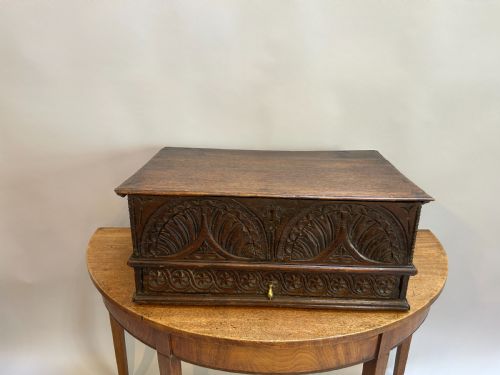


Brown Oak Document Box
A brown oak document box is a sturdy wooden repository built for keeping letters, deeds and sacred texts safe.
Brown Oak Document Box
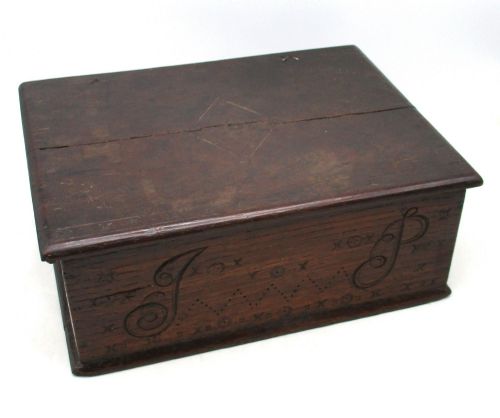
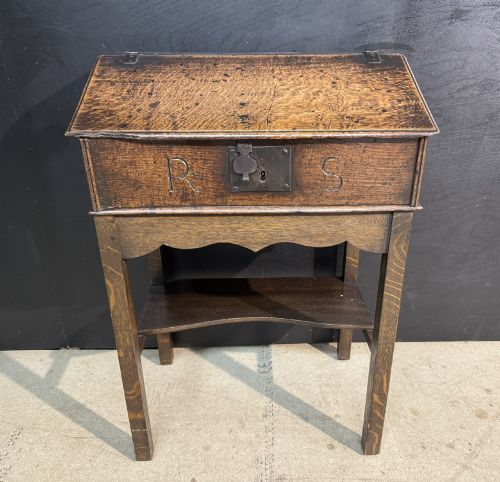
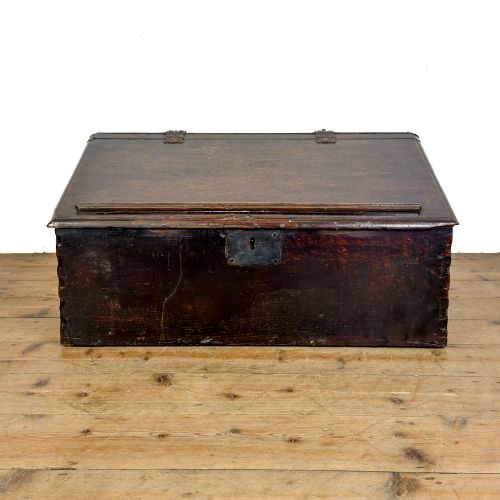
When you search for a brown oak document box, you enter a field dominated by seventeenth and eighteenth century pieces built for domestic and ecclesiastical use. These items serve variously as bible boxes, deed chests, desk boxes and writing slopes.
How they were made
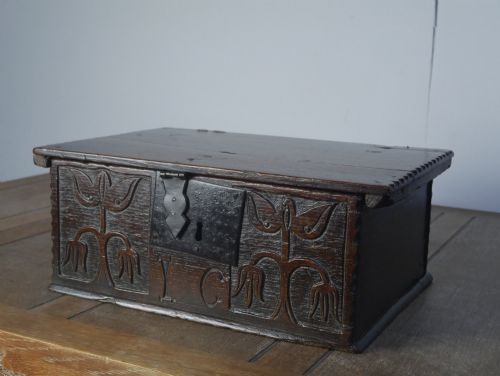
Carpenters constructed these boxes primarily from solid oak, sometimes enriched with fruitwood inlay or fitted with iron and brass hardware such as hinges and lock plates. Surfaces display hand-tool marks, chip carving, or simple moulded decoration executed by regional joiners.
Construction relied on traditional pegged joints and boards finished to varying thicknesses, occasionally incorporating secondary timbers internally for small compartments and secret drawers.
One unexpected survivor on this page even held a verger's heavy texts before coming to market.
What varies in quality
The distinction between ordinary and superior pieces rests on the crispness of the original carving, the integrity of the timber surfaces, and the survival of original brass or iron hardware. Finer examples retain their initial patination and uncompromised structural joins.
Proportion and regional decorative execution also separate standard utilitarian containers from more ambitious vernacular works, such as chip-carved Welsh boxes or ecclesiastical pieces with specific historical association.
The Brown Oak Document Box Glossary
- Bible box
- A sloping or flat-topped wooden chest originally designed to hold a family bible or important manuscripts. These pieces often sat on tables or desks in homes and churches.
- Writing slope
- A box featuring an angled lid intended to provide a convenient writing surface. Inside, compartments held ink, quills and stationery.
- Chip carving
- A decorative technique where small chips or notches are removed from the surface of the wood to create geometric patterns. It is frequently seen on vernacular seventeenth-century Welsh boxes.
- Secret drawer
- A concealed compartment built within a box behind removable panels or false bottoms. They were designed to secure valuables and private correspondence.
- Fruitwood inlay
- Contrasting lighter or coloured wood inserted into recesses in the oak surface to form decorative motifs. This technique highlights regional stylistic variations.
Brown Oak Document Box: Frequently Asked Questions
What is a brown oak document box used for?
These boxes served historically to store important papers, legal deeds, correspondence and religious texts securely within the home or church.
Today, they function practically as desktop storage for modern letters and stationery, or simply as display pieces that showcase early woodwork.
How do I tell a seventeenth century box from a nineteenth century one?
Seventeenth-century pieces typically feature hand- cleft or sawn oak boards, pegged joints, and vernacular chip carving or moulded decoration characteristic of early English and Welsh joinery.
Nineteenth-century examples often display machine-sawn timber preparation, different construction hardware, and cleaner internal fittings without the rustic irregularities of earlier work.
Where were these document boxes made?
The pieces originate primarily from regional English and Welsh domestic workshops where local joiners utilised native timber.
Ecclesiastical examples also appear, connected to parish churches and specific historical periods such as the reigns of Charles II and William III.
How should I care for an antique oak box?
Keep the wood away from direct heat sources and extreme humidity fluctuations to prevent the oak panels from splitting or warping.
Apply a traditional wax polish occasionally to nourish the surface and maintain the natural patination built up over centuries.