


Brown Oak Desk Tidy
These brown oak desk tidies are practical desk accessories that organise correspondence and writing equipment, offering both utility and period character for a study.
Brown Oak Desk Tidy
A brown oak desk tidy encompasses various utilitarian desktop forms designed to keep correspondence, inkwells, and stationery in order. The selection includes stationery cabinets, inkstands, letter boxes, and desk boxes that date from the Georgian, Victorian, and Edwardian eras.
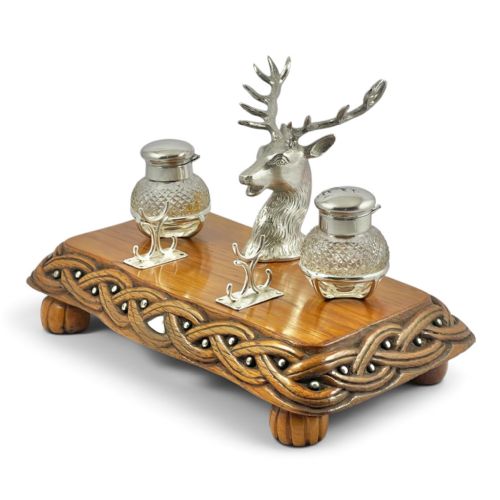
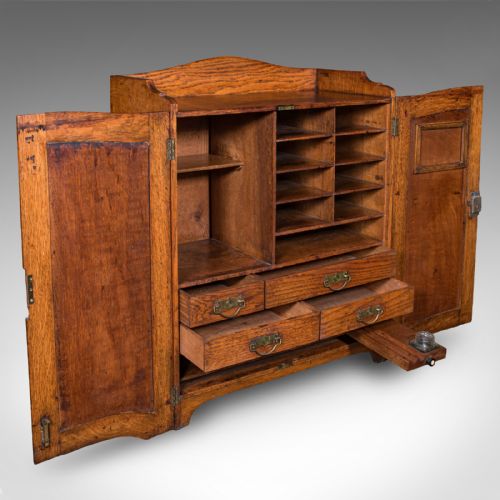
Buyers will encounter items ranging from simple cut glass and solid oak ink stands to elaborate stationery cabinets featuring adjustable dates and secret drawers. Stylistic influences span from Arts and Crafts and Gothic Revival to Victorian Celtic Revival.
Origins vary across British, Scottish, and American workshops, reflecting diverse regional tastes in domestic and office administration during the nineteenth and early twentieth centuries.
Materials and construction
Makers utilised solid oak as the primary timber, often selected for its distinct grain and durability in daily use. This was frequently paired with functional metal elements such as brass hinges, handles, and locks.
Glass and silver plate components appear regularly, particularly in inkstands and desk sets where cut glass inkwells sit within fitted wooden trays. Paper linings and fitted compartments complete the interior organisation of cabinets and boxes.
A faithful St. Bernard dog keeps watch in carved black forest style, guarding the inkwell on duty.
Evaluating quality in desk accessories
Quality rests upon the precision of the joinery and the selection of the timber, where well-figured oak and tight, robust construction distinguish better pieces. The integration of functional mechanisms, such as adjustable dates or secret drawers, also dictates the standard of execution.
The refinement of auxiliary materials, including heavy cut glass inserts and substantial brass mounts, separates standard utility items from finer examples produced for country houses and offices.
The Brown Oak Desk Tidy Glossary
- Inkstand
- A desk stand designed to hold one or more inkwells alongside pens and sometimes sanders. These pieces anchor the writing table and often incorporate a pen groove.
- Stationery cabinet
- A desktop cabinet featuring compartments, pigeonholes, and sometimes a drop-front to store paper and envelopes. They emerged to keep correspondence tidy in professional and domestic settings.
- Letter box
- A secure receptacle for incoming or outgoing mail, often styled as a miniature postbox for country houses. They frequently feature brass letter slots and lockable doors.
- Cut glass
- Glass shaped and patterned by abrasive wheel cutting, frequently seen in the inkwells fitted into Victorian desk stands. The technique creates deep facets that catch the light.
- Arts and Crafts
- A design movement valuing honest construction, simple forms, and visible handcrafted details over mass production. Pieces from this style often eschew excessive ornament in favour of clean oak surfaces.
Brown Oak Desk Tidy: Frequently Asked Questions
What is a brown oak desk tidy used for?
These pieces served as organised receptacles for letters, pens, ink, and stationery in nineteenth and early twentieth-century offices and homes. They kept loose correspondence grouped and writing fluids contained.
Today, they function well on modern desks to sort mail, hold notebooks, or house everyday desk clutter while adding period presence to a room.
How do I date a wooden stationery box?
Dating relies on observing construction methods, timber choice, and stylistic cues such as Gothic Revival or Arts and Crafts motifs. Hardware like brass hinges and lock plates also provide clues to the period.
Makers sometimes included internal calendars, adjustable date mechanisms, or hallmarked silver mounts that help narrow down the decade of manufacture.
Are inkstands and desk tidies difficult to maintain?
Maintenance involves little more than dusting the oak surfaces and occasionally treating the timber with appropriate wax or polish to prevent drying. Glass inkwells and metal mounts benefit from gentle cleaning to preserve their finish.
Keeping them out of direct sunlight and away from extreme temperature fluctuations protects both the wood and any internal paper linings.
Did these pieces come from specific regions?
The selection includes items of English, Scottish, and American origin, reflecting different regional workshops and cabinet-making traditions. Scottish pieces occasionally incorporate local silver or regional cabinet forms.
Domestic items were produced both in country house workshops and by larger commercial cabinet makers catering to the growing administrative needs of the period.