





Brown Oak Desk Cabinet
These brown oak desk cabinet pieces bring practical storage and writing surfaces together in solid timber, built for daily study and correspondence.
Brown Oak Desk Cabinet
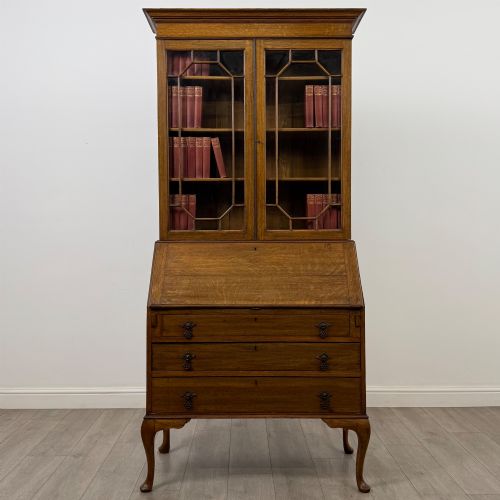
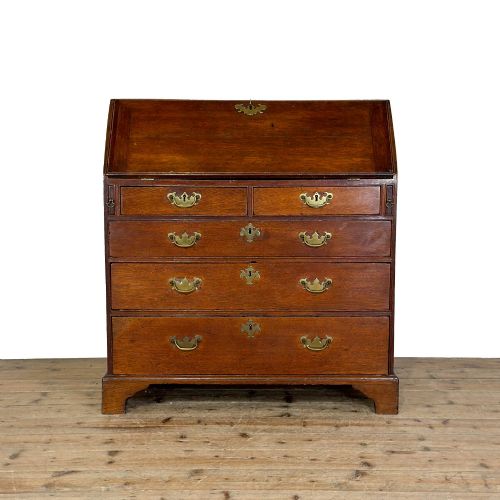
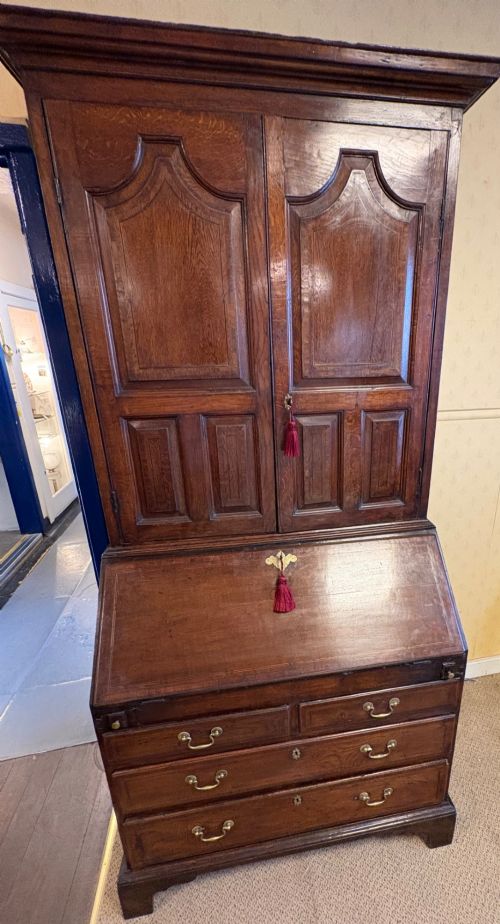
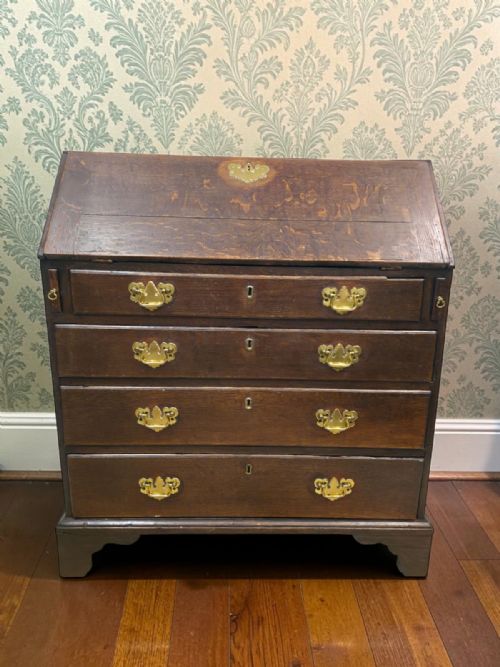
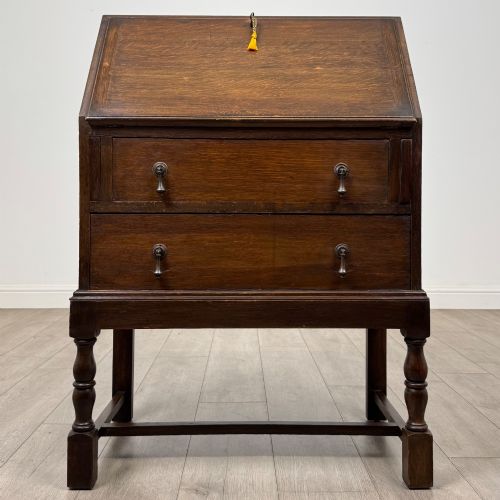
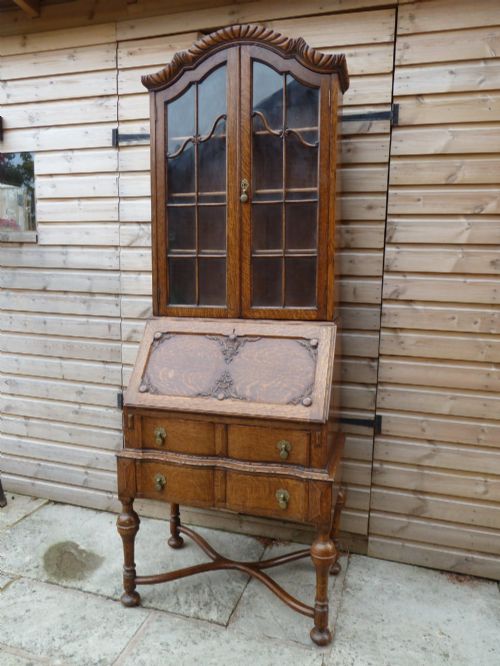
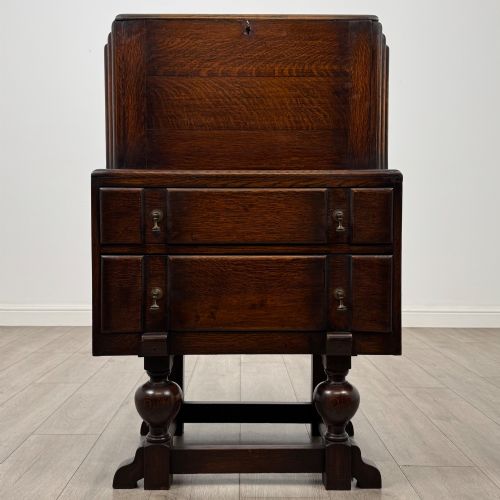
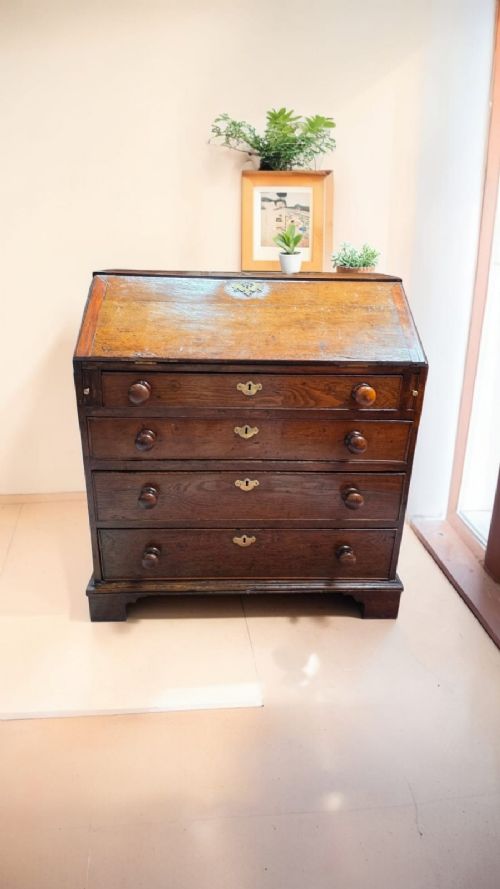
A brown oak desk cabinet satisfies the practical need for a dedicated writing space combined with enclosed storage, appearing primarily as bureaus, bureau bookcases, and stationery cabinets. These forms span multiple eras, including Georgian, Victorian, and Edwardian periods, reflecting changing domestic requirements for letter writing and document organisation.
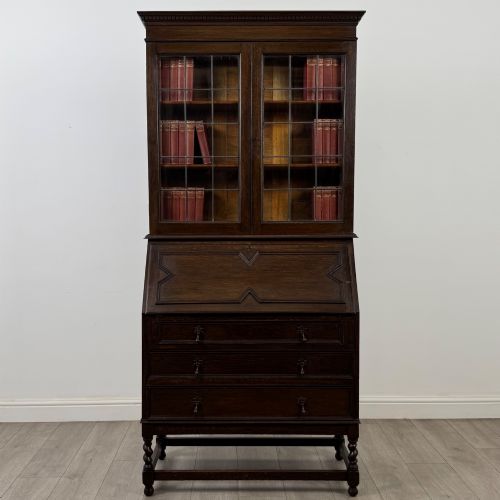
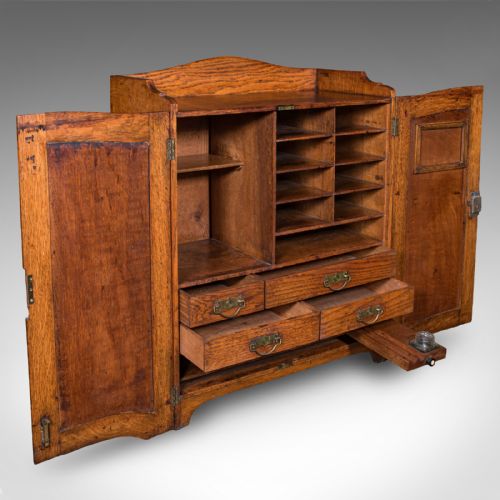
The material palette centres on oak, often accented with brass, glass, and leather inserts on writing slopes. Pieces range from modest table top cabinets and clerk cupboards to substantial bureau bookcases fitted with glazed upper doors and stepped interiors.
Vernacular examples sit alongside formal revival styles such as Jacobean and Arts and Crafts. Buyers encounter everything from compact 1920s office cabinets to 18th century fall-front writing bureaus with deep drawer configurations.
How they were made
Cabinet makers utilised solid oak timbers, occasionally applying oak veneers to create stable surfaces for large panels and fall fronts. Construction methods rely on traditional joinery, dovetailing drawer carcases and securing backboards with handmade fixings.
Metalwork played a functional role, with brass handles, hinges, and escutcheons fitted to drawers and drop-front panels. Glass panels feature in the upper sections of bureau bookcases to display books and papers while keeping dust at bay.
Watchmaker and gamekeeper cabinets hide tiny compartments originally built for miniature screws and feathers.
What varies in quality
Quality rests in the selection of the timber grain, the crispness of carved details, and the integrity of the structural joints. Superior examples display carefully matched oak boards and precise dovetailing on internal drawers.
Fittings such as period brass handles and fitted interior pigeonholes with stepped drawers elevate a piece above standard utility items. The execution of secondary timbers and the smoothness of the fall-front hinge mechanism also distinguish finer craftsmanship.
Morris And Co·Harris Lebus·Liberty Of London·Robert Mouseman Thompson
The Brown Oak Desk Cabinet Glossary
- Bureau bookcase
- A writing desk with a hinged fall front combined with a shelved upper cabinet, usually enclosed by wooden or glass doors. This form maximises vertical storage in rooms with limited floor space.
- Fall front
- A hinged writing flap that pulls down to reveal a fitted interior of pigeonholes and small drawers. When closed, it conceals the working area of the desk.
- Stationery cabinet
- A tabletop box or small cupboard designed to hold writing paper, envelopes, and inkwells. They often feature slanted lids or tambour doors.
- Stepped interior
- An arrangement of internal small drawers and pigeonholes arranged in tiers within a bureau. This layout creates architectural depth inside the desk compartment.
Brown Oak Desk Cabinet: Frequently Asked Questions
What is a brown oak desk cabinet?
A brown oak desk cabinet combines a writing surface with enclosed storage compartments, taking the form of a bureau, a bureau bookcase, or a stationery cabinet. These pieces provide dedicated spaces for correspondence and document storage.
They utilise oak timber across various eras, offering functional furniture that ranges from compact tabletop boxes to tall architectural bookcases with glazed doors.
How do I use a bureau desk daily?
The hinged fall front pulls down to create a horizontal writing surface supported by the bureau frame. Internal pigeonholes and small drawers hold stationery, pens, and papers while you work.
At the end of the writing task, documents are tucked back inside and the flap lifts shut to conceal the working area, leaving a neat cabinet front.
How do I date an oak bureau?
Dating relies on construction methods, hardware types, and stylistic details such as bracket feet, panel thickness, and interior drawer arrangement. Georgian pieces often feature solid oak drawer linings and simple bracket feet.
Later Victorian and Edwardian examples incorporate machine-sawn timbers, varied revival carving styles, and factory-produced brass handles.
Where should I place a desk cabinet?
These cabinets suit studies, living rooms, and bedrooms where floor space benefits from vertical storage combined with a fold-down writing ledge. Positioning them away from direct heat sources protects the oak timber and any leather writing inserts.
Allowance must be made for the clearance required when the fall front folds down for writing use.