
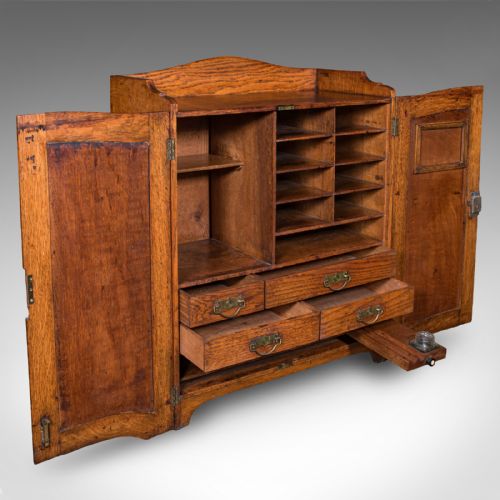


Vintage Oak Clerk Desk
These vintage oak clerk desks bring solid timber and practical storage straight into the home workspace.
Vintage Oak Clerk Desk
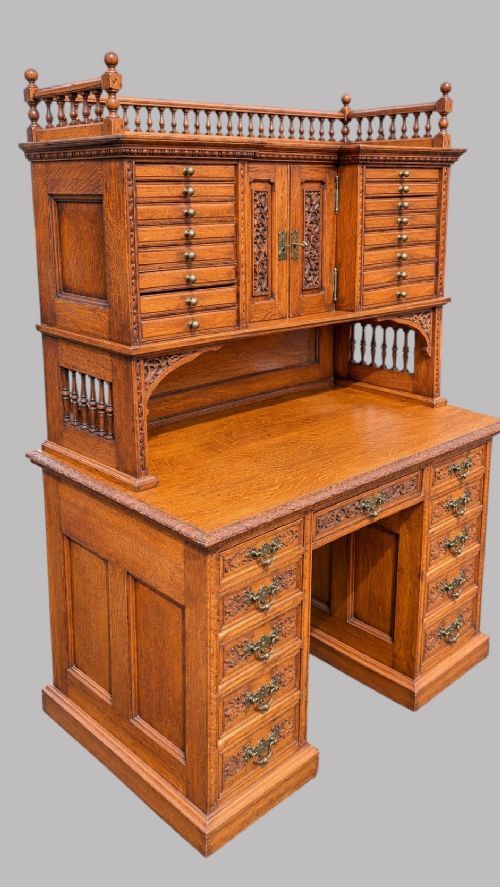
A vintage oak clerk desk serves as a sturdy workspace, appearing in forms ranging from compact kneehole configurations to substantial roll top pedestals. Buyers searching for a vintage oak clerk desk will encounter pieces spanning the Georgian era through to the early twentieth century.
Origins stretch from British country houses and Scottish estates to French provincial workshops. These work surfaces reflect the practical needs of past administrators, hoteliers, and clerks.
Materials and construction
Carpenters built these desks predominantly from solid oak, sometimes supplemented with secondary timbers such as pine or elm for interior framing and drawer linings. Joinery typically relies on robust panelled construction and dovetailed drawers designed to withstand heavy daily use.
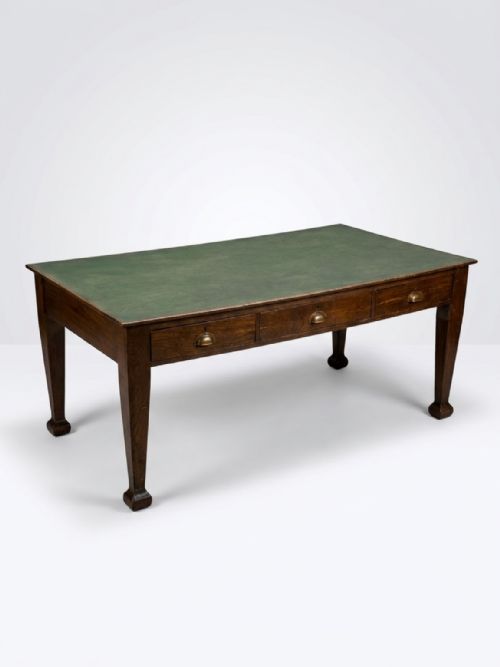
Writing surfaces frequently integrate inset leather or leatherette panels to provide a smooth tactile area for handwriting. Additional hardware includes cast brass pulls, handles, and occasional marquetry inlay for decorative contrast.
Some estate desks doubled as gamekeeper cupboards, concealing ledgers alongside sporting equipment.
Assessing quality and craftsmanship
Quality reveals itself in the selection of timber and the precision of the joinery, distinguishing heavy solid oak carcasses from lighter composite builds. Superior pieces show careful attention to internal compartmentalisation, working tambour mechanisms, and well-fitted panelled doors.
The integrity of the original hardware and the condition of the timber surfaces dictate the overall standing of the desk. Alterations, such as later stands or replacement tops, alter the historical character compared to untouched surviving examples.
Pairs MFG Co
The Vintage Oak Clerk Desk Glossary
- Tambour top
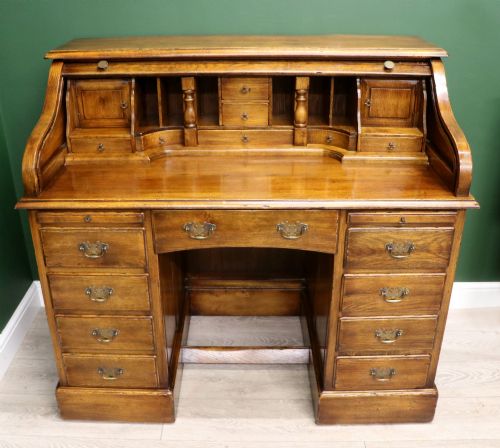
- A flexible sliding cover made of narrow wooden slats running in grooves to enclose the desktop pigeonholes. This mechanism allows the workspace to be locked securely.
- Kneehole desk
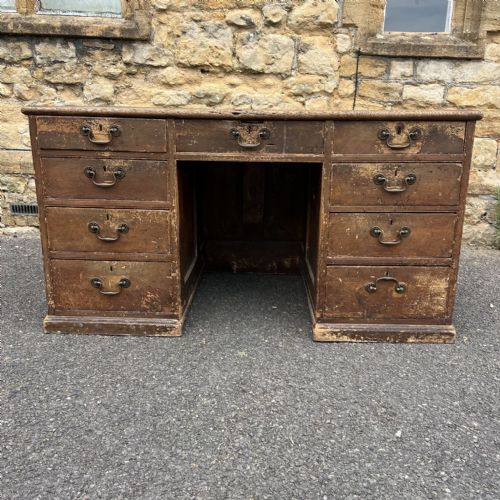
- A freestanding desk featuring a central recess for the user's legs, flanked by pedestals of small drawers. This layout provides structured storage while maintaining a compact footprint.
- Wages desk
- A utilitarian piece historically used for distributing pay packets, often fitted with robust locks and deep storage compartments. These surfaces prioritise security and functional organisation.
- Marquetry inlay
- Decorative patterns formed by fitting contrasting pieces of wood veneer into the primary timber surface. This technique adds visual interest to drawer fronts and writing slopes.
- Pedestal desk
- A heavy desk supported by two banks of drawers or cupboards beneath the main work surface. They offer substantial storage capacity within a formal architectural framework.
Vintage Oak Clerk Desk: Frequently Asked Questions
What is a tambour top desk?
A tambour top desk uses a slatted wooden shutter that rolls back in tracks to reveal the interior pigeonholes and writing surface. This design secures the desk contents without requiring a hinged sloping lid.
Such mechanisms were popular in early twentieth-century offices for keeping paperwork organised and out of sight when not in use.
How do I date an oak desk?
Dating relies on examining construction methods, timber selection, and hardware styles across different periods. Georgian and Victorian pieces often show hand-cut dovetails and solid timber framing.
Later Edwardian and interwar examples introduce mechanical tambour systems and standardised metal fittings alongside factory production techniques.
Were these desks used in offices?
These desks served in various administrative environments, from country estate offices and hotels to taverns and reception stations. Clerks utilised them for ledger work, correspondence, and financial management.
Their robust construction reflected the demanding clerical tasks required before the widespread adoption of modern office machinery.
How do I care for a leather desk top?
Leather and leatherette writing surfaces require gentle cleaning with a damp cloth and occasional conditioning to prevent drying and cracking. Avoid using harsh chemical solvents or abrasive cleaners that can strip the dyed finish.
Keeping the surface free from dust and moisture preserves the tactile quality of the writing area.