



Brown Oak Corner Unit
A brown oak corner unit is a fitted or freestanding timber storage piece designed to occupy a room intersection, seen here in Georgian, Victorian, and later periods.
Brown Oak Corner Unit
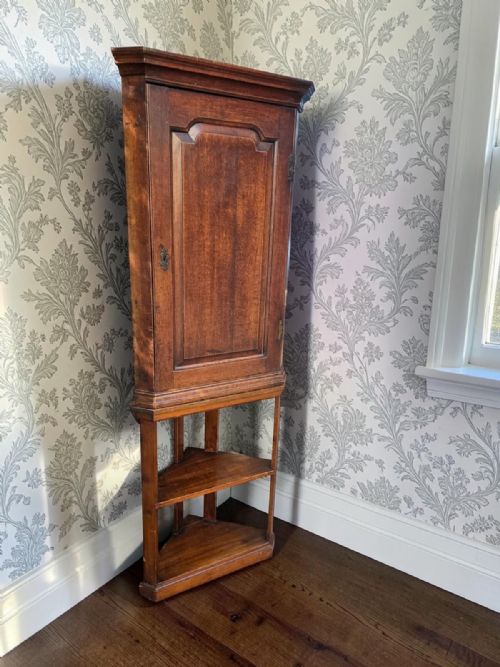
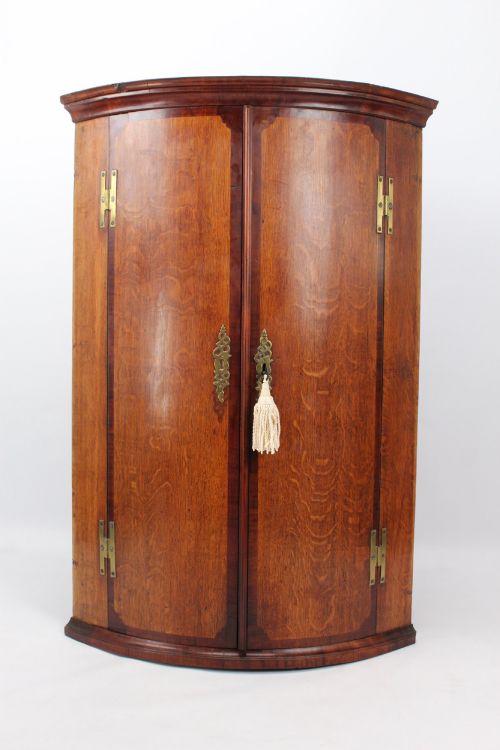
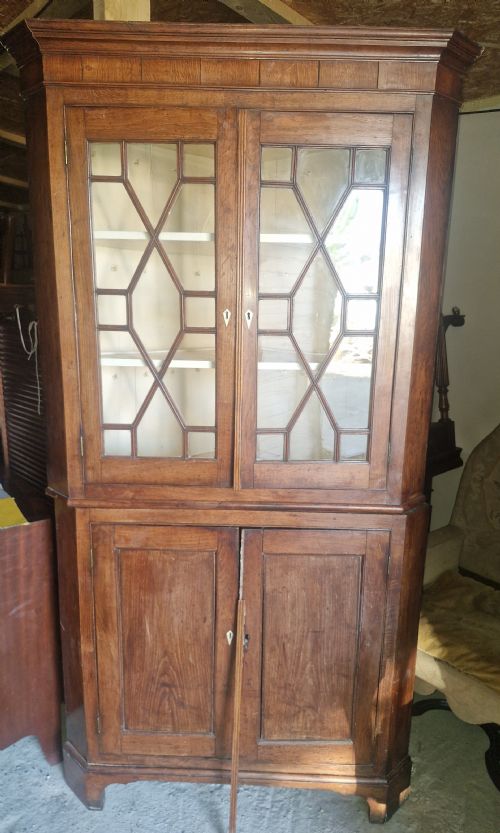
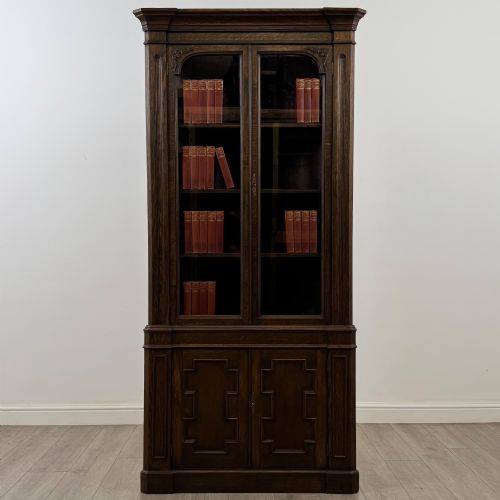
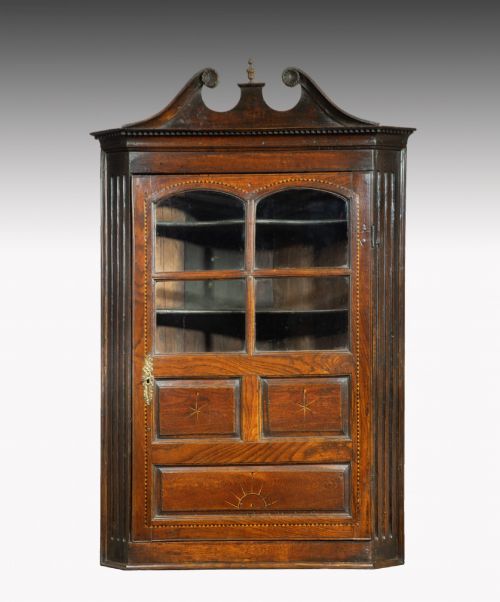
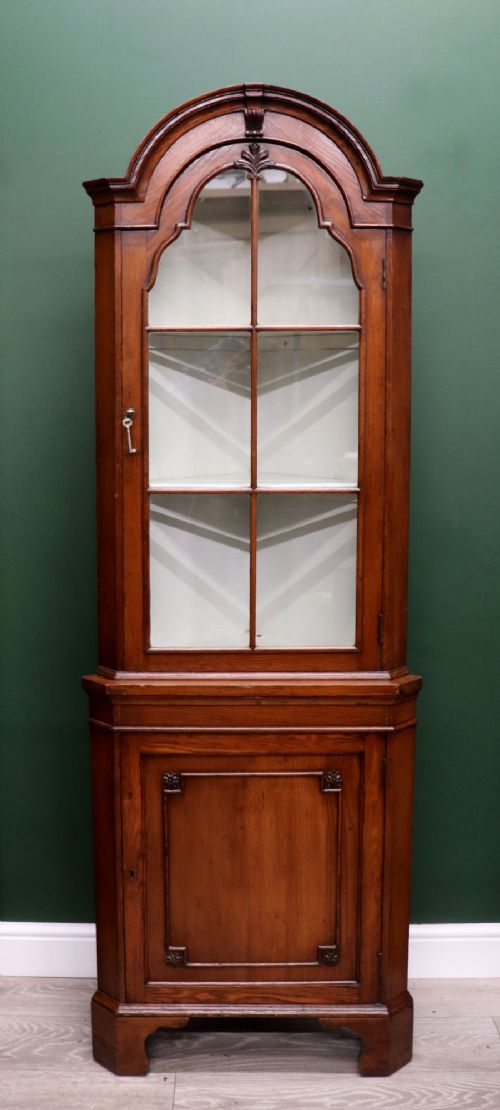
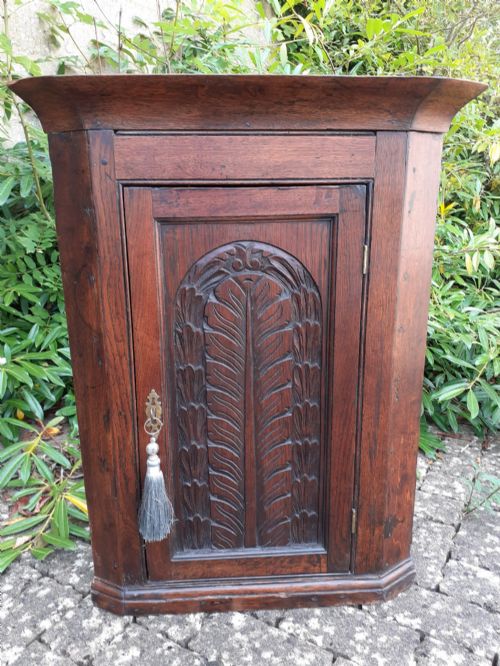
When you search for a brown oak corner unit, you encounter pieces designed to utilise dead space in a room whilst displaying or concealing contents. The examples recorded here span hanging models, floor-standing variants, two-part cupboards, and versions raised on stands.
The predominant format is the Georgian or 18th century hanging cupboard, alongside tall floor-standing or two-part Welsh country pieces. Later interpretations extend through Victorian, Edwardian, and 1930s revivals, incorporating Jacobean styles and bow-fronted doors.
Materials extend beyond standard timber to include occasional secondary woods like mahogany, walnut, pine, and fruitwood, sometimes finished with brass hardware, glass panels, or decorative inlays.
Construction and materials
Surface treatments range from plain polished oak to decorative detailing including inlays and simulated finishes on pine. Brass hinges, escutcheons, and glass panes appear across different periods to secure and reveal the cabinet interiors.
The recorded object types include hanging cupboards, standing cabinets, two-part units, and pieces elevated on stands.
Assessing quality in brown oak corner units
Quality rests upon the selection of timber figures and the integrity of the joinery used to form the angular carcass. Early 18th century panelled examples demonstrate hand-cut joints that contrast with later revival production methods.
The sophistication of decorative additions, such as contrasting inlays, brass hardware, and bow-front door construction, separates standard utility cupboards from more ambitious regional and metropolitan commissions.
The Brown Oak Corner Unit Glossary
- Hanging cupboard
- A wall-mounted storage unit typically fitted with internal shelving and a single door. These pieces save floor space in smaller rooms.
- Two-part cupboard
- A tall storage cabinet constructed in separate upper and lower sections for ease of transport. This form is common in Welsh country furniture.
- Bow front
- A convex, outwardly curved front elevation on a cabinet or cupboard. This shape softens the sharp angles inherent in corner furniture.
- Stand
- A separate base frame or table structure upon which a cabinet sits to elevate the storage compartment off the floor. Stands introduce extra height and slender proportions.
Brown Oak Corner Unit: Frequently Asked Questions
What is a brown oak corner unit?
A brown oak corner unit is a wooden storage cabinet built with a ninety-degree or angled back to fit neatly into the corner of a room. These pieces function as cupboards or display cabinets depending on whether they feature solid timber or glass doors.
They appear in various formats including hanging models, floor-standing versions, and two-part cupboards. The surviving examples date from the eighteenth century through to the twentieth century.
How were corner cupboards used historically?
Historically, these cabinets stored tableware, glassware, and household provisions in domestic interiors. Their placement in room corners made efficient use of space that otherwise remained empty.
Floor-standing and two-part variants provided substantial lower storage alongside upper display shelves. Hanging versions kept items off the floor in more compact parlours and dining spaces.
How do I tell an 18th-century unit from a later revival?
Eighteenth-century pieces display traditional joinery techniques, such as hand-cut panels and pegged joints, along with natural timber ageing and wear. The proportions and mouldings reflect Georgian vernacular or country design standards.
Later Victorian, Edwardian, and 1930s revival pieces often incorporate machine-cut elements, different interior linings, or explicit style labels like Jacobean Revival. Examining the internal construction boards and hardware helps determine the exact manufacturing era.
Where should I place a corner unit in a modern room?
These units suit awkward room intersections, dead corners, and transitional spaces between walls. A hanging cupboard works well above a sideboard or desk, whilst a standing or two-part unit anchors an empty corner in a living room or dining area.
Ensure the wall angles match the cabinet back before installation. Freestanding variants require flat flooring to ensure the doors align correctly upon closing.