

Brown Music Cabinet
A brown music cabinet brings timber grain and sheet storage into a room, offering a practical home for scores and paper.
Brown Music Cabinet
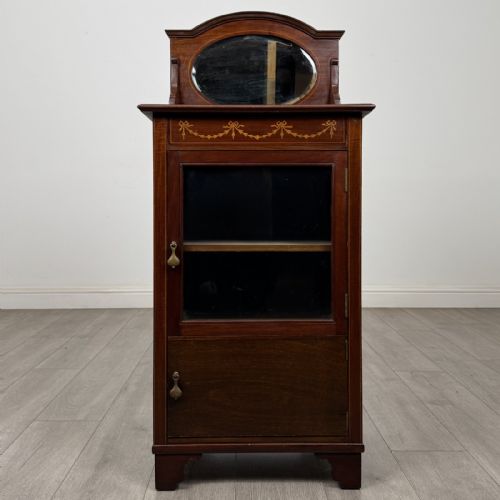
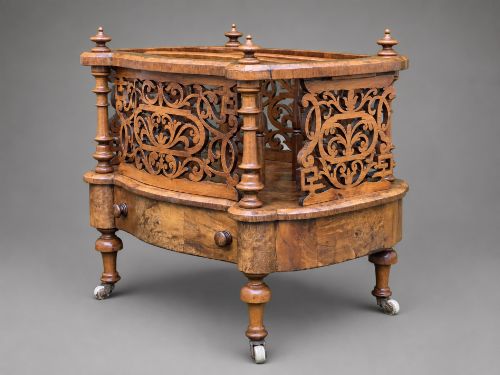
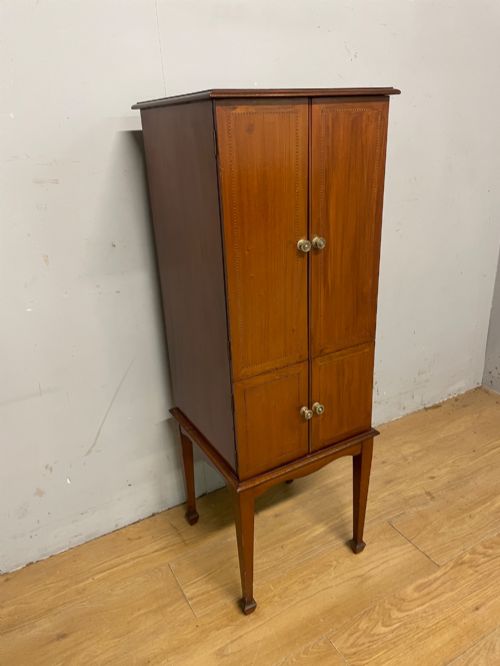
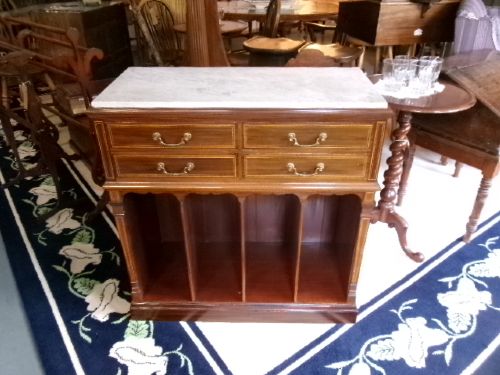
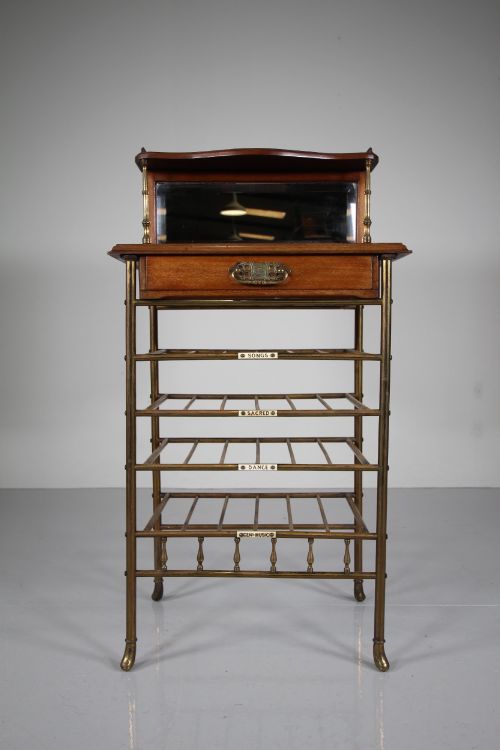
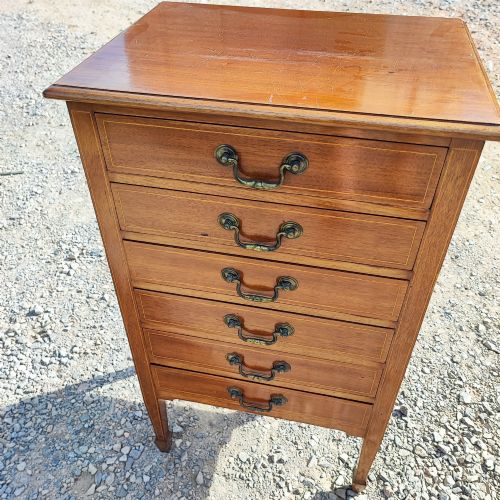
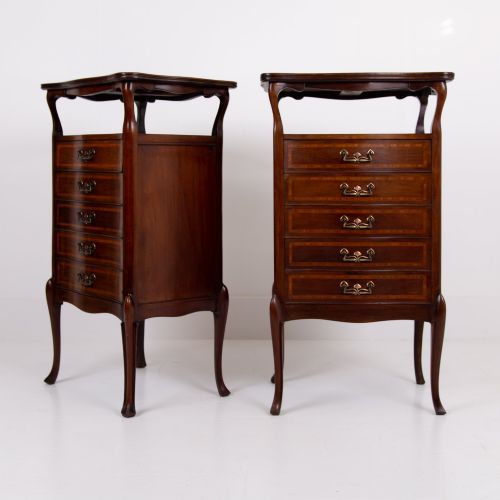
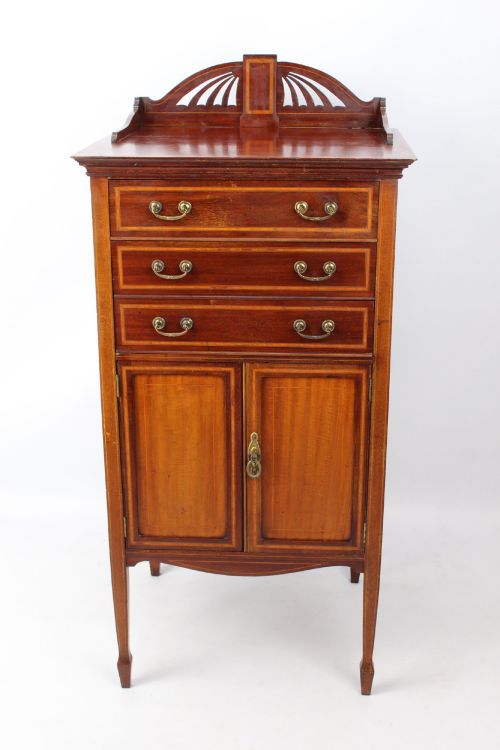
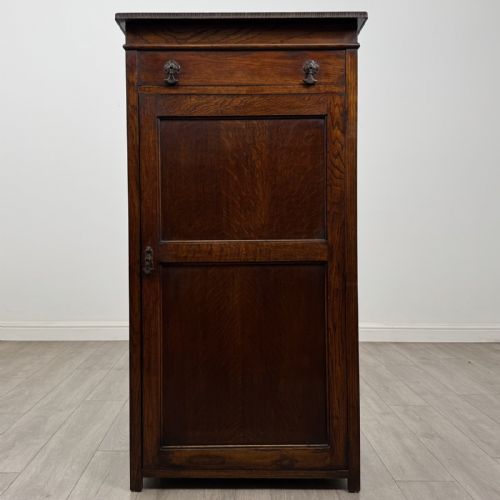
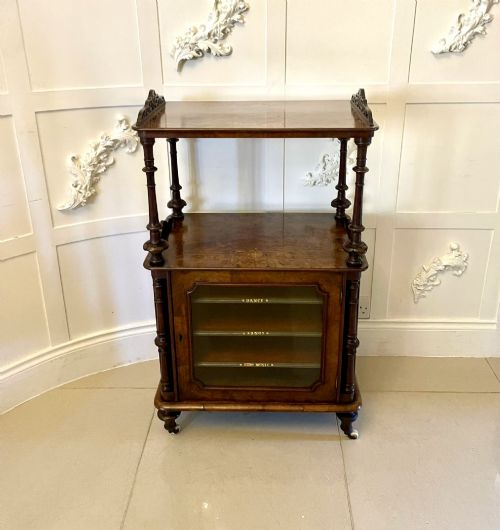
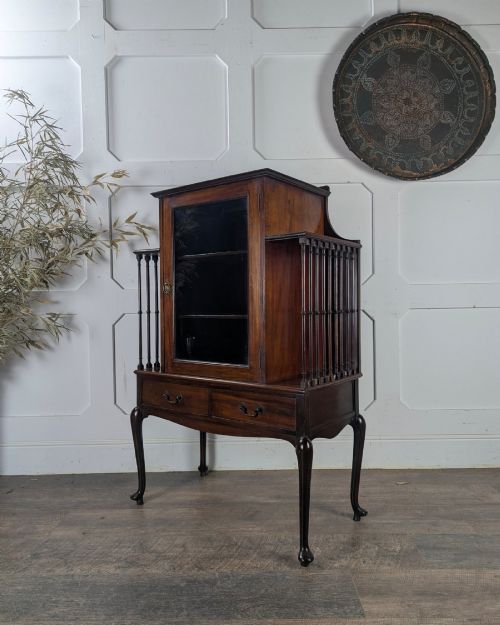
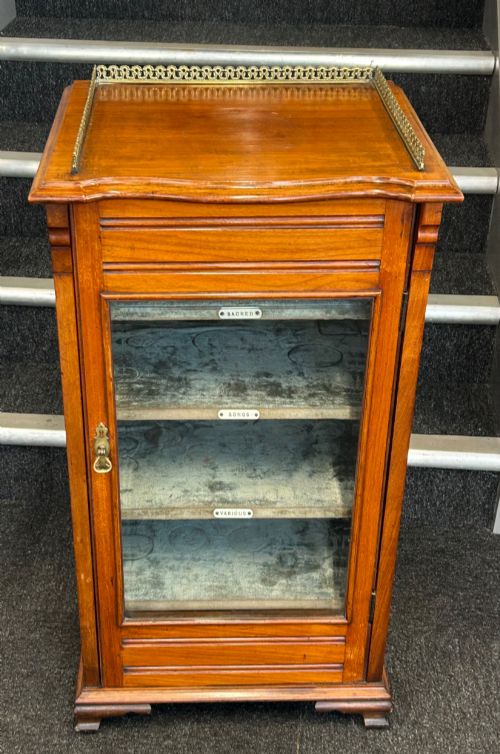
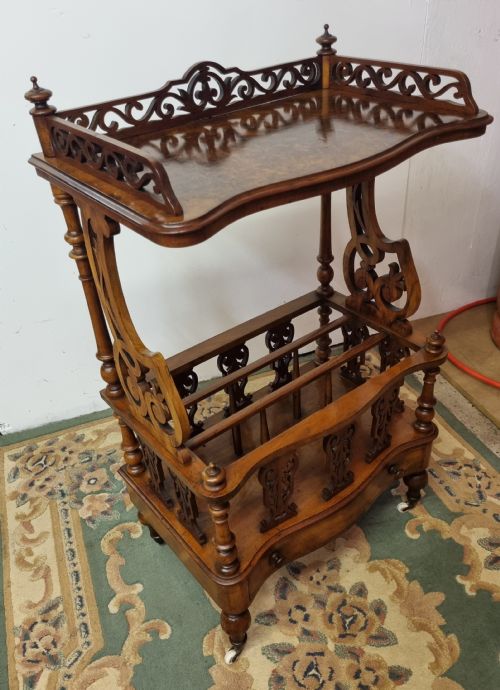
A brown music cabinet serves as a dedicated piece of furniture designed to hold sheet music, scores, and related items within drawers or drop-down compartments. The selections here predominantly span the Edwardian and Victorian periods, often taking the form of upright cupboards or canterbury designs.
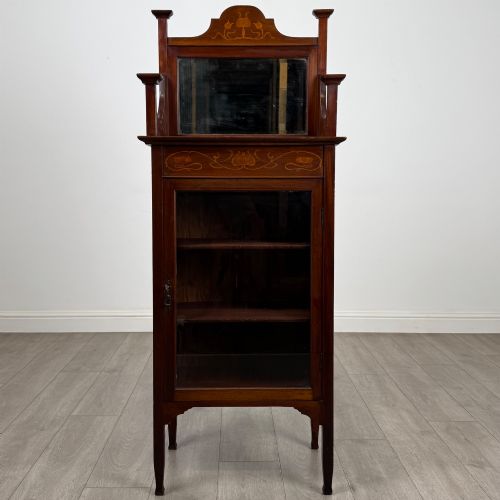
Alongside standard music cabinets, the listings include related forms such as display cabinets, magazine racks, and filing cabinets. Edwardian mahogany examples with inlaid decoration appear frequently across the current stock.
Distinctions in Quality and Execution
Quality manifests in the choice of timber veneer, particularly the liveliness of burr walnut or the depth of the mahogany grain. Finer examples display precise satinwood inlay and well-fitted internal partitions rather than plain secondary woods.
The sophistication of the hardware, including brass handles, hinges, and locks, separates standard production items from superior pieces. Structural integrity in the fall-front mechanisms and drawer runners dictates longevity in daily use.
Brown Music Cabinet Retail Price Guide 2026
Typical asking prices for brown music cabinet among the pieces listed under this phrase on Sellingantiques today, from the lower quarter to the upper quarter. They describe what is for sale here now, not the wider market.
The listings show Edwardian and Victorian pieces predominantly in mahogany and walnut, alongside oak and burr walnut.
The Brown Music Cabinet Glossary
- Canterbury
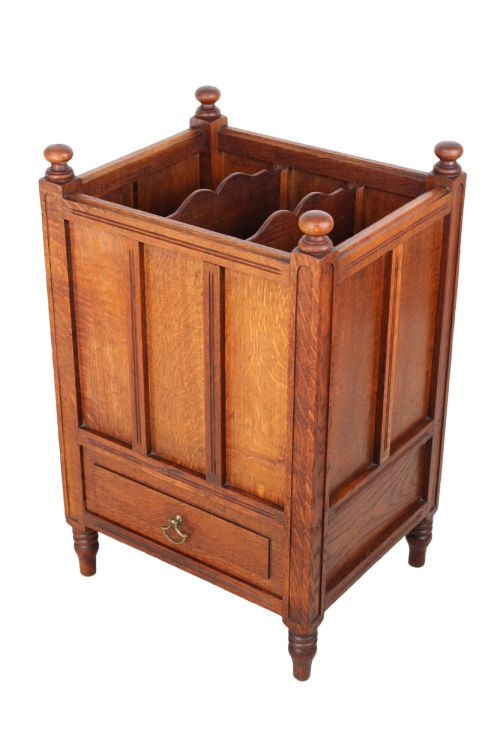
- A low stand with slatted partitions, originally built for holding sheet music or portfolios. These often include a single drawer beneath the main section.
- Fall-front
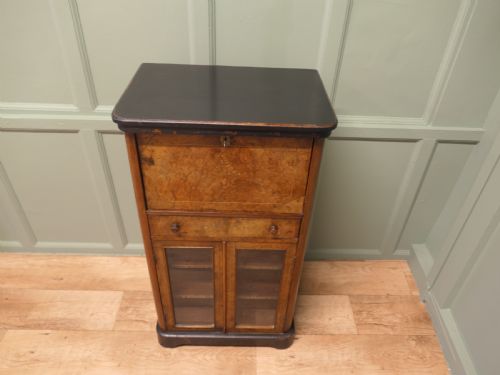
- A hinged door that drops forward to reveal interior shelves or compartments. This mechanism allows easy access to stacked sheet music.
- Burr walnut
- Timber taken from a growth on the walnut tree, prized for its swirling grain patterns. It is frequently used as a veneer on Victorian furniture.
- Marquetry
- The art of applying decorative pieces of veneer to a structure to form intricate patterns. Cabinetmakers often employed this on mahogany and walnut surfaces.
Brown Music Cabinet: Frequently Asked Questions
What is a brown music cabinet?
A brown music cabinet is a specialised wooden piece of furniture created to store sheet music, scores, and small instruments. They typically feature internal vertical divisions or drop-front drawers to keep paper organised.
Most examples seen here date from the Victorian and Edwardian eras, constructed in woods such as mahogany and walnut. Some variations incorporate display glass or mirrored backs.
How were music cabinets used?
These cabinets housed sheet music for the piano or parlour instruments, keeping scores flat and sorted before evening performances. The partitions prevented large stacks of paper from slumping.
Canterbury variants allowed musicians to keep active pieces close to hand in the room. Fall-front drawers provided an immediate writing or sorting surface.
How do I date a music cabinet?
Dating relies on timber choice, decorative styles, and construction methods visible in the drawers and backboards. Victorian pieces often use burr walnut and heavy carving, while Edwardian versions favour lighter mahogany with satinwood inlay.
Later pieces from the 1920s adopt simpler lines or art deco influences. Inspecting the drawer joints and internal hardware helps narrow down the manufacturing decade.
Where should I place one at home?
These cabinets fit well in living rooms, studies, or music rooms as practical storage units for papers, magazines, or stationery. Slim profiles allow them to occupy tight corners or wall spaces.
Keep them away from direct heat sources and strong sunlight to protect the walnut or mahogany veneers. The top surface often serves to display small decorative objects or lamps.