



Brown Marble Top Credenza
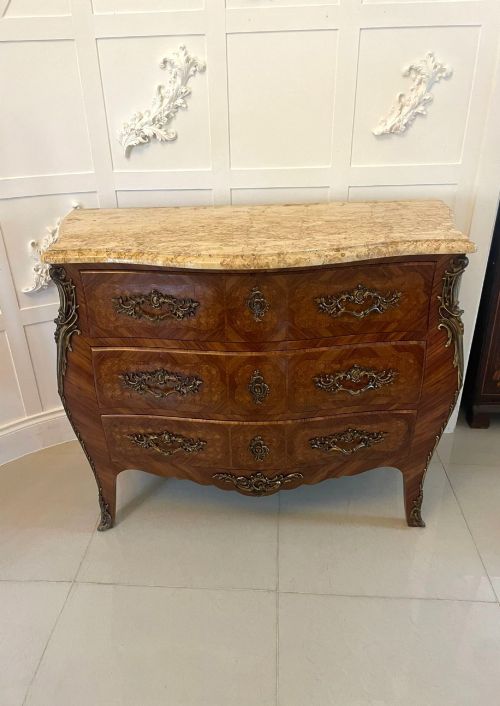
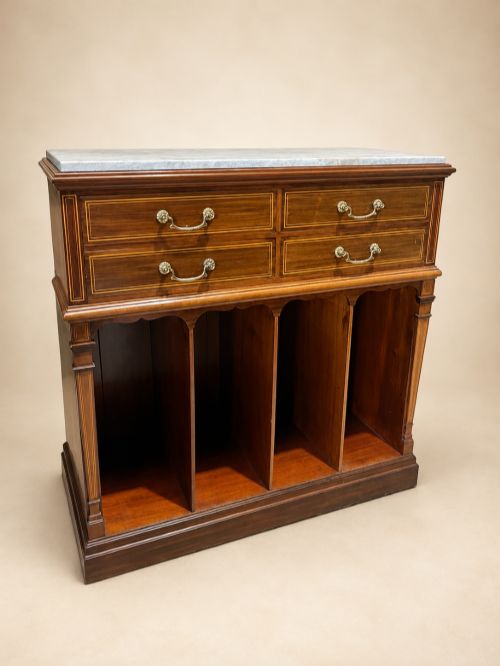
A brown marble top credenza delivers a robust stone surface atop timber cabinetry, bringing weight and utility to a room.
Brown Marble Top Credenza
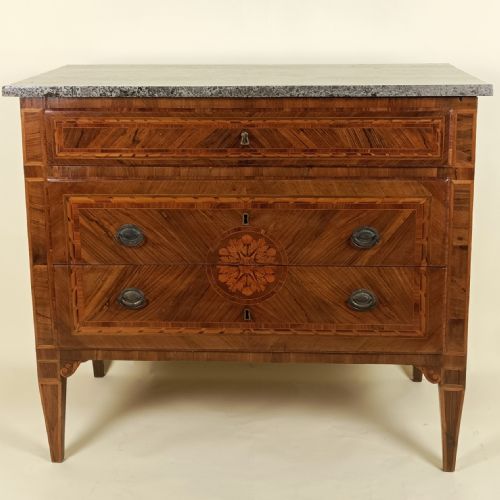
A brown marble top credenza combines substantial stone surfaces with timber cabinetry such as sideboards, commodes, and side cabinets. The pieces span periods from the eighteenth century through to the early twentieth century, with nineteenth-century examples appearing frequently.
Forms include commodes, side cabinets, and console tables originating from French, Italian, Dutch, and English workshops. These items function primarily for display and storage in dining rooms, living areas, and hallways.
Materials and construction methods
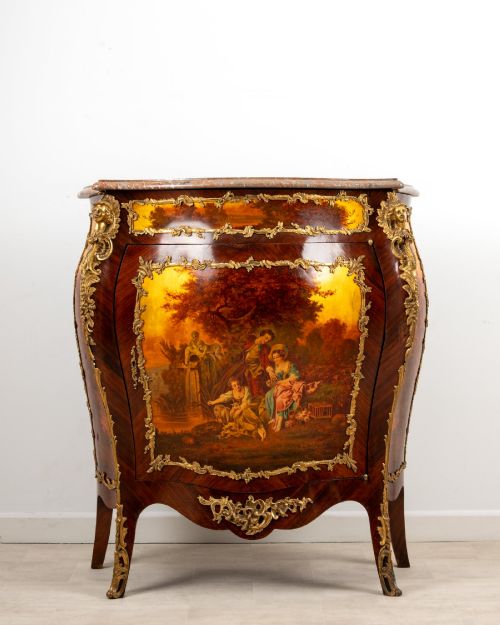
Cabinet makers utilised foundational timbers such as mahogany, walnut, rosewood, and satinwood, often embellishing surfaces with marquetry, parquetry, and inlaid details. Ormolu mounts and brass fixtures provide structural and decorative accents across many pieces.
Heavy marble slabs form the upper surfaces, shaped to fit the contours of commodes, sideboards, and side cabinets. Carved woodwork, lacquered finishes, and applied bronze or brass mounts complete the construction.
Listings feature walnut, mahogany, rosewood, and satinwood paired with marble tops across Victorian, Edwardian, and Art Deco periods.
Judging the quality of construction
Superior execution shows in the precision of the timber inlay, the depth of the marquetry work, and the integration of ormolu mounts. Finer pieces demonstrate careful selection of burr walnut, mahogany, or kingwood veneers.
The weight, thickness, and finish of the marble top distinguish different tiers of manufacture. High-grade items display harmonious proportions between the stone slab and the underlying cabinet carcass.
Gillows·Beurdeley
The Brown Marble Top Credenza Glossary
- Ormolu
- Gilded bronze mounts applied to furniture for decorative effect. These metal fittings appear frequently on French cabinets and commodes from the nineteenth century.
- Marquetry
- Decorative patterns formed by inserting pieces of wood veneer into a master wood matrix. This technique creates complex floral or geometric designs on cabinet doors and drawer fronts.
- Commode
- A low chest of drawers or cabinet with a flat top designed for domestic storage. Many nineteenth-century variants incorporate marble slabs above the primary storage compartment.
- Parquetry
- Geometric wood mosaic work used for floors and cabinet surfaces. The method employs contrasting timber tones to create tiled patterns.
Brown Marble Top Credenza: Frequently Asked Questions
How do I clean a marble top?
Wipe the stone surface using a soft cloth dampened with warm water and mild soap. Avoid acidic cleaners that etch the polished finish.
Dry the marble thoroughly after washing to prevent water marks and maintain the natural lustre of the stone.
Where were these cabinets placed?
These items served primarily in formal dining rooms, drawing rooms, and hallways for storing porcelain, linen, and silverware.
The flat stone surface also provided a sturdy counter for serving food or displaying decorative ornaments.
How do I distinguish French styles?
Louis XV and Louis XVI revival pieces display characteristic curved or straight lines, intricate marquetry, and elaborate ormolu mounts. Empire pieces rely on darker woods and classical bronze details.
Provincial examples offer simpler woodwork and restrained decoration compared to their metropolitan counterparts.
Can the marble be separated from the wood?
Most marble slabs rest loose upon the timber base to allow for safe transport and cleaning. Heavy weight keeps the stone stable during daily use.
Lifting the top requires multiple people due to the dense weight of the natural stone.