


Three Door Carved Sideboard
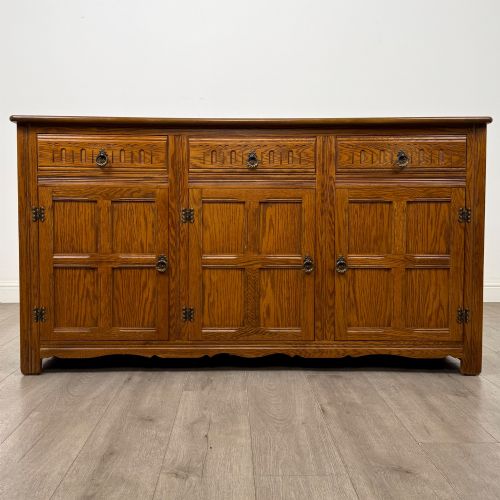
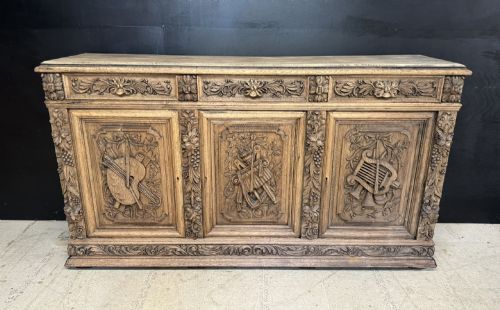
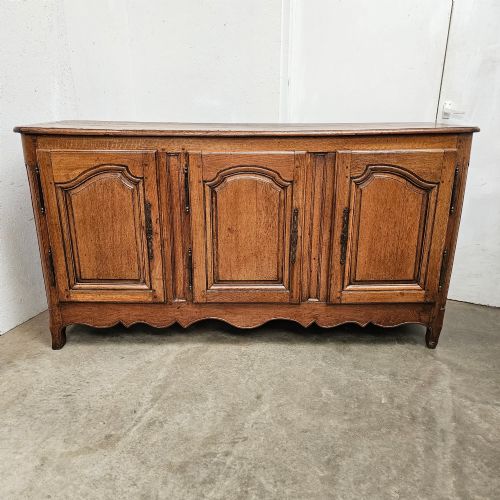
A three door carved sideboard brings solid timber presence and ample storage to a room, drawing the eye with rich relief work.
Three Door Carved Sideboard
When you search for a three door carved sideboard, you encounter substantial dining and living room furniture designed to anchor a wall while hiding tableware and linens behind a trio of cabinet doors. These pieces emerge from periods spanning the nineteenth century through the nineteen-thirties, reflecting diverse regional tastes.
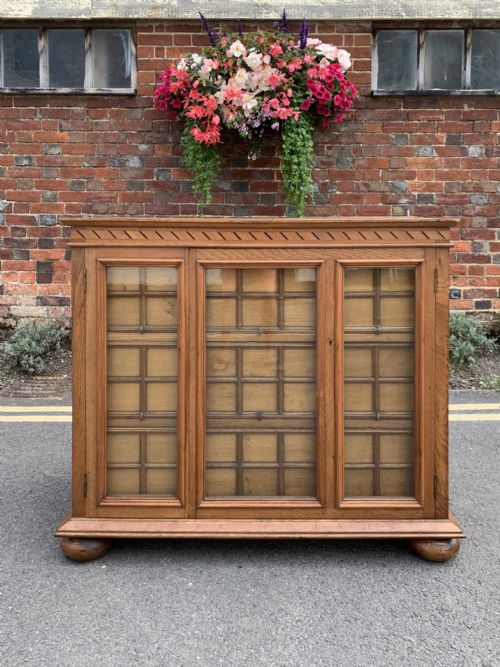
You meet examples ranging from robust golden oak and pollard oak creations in English Victorian styles to refined French enfilades and parquetry-topped designs. Some incorporate practical top shelves or mirrored displays, while others favour pure carved cabinetry.
The dominant forms lean towards heavy oak and mahogany constructions, though occasional walnut, rosewood and birds eye maple variations appear. Each version provides the characteristic triple-bay storage configuration that defines this category of antique cabinetry.
How they were made
Cabinetmakers constructed these sideboards using solid timbers such as oak, mahogany and walnut, frequently applying flame mahogany veneer or parquetry patterns to expansive surfaces. Structural integrity relied on traditional joinery techniques suited to heavy domestic service.
Carving formed the primary decorative vocabulary, executed directly into the dense wood of the doors and friezes by hand. Brass hardware and occasional marble tops completed the construction, adding functional contrast to the wooden carcases.
Several pieces double as display cabinets, proving that sideboards love showing off glassware just as much as hiding dinner plates.
What varies in quality
Depth and crispness of the wood carving distinguish superior examples from plain utility pieces, separating skilled relief work from mechanical cutting. The selection of timber grain, particularly in flame mahogany veneers or figured oak, dictates visual impact.
The integrity of the internal carcass construction and the smooth operation of all three doors reveal the original maker's standard of joinery. Original brass mountings and sound marble tops further elevate the standing of an individual piece.
The Three Door Carved Sideboard Glossary
- Enfilade
- A long sideboard or buffet, typically of French origin, featuring a continuous row of cabinets along a single facade. This form provides expansive surface and storage capacity.
- Parquetry
- A geometric mosaic of wood pieces used for decorative surfacing on tabletops and cabinet fronts. It displays contrasting timber tones in repeating patterns.
- Pollard oak
- Oak timber taken from trees that were cut back to promote a dense branch growth, producing a highly figured and speckled grain. Cabinetmakers prized this wood for decorative door panels.
- Chiffonier
- A low sideboard or cabinet featuring shelves or a mirror superstructure above the main storage body. It developed during the nineteenth century for drawing room use.
- Buffet
- A sideboard designed for serving food and storing dining accessories. It often incorporates upper tiers or display surfaces above the primary cupboards.
Three Door Carved Sideboard: Frequently Asked Questions
How do I place a three door carved sideboard?
Position the piece against a principal dining room or hallway wall where its length and depth can be appreciated without blocking traffic flow.
Ensure adequate clearance for all three doors to swing open fully when accessing stored items.
What periods do these sideboards come from?
The pieces span the nineteenth century through the nineteen-thirties, encompassing Victorian, Edwardian and later revival aesthetics.
Earlier examples often display heavier Gothic or Renaissance influences, while later twentieth-century pieces adopt lighter French provincial styles.
How do I care for antique timber surfaces?
Maintain the wood by applying quality beeswax periodically and avoiding direct exposure to strong sunlight or radiator heat.
Dust regularly with a soft cloth to protect the polished finish and carved details from accumulating grime.
What timber types should I expect to find?
Oak and mahogany form the majority of the structural materials, supplemented by walnut, rosewood and birds eye maple.
Some iterations feature specialised veneers or marble inserts on the upper surface for added texture.