
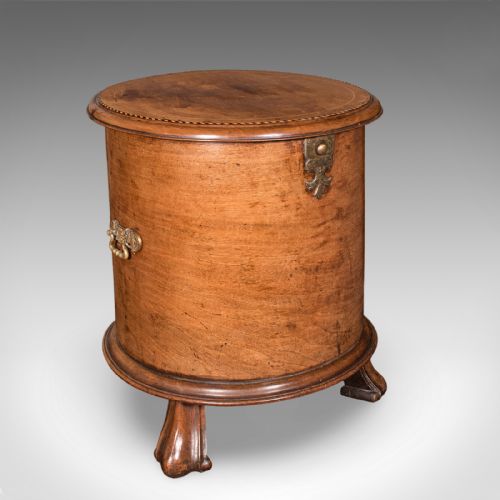
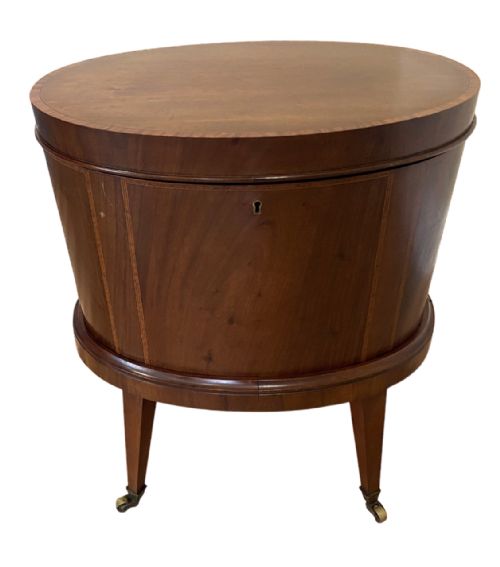


Brown Mahogany Wine Cooler
Brown mahogany wine coolers bring refined Georgian and Regency utility to dining rooms, holding bottles in robust timber.
Brown Mahogany Wine Cooler
A brown mahogany wine cooler serves as a dedicated vessel for chilling and presenting wine during formal meals, appearing in various classical forms. Buyers seeking a brown mahogany wine cooler will encounter distinct variations spanning the Georgian, Regency, and Victorian eras.
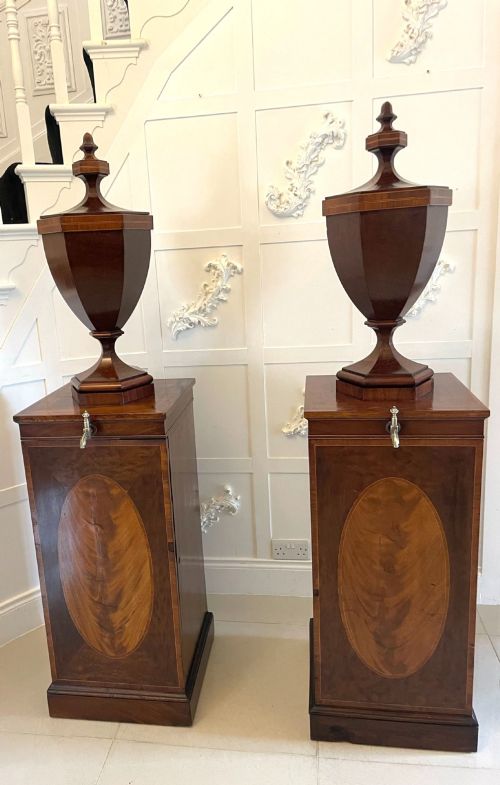
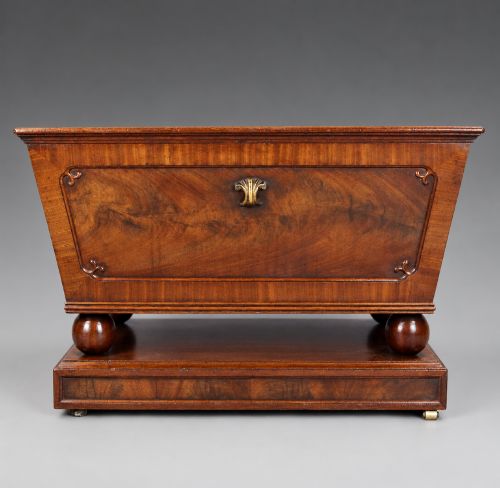
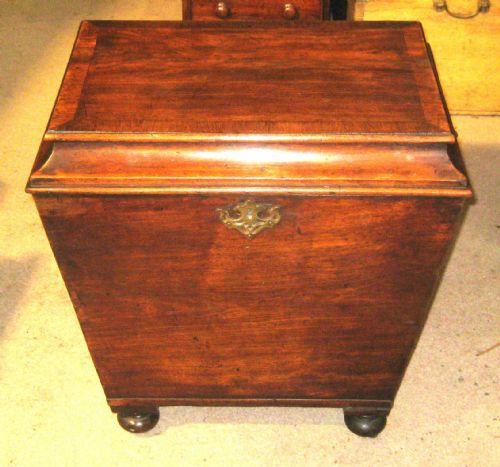
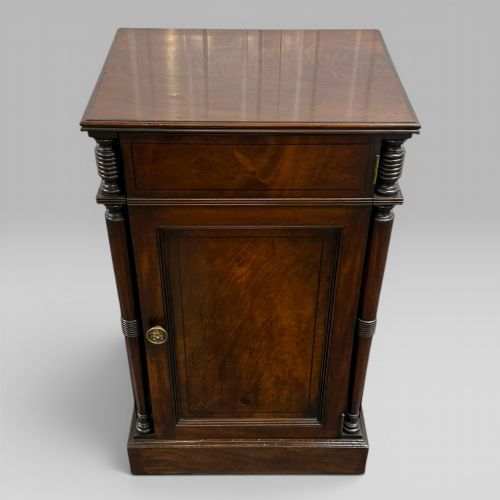
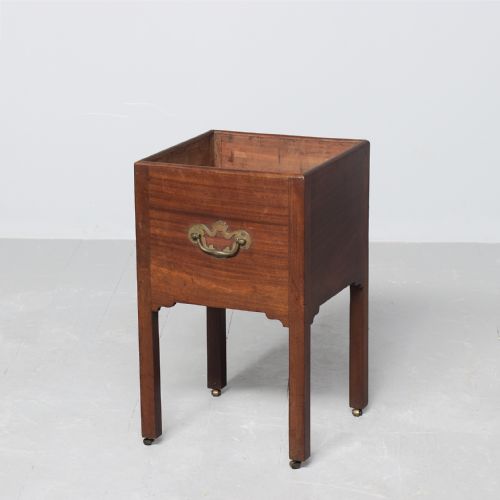
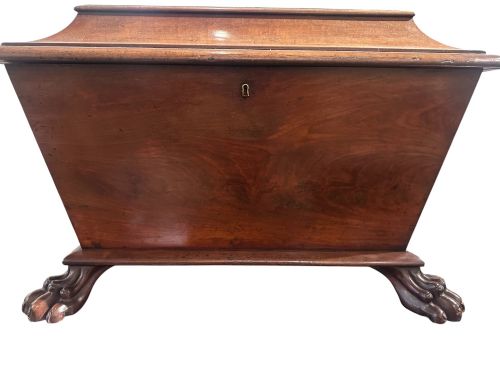
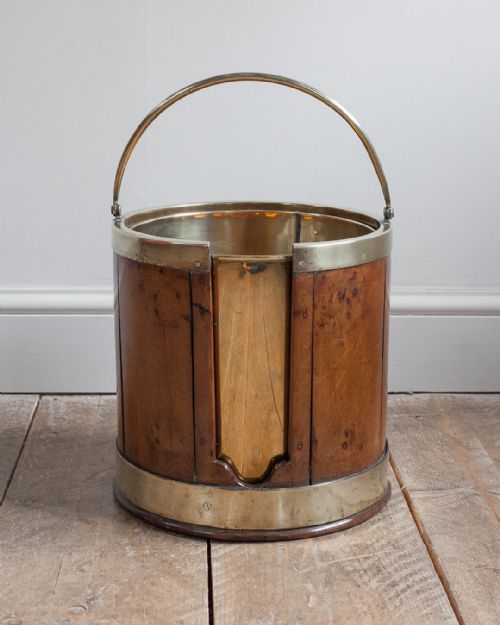
The most common forms on this page include sarcophagus shapes, oval buckets, and pedestal designs. These pieces often feature fitted interiors designed originally to hold bottles and ice.
Originating predominantly from English and Irish workshops, these items reflect the changing domestic habits of dining rooms over successive centuries. The timber varies from plain surfaces to rich, figured grain patterns.
Materials and construction
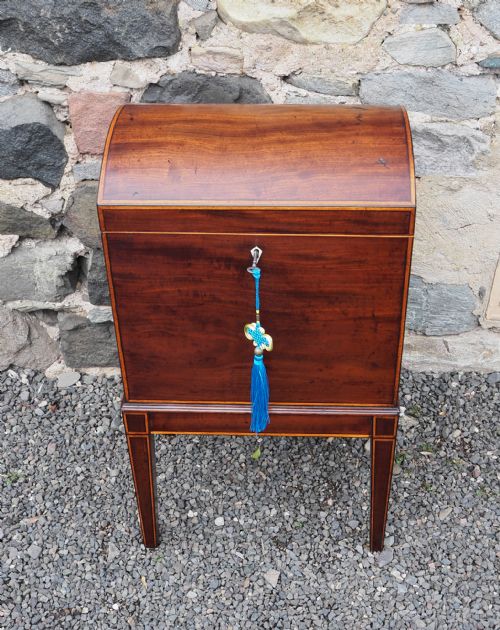
Cabinet makers utilised solid mahogany and flame mahogany veneer over secondary woods, often applying boxwood or satinwood inlay to accentuate the contours. The choice of timber determined the visual depth of the exterior grain.
Metal components played a structural and decorative role, with brass bands securing the staves of bucket-form coolers and brass lion-paw feet supporting heavy sarcophagus bodies. These hardware additions ensured durability for heavy vessels meant to hold wet ice and glass bottles.
Brown Mahogany Wine Cooler Retail Price Guide 2026
Typical asking prices for brown mahogany wine cooler among the pieces listed under this phrase on Sellingantiques today, from the lower quarter to the upper quarter. They describe what is for sale here now, not the wider market.
Listings demonstrate forms ranging from George III serpentine boxes to massive Victorian walnut chests and Regency sarcophagi.
Assessing quality in construction and detail
The standard of a piece rests on the selection of timber veneers and the precision of the joinery, particularly in curved or serpentine forms. Finer examples display symmetrical flame patterns and meticulous brass work rather than plain, utilitarian joints.
Proportion and interior preservation dictate the desirability of a piece. Original lead linings or divided wooden compartments indicate a higher degree of surviving domestic utility.
Gillows·Maples and Co·Robert Strahan and Co
The Brown Mahogany Wine Cooler Glossary
- Cellarette
- A lockable container used for storing wine bottles near the dining table. It often sits on short legs or floor-standing pedestals.
- Sarcophagus
- A coffin-shaped architectural style popular during the Regency period for large wine coolers. These vessels typically feature heavy carved paws and domed lids.
- Flame mahogany
- Timber cut from the fork of the mahogany tree to produce a rippling, flame-like grain pattern. Cabinet makers reserved this veneer for primary visible surfaces.
- Plate bucket
- A deep cylindrical vessel bound with brass hoops, originally designed for holding cutlery or wine bottles in ice. They frequently mirror the construction of coopered wooden casks.
Brown Mahogany Wine Cooler: Frequently Asked Questions
What is a wine cooler used for?
These pieces functioned historically to cool wine bottles at the dining table using ice or cold water. Interiors often contained lead linings or compartments to separate bottles from melting ice.
Today, buyers repurpose them as decorative plant stands, storage chests, or traditional cocktail accessories in reception rooms.
How do I tell Georgian from Regency styles?
Georgian pieces generally favour straight lines, satinwood bandings, and lighter bracket feet, reflecting neoclassical restraint. The George III era often produced elegant urns and serpentine fronted boxes.
Regency coolers lean towards heavier architectural forms like the sarcophagus shape, incorporating bold carved paw feet, bold brass binding, and classical lion masks.
Are these coolers waterproof inside?
Many original interiors featured lead linings to contain melting ice and water safely without damaging the outer mahogany timber. Over time, some linings have been removed or replaced during past restorations.
Buyers should inspect the interior compartment if they intend to use the vessel for actual cooling duties rather than dry storage.
Where were these pieces placed in the room?
Cellarettes and wine coolers stood directly on the dining room floor, frequently tucked beneath sideboards or beside serving tables during grand banquets. Freestanding pedestals and urns flanked doorways or main furniture pieces.
Modern interiors accommodate them easily as focal points beneath art or beside seating arrangements.