




Brown Mahogany Trinket Chest
A brown mahogany trinket chest provides a small scale storage box fashioned in rich timber for precious items.
Brown Mahogany Trinket Chest
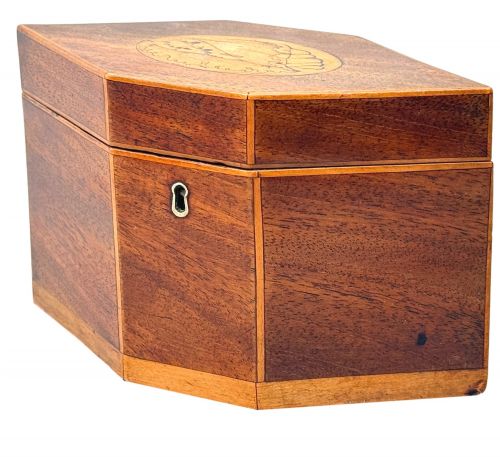
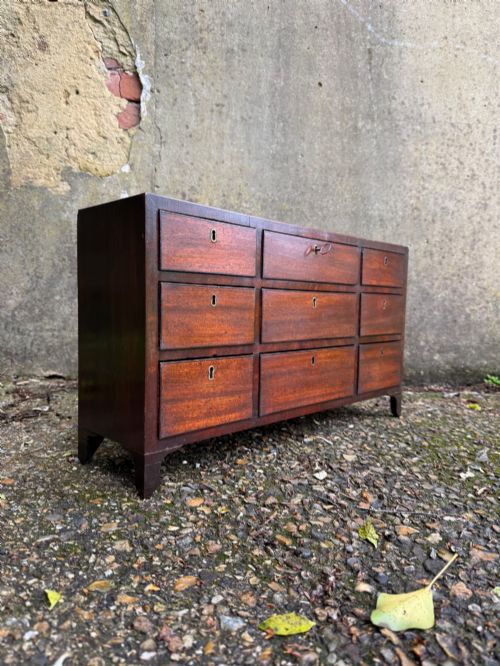
A brown mahogany trinket chest encompasses miniature chests of drawers, tea caddies, sewing boxes, and decorative boxes originating from the Georgian, Victorian, Regency, and Edwardian periods. These forms serve as compact containers for valuables, jewellery, and domestic sundries.
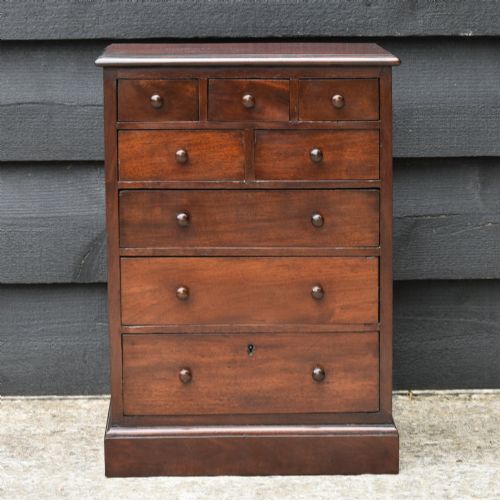
Miniature chests of drawers and tea caddies dominate the selection, spanning straight front and bow front designs. Makers structured these pieces during the eighteenth and nineteenth centuries using durable timber stock.
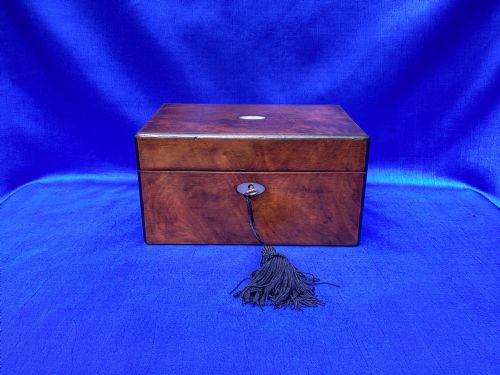
Examples range from plain storage pieces to inlaid models featuring boxwood, mother of pearl, and shell motifs. The selection includes apprentice pieces alongside functional tea and storage boxes.
Materials and construction
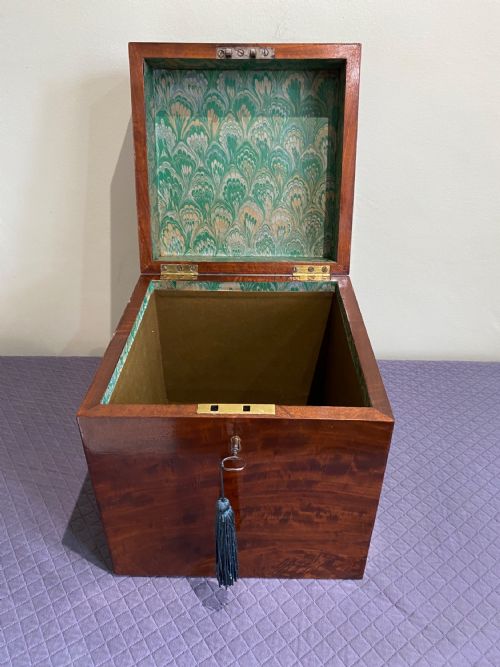
Carpenters constructed these boxes primarily in solid mahogany and wood, often applying delicate boxwood and mother of pearl inlay for decorative contrast. Brass fixtures such as escutcheons and hinges provide structural reinforcement and closure.
Interior compartments frequently incorporate paper linings and bone details to divide spaces for tea leaves, sewing implements, or trinkets. Cabinetmakers joined the timber using traditional methods suited to small scale furniture.
Several miniature chests are traditional apprentice pieces, proving a young joiner's mastery before tackling full sized furniture.
Judging quality and execution
Superior execution shows in the precision of the wood grain alignment, the crispness of bow front curves, and the integration of shell or boxwood inlay. Finer examples maintain original brass hardware and clean interior paper linings.
Proportion and scale distinguish standard utility boxes from finely detailed miniature chests and tea caddies. The depth of the timber colour and the restraint of decorative additions govern the overall character of the piece.
The Brown Mahogany Trinket Chest Glossary
- Bowfront
- A curved front contour found on several miniature chests in the selection. This convex shape requires skilled woodworking to follow the line of the drawers.
- Apprentice piece
- A small scale furniture item demonstrated by a craftsman to prove skill. These miniature chests of drawers often display the precise joinery of full sized furniture.
- Tea caddy
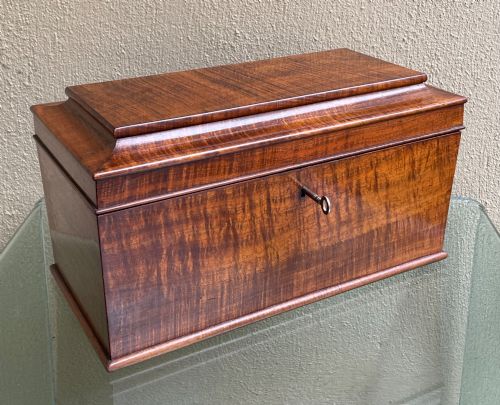
- A container designed to store dry tea leaves securely. Examples here appear in hexagonal and rectangular mahogany formats.
- Escutcheon
- A protective brass plate surrounding a keyhole. It prevents the wood from splitting around the lock.
Brown Mahogany Trinket Chest: Frequently Asked Questions
What were miniature chests used for?
Cabinetmakers produced miniature chests of drawers to store small valuables, trinkets, or sewing accessories on dressing tables. Many served as apprentice pieces displaying the skill of the maker.
Today, owners utilise them on desks and side tables to organise modern items while retaining period character.
How do I date a mahogany tea caddy?
Dating relies on assessing the timber grain, hardware, and stylistic traits like Sheraton Revival or Georgian shaping. Examination of internal compartments and construction techniques clarifies the period.
Earlier examples from the eighteenth century often feature simpler joinery and distinct proportions compared to later Victorian iterations.
Are these boxes made of solid mahogany?
The pieces utilise mahogany alongside supporting wood species for internal structures and secondary framing. Inlay work incorporates materials like boxwood and mother of pearl.
Surface finishes highlight the natural grain and deep brown colour of the primary timber.
What is the difference between a trinket chest and a tea caddy?
Trinket chests generally feature drawers or open compartments intended for jewellery and small personal items. Tea caddies are specifically engineered with lidded internal canisters to preserve tea leaves.
Both forms utilise similar mahogany construction and decorative inlay techniques.