


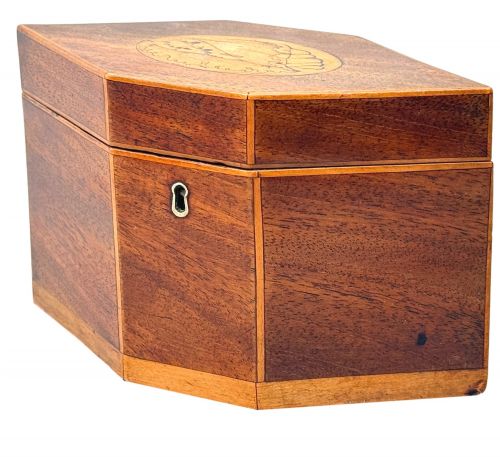


Brown Mahogany Tea Chest
A brown mahogany tea chest brings the warm grain and precise joinery of Georgian and Regency craftsmanship directly into a modern room.
Brown Mahogany Tea Chest
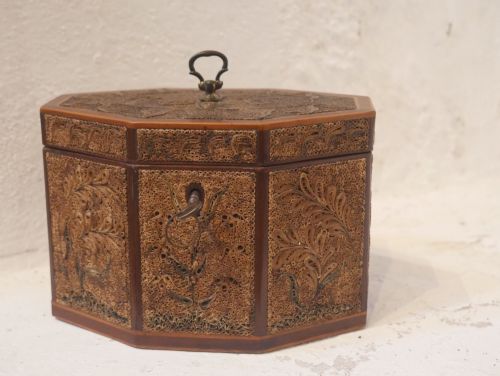
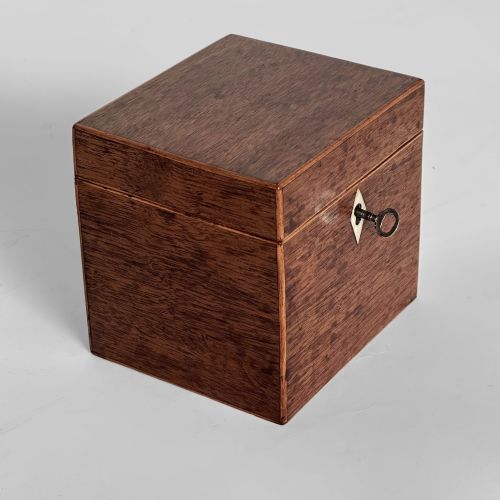
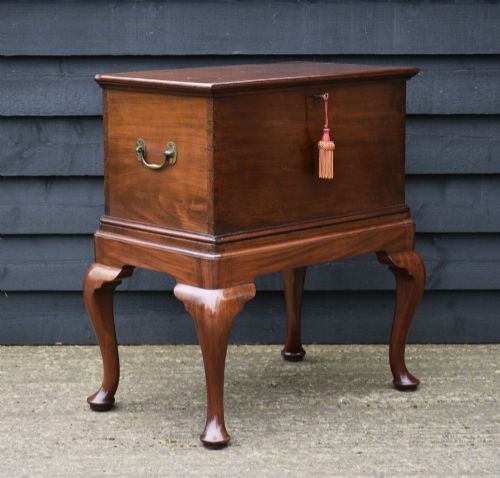
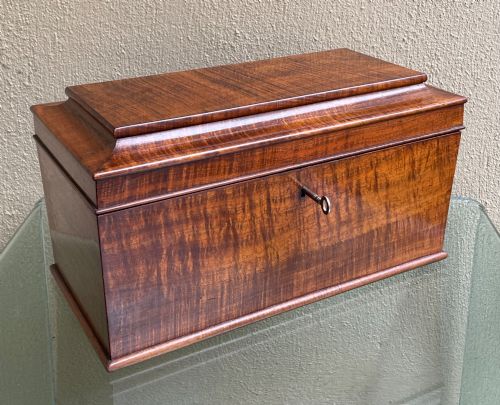
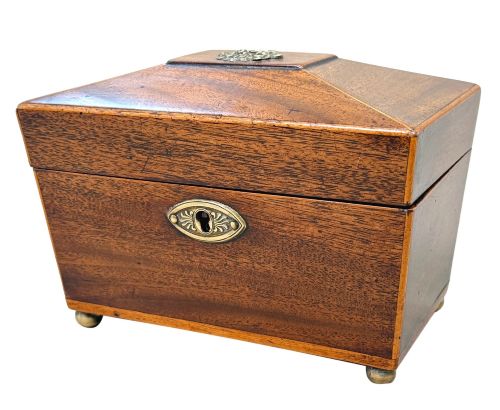
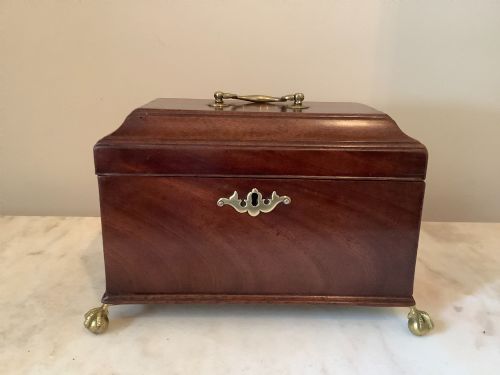
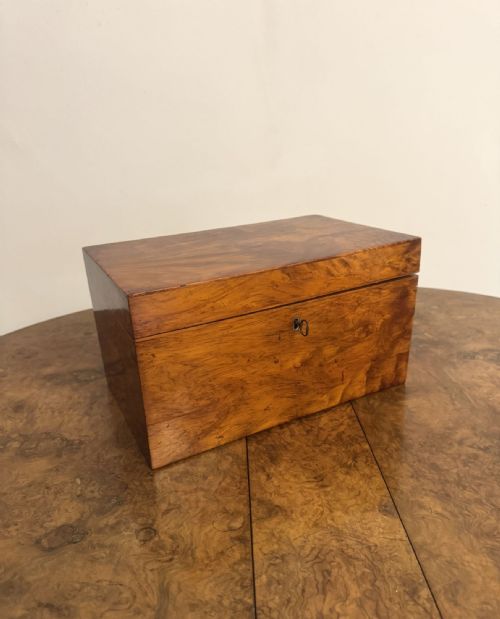
A brown mahogany tea chest is a specialised storage box designed to hold precious loose tea leaves securely under lock and key. The pieces seen here span the Georgian, Regency, and Victorian periods, taking forms that range from simple rectangular boxes to elaborate sarcophagus shapes and standing teapoys.
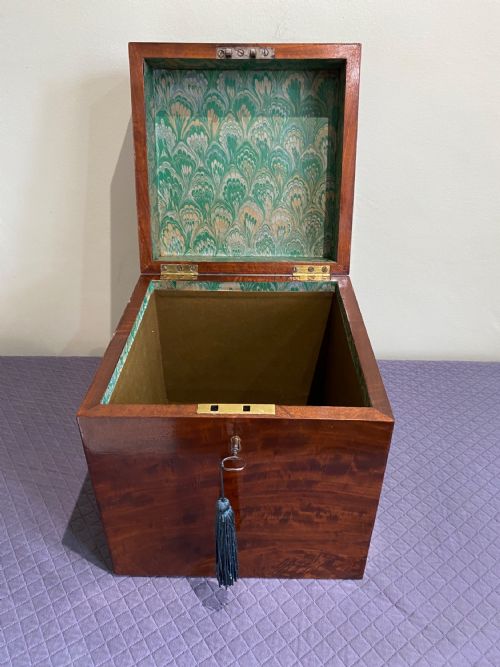
The most common examples encountered on this page are compact Georgian and Regency tea caddies fashioned from rich brown mahogany. These often feature internal compartments, mixing glasses, or delicate boxwood and ebony stringing.
Larger variants include Victorian teapoys raised on stands and miniature sideboards designed to hold multiple canisters. Each piece reflects the high status of tea as a luxury commodity in past centuries.
Materials and construction
Cabinet makers utilised solid mahogany and figured flame mahogany veneers over secondary timbers to construct these sturdy beverage cases. The timber exhibits a deep, warm brown tone that deepens with age and handling.
Decorative details rely on contrasting materials such as boxwood, ebony, and bone for stringing and star inlays. Metal fittings typically consist of brass escutcheons, handles, and working locks with matching keys.
Several boxes contain secret drawers requiring hidden spring catches to open, perfect for concealing the key to the tea.
Assessing quality and execution
Quality rests upon the selection of the timber and the precision of the cabinet work. Superior pieces display striking flame mahogany grain patterns matched symmetrically across the lid and panels.
Interior fittings strongly influence desirability. Examples retaining their original cut glass mixing bowls, loose leaf canisters, and working secret drawers command closer attention from collectors.
Gillows
The Brown Mahogany Tea Chest Glossary
- Teapoy
- A small stand or large caddy mounted on a central pillar or legs, designed to hold tea canisters and a mixing bowl. They often include internal compartments for sugar and loose leaves.
- Sarcophagus form
- A box design featuring a steep, sloping lid and a tapered body resembling a miniature stone tomb. This neoclassical shape gained immense popularity during the Regency period.
- Stringing
- Thin inlaid lines of contrasting timber, such as boxwood or ebony, set flush into the mahogany surface. It provides a crisp border to panels and lids.
- Mixing glass
- A small glass bowl fitted inside the caddy for blending different teas or holding sugar. Many original examples feature hand-cut crystal details.
Brown Mahogany Tea Chest: Frequently Asked Questions
What was inside a tea chest?
Tea chests contained lead-lined compartments for green and black tea leaves, keeping the expensive contents dry and aromatic.
Many also housed a central glass bowl used for washing spoons or mixing the dry leaves before brewing.
How do I date a mahogany tea chest?
Dating relies on architectural styles, hardware, and construction methods. Georgian examples often show straight lines and bracket feet, while Regency pieces favour sarcophagus shapes and brass lion paw rings.
Internal hinges, lock designs, and secondary woods like pine or oak offer further clues to the exact decade of manufacture.
Were these boxes kept locked?
Tea was a heavily taxed and costly commodity in the eighteenth and nineteenth centuries, making security essential.
Households kept the key separate to prevent domestic staff from helping themselves to the valuable leaves.
How do I care for antique mahogany?
Keep the wood away from direct sunlight and sudden temperature changes to prevent the mahogany veneer from lifting.
Apply a traditional beeswax polish occasionally to nourish the grain and maintain the natural lustre of the brown timber.