
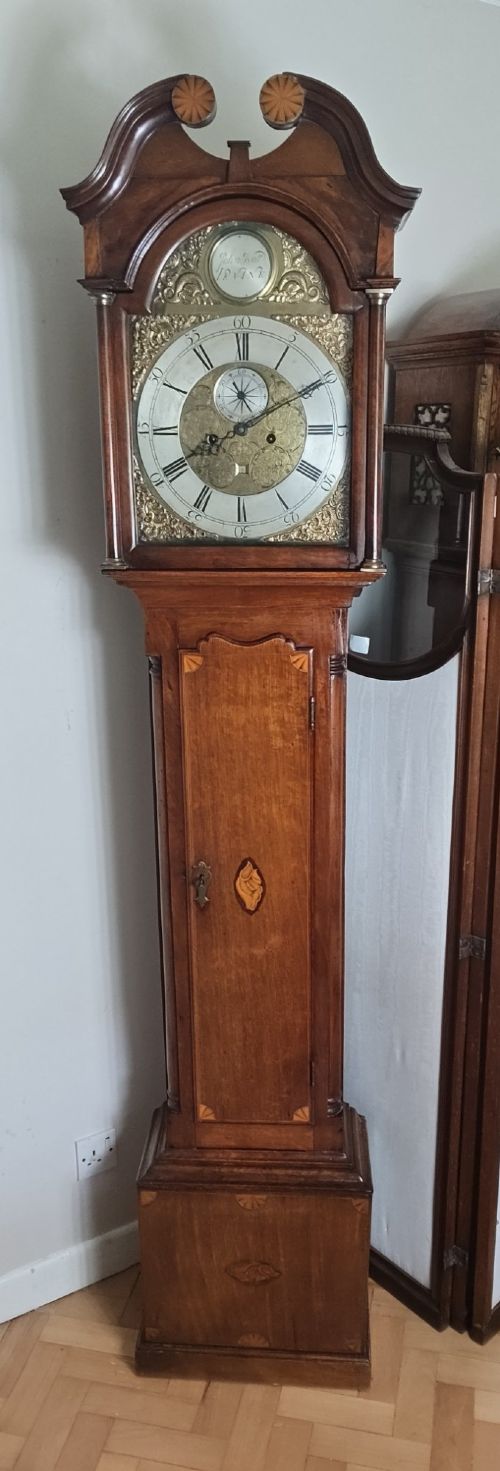
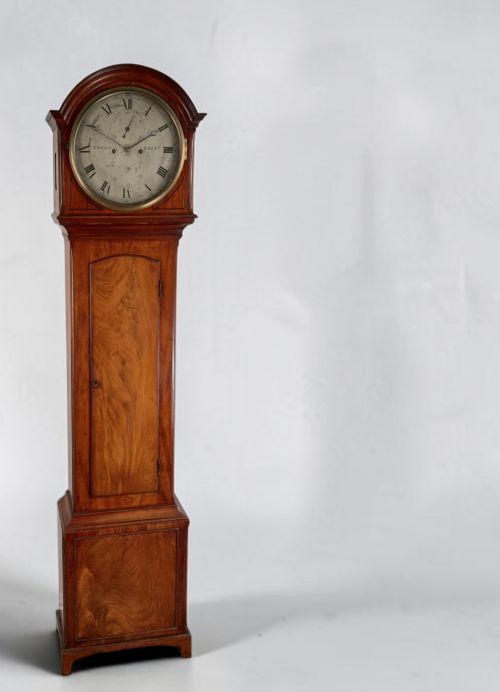
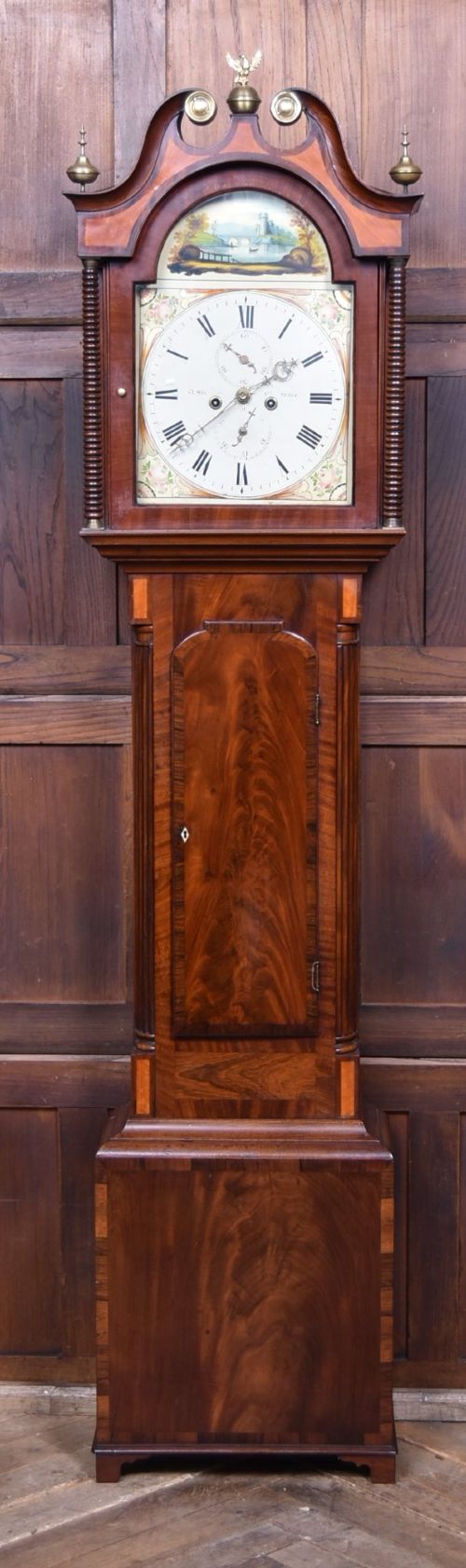
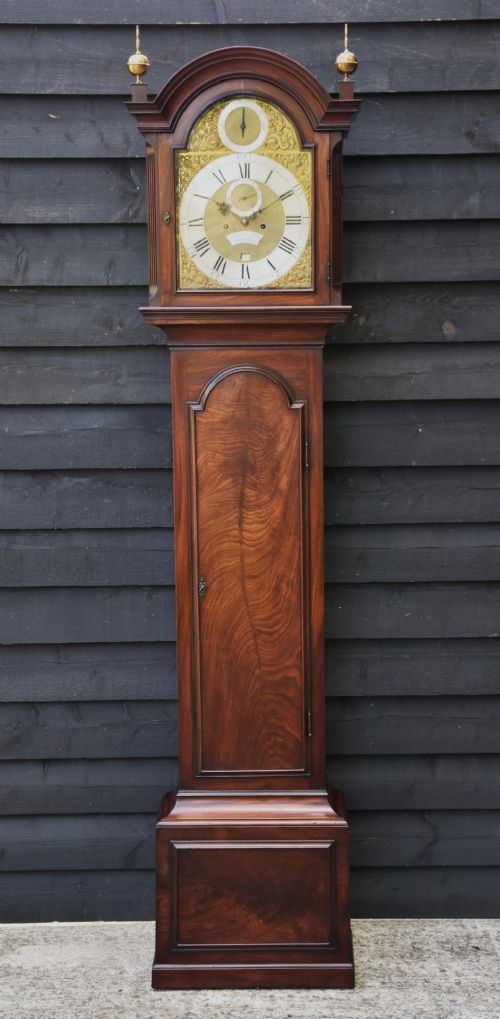
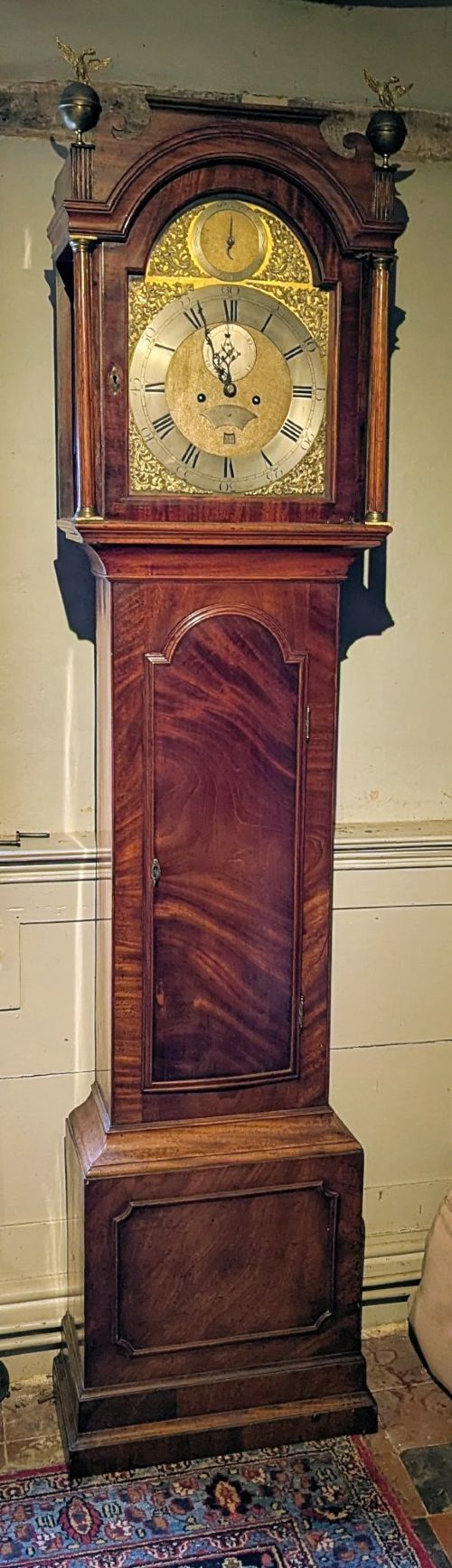
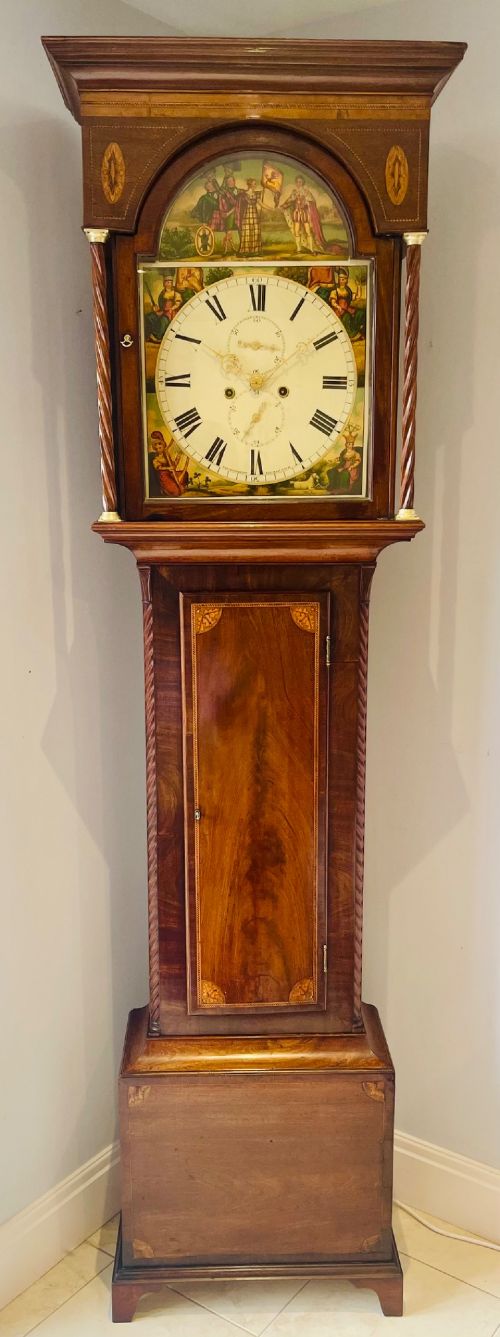
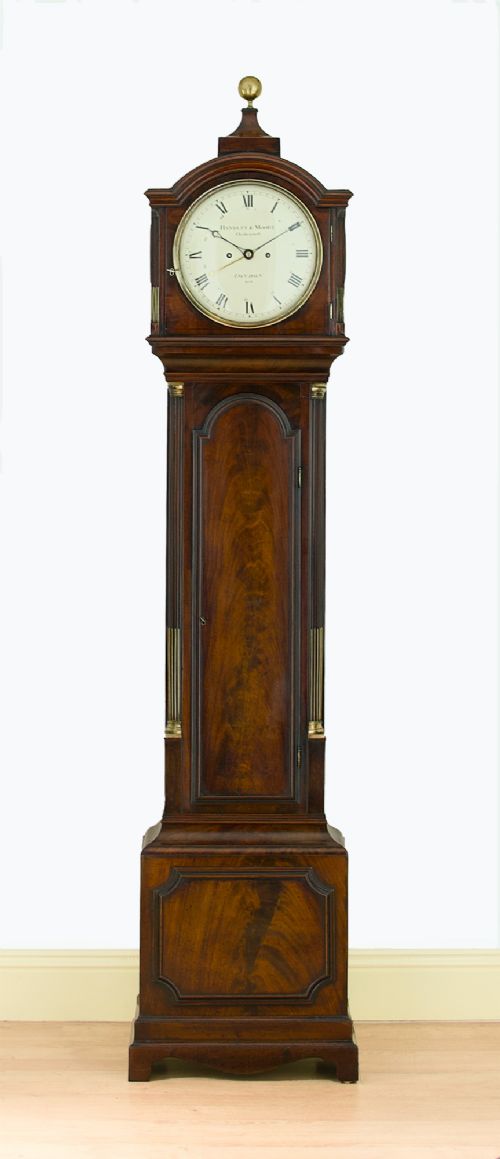
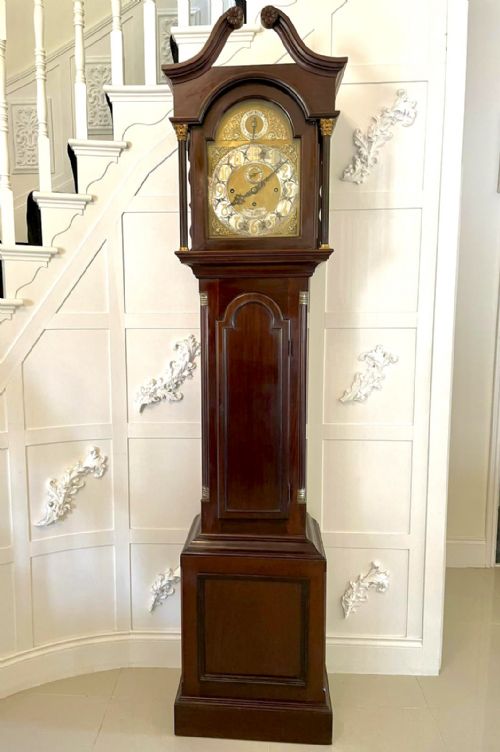
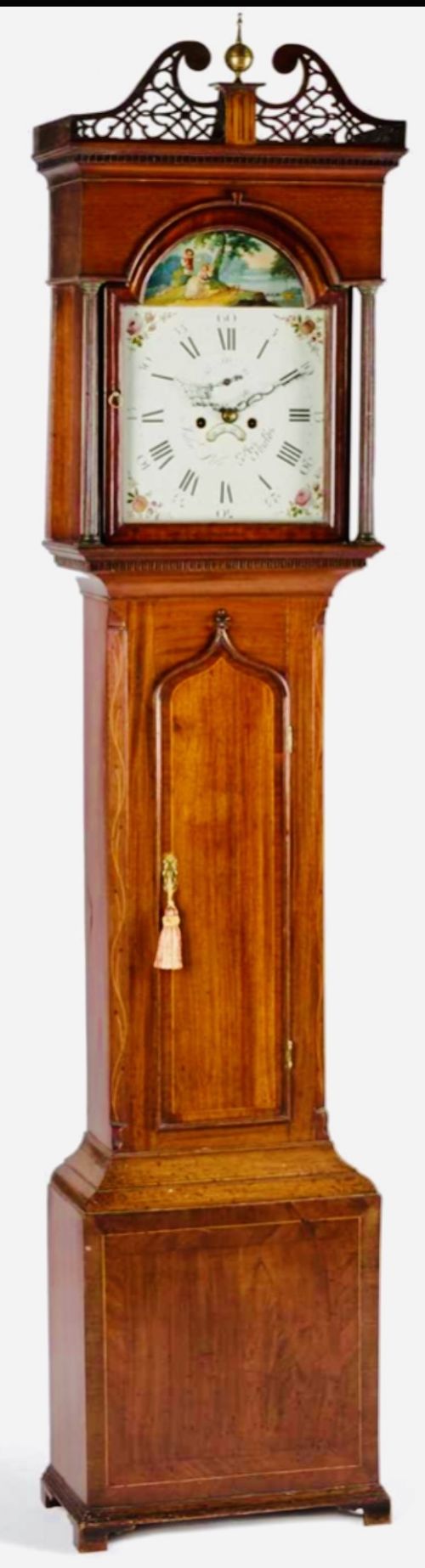
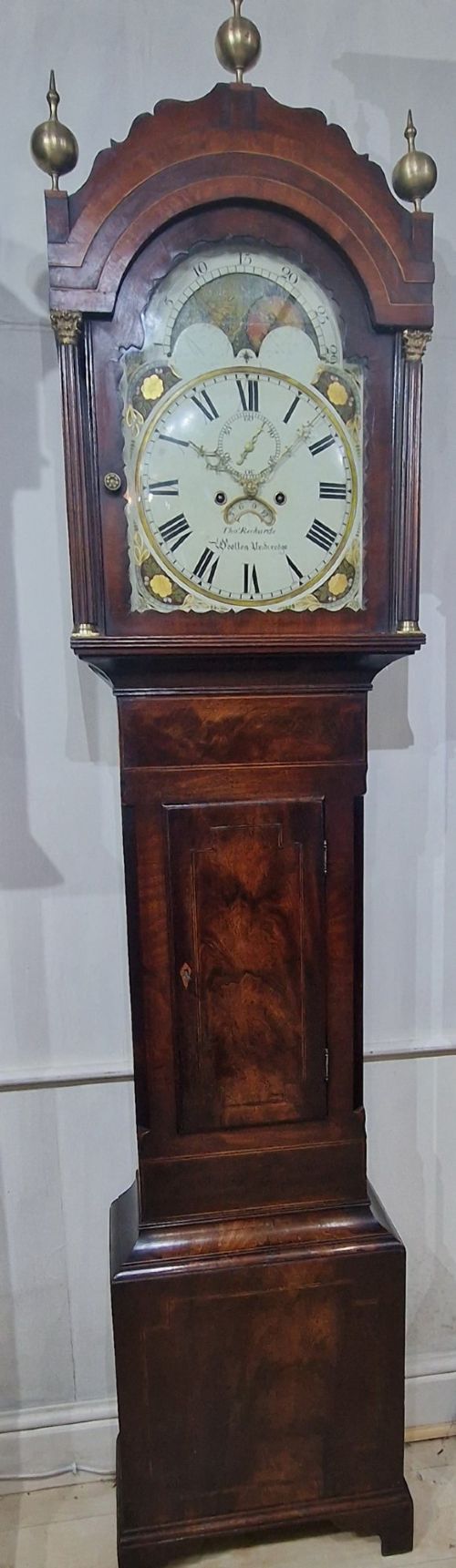
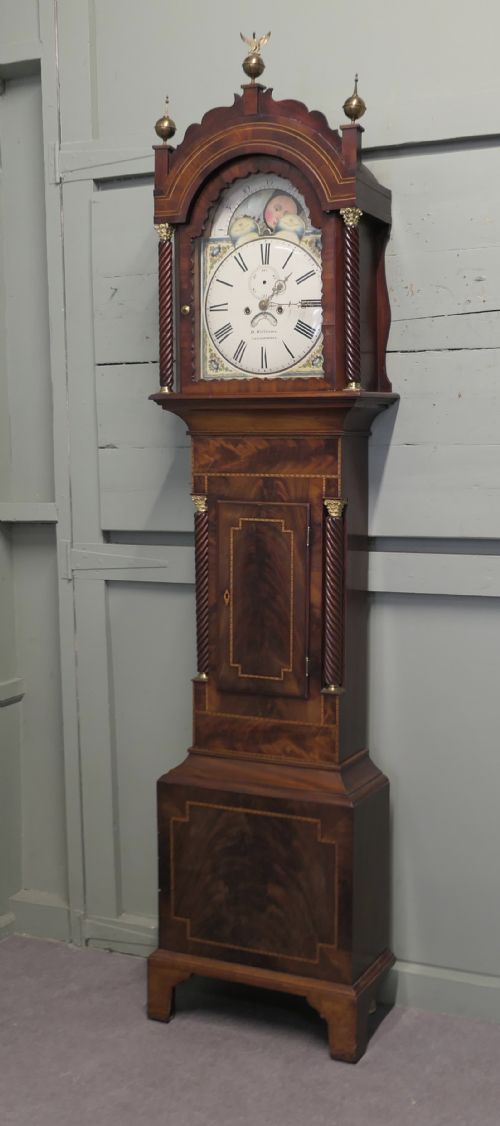
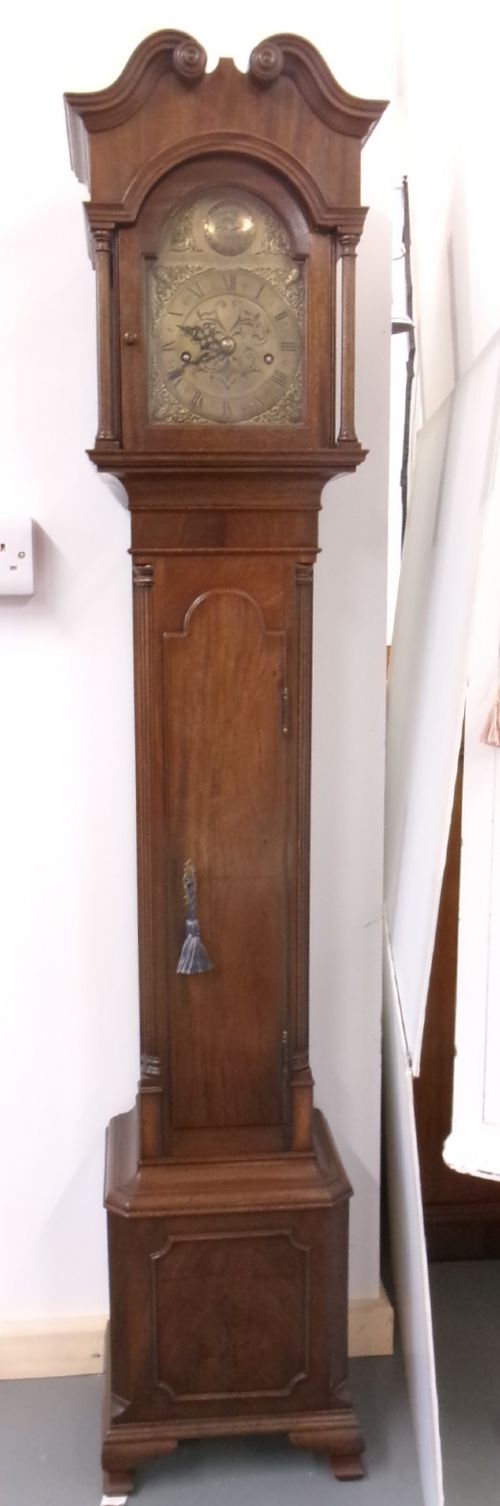
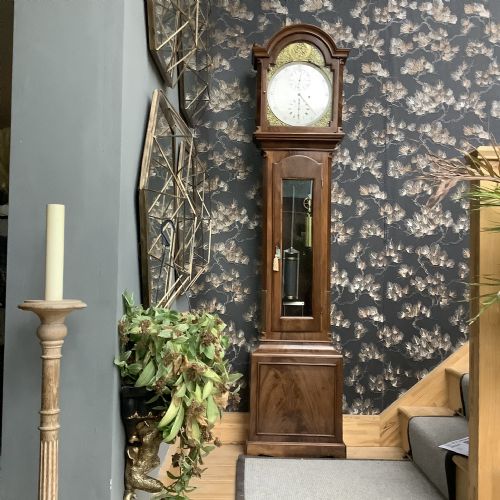


Brown Mahogany Tallcase Clock
These brown mahogany tallcase clock examples stand tall in disciplined timber, measuring the hours with brass dials and rhythmic weight-driven movements.
Brown Mahogany Tallcase Clock
A brown mahogany tallcase clock brings floor-standing vertical presence to a room, housing a pendulum movement inside a fitted wooden trunk.
Most pieces seen here belong to the Georgian and Victorian eras, alongside Edwardian examples and smaller scale grandmother or granddaughter clocks.
Cases range from restrained architectural lines in flame mahogany to inlaid Edwardian interpretations and regional Scottish variations.
How they were made
Cabinetmakers utilised solid mahogany and figured flame mahogany veneers over secondary timbers like oak, constructing tall housing frames with glass viewing doors.
Dial work combined engraved brass, painted iron, and steel hands, driven by eight-day weight-driven mechanical movements.
Listings span the 18th, 19th, and 20th centuries, uniting Georgian, Victorian, and Edwardian periods through mahogany, oak, and brass materials.
What varies in quality
Case proportion and timber selection separate standard examples from superior pieces, particularly where figured flame mahogany veneers align precisely across the trunk door.
Dial execution dictates value, distinguishing basic painted faces from elaborate brass arch dials featuring moon phases and mechanical quarter-chiming or musical complications.
Green of Edinburgh·D Straiton Montrose·Handley and Moore·Winsor Bishop Norwich·Edward White Birmingham·John Rainsford Leicester Square·Benjamin Peers Chester·Parkinson and Frodsham
The Brown Mahogany Tallcase Clock Glossary
- Tallcase clock
- A weight-driven pendulum clock housed in a tall wooden floor-standing case, commonly known as a grandfather clock.
- Moon phase
- A dial mechanism displaying the lunar cycle via a rotating painted disc behind an arched aperture.
- Flame mahogany
- Timber veneer sliced from fork joints in mahogany trees, producing a distinctive flickering feather pattern.
- Grandmother clock
- A smaller, more slender version of the traditional tallcase clock, generally dating from the twentieth century.
- Drum head
- A circular clock head design sitting atop a narrow mahogany trunk, popular during the Victorian period.
Brown Mahogany Tallcase Clock: Frequently Asked Questions
Where should a tallcase clock stand?
Position the piece on a stable, level floor away from direct heat sources and sunlight to protect the mahogany timber and ensure the pendulum swings evenly.
Secure the tall trunk to a wall bracket if necessary to prevent accidental tipping in busy hallways or living spaces.
How do eight-day movements work?
An eight-day movement requires winding via the dial face once a week, utilising suspended weights that descend slowly inside the wooden trunk as time passes.
This mechanical system drives both the timekeeping hands and, on select pieces, striking bells or musical chimes.
What is a grandmother clock?
A grandmother clock is a scaled-down variation of the traditional tallcase clock, standing significantly shorter and narrower.
These pieces emerged more frequently in the Edwardian period and later, offering tallcase mechanics for smaller domestic rooms.
How do I identify a Georgian clock?
Georgian examples display classical proportions, often featuring arched brass dials, clean mahogany or oak trunk lines, and regional maker signatures.
Cabinetry from this period prioritises structural joinery and traditional wax finishes over heavy Edwardian inlay.