
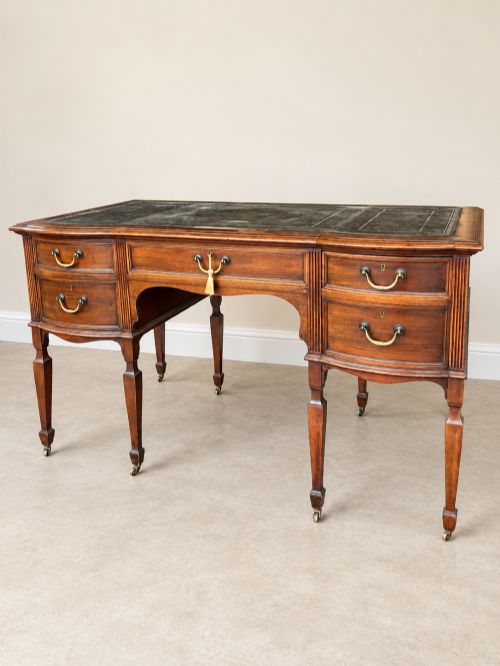
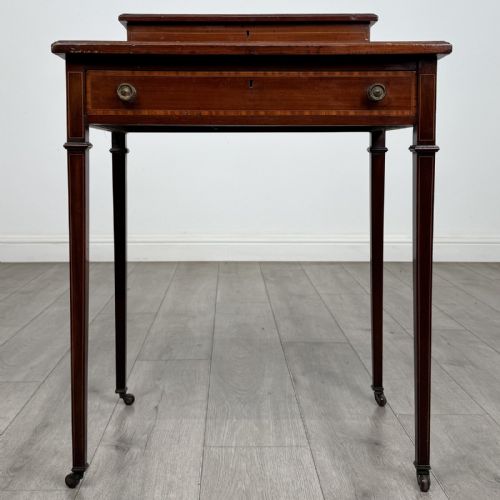
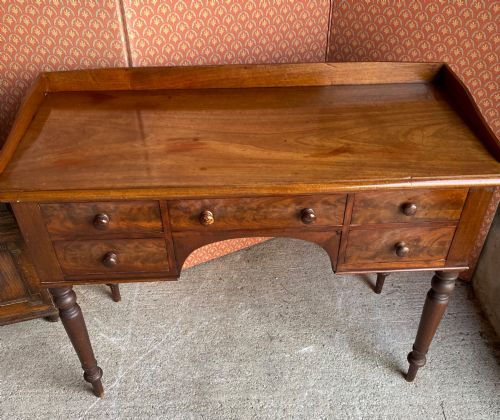
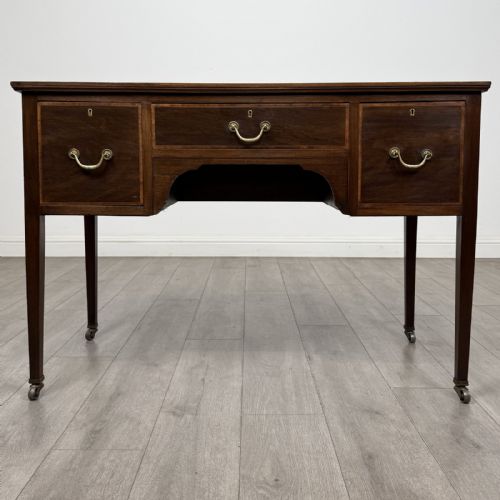
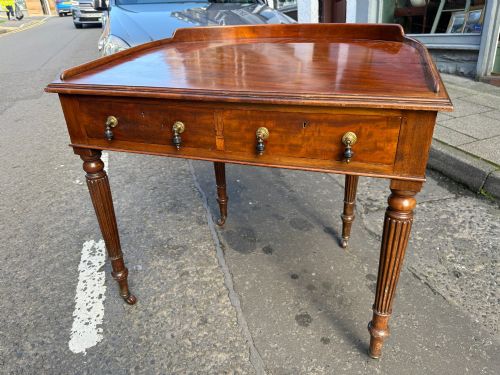
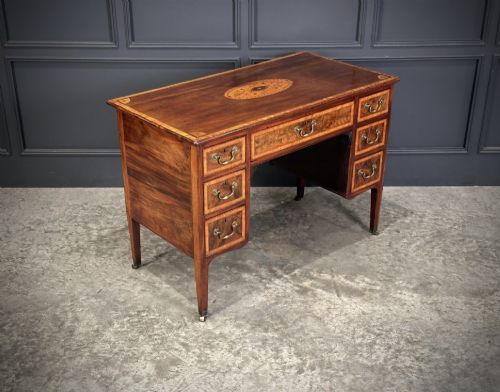
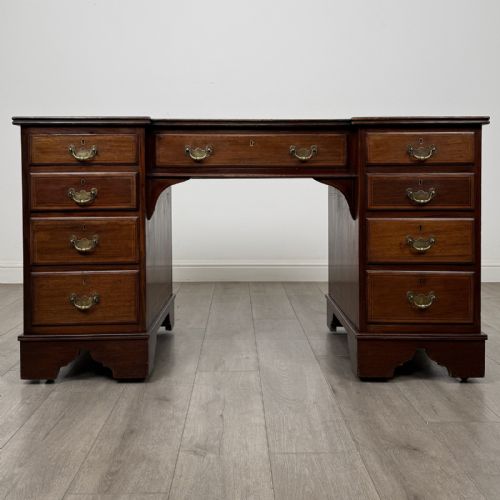
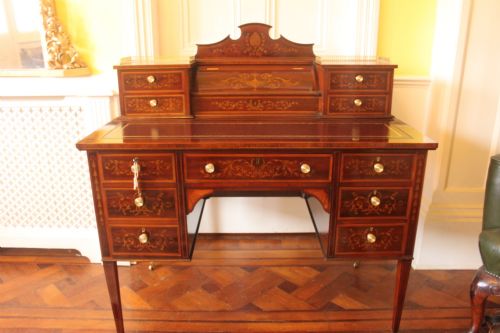
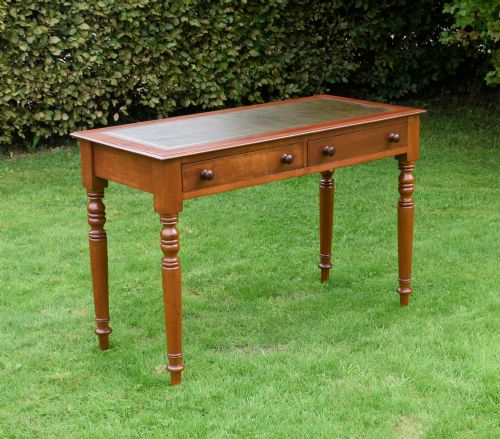
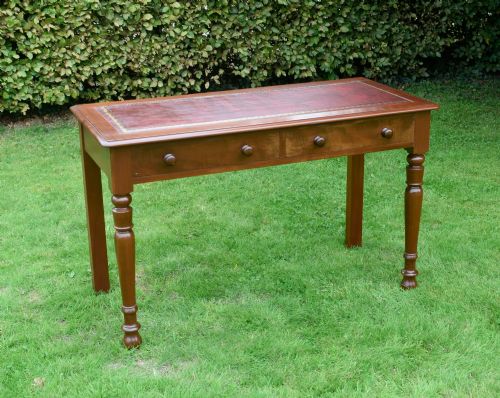
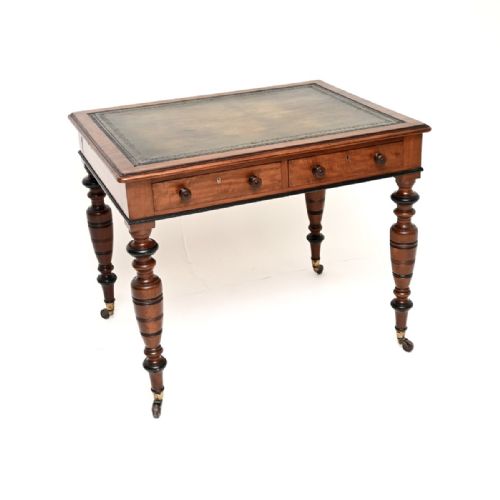
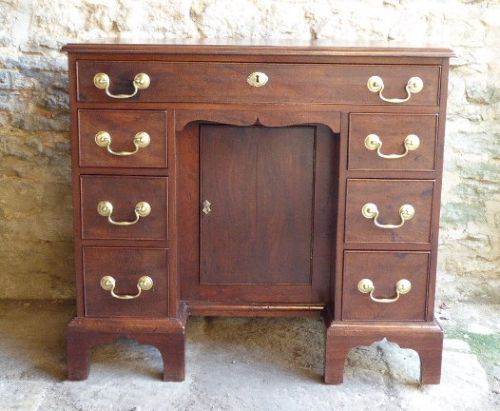
Brown Mahogany Study Table
A brown mahogany study table offers a solid workspace grounded in rich timber, bringing traditional British craftsmanship directly into a working room.
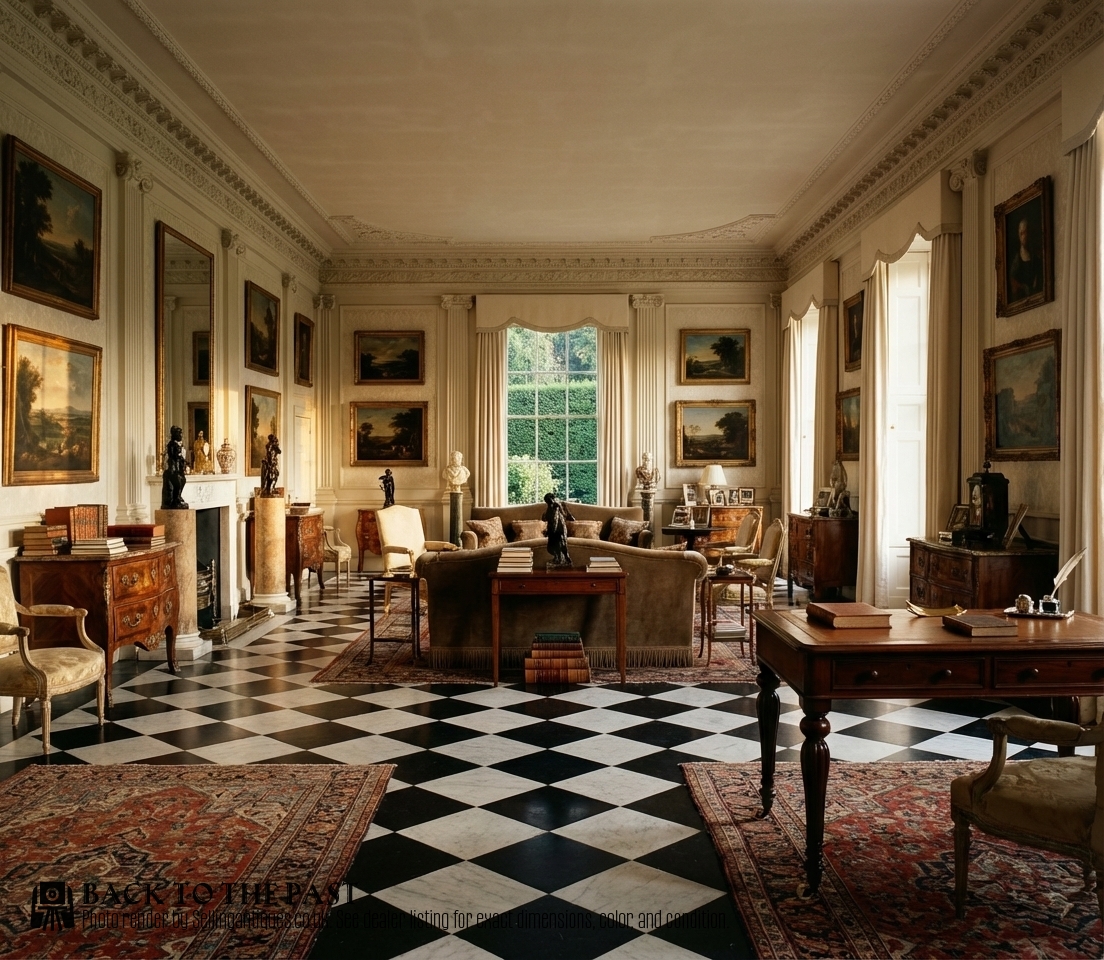
Brown Mahogany Study Table
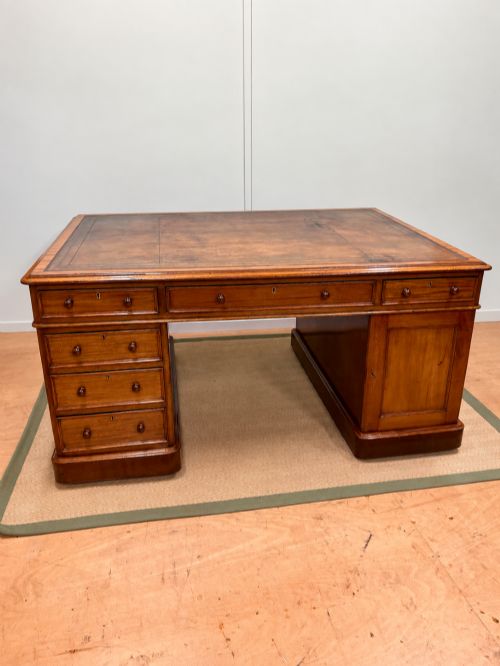
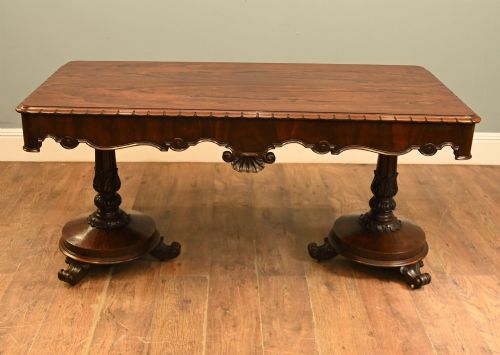
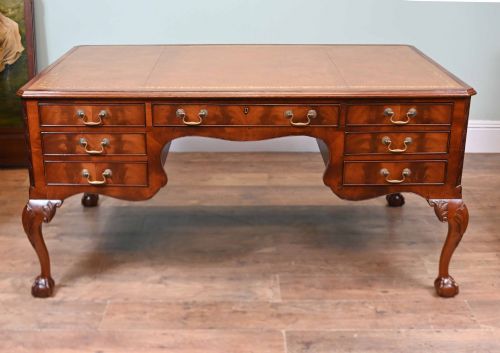
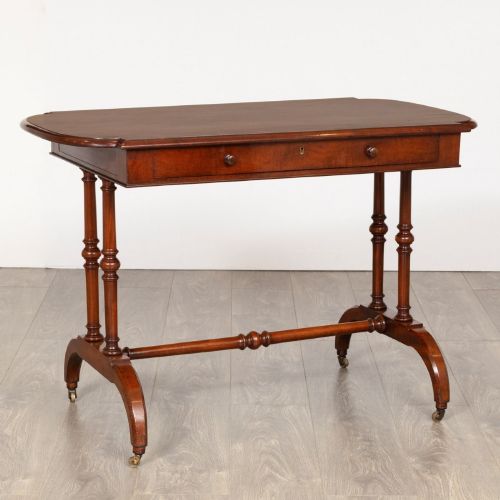
A brown mahogany study table primarily takes the form of a writing table, pedestal desk, or partners desk designed for household and library use. You will most frequently encounter Victorian and Edwardian examples on this page, alongside earlier Georgian pieces.
The evidence shows a strong presence of writing tables and pedestal desks, spanning the eighteenth, nineteenth, and early twentieth centuries. These pieces originate from domestic studies, libraries, and administrative rooms.
Makers and workshops constructed these desks to serve as functional hubs, resulting in varied configurations such as kneehole designs, leather inserts, and multiple drawers.
Materials and Technique
Makers relied heavily on solid mahogany and mahogany veneers, often enhanced with satinwood inlay or flame mahogany veneer for decorative contrast on drawer fronts and tops. This timber provides both structural stability and a deep reddish-brown grain.
Brass fittings, including original handles and key escutcheons, appear alongside fitted leather writing surfaces tooled with gold leaf. Iron hardware and oak secondary woods frequently support the internal drawer construction.
Current listings demonstrate a broad range of periods, stretching from eighteenth-century Georgian forms to early twentieth-century Edwardian variations.
Judging Quality
Quality rests on the selection of timber figure, such as flame mahogany, and the crispness of any satinwood inlay or marquetry work. Superior pieces display thoughtful grain matching across large surfaces and drawers.
The retention of original hardware, brass fittings, and properly fitted leather inserts elevates a desk's standing. Refined proportions and cleanly executed joinery distinguish standard workshop output from exceptional cabinet-making.
Trollope and Sons·Edwards and Roberts·James Mein of Kelso·Charles Andrea Nosotti·Hobbs and Co
The Brown Mahogany Study Table Glossary
- Partners desk
- A large double-sided pedestal desk designed for two people to work opposite one another. These tables feature drawers and cupboards on both long faces.
- Pedestal desk
- A heavy freestanding desk supported by two banks of drawers rather than simple legs. They provide substantial storage space beneath the main writing surface.
- Tambour
- A sliding door constructed from narrow vertical strips of wood glued to a canvas backing. This mechanism conceals pigeonholes and small drawers on specialised writing desks.
- Kneehole
- The central recessed space beneath a desk designed to accommodate the user's legs. Smaller variants of this form are known as kneehole desks.
Brown Mahogany Study Table: Frequently Asked Questions
What is a brown mahogany study table?
It is a traditional wooden desk or writing table utilised for reading, correspondence, and administrative tasks. These pieces are built primarily from mahogany and date from the Georgian era through to the Edwardian period.
They serve as practical furniture while bringing historical character into a modern home office or library.
How do I care for the leather top?
Leather writing surfaces require gentle cleaning with a slightly damp cloth and occasional treatment with appropriate leather dressings to prevent drying. Avoid harsh chemical cleaners and excessive moisture.
Keeping the leather conditioned preserves the gold tooling and maintains the smooth texture needed for writing.
Are partners desks double-sided?
Yes, partners desks feature drawers and cupboards accessible from both sides, allowing two people to use the desk simultaneously. They were traditionally placed in the middle of a room rather than against a wall.
This configuration makes them exceptionally versatile for open-plan studies and larger spaces.
How do I distinguish Victorian from Georgian desks?
Georgian desks generally exhibit simpler, cleaner architectural lines with understated proportions and classical bracket feet. Victorian examples tend to be heavier and more ornate, often utilising pedestal configurations and richer brass hardware.
Examining the construction methods, secondary woods, and secondary hardware helps clarify the period of manufacture.