

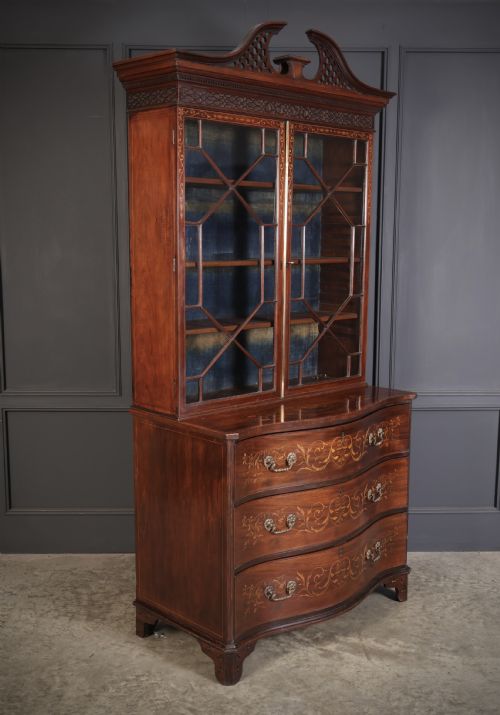


Brown Mahogany Serpentine Chest
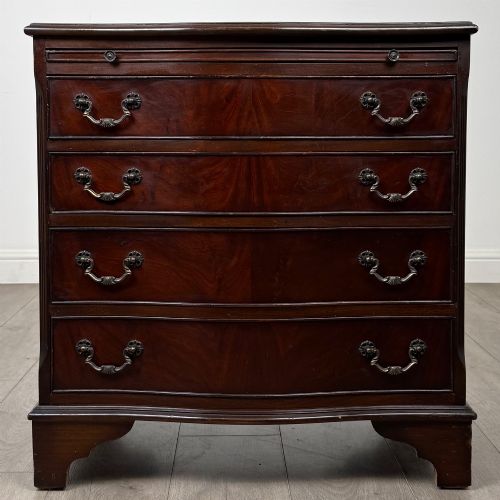
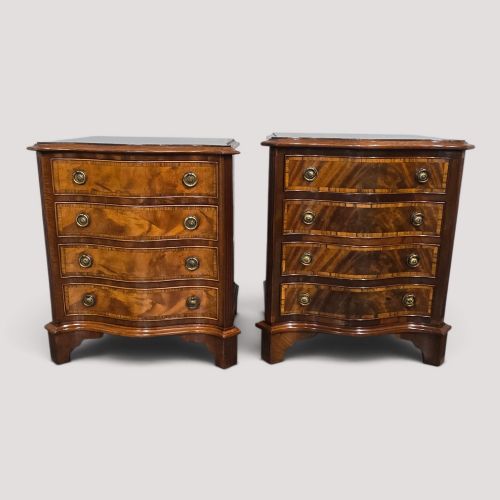
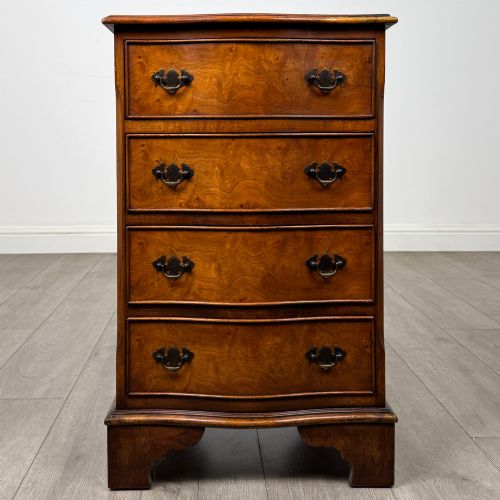
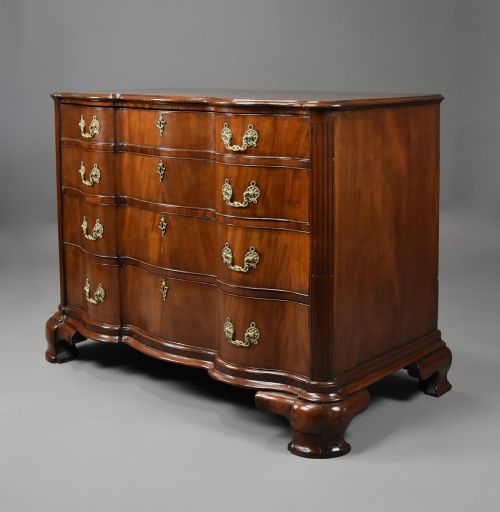
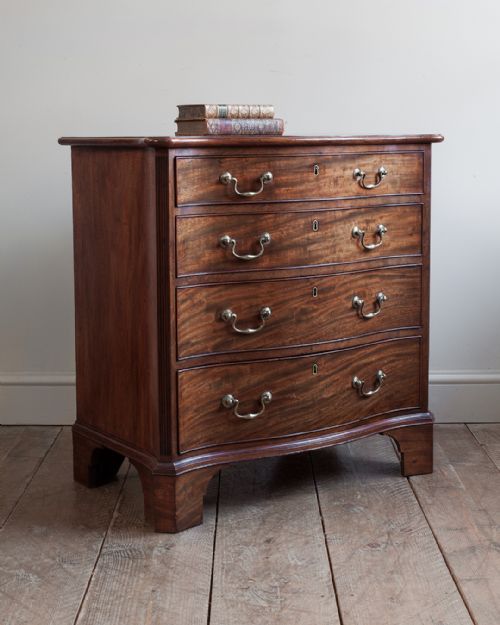
A brown mahogany serpentine chest brings together the fluid movement of an undulating front and the rich warmth of figured timber.
Brown Mahogany Serpentine Chest
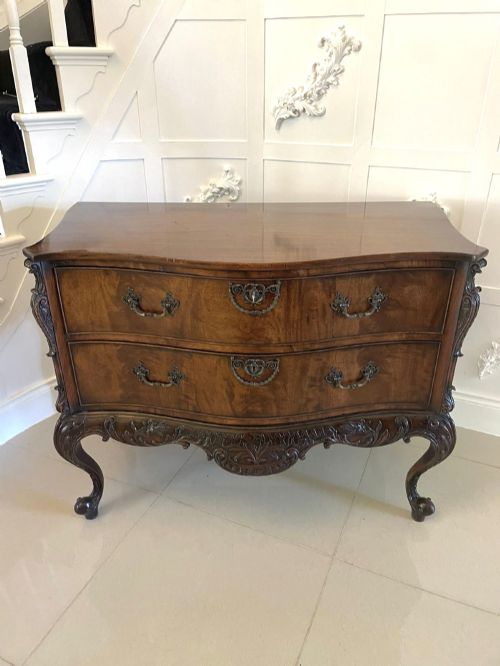
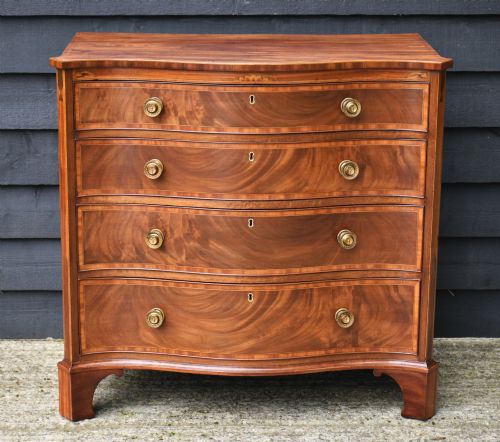
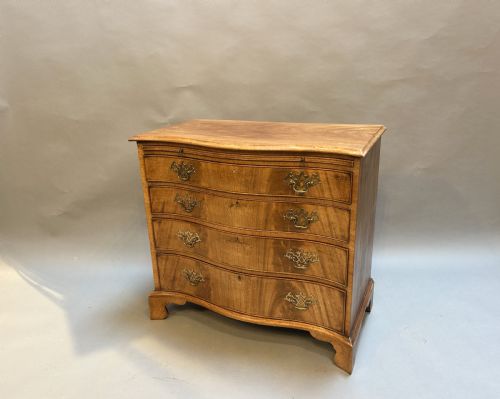
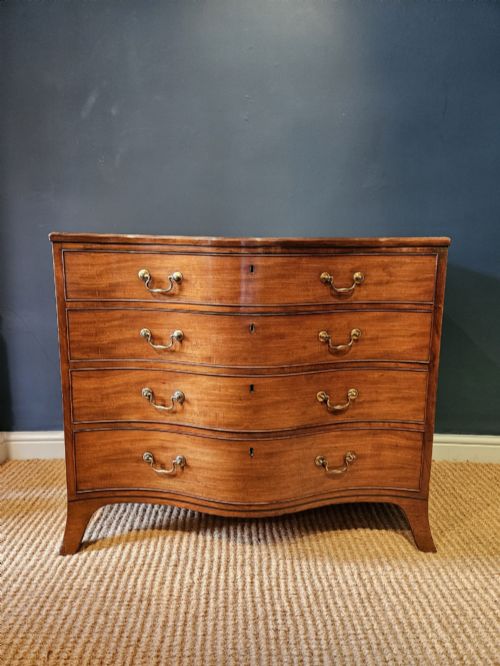
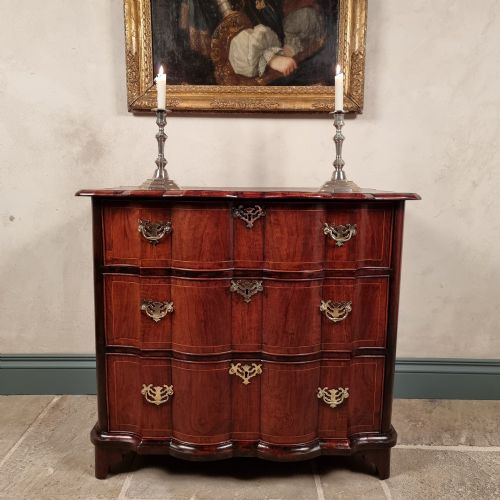
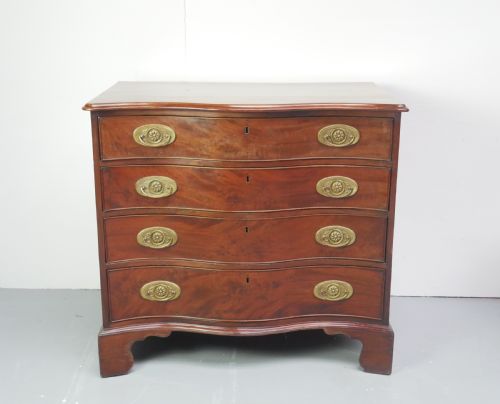
A brown mahogany serpentine chest is a storage form defined by its convex-concave-convex sweeping front, predominantly appearing as a chest of drawers from the Georgian and 18th century periods alongside later revival interpretations. These pieces function as principal bedroom or reception room furniture, offering deep graduated drawers behind their sculpted facades. Buyers encountering this selection will find examples ranging from late 18th-century English and Continental commodes to Edwardian and 19th-century cabinet work.
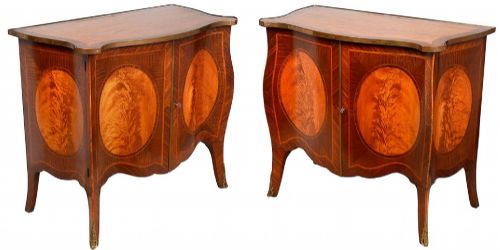
The form stretches from compact bedside lamp chests and small commodes to generous proportions with four or more drawers. Alongside standard chests, the selection encompasses related serpentine forms such as bedside cabinets, sideboards, bookcases, and chests on stands. Origin spans English workshops, Dutch makers, and French ateliers adopting the serpentine outline.
Materials and construction
Makers built these pieces using solid mahogany and wood veneers, frequently selecting figured mahogany, flame mahogany, or fiddleback figure to catch the light across the curved drawer fronts. Secondary timbers such as oak provided structural stability for drawer linings and internal framing. Inlaid details utilised contrasting woods like satinwood and boxwood, creating delicate stringing and decorative motifs.
Cabinetmakers shaped the characteristic front by carefully cutting solid timber or bending thick veneer over laminated blocking to achieve the sweeping serpentine contour. Brass hardware, including drop handles and escutcheons, fastened to the drawer faces to complement the dark grain of the timber.
Cabinetmakers had to plane solid mahogany until their arms ached just to achieve that graceful, wave-like wiggle on a Tuesday morning.
Judgements of quality
Quality rests upon the handling of the curved timber and the rhythm of the serpentine sweep across the drawer fronts. Superior examples maintain crisp lines where the curves meet the corners, showing tight joints and continuous grain patterns across adjacent drawers. Lesser execution appears stiff, with flat transitions or heavy-handed mouldings that obscure the natural movement of the wood.
The choice of veneer grading also separates the work, with top-tier pieces exhibiting balanced, highly figured flame or fiddleback mahogany selected specifically to mirror across the centre. Drawer construction reveals the standard of the workshop, demonstrated by fine, regular dovetails and clean oak linings rather than hurried modern replacements.
The Brown Mahogany Serpentine Chest Glossary
- Serpentine front
- A furniture facade shaped with a central convex curve flanked by two concave curves, creating an undulating outline. This complex geometry requires skilled carpentry to execute successfully.
- Commode
- A low chest of drawers or cabinet, often of French or Continental origin, highly decorative and frequently fitted with a marble top. The term appears frequently among 18th-century Continental examples.
- Flame mahogany
- A veneer cut from the fork of a mahogany tree where the branch meets the trunk, producing a rippling flame-like pattern. It was favoured by cabinetmakers for principal drawer fronts.
- Stringing
- A narrow strip of contrasting wood inlaid into the surface of a piece to form delicate decorative borders or lines. Boxwood and satinwood were common choices for this inlay work.
- Fiddleback
- A type of figured mahogany marked by fine, transverse ripples resembling the grain of maple used for the backs of violins. This figuring creates an optical depth when polished.
Brown Mahogany Serpentine Chest: Frequently Asked Questions
How do I care for a mahogany chest?
Keep the wood away from direct heat sources and strong sunlight to prevent the mahogany finish from drying out or fading over time. Apply a traditional beeswax polish sparingly to nourish the grain and maintain a soft lustre.
Dust the carved mouldings and serpentine curves regularly with a soft, dry cloth to prevent dirt accumulation in the recessed corners.
Are these chests suitable for modern bedrooms?
The compact proportions of many surviving examples allow them to fit comfortably as bedside tables or smaller drawer units in contemporary spaces. Their warm brown tones blend easily with various interior palettes while offering practical storage.
Larger scaled pieces serve well as statement storage items in hallways or living areas where the undulating front can be fully appreciated.
How can I tell an 18th-century piece from a revival?
Examination of the internal construction, timber shrinkage, and hand-cut dovetails generally points towards the earlier 18th-century and Georgian origins. Secondary woods like oak and the wear patterns around the brass hardware provide further clues to age.
Revival pieces from the Edwardian period or later often display more uniform machine-sawn timber and consistent interior linings without the historical patina.
What is an oxbow front?
An oxbow front is a specific variation of curved furniture design where the centre curves inward rather than outward, reversing the standard serpentine pattern. This creates a distinctive silhouette seen on certain 18th-century Continental commodes.
It requires the same high level of cabinetmaking skill to shape the drawer fronts and matching frames accurately.