



Brown Mahogany Sarcophagus
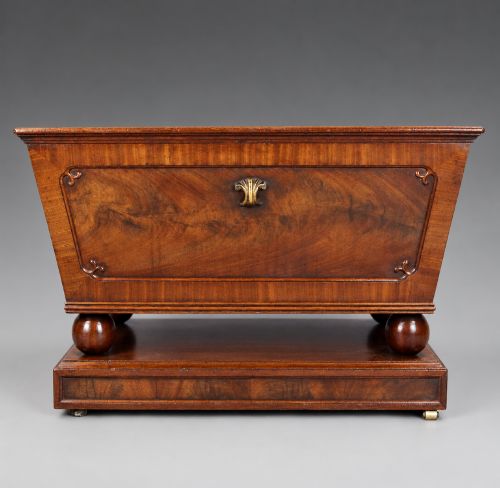
These brown mahogany sarcophagus pieces are substantial vessel forms that bring architectural presence and classical weight to a room.
Brown Mahogany Sarcophagus
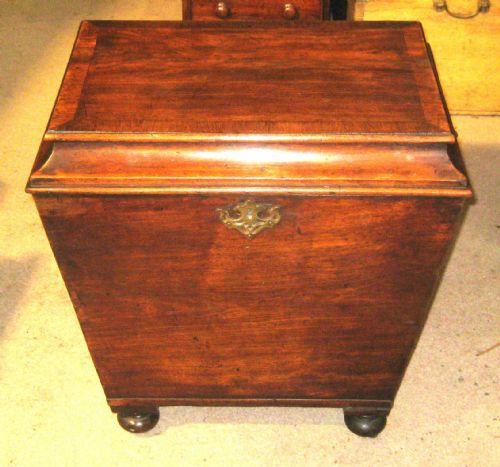
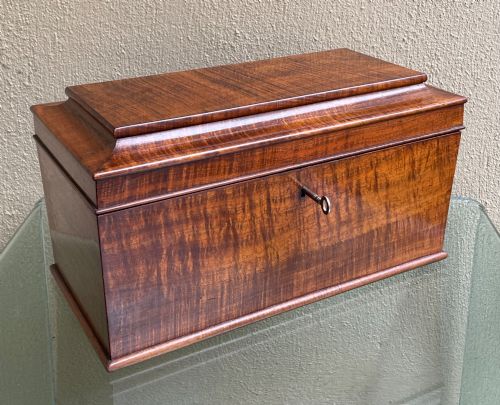
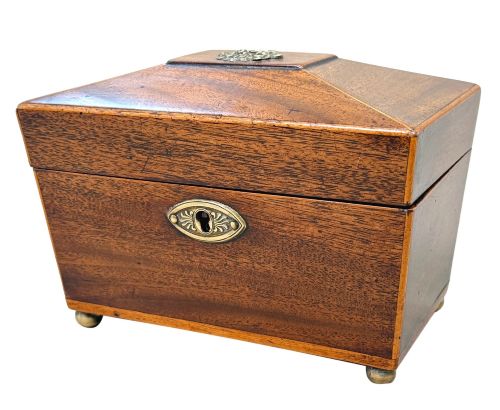
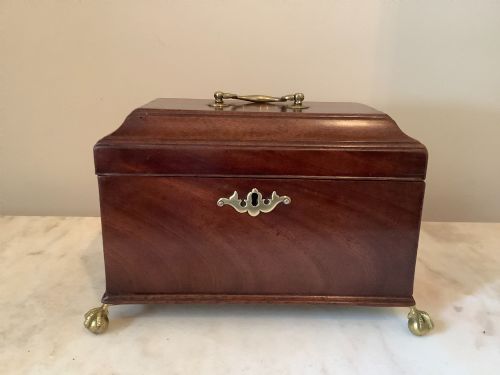
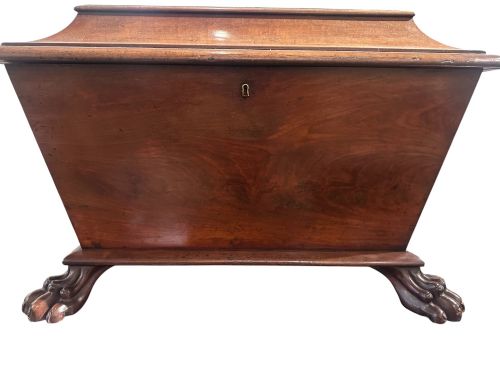
A brown mahogany sarcophagus search covers large wine coolers, cellarettes, and tea caddies built during the Georgian, Regency, and Victorian periods. These pieces take their low, heavy proportions from classical Roman tombs, adapted by cabinet makers to store wine bottles or dry tea leaves.
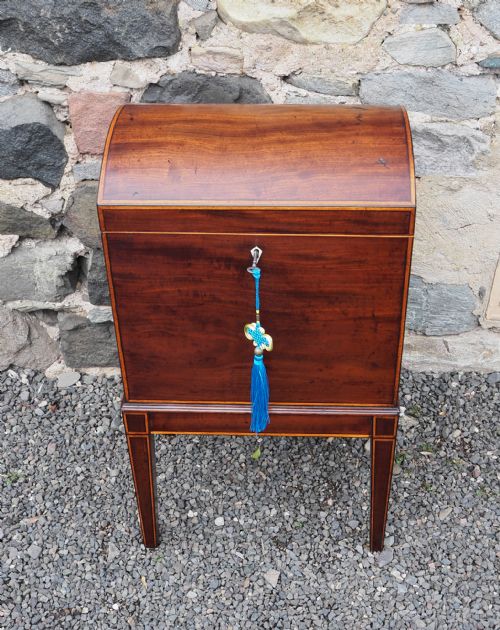
The version most commonly met on this page is the Regency or Georgian wine cellarette, often resting on feet and featuring a hinged lid. Alongside these, smaller tea caddies share the same distinct arched lid and tapered body.
Makers from these eras built them to sit on the floor beneath a sideboard or to rest upon a table, serving a practical domestic function in grand dining rooms.
Materials and construction
Makers built these vessels using solid mahogany and flame mahogany veneer, chosen for rich grain patterns that catch the light. They often incorporated boxwood, ebony, and satinwood inlay to define panels and edges.
Structural strength came from dense secondary timbers hidden beneath the veneers, joined with traditional framing to support heavy loads of wine or metal liners. Brass handles, feet, and lion paw mounts were cast and fixed securely to the corners and sides.
Some tea caddies conceal secret drawers for storing valuable tea leaves away from prying household staff.
Factors that separate the range
The distinction between ordinary and exceptional pieces lies in the choice of veneer and the crispness of carved detail. Flame mahogany selected for symmetry across a lid elevates an object far beyond straight-grained timber.
Interior fittings reveal the maker's care, such as original fitted compartments, glass mixing bowls, and well-cast brass hardware that remains intact and matching throughout.
Gillows of Lancaster and London·Maples & Co·Robert Strahan & Co of Dublin
The Brown Mahogany Sarcophagus Glossary
- Cellarette
- A lockable container used for storing wine bottles in a dining room. They often feature lead linings or internal dividers.
- Sarcophagus form
- A container design featuring a domed or peaked lid and a tapering rectangular body, inspired by ancient stone coffins.
- Teapoy
- A small stand or large caddy designed to hold multiple varieties of tea, often raised on a central pillar with paw feet.
- Flame mahogany
- A veneer cut from the fork of the mahogany tree where branches meet the trunk, producing a rippling flame effect.
- Boxwood inlay
- Narrow strips of pale yellowish boxwood inserted into grooves in darker wood to create contrasting geometric borders.
Brown Mahogany Sarcophagus: Frequently Asked Questions
What is a brown mahogany sarcophagus used for?
These containers were originally built to hold bottles of wine or dry tea leaves securely in the dining room or parlour.
Today, collectors use them as statement storage pieces, side tables, or decorative floor boxes in traditional interiors.
How do I date a brown mahogany sarcophagus?
Dating relies on observing the combination of classical architectural styles, such as Regency or George III, alongside timber choices like flame mahogany veneer and brass mounts.
Hardware styles, secondary woods, and construction methods also provide clear indicators of whether a piece dates to the eighteenth or nineteenth century.
Are tea caddies and cellarettes the same age?
Tea caddies and cellarettes span similar Georgian and Regency eras, following identical aesthetic developments in furniture design.
While cellarettes are large floor-standing wine coolers, tea caddies are smaller tabletop boxes built with the same characteristic sarcophagus shape.
Where did these pieces sit in a room?
Large cellarettes typically stood directly on the floor beneath a dining room sideboard to provide easy access to bottles during meals.
Smaller tea caddies and teapoys were placed on tables in drawing rooms or parlours where tea was prepared for guests.