


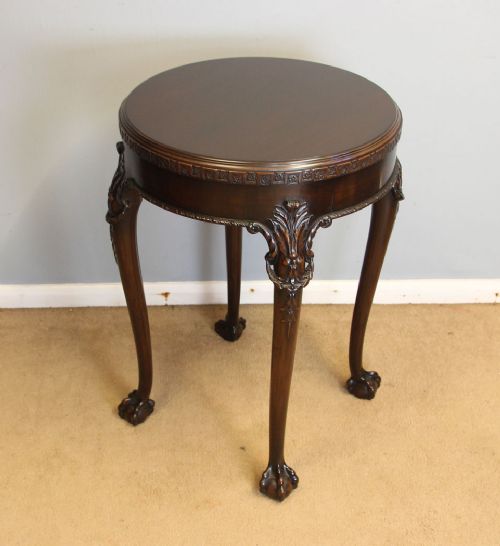


Brown Mahogany Jardiniere
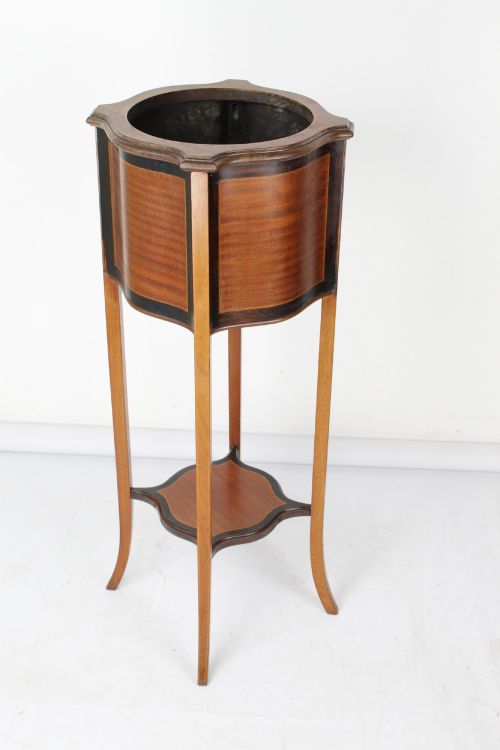
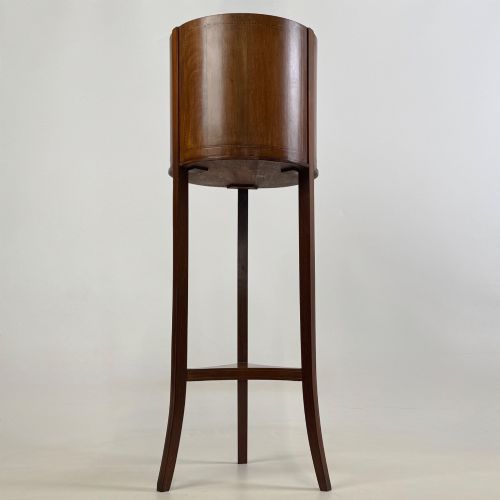
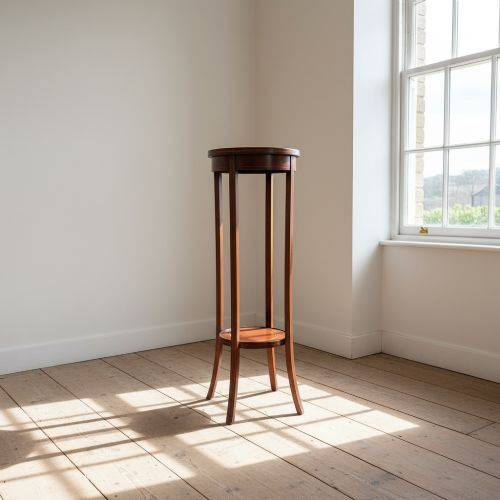
A brown mahogany jardiniere brings rich timber and refined botanical display into a room, offering a functional pedestal for indoor plants.
Brown Mahogany Jardiniere
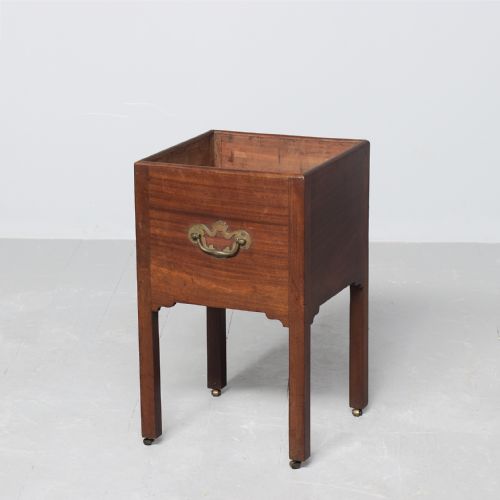
The Edwardian pieces and George III examples dominate the selection, showing styles from simple Edwardian plant stands to elaborate Regency and George III wine coolers. Buyers find items featuring satinwood, boxwood inlay, and brass fittings alongside plain mahogany timber.
Forms range from tripod bases and two-tier dumb waiters to torchieres and traditional plant stands. Each variation serves the practical purpose of holding plants or displaying decorative items within domestic spaces.
How they were made
Makers utilised solid mahogany and mahogany veneers, often incorporating contrasting boxwood and satinwood inlay to add geometric or botanical patterns to the surfaces. Metal components such as brass liners and bindings appear frequently on the wine coolers and jardiniere stands.
Structural elements include zinc liners for water retention in plant vessels and sturdy tripod or pedestal bases for stability. Joinery methods reflect the period of manufacture, from eighteenth-century cabinet making to Edwardian production.
The listings feature mahogany alongside brass, metal, satinwood, boxwood inlay, walnut, and zinc across multiple periods.
What varies in quality
The distinction between standard domestic pieces and superior examples rests on the crispness of the inlay work and the quality of the mahogany grain. Finer items exhibit intricate boxwood and satinwood stringing alongside well-preserved brass bands and original liners.
Proportion and structural integrity separate simpler plant stands from grander George III and Regency wine coolers. The weight of the timber and the refinement of the turned pedestals dictate the standing of each piece.
The Brown Mahogany Jardiniere Glossary
- Jardiniere
- An ornamental pot or stand for holding plants or flowers. These items sit on floor-standing pedestals or take the form of low vessels.
- Torchiere
- A tall stand or candlestick holder, adapted in these listings to function as a plant stand or lamp support. They feature slender upright shafts.
- Cellarette
- A lockable container used for holding bottles, frequently adapted or related in form to the open wine coolers and jardinieres of the Georgian period.
- Inlay
- A technique where contrasting woods such as satinwood or boxwood are inserted into recesses in the mahogany surface to form decorative patterns.
- Tripod base
- A three-legged support structure commonly found beneath nineteenth-century plant stands and bust pedestals to ensure stability.
Brown Mahogany Jardiniere: Frequently Asked Questions
What is a brown mahogany jardiniere used for?
These pieces serve as decorative plant holders or display pedestals for floral arrangements inside the home. They elevate potted plants to bring greenery into principal rooms.
Historically, many of the older examples began life as wine coolers or cellarettes before finding a second life as plant stands. Their sturdy construction and lined interiors make them well-suited for holding botanical displays safely.
How do I date an Edwardian plant stand?
Edwardian pieces generally date from the early twentieth century and often display lighter mahogany timbers with delicate boxwood inlay. They tend to feature simpler, lighter proportions than their heavier Victorian predecessors.
Comparing the turning on the pedestals and the style of any stringing helps distinguish Edwardian work from earlier Georgian or Regency items. The absence of heavy brass mounts also points toward the Edwardian preference for domestic refinement.
Can these hold real plants with water?
Many pieces include original metal or zinc liners designed to contain moisture and protect the surrounding timber from dampness. These liners allow plants to be watered directly within the stand.
For pieces lacking liners, placing a separate waterproof tray or pot inside protects the historic mahogany base. Checking the interior condition confirms whether the vessel remains watertight.
What is the difference between a jardiniere and a torchiere?
A jardiniere is specifically built to house a plant pot, often featuring a basket or bowl-like upper section with a protective liner. Its primary function is botanical display.
A torchiere is a tall, slender stand originally designed to hold a light source, which translates in these listings to a narrow plant or lamp pedestal. Torchieres emphasise height and vertical turning rather than a broad container.
How do George III pieces differ from later ones?
George III pieces originate from the eighteenth century and typically feature heavier, denser mahogany timber combined with substantial brass banding. Their construction reflects the robust cabinet-making standards of the period.
Later nineteenth-century and Edwardian iterations often adopt lighter decorative elements, including boxwood stringing and satinwood crossbanding. These later versions prioritize delicate aesthetics over the utilitarian strength of military or dining room wine coolers.