





Brown Mahogany Etagere
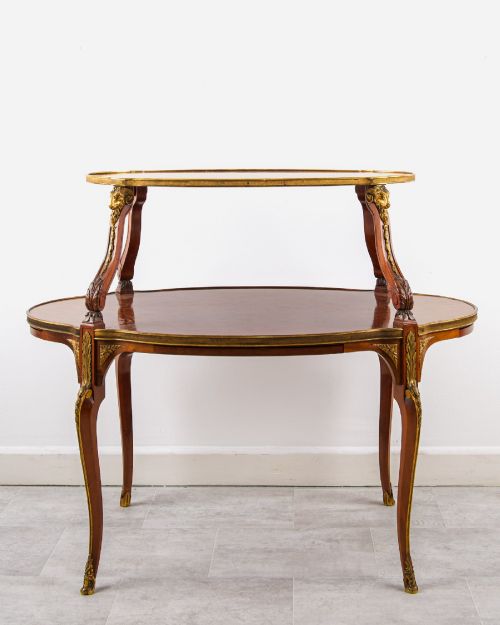
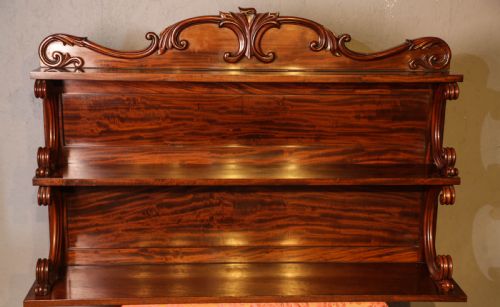
Brown mahogany etagere pieces are multi-tiered display stands built to hold books, china and ornaments with elegance.
Brown Mahogany Etagere
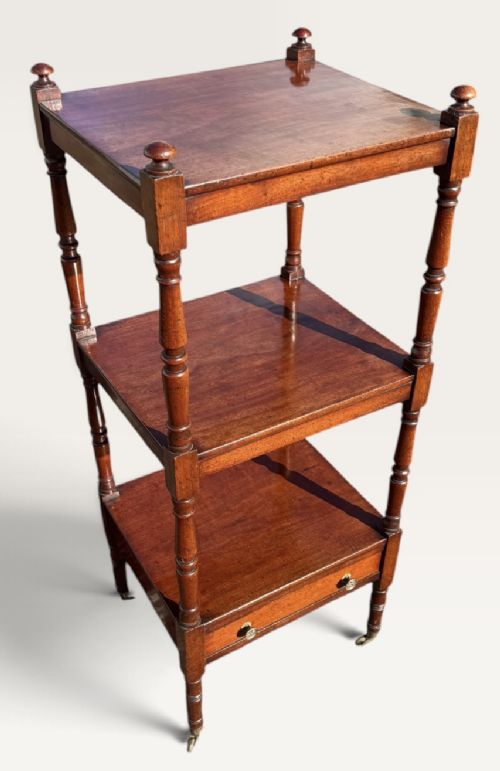
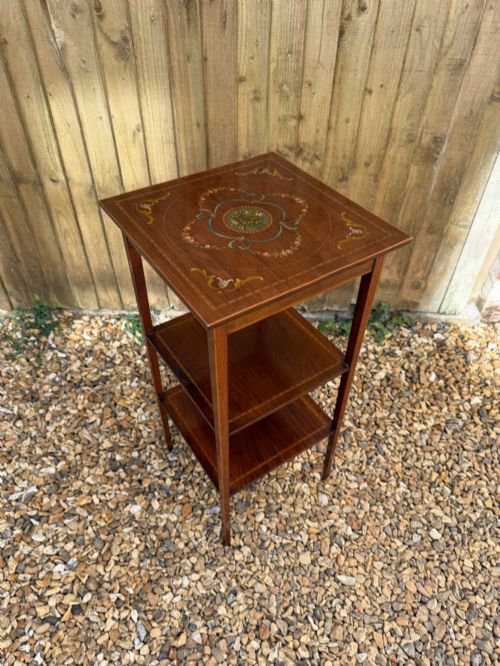
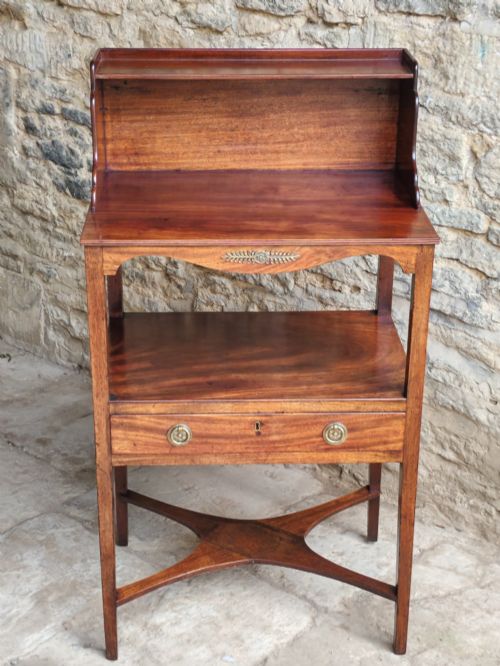
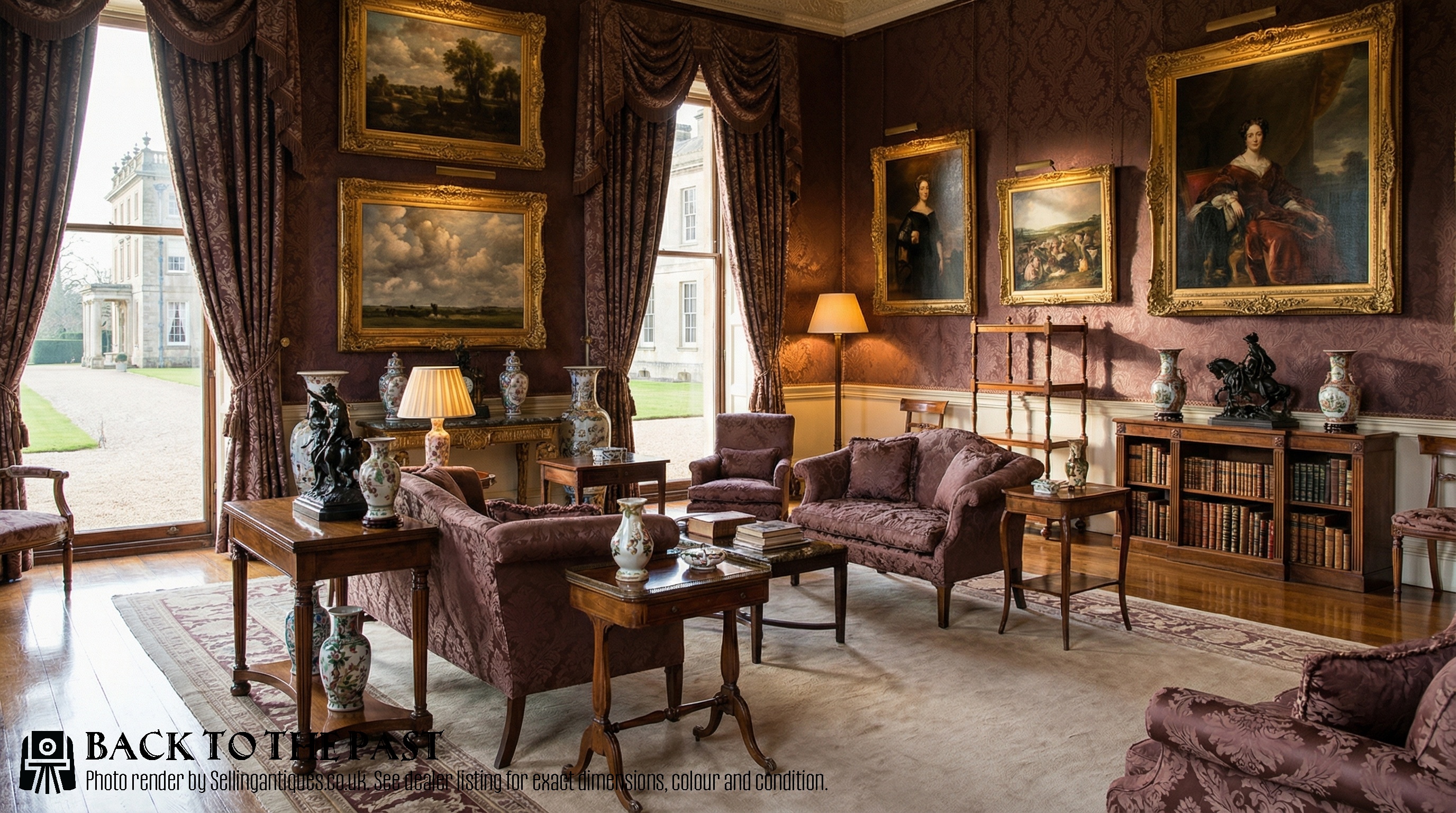
A brown mahogany etagere is an open tiered stand designed for display and storage, appearing frequently in Victorian, Edwardian and Georgian forms across these listings. These pieces serve as versatile display stands, occasional tables, or multi-tiered wall shelves within a room.
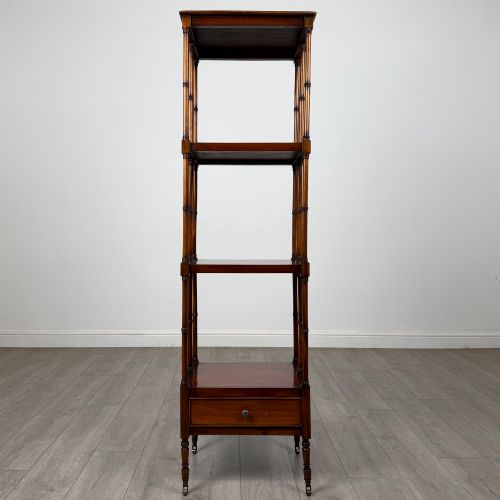
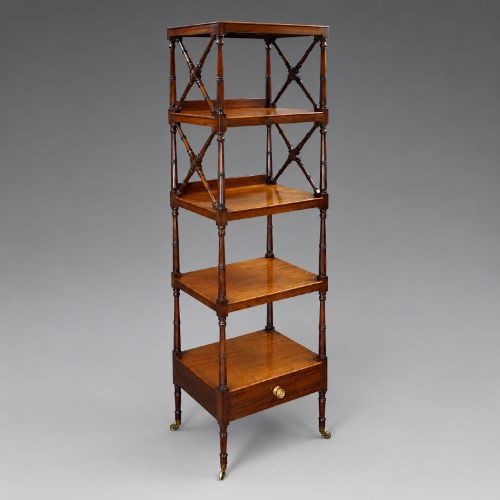
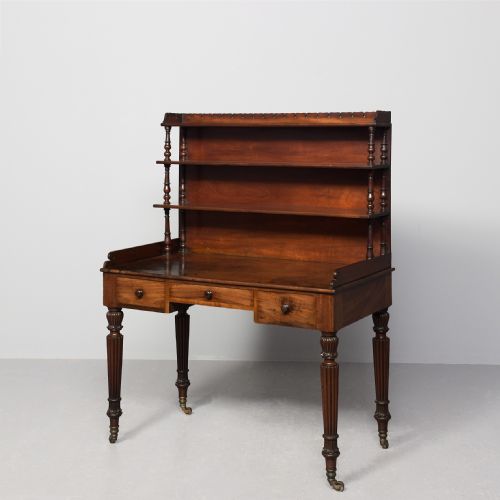
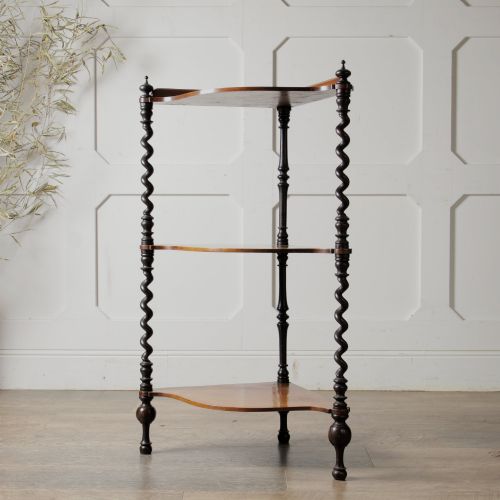
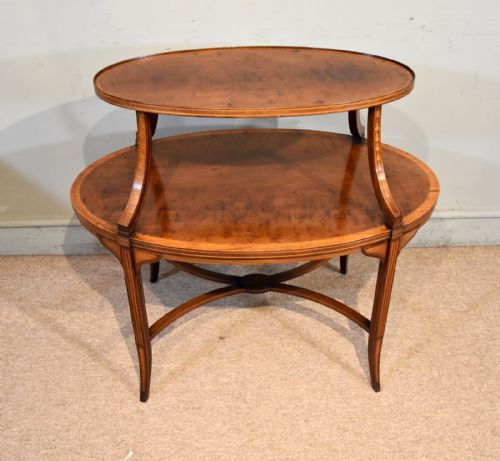
The most common formats on this page include two-tier and three-tier open tables, alongside taller four-tier stack whatnots and wall-hanging shelves. The design relies on slender upright supports holding stacked platforms for decorative items.
How they were made
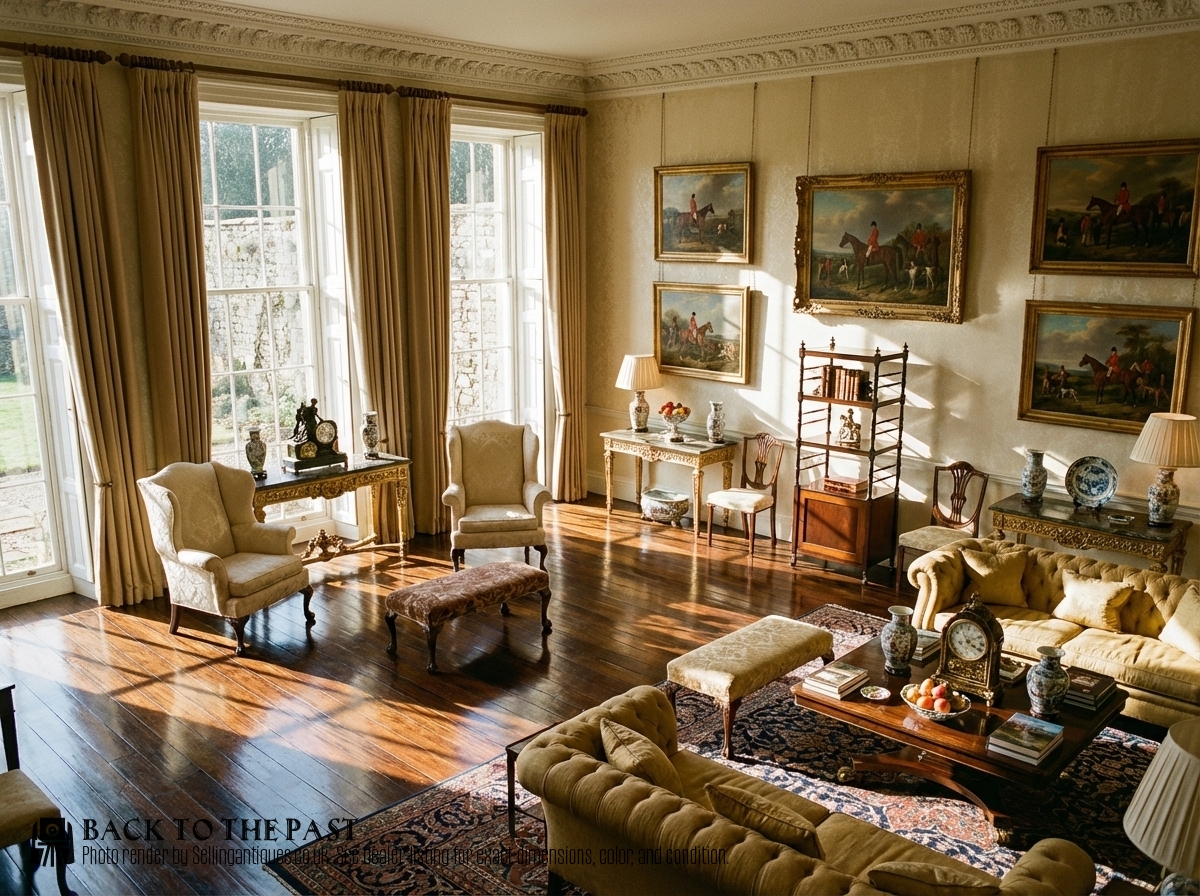
Makers built these pieces primarily from solid and veneered mahogany, often selecting timber with rich grain patterns such as plum pudding mahogany or golden tones. Structural elements were joined securely to support multiple stacked tiers without sagging.
Craftsmen enriched the timber surfaces using contrasting stringing, satinwood and boxwood inlay, or marquetry detailing. Metal accents such as brass fittings, castors, and cast ormolu mounts appear on select pieces alongside painted finishes.
Brown Mahogany Etagere Retail Price Guide 2026
Typical asking prices for brown mahogany etagere among the pieces listed under this phrase on Sellingantiques today, from the lower quarter to the upper quarter. They describe what is for sale here now, not the wider market.
Listings feature multiple periods including Georgian, Regency, Victorian, and Edwardian eras, demonstrating sustained popularity across two centuries.
What varies in quality
Quality shows in the selection of the mahogany timber and the crispness of any inlay work, such as satinwood or boxwood banding. Finer examples display meticulous attention to the grain alignment across the tiers and shelves.
Construction details differentiate standard items from exceptional ones, including the refinement of turned upright supports, the integration of drawers or mirrors, and the quality of applied ormolu or brass mounts.
James Mein of Kelso·W. Turner Lord & Co·Gillows
The Brown Mahogany Etagere Glossary
- Etagere
- A piece of furniture consisting of a set of open shelves for displaying small ornaments or books. Originating in France, these multi-tiered stands became popular in English interiors during the nineteenth century.
- Whatnot
- A nineteenth-century multi-shelved stand used for displaying china, silver, or books. They range from small bedside variants to tall four-tier corner and freestanding units.
- Marquetry
- Decorative veneer applied to furniture in geometrical patterns or pictorial designs using various woods. Craftsmen cut thin pieces of contrasting timber, such as satinwood and boxwood, to fit precisely into the mahogany ground.
- Ormolu
- Gilded bronze mounts applied to furniture for decorative effect. This technique was frequently utilised on French-influenced pieces during the nineteenth century to accent corners and borders.
- Sheraton Revival
- A late nineteenth and early twentieth-century style inspired by the designs of George Sheraton. These pieces often feature light mahogany construction with delicate satinwood inlay and classical proportions.
Brown Mahogany Etagere: Frequently Asked Questions
What is a brown mahogany etagere used for?
These multi-tiered stands were traditionally used in nineteenth-century drawing rooms to display ornaments, ceramics, and small books. They provided accessible display space without occupying a large floor footprint.
Today, they function well in living rooms or hallways as side tables, bedside stands, or open display units for collections.
How do I tell a Victorian whatnot from a Georgian one?
Georgian pieces often feature cleaner architectural lines, simpler turned supports, and heavier structural timber consistent with eighteenth-century cabinet making. They tend to prioritize functional display over ornate embellishment.
Victorian examples frequently introduce turned barley twist columns, mirrored backs, small drawers, or more elaborate marquetry and satinwood inlay work.
Are all these pieces freestanding?
While the majority of the etageres and whatnots stand independently on the floor as tables or multi-tiered stacks, some specific variations are designed differently.
The listings also include wall-hanging shelves intended to be secured directly to a wall, as well as corner units built to fit tightly into room angles.
What timber types are used alongside mahogany?
Mahogany forms the primary structural and visual body of these pieces, but makers incorporated other woods for contrast. Satinwood and boxwood appear frequently as fine stringing and inlay details.
Plum pudding mahogany is also utilised for its distinctive mottled grain pattern, adding visual depth to the upper tiers and tabletops.