


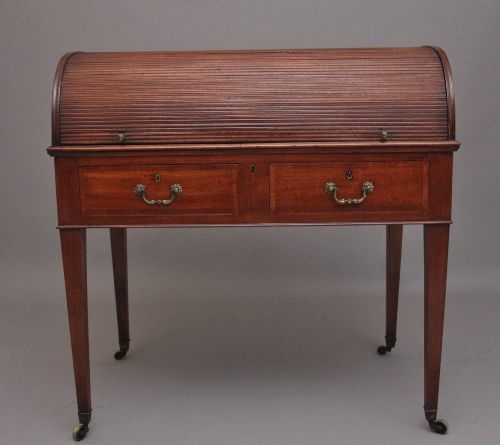


Brown Mahogany Cylinder Desk
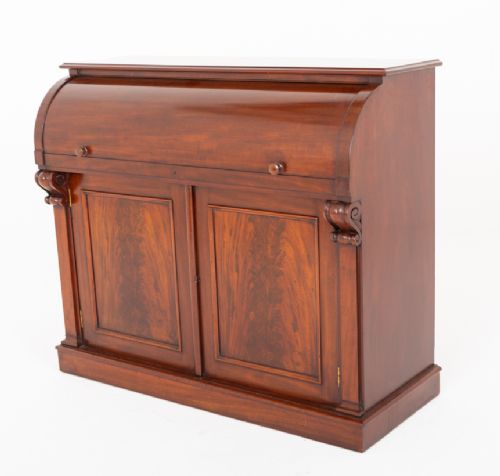
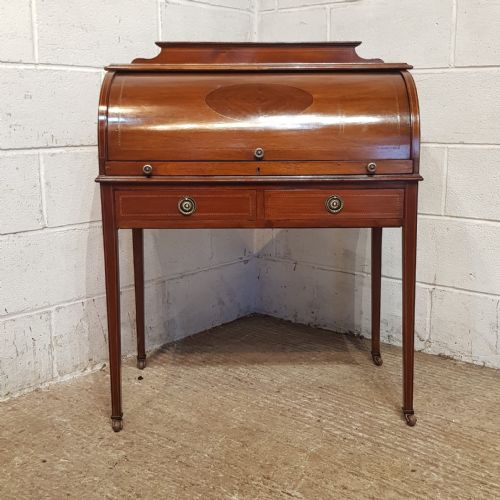
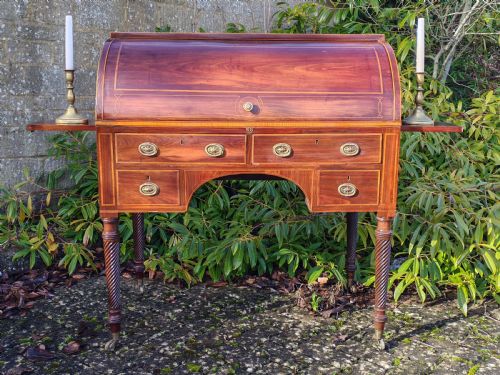
A brown mahogany cylinder desk conceals paperwork beneath a curving wooden shell, offering a private writing surface that folds away neatly.
Brown Mahogany Cylinder Desk
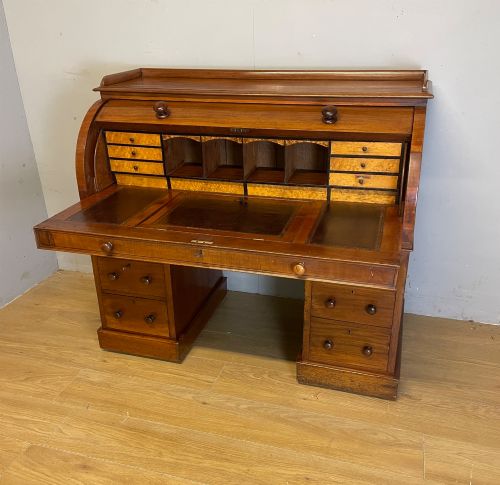
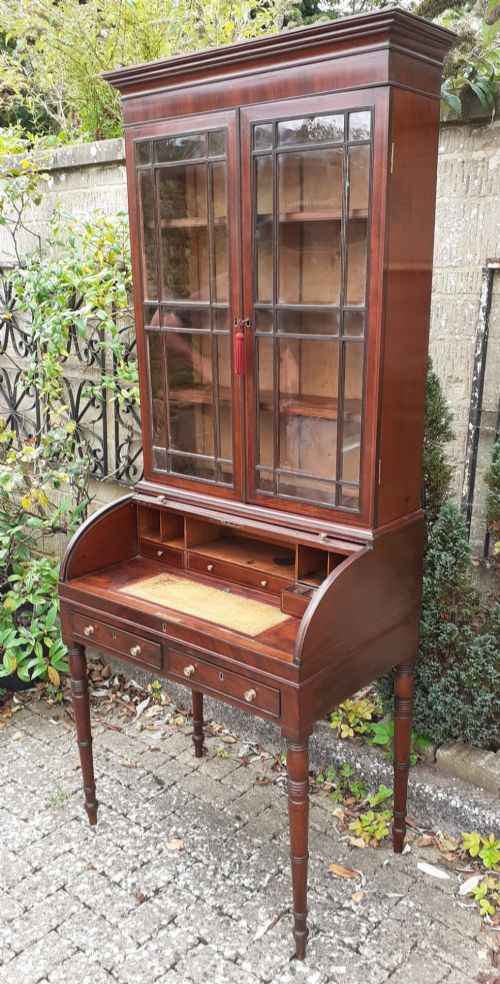
A brown mahogany cylinder desk combines a traditional writing surface with a rolling cylindrical lid that encloses drawers and pigeonholes when closed. Pieces matching this brown mahogany cylinder desk description span the Georgian, Victorian, and Edwardian eras, alongside William IV and Regency examples.
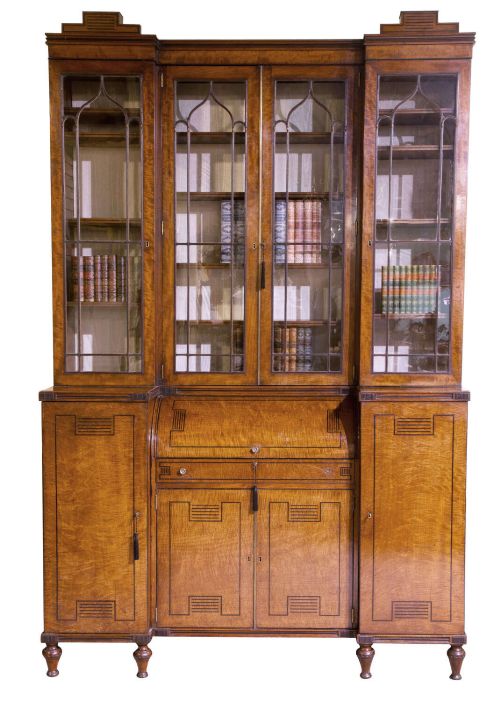
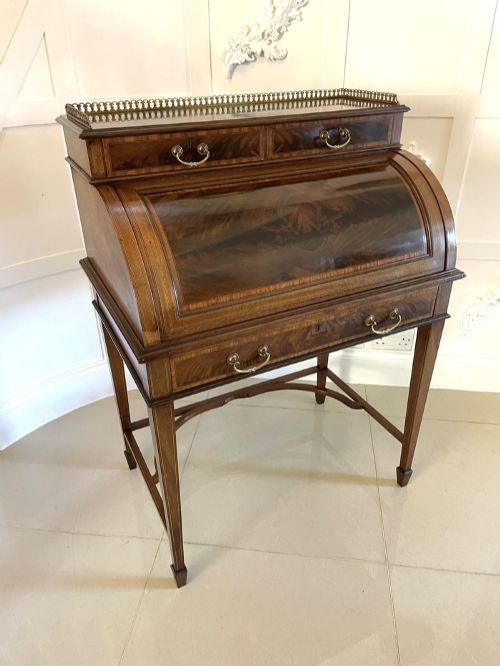
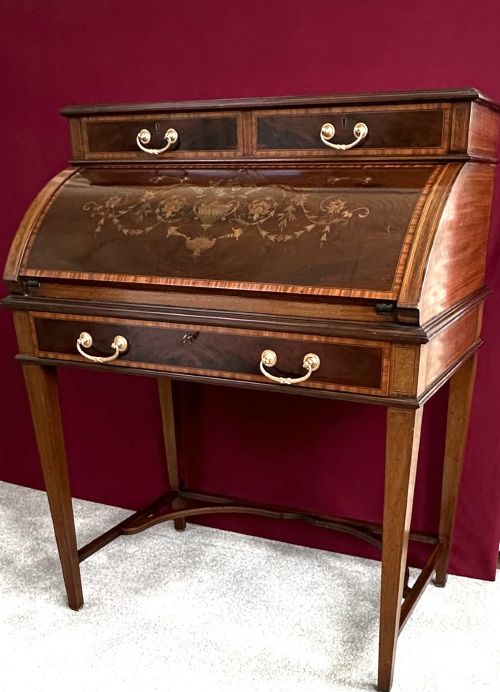
Most items appearing under this heading take the form of freestanding pedestal desks, ladies writing tables, or tall bureau bookcases fitted with glazed upper sections. Makers from the nineteenth and early twentieth centuries adapted these versatile writing cabinets for both grand libraries and compact drawing rooms.
Materials and construction
Cabinet makers utilised solid mahogany and rich veneers for the primary carcass, frequently embellishing the surfaces with satinwood inlay, brass mounts, and glazed panels. The curved cylinder or tambour shutter requires precise tongue-and-groove laths glued to a flexible canvas backing so the mechanism glides smoothly within curved tracks.
Internal fittings often incorporate secondary timbers such as maple alongside fitted leather writing inserts, small drawer units, and pigeonholes designed to organise correspondence. Structural integrity relies on traditional dovetail joinery in the drawer construction and sturdy pedestal bases supporting the upper writing compartments.
Brown Mahogany Cylinder Desk Retail Price Guide 2026
Typical asking prices for brown mahogany cylinder desk among the pieces listed under this phrase on Sellingantiques today, from the lower quarter to the upper quarter. They describe what is for sale here now, not the wider market.
Many Victorian cylinder desks hide secret small drawers behind removable pigeonhole partitions for stashing private correspondence.
Judging execution and finish
Superior examples demonstrate meticulous matching of mahogany grain patterns across the cylinder front and drawer faces, paired with fine satinwood stringing and marquetry. The smoothness of the mechanical roll-top action and the tight tolerance of the moving shutter distinguish master workshops from standard commercial production.
The refinement of internal pigeonholes, secret compartments, and original brass hardware elevates certain pieces above simpler utility models. Overall proportion, timber selection, and the crispness of carved or inlaid details mark the distinction between everyday office furniture and fine cabinet work.
Maple and Co London·Tudor and Burrey Shrewsbury
The Brown Mahogany Cylinder Desk Glossary
- Cylinder desk
- A writing desk featuring a curved, quarter-circle wooden shutter that rolls back to reveal the writing surface and interior compartments. This mechanical lid conceals paperwork while keeping the desk tidy.
- Tambour
- A flexible sliding shutter formed from narrow wooden strips glued to fabric backing. It runs in tracks to cover storage spaces in desks and cabinets.
- Bureau bookcase
- A combination furniture piece featuring a writing desk base topped by a glazed shelving cabinet for books. These tall items served as multi-purpose study furniture.
- Pedestal desk
- A heavy writing table supported by two vertical banks of small drawers rather than simple legs. This layout provides generous storage beneath the main writing top.
- Satinwood
- A lustrous, pale yellow timber native to India and Ceylon frequently used for contrasting inlay and bandings on mahogany furniture. Its bright grain provides decorative detail.
- Stringing
- Thin inlaid lines of contrasting wood used to outline drawer fronts and panels. This subtle banding highlights the geometric shapes of the cabinet work.
Brown Mahogany Cylinder Desk: Frequently Asked Questions
How does a cylinder desk work?
The curved wooden shutter slides along grooved tracks in the sides of the desk, rotating backward to disappear into the body of the cabinet. Pulling the shutter forward closes the lid over the writing surface and pigeonholes.
Most mechanisms operate smoothly by hand, though some designs link the rolling lid to an internal writing slide that extends automatically as the cylinder opens.
What is the difference between a cylinder desk and a rolltop?
A cylinder desk uses a solid, curved wooden shell made of a single piece or rigid construction that glides on a circular path. A rolltop desk typically employs flexible tambour slats.
Cylinder desks generally date from the Georgian, Regency, and Victorian periods and feature refined cabinet work, whereas traditional tambour rolltops often appear in later Victorian and Edwardian office settings.
Where were these desks placed in a home?
These pieces sat in libraries, studies, and formal drawing rooms as private writing stations for managing correspondence and personal accounts. Freestanding versions often occupied the centre of a room.
Smaller ladies writing desks were frequently positioned against parlour walls or near windows to catch natural daylight while writing letters.
How should I care for the mahogany and leather?
Maintain the mahogany timber by applying natural beeswax sparingly and buffing gently with a soft cloth to preserve the sheen. Avoid placing the wood near direct heat sources.
Treat leather writing inserts with specialist leather balms to prevent drying and cracking, and keep liquids away from the writing surface to protect both the hide and the internal mechanism.