
Brown Mahogany Collector Chest
A brown mahogany collector chest provides compact, secure storage for small treasures, spanning Georgian, Victorian and Edwardian periods.
Brown Mahogany Collector Chest
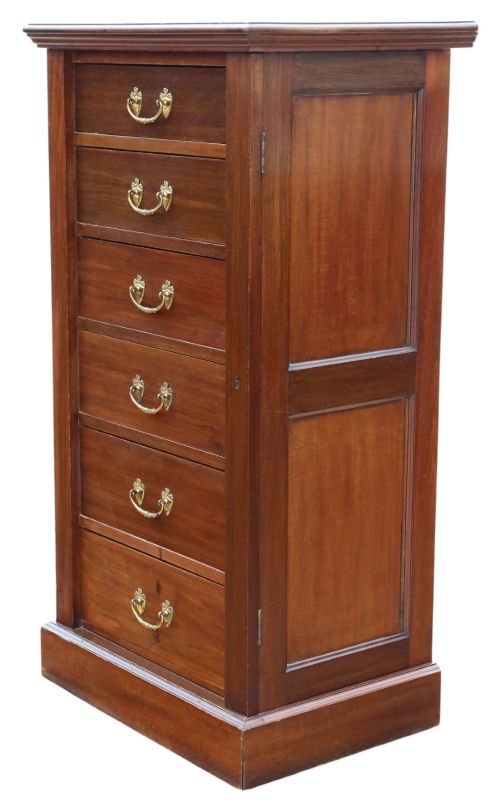
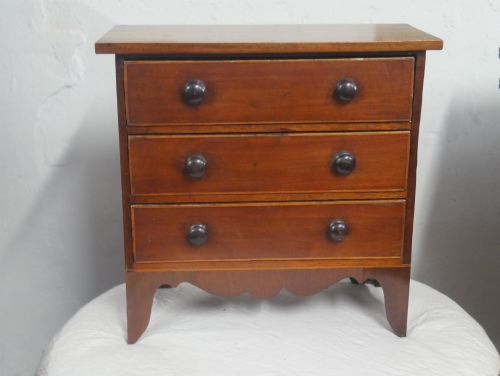
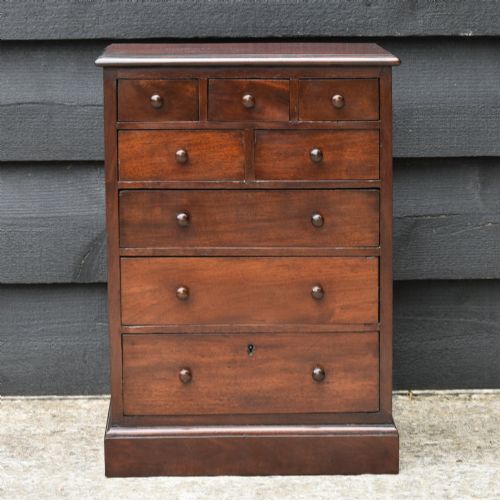
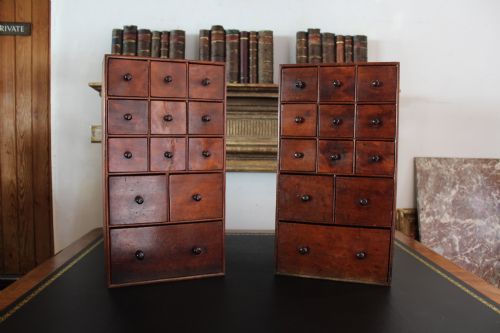
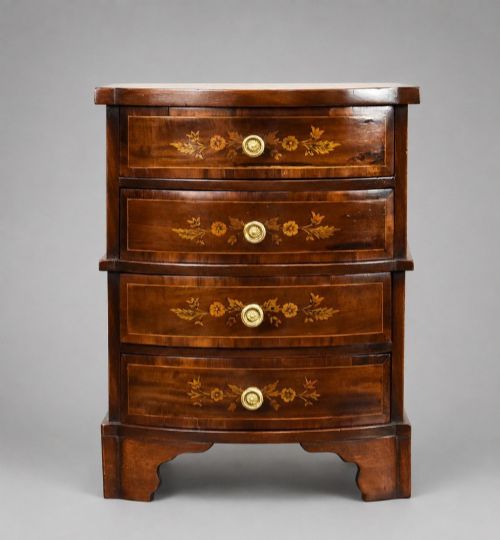
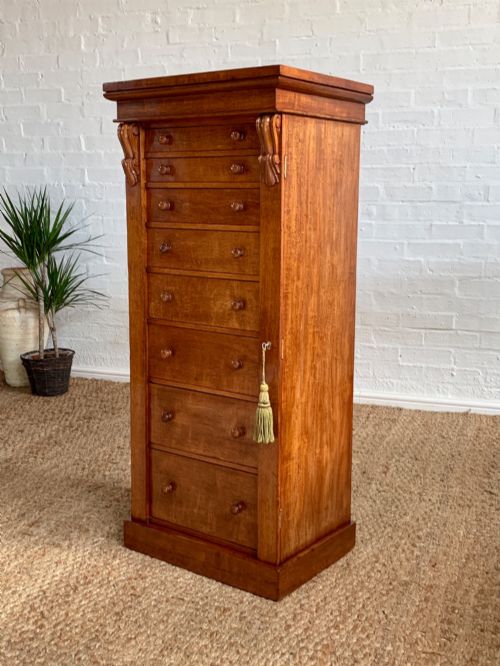
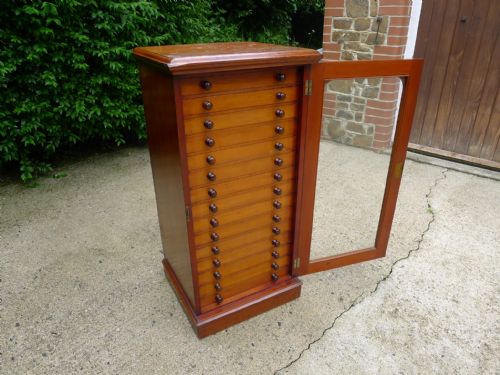
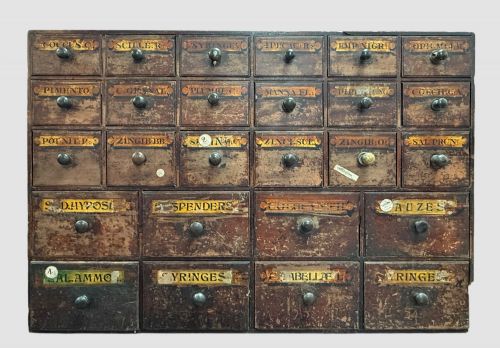
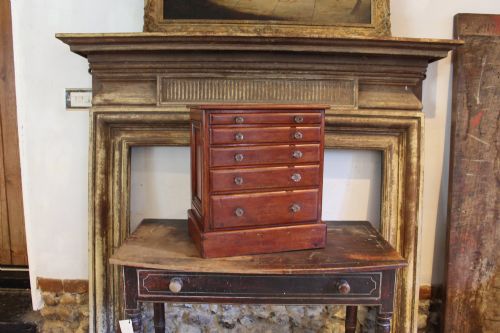
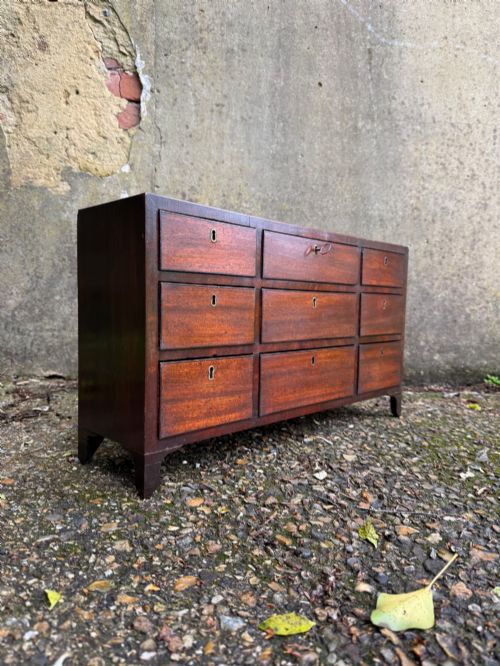
A brown mahogany collector chest encompasses a variety of small-scale storage forms including miniature chests of drawers, Wellington chests, specimen cabinets and apothecary banks. These pieces originate across the Georgian, Victorian and Edwardian eras, serving specialised purposes from general storage to housing insects, microscope slides and homeopathic remedies.
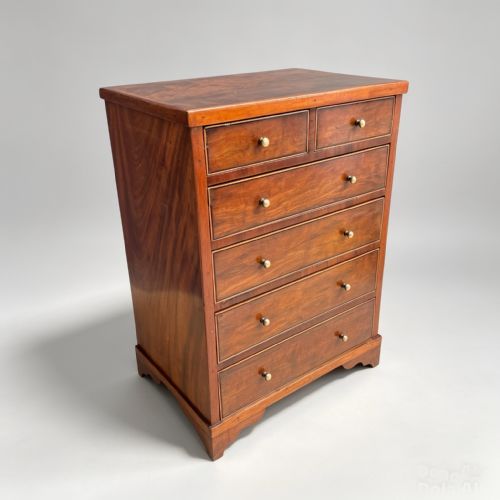
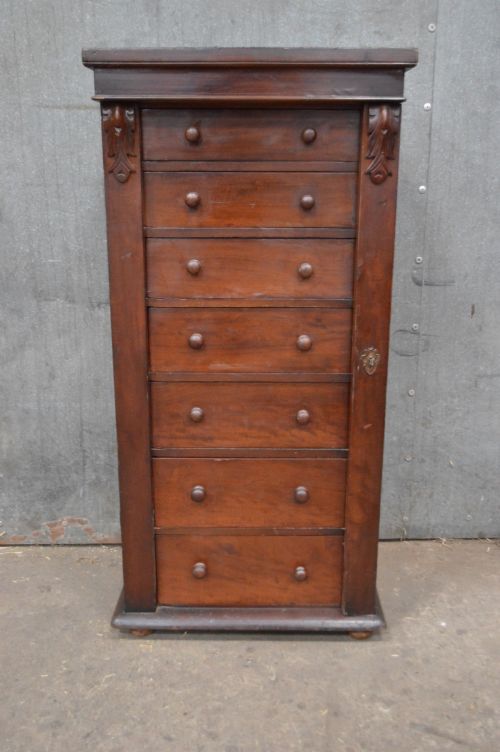
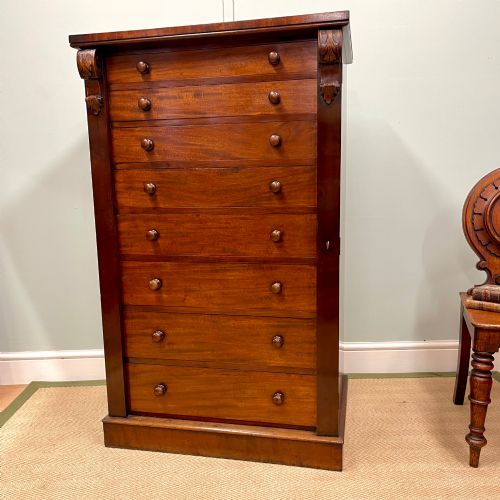
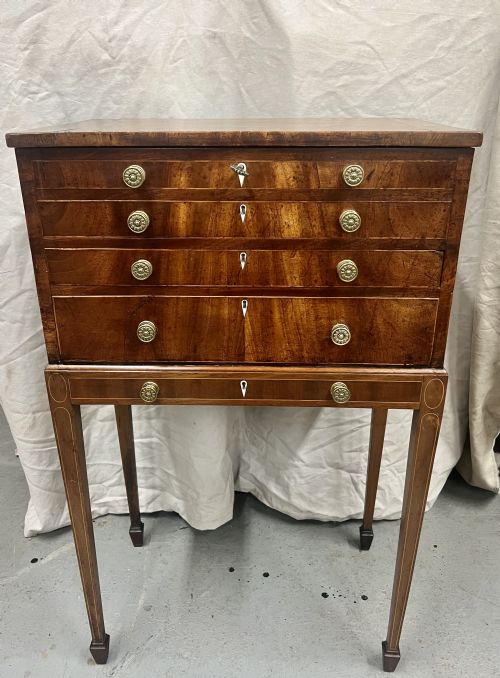
The version most commonly encountered is the Victorian mahogany Wellington chest or miniature chest of drawers. These items range from desktop specimen cases to floor-standing folio cabinets and small side units containing multiple graduated drawers.
Origins span English workshops alongside Scottish examples, reflecting traditional cabinet-making practices across the nineteenth and early twentieth centuries. Pieces often incorporate specific regional traits, such as Scottish apprentice proportions or Georgian proportions with bracket feet.
How They Were Made
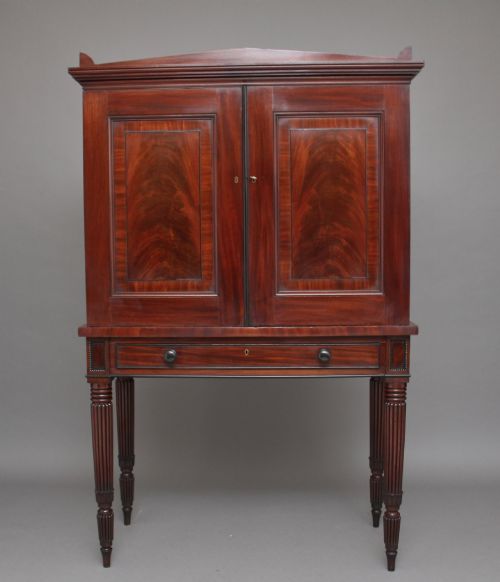
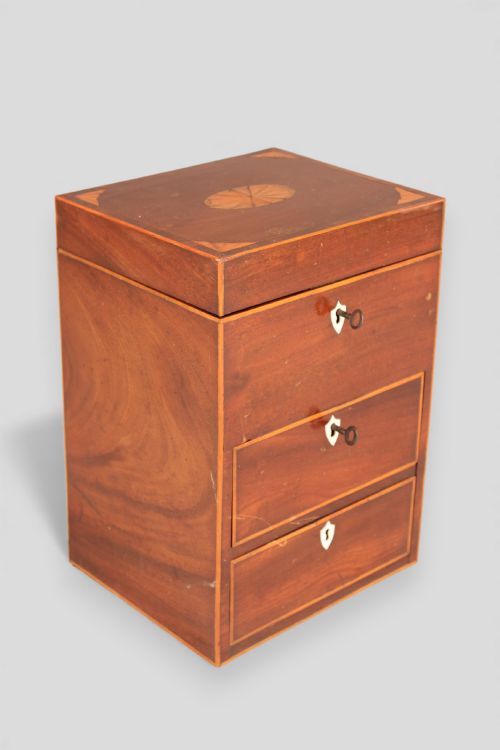
Construction relies heavily on solid mahogany and flame mahogany veneer applied to secondary timbers like pine, structured to maintain stability across numerous small drawer divisions. Boxwood inlay and mother of pearl detail frequently accentuate the exterior surfaces of finer examples.
Hardware components comprise brass handles, escutcheons and locking mechanisms, which are essential on Wellington chests featuring the characteristic side-locking stile. Turned wooden knobs also appear widely on Victorian and Edwardian drawer fronts.
Internal drawer construction utilises softwood or hardwood framing, occasionally lined with bone or specialised inserts depending on whether the cabinet was intended for insect collections, watch repair or medical phials.
Several miniature chests include tiny secret compartments originally designed for hiding small valuables away from prying eyes.
What Varies in Quality
The grade of timber selection distinguishes standard items from superior pieces, particularly where highly figured flame mahogany veneer or crisp boxwood inlay is employed. The coherence of the wood grain across multiple drawer fronts indicates greater workshop skill.
Mechanical complexity and hardware execution separate basic drawer units from sophisticated collector cabinets. Original locking stiles on Wellington chests, intact brass fittings and specialised internal partitions demonstrate higher initial manufacturing standards.
Watkins And Doncaster·Brady
The Brown Mahogany Collector Chest Glossary
- Wellington chest
- A tall, slender chest of drawers featuring a hinged locking stile on one side that secures all drawers simultaneously when locked. This form typically includes six or seven graduated drawers beneath a moulded top.
- Apprentice piece
- A small-scale item created by a tradesman to demonstrate advanced proficiency to a guild. These objects display the exact construction methods of full-sized furniture in miniature proportions.
- Apothecary chest
- A specialised cabinet or box fitted with numerous small drawers or pigeonholes designed for storing medical ingredients or remedies. They frequently retain original glass phials or specialised internal dividers.
- Specimen cabinet
- A multi-drawer unit built specifically to house natural history collections such as insects, minerals or botanical slides. The drawers often feature glass covers or shallow depths to protect delicate items.
- Flame mahogany
- A veneer cut from the fork of a mahogany tree where the branches join the trunk. This method produces a distinctive, swirling flame-like grain pattern prized in cabinet work.
Brown Mahogany Collector Chest: Frequently Asked Questions
What is a brown mahogany collector chest used for?
These pieces serve to organise and store small items, ranging from natural history specimens and medical slides to coins and jewellery. Their multi-drawer formats allow for tidy categorisation of delicate objects.
Historically, specific layouts accommodated pharmacist supplies, watch repair tools or insect collections. Today, they function as versatile desk accessories or small accent furniture in living spaces.
How do you identify a Wellington chest?
A Wellington chest stands out due to its tall, narrow proportions and a hinged vertical wooden locking bar on the right side. This bar secures all the drawers when locked with a key.
They generally contain six to seven drawers and date predominantly from the Victorian period. The locking mechanism provides a simple method for keeping contents secure.
What is an apprentice piece?
An apprentice piece is a miniature furniture item made by a craftsman to prove skill before earning master status. These objects mirror the joinery and design of larger furniture.
They feature dovetail joints and timber selection identical to full-sized furniture of the same era. Collectors value them for their detailed scale and craftsmanship.
How should I clean mahogany furniture?
Maintain mahogany surfaces by dusting gently with a dry, soft cloth to prevent particle buildup. Avoid using silicone-based polishes or harsh chemical sprays that can damage the finish.
Apply traditional beeswax occasionally to nourish the timber and preserve the natural sheen of the wood. Keep the chest away from direct sunlight and heat sources to prevent timber splitting.