


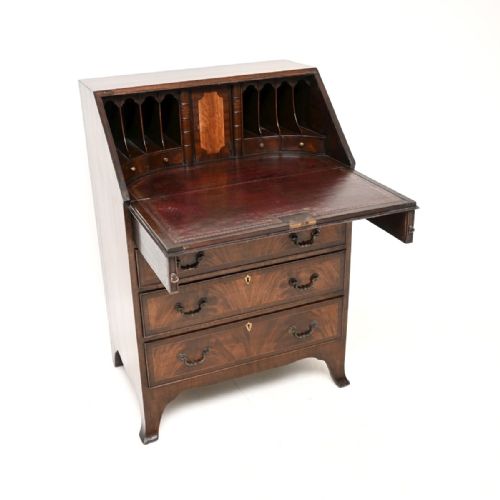


Brown Leather Writing Slope
A brown leather writing slope offers a portable desk surface lined in hide, prized for practical correspondence and compact elegance.
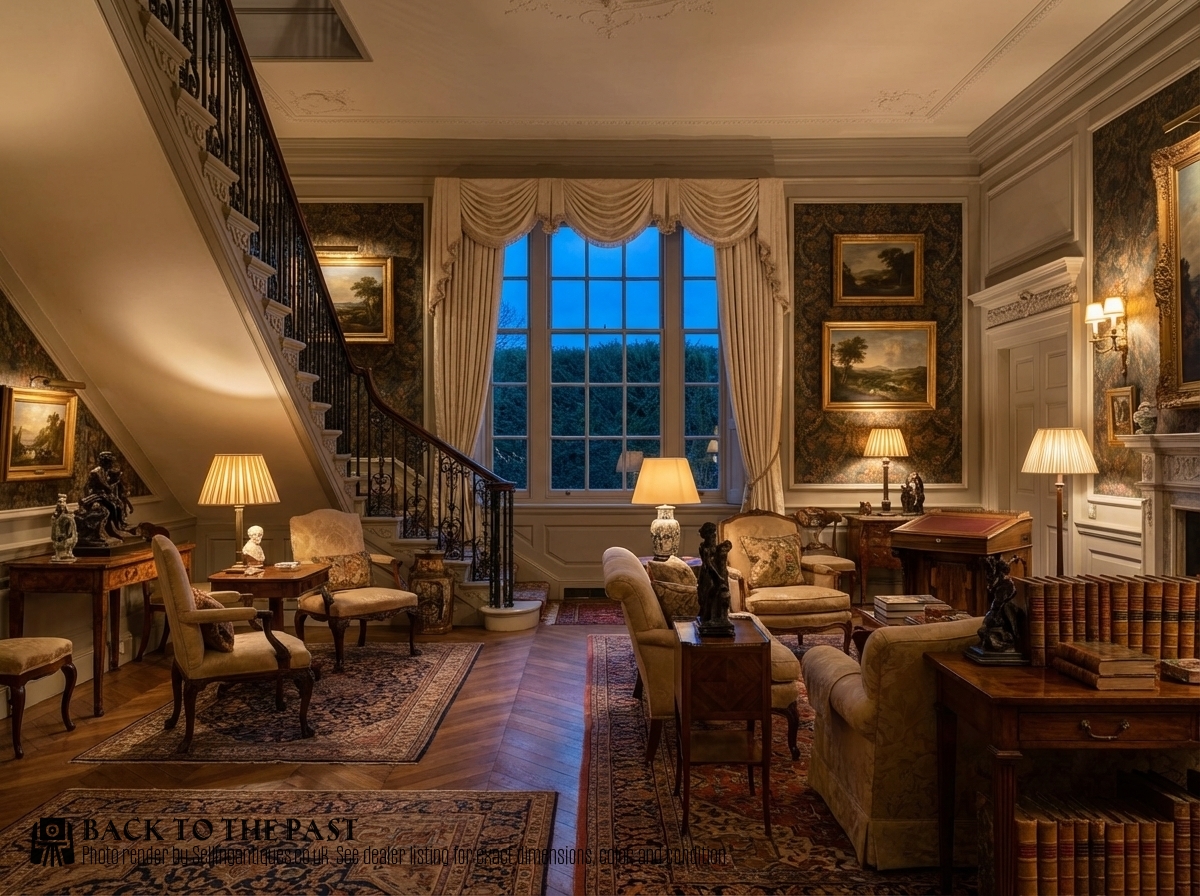
Brown Leather Writing Slope
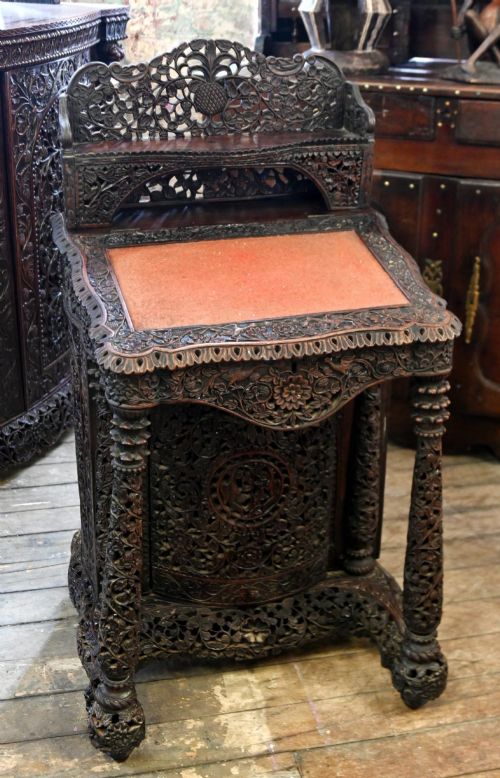
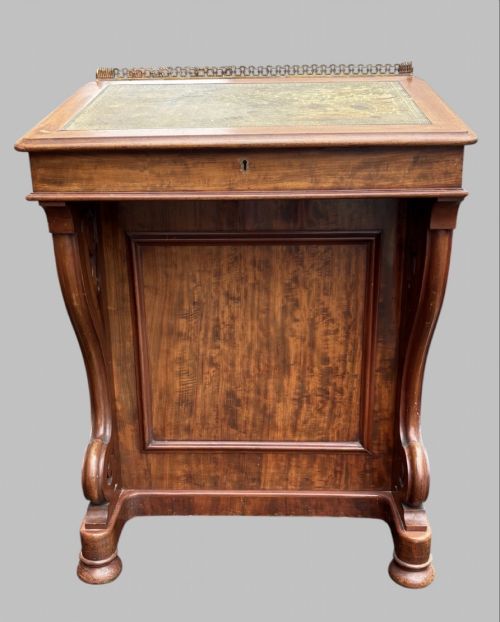
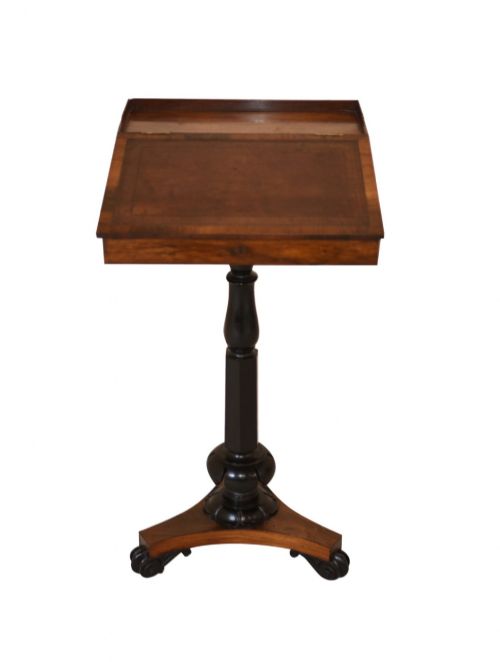
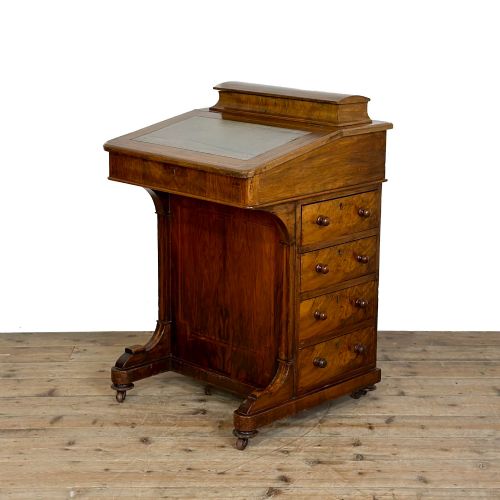
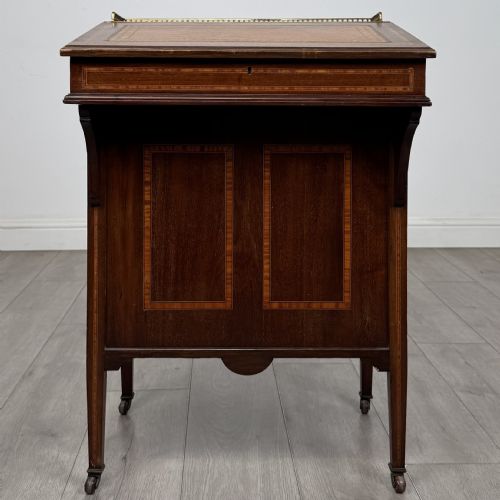
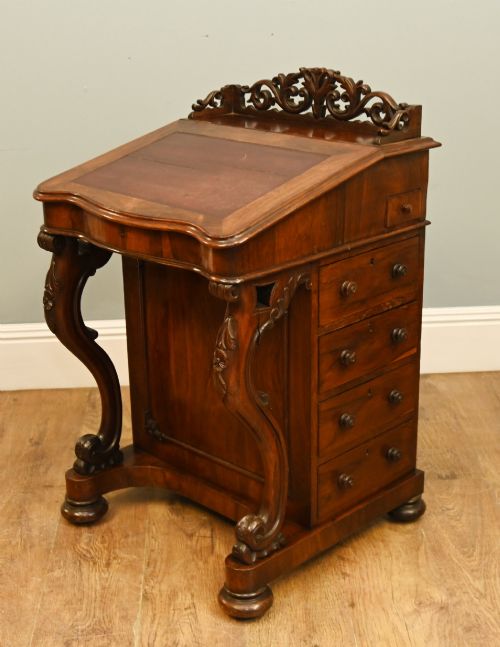
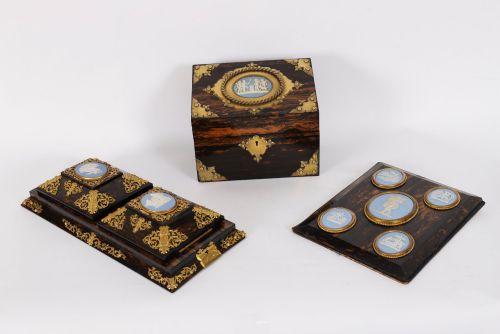
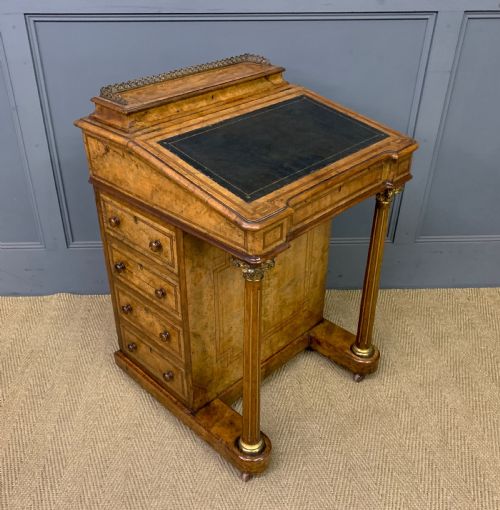
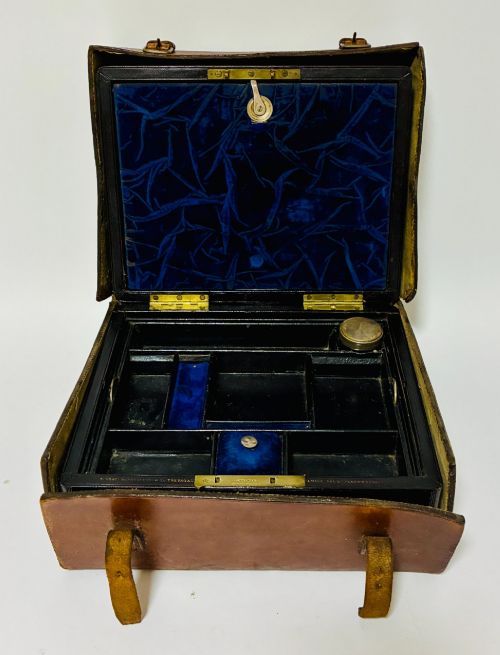
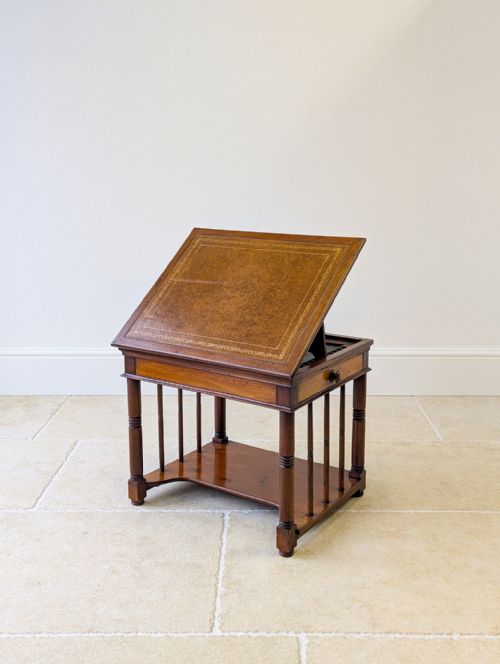
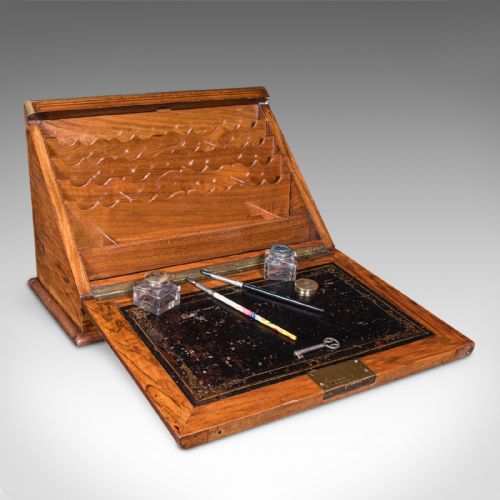
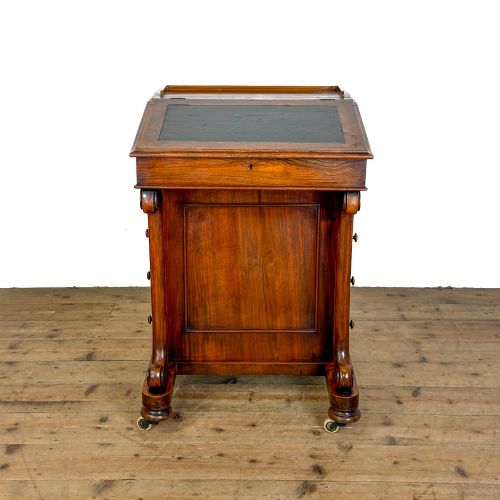
When you search for a brown leather writing slope, you encounter portable and stationary writing furniture designed for correspondence. These pieces include travelling boxes, table-top slopes, and larger Davenport desks featuring hinged leather writing surfaces.
The pieces on this page span the Georgian, Regency, and Victorian periods, with nineteenth-century examples appearing most frequently. Woods such as mahogany, walnut, rosewood, and oak provide the structural carcase for these slope forms.
Makers constructed these items to house inkwells, pens, and paper securely within a compact footprint. The inclusion of fitted interiors and secret compartments distinguishes many of the surviving examples.
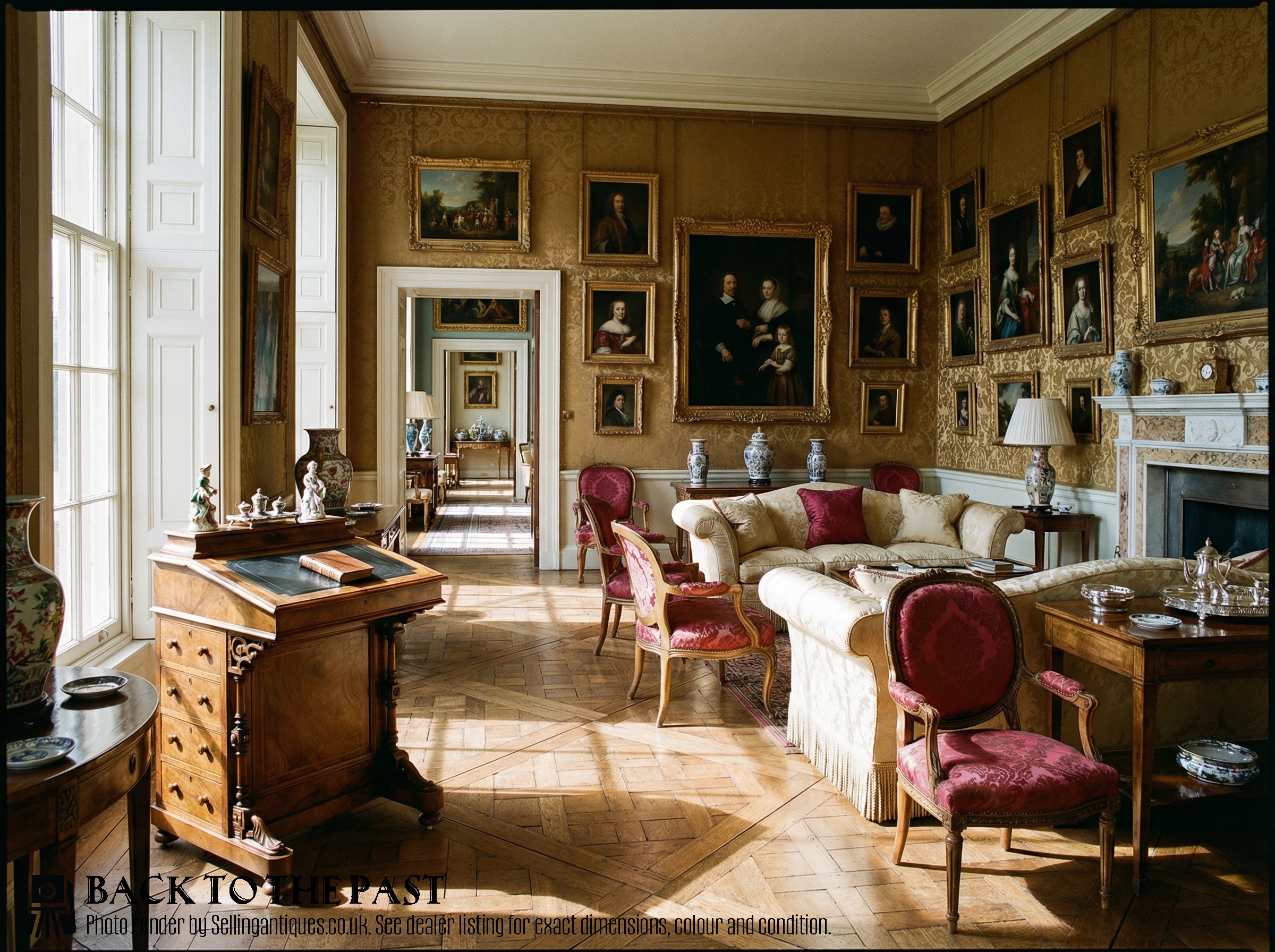
How they were made
Cabinet makers utilised dense hardwoods like mahogany, walnut, and rosewood, often employing burr veneers to create figured exterior panels. Brass hinges, corner mounts, and inlaid stringing reinforced the structural joints while adding decorative contrast.
Writing surfaces incorporated panels of leather, frequently tooled with gilt borders, inset into the wood to provide a smooth plane for quibs and steel nibs. Interiors featured satinwood or secondary timbers shaped into small drawers, pen trays, and ink bottle compartments.
Brown Leather Writing Slope Retail Price Guide 2026
Typical asking prices for brown leather writing slope among the pieces listed under this phrase on Sellingantiques today, from the lower quarter to the upper quarter. They describe what is for sale here now, not the wider market.
Listings feature Victorian, Regency, and Georgian periods, constructed from mahogany, walnut, rosewood, and oak.
What varies in quality
The grade of timber selection and the complexity of the internal fitments separate standard examples from finer works. Finely figured burr walnut or pollard oak veneers indicate superior craftsmanship.
Precision in brass hardware integration and the presence of original working locks and keys influence the overall standard. Superior pieces maintain crispness in internal satinwood drawers and retain matching components throughout.
F. West·Gillows of Lancaster
The Brown Leather Writing Slope Glossary
- Davenport
- A compact desk featuring a sloping writing surface above a pedestal of drawers, popular throughout the nineteenth century. It typically incorporates a side-sliding pen tray and small internal compartments.
- Slope
- A hinged box that opens to reveal an angled writing surface and fitted stationery storage. These items were designed for portability during the Georgian and Regency eras.
- Satinwood
- A pale, lustrous hardwood utilised for contrasting internal drawers and crossbanding. Cabinet makers favoured it for decorative interior fitments.
- Burr walnut
- A highly figured timber harvested from the wart-like growths on walnut trees. It provides elaborate grain patterns on the exterior surfaces of Victorian desks.
Brown Leather Writing Slope: Frequently Asked Questions
What is a brown leather writing slope used for?
These pieces served as portable or stationary desks for writing letters, storing stationery, and managing personal correspondence. The sloping lid provided an ergonomic angle for handwriting before the widespread use of flat-top desks.
Interior compartments kept inkwells, stamps, and nibs organised securely within the box or desk structure.
How do I identify a Regency writing slope?
Regency examples typically date from the early nineteenth century and feature classical proportions with restrained brass inlay or corner mounts. Woods like rosewood and mahogany predominate in this period.
They often take the form of portable correspondence boxes rather than large standing desks.
Are writing slopes and Davenport desks the same thing?
While both incorporate sloping writing surfaces, a traditional slope is a portable box placed upon a table. A Davenport is a substantial desk featuring a fixed writing slope over a pedestal of drawers.
Both forms utilise leather writing panels and fitted internal compartments for stationery.
How should I care for the leather writing surface?
Maintain the leather by keeping it away from direct sunlight and excessive heat sources to prevent cracking. Occasional gentle cleaning with appropriate leather care products preserves the material.
Avoid using excess moisture when cleaning gilt tooling around the edges of the panel.